
Infrastructure Push Cuts Travel Time, 549 Trains Speeded Up
A PIB backgrounder issued on 5 October 2026 set out how new bridges, tunnels, expressways and trains have cut journey times, with 549 trains speeded up.
Why in News
On 5 October 2026 the Press Information Bureau published a research backgrounder setting out the travel time saved by India’s new bridges, tunnels, expressways, trains and high-speed rail corridors.
The Press Information Bureau released a research backgrounder on 5 October 2026 titled Saving Time, Shortening Journeys, which measures India’s connectivity gains in hours saved rather than in kilometres built. It gathers the travel-time effect of bridges, tunnels, expressways, new trains and high-speed rail corridors in one place.
Bridges
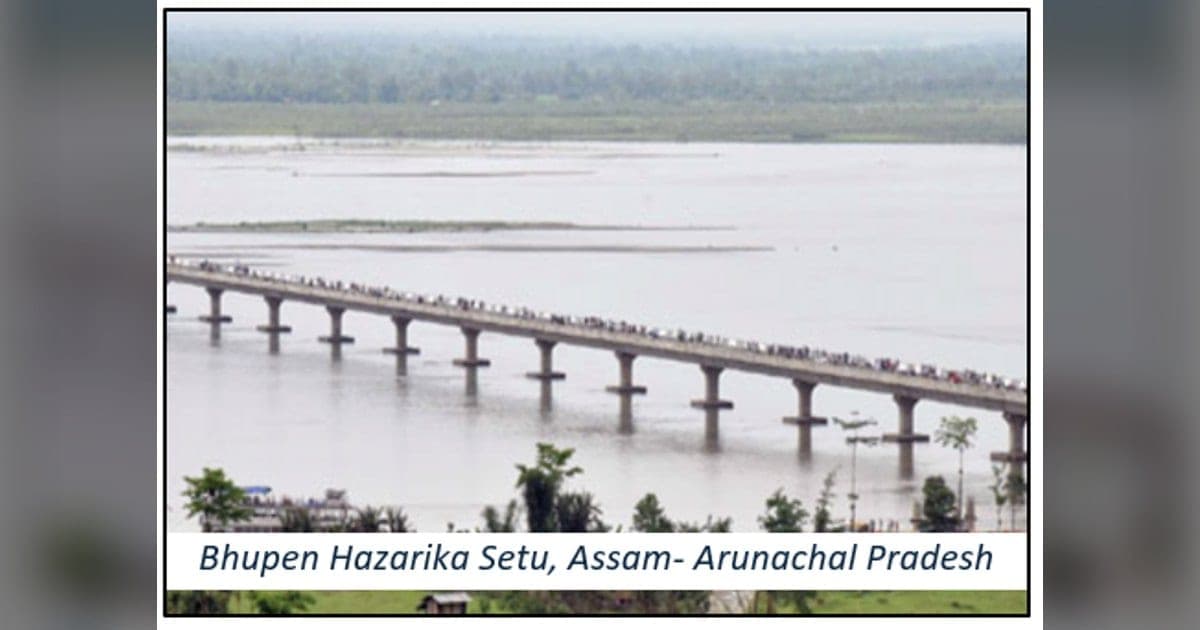
The Bhupen Hazarika Setu, also called the Dhola–Sadiya bridge and opened in May 2017, brought the trip between Rupai in Assam and Meka or Roing in Arunachal Pradesh down from six hours to one hour. The Bogibeel rail-cum-road bridge over the Brahmaputra, opened in December 2018, turned a day-long trip between Dhemaji and Dibrugarh into one of about one to two hours. Atal Setu, the Mumbai Trans Harbour Link opened in January 2024, links Mumbai with Navi Mumbai in roughly 20 minutes instead of two hours. The Kosi Rail Mahasetu of September 2020 shortened the Nirmali–Saraigarh rail run from about eight hours to 30 minutes and the distance from about 300 km to 22 km. The 200-metre Sisseri River Bridge of November 2019 saves about five hours between Pasighat and Roing.
Tunnels
- Atal Tunnel, Himachal Pradesh (October 2020): 9.02 km, bypasses the Rohtang Pass, shortens Manali–Sarchu by 46 km and gives Lahaul-Spiti all-weather access
- Dr Syama Prasad Mookerjee Tunnel, Jammu and Kashmir (April 2017): 9 km, trims the route by about 30 km and saves nearly two hours between Jammu and Srinagar
- Banihal–Qazigund road tunnel (April 2022): 8.45 km twin-tube, cuts 16 km and about an hour and a half
- Sela Tunnel, Arunachal Pradesh (March 2024): built at about 13,000 feet on the Tezpur–Tawang route
Expressways
The Delhi–Meerut Expressway cut that journey to about 50 minutes, while the 118-km Bengaluru–Mysuru Expressway of March 2023 reduced it to about 75 minutes. The 213-km Delhi–Dehradun Economic Corridor of April 2026 brought a six-hour drive to about two and a half hours, and the 701-km Mumbai–Nagpur Samruddhi Mahamarg of December 2022 halved a 16-hour trip. The 109-km Ahmedabad–Dholera greenfield expressway of March 2026 shortened the Ahmedabad–Dholera run from 100 km and over two hours to 83 km and 45 minutes.
Railways and high-speed rail
The 2026 railway timetable speeded up 549 trains: 20 gained an hour or more, 48 gained 31 to 59 minutes, 105 gained 16 to 30 minutes and 376 gained 5 to 15 minutes. India’s first Vande Bharat Express ran on the New Delhi–Kanpur–Prayagraj–Varanasi route in February 2019, and the first Vande Bharat Sleeper between Howrah and Guwahati, with 16 air-conditioned coaches for about 823 passengers, saves nearly three hours. The Mumbai–Ahmedabad high-speed rail corridor runs 508 km at an operating speed of 320 kmph with 12 stations and India’s first undersea rail tunnel beneath Thane Creek, the first service being targeted for August 2027. Seven more corridors announced in the Union Budget 2026–27 span nearly 4,000 km.
Important Facts
| Document | PIB backgrounder Saving Time, Shortening Journeys, 5 October 2026 |
|---|---|
| Trains speeded up | 549 in the 2026 railway timetable |
| Biggest gains | 20 trains faster by an hour or more; 376 faster by 5 to 15 minutes |
| Mumbai–Ahmedabad HSR | 508 km, 320 kmph, 12 stations, first service targeted August 2027 |
| New HSR corridors | Seven corridors of nearly 4,000 km announced in the Union Budget 2026–27 |
| Atal Setu | Mumbai Trans Harbour Link, January 2024, two hours to about 20 minutes |
| Kosi Rail Mahasetu | September 2020, about eight hours to 30 minutes; 300 km to 22 km |
| Atal Tunnel | 9.02 km, Himachal Pradesh, bypasses Rohtang Pass |
| Sela Tunnel | About 13,000 feet, Tezpur–Tawang route, Arunachal Pradesh |
| Longest expressway listed | Mumbai–Nagpur Samruddhi Mahamarg, 701 km |
| First Vande Bharat Sleeper | Howrah–Guwahati, 16 coaches for about 823 passengers |
Exam Point of View
Learn the bridge and tunnel pairs with their time savings, the 549 trains speeded up in the 2026 timetable, the Mumbai–Ahmedabad corridor figures of 508 km, 320 kmph and 12 stations, the August 2027 target, and the seven new corridors of nearly 4,000 km announced in the Union Budget 2026–27.
Practice Questions
According to the PIB backgrounder, how many trains were speeded up in the 2026 railway timetable?
- A.376
- B.459
- C.549
- D.649
Show answer
Correct answer: C. 549
Explanation
The correct answer is 549. The backgrounder states that the 2026 railway timetable speeded up 549 trains across the network, and it breaks that total into four bands. Twenty trains became faster by an hour or more, another 48 gained between 31 and 59 minutes, 105 gained between 16 and 30 minutes, and the remaining 376 were speeded up by 5 to 15 minutes. Option A, 376, is the figure for the last and largest band alone, which makes it the most tempting wrong answer, so candidates must read whether a question asks for the total or for one band. Option B, 459, and option D, 649, do not appear anywhere in the document. The safest way to carry this set into the examination hall is to remember the total first and then the four bands in descending order of time saved, because questions are set on both.
What are the length and operating speed of the Mumbai–Ahmedabad high-speed rail corridor?
- A.408 km and 300 kmph
- B.508 km and 320 kmph
- C.608 km and 350 kmph
- D.508 km and 250 kmph
Show answer
Correct answer: B. 508 km and 320 kmph
Explanation
The correct answer is 508 km and 320 kmph. The corridor will serve 12 stations and includes India’s first undersea rail tunnel, which runs about 7 km beneath Thane Creek, and the first service on it is targeted for August 2027. By road the same journey takes eight to nine hours, while the corridor is expected to cover it in close to two hours. Option A changes both numbers and is wrong. Option C inflates the length and the speed together, a common form of distractor in infrastructure questions. Option D keeps the correct length but lowers the speed to 250 kmph, which tests whether a candidate has learnt the two figures as a pair rather than only one of them. Remember that the project also features the undersea tunnel, since that first is itself a frequent question.
Which bridge reduced the rail journey between Nirmali and Saraigarh from about eight hours to 30 minutes?
- A.Bogibeel Bridge
- B.Bhupen Hazarika Setu
- C.Kosi Rail Mahasetu
- D.Sisseri River Bridge
Show answer
Correct answer: C. Kosi Rail Mahasetu
Explanation
The correct answer is the Kosi Rail Mahasetu in Bihar, opened in September 2020. Besides cutting the running time from roughly eight hours to half an hour, it shortened the distance between the two points from about 300 km to 22 km, which is why it is quoted as one of the sharpest connectivity gains in the document. Option A, the Bogibeel Bridge of December 2018, is a rail-cum-road bridge over the Brahmaputra that reduced a day-long journey between Dhemaji and Dibrugarh to about one to two hours. Option B, the Bhupen Hazarika Setu or Dhola–Sadiya bridge of May 2017, brought the Rupai to Meka and Roing trip down from six hours to one hour. Option D, the 200-metre Sisseri River Bridge of November 2019, saves about five hours between Pasighat and Roing. Each of these four bridges is tied to a different state and a different saving, so they should be learnt as a table.
The seven high-speed rail corridors announced in the Union Budget 2026–27 cover a total length of about
- A.2,000 km
- B.3,000 km
- C.4,000 km
- D.6,000 km
Show answer
Correct answer: C. 4,000 km
Explanation
The correct answer is about 4,000 km. The backgrounder says the seven announced high-speed rail corridors span nearly 4,000 km with an estimated investment of 16 lakh crore rupees, and that they are meant to bring major city pairs within roughly one to four hours of each other. The indicative travel times given include Chennai to Bengaluru in about an hour and a quarter, Mumbai to Pune in under an hour, Bengaluru to Hyderabad in about two hours and Delhi to Varanasi in close to four hours. Options A and B understate the network, while option D overstates it. Candidates should pair the number of corridors, the total length and the investment figure in memory, and should keep this set separate from the Mumbai–Ahmedabad corridor, which is already under construction and is counted apart from the seven newly announced lines.
Frequently Asked Questions
How many trains were speeded up in the 2026 railway timetable?
549 trains. Of these, 20 became faster by an hour or more, 48 by 31 to 59 minutes, 105 by 16 to 30 minutes and 376 by 5 to 15 minutes.
What are the main figures for the Mumbai–Ahmedabad high-speed rail corridor?
It is 508 km long, designed for an operating speed of 320 kmph, will serve 12 stations and includes India’s first undersea rail tunnel beneath Thane Creek. The first service is targeted for August 2027.
Which bridge cut the Nirmali–Saraigarh rail journey to 30 minutes?
The Kosi Rail Mahasetu, opened in September 2020. It brought the journey down from about eight hours and the distance from about 300 km to 22 km.
How long are the seven high-speed rail corridors announced in the Union Budget 2026–27?
They span nearly 4,000 km in all, with an estimated investment of 16 lakh crore rupees.
Sources
- समय की बचत, यात्रा छोटी (opens in a new tab) — Press Information Bureau
Current Affairs 5 October 2026
- UCIL Marks Diamond Jubilee Year of Uranium MiningScience & Technology
- TDB Backs Project VeerAI With Rs 130 Crore for AI Vision ChipScience & Technology
- India, Switzerland Sign Mobility and Infrastructure AgreementsInternational
- Coal India Offtake Reaches 384.2 MT in First Half of 2026-27Economy
- Sanchar Saathi Portal Crosses 30 Crore Visits Against Telecom FraudScience & Technology
- Gadkari Opens Chintan Shivir 2026 on Highway InfrastructureSummits & Conferences
- DST Marks Swachhata Hi Sewa 2026, Felicitates 110 Safai MitrasGovernment Schemes
- Kuno Cheetah KJP21 Delivers Five Cubs, India Tally Reaches 60Environment
Related Current Affairs

Related GK
- Union Budget and Fiscal Policy: Deficits, Articles and PYQs
27 September 2026 · Indian Economy
Take the Quiz
- Current Affairs Quiz
State Exams Current Affairs Quiz: 5 October 2026
25 questions25 minutesStart Quiz