
SSC CGL 2026: Exam Pattern, Syllabus, Eligibility, Dates and Preparation
The Combined Graduate Level Examination (SSC CGL) is held by the Staff Selection Commission to fill Group "B" and Group "C" posts in Ministries, Departments and Organisations of the Government of India, from Assistant Section Officer and Inspector of Income Tax to Auditor and Tax Assistant. Any graduate can apply, which makes it the largest graduate-level recruitment in the country: the CGL 2026 notice lists about 12,256 tentative vacancies. Selection is through two computer based tiers, and General Awareness carries 50 marks in Tier-I and 75 marks in Tier-II. This page gives the pattern, the General Awareness syllabus, eligibility, age limits, this cycle's dates and the posts, all as per the CGL 2026 notice, with GK24's daily current affairs, GK notes, quizzes and previous-year questions for the exam.
Prepare for SSC CGL
Latest SSC CGL Current Affairs
View all- Summits & Conferences
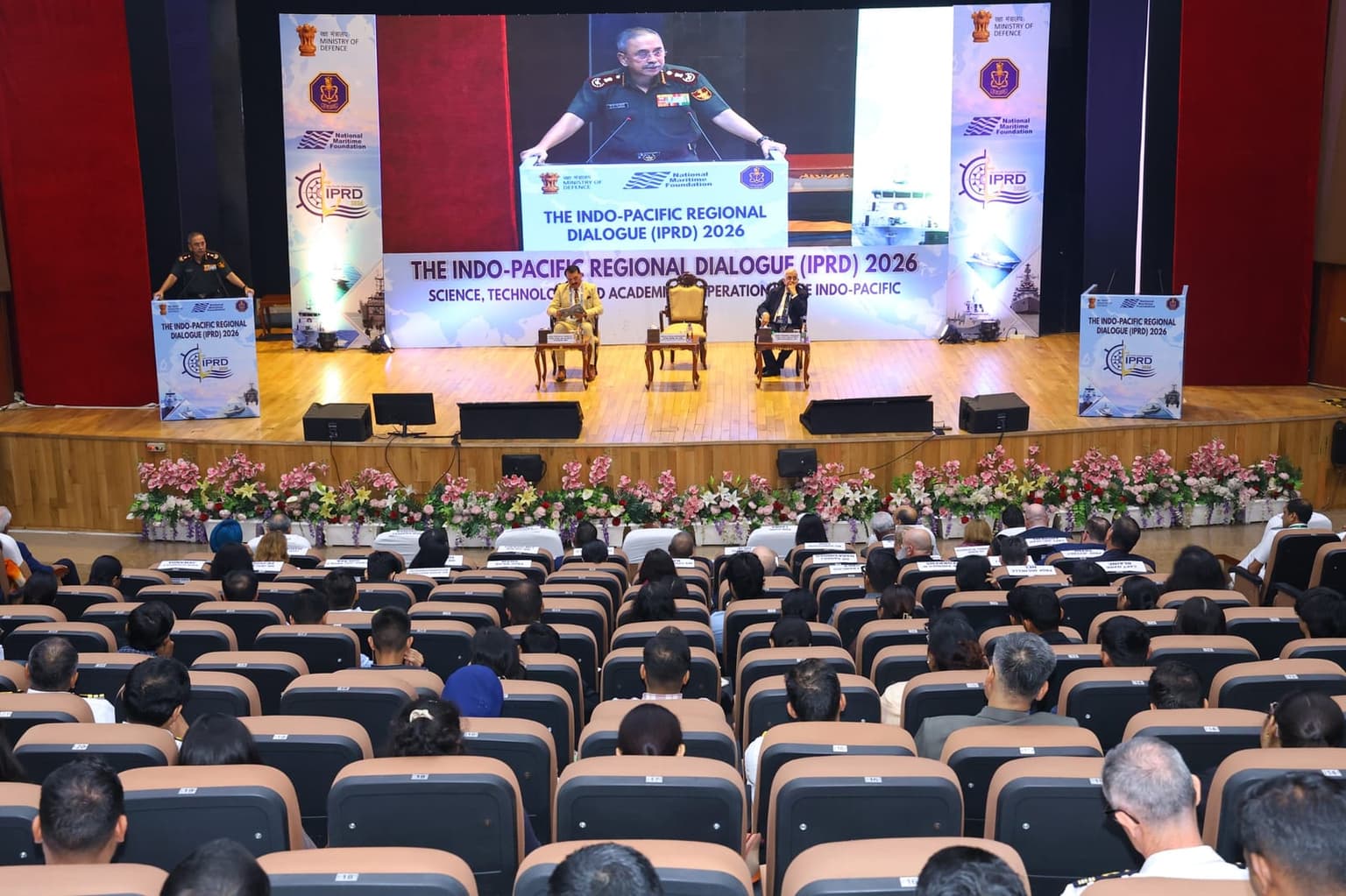
Indo-Pacific Regional Dialogue 2026 Concludes in New Delhi
The Indian Navy's three-day Indo-Pacific Regional Dialogue closed in New Delhi with over 40 experts from 20 countries debating maritime science and technology.
5 November 2026 · 2 min read
- Science & Technology
Indian Astronomers Find Star Cluster UBC 63 Is Really Two
5 November 2026 · 2 min read



SSC CGL Practice Quizzes
View all- Current Affairs Quiz
SSC CGL Current Affairs Quiz: 5 November 2026
25 questions25 minutesStart Quiz - Current Affairs Quiz
SSC CGL Current Affairs Quiz: 4 November 2026
25 questions25 minutesStart Quiz - Current Affairs Quiz
SSC CGL Current Affairs Quiz: 3 November 2026
25 questions25 minutesStart Quiz - Current Affairs Quiz
SSC CGL Current Affairs Quiz: 2 November 2026
25 questions25 minutesStart Quiz - Current Affairs Quiz
SSC CGL Weekly Current Affairs Quiz: 26 October – 1 November 2026
30 questions30 minutesStart Quiz - Current Affairs Quiz
SSC CGL Current Affairs Quiz: 1 November 2026
25 questions25 minutesStart Quiz
SSC CGL at a glance
These facts are as per the SSC Combined Graduate Level Examination, 2026 notice (F. No. HQ-C11018/1/2026-C-1) published on 21 May 2026, and the Commission's later notices of 23 June, 12 September, 21 September and 24 September 2026.
| Item | Detail |
|---|---|
| Conducting body | Staff Selection Commission (SSC), Department of Personnel and Training, Government of India |
| Posts | Group "B" and Group "C" posts in Ministries, Departments and Organisations of the Government of India, and in Constitutional Bodies, Statutory Bodies and Tribunals |
| Tentative vacancies | 10,731 as per the Commission's tentative vacancy list of 24 September 2026 (the notice had shown approx. 12,256) |
| Stages | Tier-I and Tier-II, both Computer Based Examinations |
| Mode | Online, objective multiple-choice; questions in English and Hindi except the English sections |
| Tier-I | 100 questions, 200 marks, 1 hour (15 minutes per section) |
| Tier-II Paper-I | Sections I to III: 150 questions, 450 marks; Section-IV: Data Entry Speed Test |
| Negative marking | 0.50 mark per wrong answer in Tier-I; 1 mark in Sections I to III of Tier-II Paper-I; 0.50 mark in Paper-II and Paper-III |
| Eligibility | Bachelor's degree from a recognised university; age 18–27, 20–30, 18–30 or 18–32 years depending on the post, as on 1 August 2026 |
| Application fee | ₹100; women, SC, ST, PwBD and Ex-Servicemen candidates are exempt |
| Official site | ssc.gov.in |
Selection process
- Online application on ssc.gov.in through One Time Registration (OTR). For CGL 2026 the window was 21 May to 22 June 2026, and the Commission reopened it from 23 to 25 June 2026 by its notice of 23 June 2026.
- Tier-I, a one-hour Computer Based Examination. It is a screening stage: candidates are shortlisted category-wise for Tier-II on Tier-I marks, with separate cut-offs for Junior Statistical Officer and Statistical Investigator Grade-II, for Assistant Audit Officer and Assistant Accounts Officer, and for all other posts.
- Tier-II Paper-I for every shortlisted candidate. Its four sections run in two sessions on one day. A candidate must qualify each section separately; Section-III (Computer Knowledge Test) and Section-IV (Data Entry Speed Test) are qualifying only.
- Tier-II Paper-II (Statistics) for Junior Statistical Officer and Statistical Investigator Grade-II candidates, and Paper-III (General Studies: Finance and Economics) for Assistant Audit Officer and Assistant Accounts Officer candidates.
- Post preference through an online option form before the result. A candidate is not considered for any post he or she did not opt for, and options once submitted are final.
- Final merit is prepared on Tier-II performance only. For most posts it is the aggregate of Section-I and Section-II of Paper-I, subject to qualifying Sections III and IV. Tier-I marks do not count in the final merit.
- Document Verification by the user department, followed by physical and medical tests for posts that prescribe them (Inspector posts in CBIC, Sub-Inspector in CBI, NIA, NCB and CBN, and a few others).
Minimum qualifying marks in Tier-I and in each objective section or paper of Tier-II are 30% for UR, 25% for OBC and EWS and 20% for all other categories. Marks of papers held in multiple shifts are normalised using the procedure the Commission published on 2 June 2025. Tentative answer keys are released after each exam and can be challenged online at ₹100 per question.
Exam pattern
Tier-I (Computer Based Examination)
| Section | Questions | Marks | Time |
|---|---|---|---|
| A. General Intelligence and Reasoning | 25 | 50 | 15 minutes |
| B. General Awareness | 25 | 50 | 15 minutes |
| C. Quantitative Aptitude | 25 | 50 | 15 minutes |
| D. English Comprehension | 25 | 50 | 15 minutes |
| Total | 100 | 200 | 1 hour |
Each section has its own 15-minute timer. Every wrong answer costs 0.50 mark. Questions in Parts A, B and D are of graduation level; Part C is of Class 10 level. Scribe-eligible candidates get 1 hour 20 minutes.
Tier-II Paper-I (compulsory for all posts)
| Section | Subject | Questions | Marks | Time |
|---|---|---|---|---|
| Section-I | A: Mathematical Abilities; B: Reasoning and General Intelligence | 30 + 30 = 60 | 180 | 1 hour (30 + 30 minutes) |
| Section-II | A: English Language and Comprehension; B: General Awareness | 45 + 25 = 70 | 210 | 1 hour (40 + 20 minutes) |
| Section-III | Computer Knowledge Test (qualifying) | 20 | 60 | 15 minutes |
| Section-IV | Data Entry Speed Test (qualifying), a passage of about 2,000 key depressions | One task | – | 15 minutes |
Sections I to III run in Session-I (2 hours 15 minutes); Section-IV runs in Session-II after a break for re-registration. Each question carries 3 marks and each wrong answer in Sections I to III costs 1 mark. Allowed errors in the DEST are 20% for UR, 25% for OBC and EWS and 30% for other categories, with higher standards for posts where computer proficiency or DEST is prescribed.
Tier-II Paper-II and Paper-III
| Paper | For | Questions | Marks | Time | Negative marking |
|---|---|---|---|---|---|
| Paper-II: Statistics | Junior Statistical Officer, Statistical Investigator Grade-II | 100 | 200 | 2 hours | 0.50 mark |
| Paper-III: General Studies (Finance and Economics) | Assistant Audit Officer, Assistant Accounts Officer | 100 | 200 | 2 hours | 0.50 mark |
General Awareness syllabus
General Awareness is Section B of Tier-I (25 questions, 50 marks) and Part B of Section-II of Tier-II Paper-I (25 questions, 75 marks). The notice gives the same indicative scope for both.
- General awareness of the environment around the candidate and its application to society
- Current events
- Matters of everyday observation and experience in their scientific aspect, as expected of an educated person
- India and its neighbouring countries: History
- Culture
- Geography
- Economic Scene
- General Policy (the Constitution, polity and government schemes)
- Scientific Research
In practice, SSC leans on static GK. Indian Polity (Constitution articles, parts, schedules, amendments and constitutional offices), History (ancient dynasties, the Sultanate and Mughal periods, the freedom struggle), Geography (rivers, soils, national parks, Indian and world physical features) and the Economy (budget terms, RBI, basic concepts) fill most of the 25 questions. General Science covers Physics, Chemistry and Biology at school level. Current affairs of the 6 to 12 months before the exam appear as questions on awards, sports, appointments, summits, reports, government schemes and books, often paired with a static fact linked to the event.
Eligibility and age limit
All conditions are as on 1 August 2026, the crucial date in the CGL 2026 notice.
Nationality
A candidate must be a citizen of India, a subject of Nepal or Bhutan, or a person of Indian origin who has migrated from Pakistan, Burma, Sri Lanka, the East African countries named in the notice, Zambia, Malawi, Zaire, Ethiopia or Vietnam to settle permanently in India. Candidates other than Indian citizens need a certificate of eligibility from the Government of India.
Educational qualification
| Post | Qualification |
|---|---|
| Assistant Audit Officer, Assistant Accounts Officer | Bachelor's degree from a recognised university. Desirable: CA, CMA, CS, M.Com, MBS, MBA (Finance) or MBE. State Cadre posts also need proficiency in the State's official language at matriculation level |
| Junior Statistical Officer | Bachelor's degree in any subject with at least 60% marks in Mathematics at Class 12, or a Bachelor's degree with Statistics as a subject |
| Statistical Investigator Grade-II | Bachelor's degree in Statistics, Mathematics, Economics, Demography, Population Studies, Operation Research, IT, Computer Science, Computer Application, Data Science or Artificial Intelligence |
| All other posts | Bachelor's degree from a recognised university or equivalent |
Final-year students may apply, but must hold the degree by 1 August 2026.
Age limit
| Age band | Born between | Posts |
|---|---|---|
| 18–27 years | 2 August 1999 and 1 August 2008 | All Group "C" posts (Auditor, Accountant, Tax Assistant, Postal Assistant, UDC and others) |
| 20–30 years | 2 August 1996 and 1 August 2006 | Assistant Section Officer in CSS, Railways, MEA and AFHQ; Sub Inspector in CBI |
| 18–30 years | 2 August 1996 and 1 August 2008 | Most other Group "B" posts, including Assistant Audit Officer, Inspector of Income Tax, Inspector in CBIC and Inspector Posts |
| 18–32 years | 2 August 1994 and 1 August 2008 | Junior Statistical Officer |
Upper age relaxation: 5 years for SC and ST, 3 years for OBC, 10 years for PwBD (13 for PwBD-OBC and 15 for PwBD-SC/ST), and 3 years after deducting military service for Ex-Servicemen. For Group "C" posts, Central Government civilian employees with 3 years of regular service can apply up to 40 years of age (45 for SC/ST), and widows, divorced women and judicially separated women who have not remarried up to 35 years (40 for SC/ST). The date of birth in the Matriculation certificate is final.
Important dates
| Event | Date (CGL 2026) |
|---|---|
| Notice published | 21 May 2026 |
| Online applications | 21 May to 22 June 2026 (23:00); reopened from 23 June (23:00) to 25 June 2026 (23:00) by the notice of 23 June 2026 |
| Last date for online fee payment | 26 June 2026 (23:00), moved from 23 June by the notice of 23 June 2026 |
| Application correction window | 1 to 3 July 2026 (23:00), moved from 29 June to 1 July by the notice of 23 June 2026 |
| Tier-I (CBE) | 30 September to 30 October 2026 (notice of 12 September 2026); held |
| Tier-II (CBE) | December 2026 (tentative, as per the notice); no date announced as of 2 November 2026 |
The notice had shown Tier-I tentatively for August–September 2026; the Commission fixed the dates by its notice of 12 September 2026. Examination city details went live on 21 September 2026. Admission certificates are released two or three days before each exam date on the candidate login. Candidates using their own scribe had to map the scribe's OTR by 24 September 2026. On 24 September 2026 the Commission published the tentative vacancies of CGL 2026: 10,731 posts in all, against about 12,256 in the notice, and final vacancies may still differ. Tier-I was held from 30 September to 30 October 2026 and that stage is over. As of 2 November 2026 no date for Tier-II has been announced.
How to prepare General Awareness for SSC CGL
General Awareness is the one section where speed does not depend on calculation; you either know the fact or you do not. It also decides Tier-I cut-offs, because 15 minutes is enough to attempt all 25 questions if you know them.
- Start with static GK. Read the GK24 GK notes for SSC CGL topic by topic: Polity first, then Modern History, Geography, Economy, Ancient and Medieval History and General Science. Revise each topic twice before the exam.
- Read daily current affairs. GK24 publishes daily current affairs in English and Hindi from official releases. Cover the 12 months before your Tier-I date and keep monthly revision notes.
- Solve previous-year questions. The SSC CGL previous-year questions on GK24 show which topics repeat; the same statutory bodies, dynasties, rivers and schemes return with the options changed.
- Take timed quizzes. Practise 25-question GK24 quizzes in 15 minutes to build the habit of skipping unknown questions, because each wrong answer costs 0.50 mark in Tier-I and 1 mark in Tier-II.
- Do not neglect Tier-II. General Awareness carries 75 marks there, and those marks count in the final merit; Tier-I marks do not.
Posts and pay
The CGL 2026 notice lists these likely posts with their pay levels.
| Pay level | Pay scale | Main posts | Group |
|---|---|---|---|
| Level-8 | ₹47,600–1,51,100 | Assistant Audit Officer and Assistant Accounts Officer in the Indian Audit and Accounts Department under C&AG | Group "B" Gazetted |
| Level-7 | ₹44,900–1,42,400 | Assistant Section Officer (CSS, IB, Railways, MEA, AFHQ, MeitY and other ministries), Inspector of Income Tax (CBDT), Inspector (Central Excise), Inspector (Preventive Officer) and Inspector (Examiner) in CBIC, Assistant Enforcement Officer (ED), Sub Inspector (CBI), Inspector Posts, Inspector (CBN) | Group "B" |
| Level-6 | ₹35,400–1,12,400 | Assistant/Assistant Section Officer in other ministries, Executive Assistant (CBIC), Research Assistant (NHRC), Divisional Accountant (C&AG), Sub Inspector (NIA), Sub-Inspector/Junior Intelligence Officer (NCB), Junior Statistical Officer (MoSPI), Statistical Investigator Grade-II (MHA), Office Superintendent (CBDT), Section Head (DGFT) | Group "B" |
| Level-5 | ₹29,200–92,300 | Auditor (C&AG, CGDA and other departments), Accountant and Junior Accountant (C&AG, CGA and other departments) | Group "C" |
| Level-4 | ₹25,500–81,100 | Postal Assistant/Sorting Assistant, Senior Secretariat Assistant/Upper Division Clerk, Senior Administrative Assistant (MES), Tax Assistant (CBDT and CBIC), Sub-Inspector (CBN) | Group "C" |
The pay scale is the basic pay of the level; allowances depend on the posting. Posts are allotted on merit-cum-preference, and an allotted post is not changed later.
Frequently Asked Questions
Is there negative marking in SSC CGL Tier-I?
Yes. As per the CGL 2026 notice, 0.50 mark is deducted for each wrong answer in Tier-I. In Tier-II, 1 mark is deducted per wrong answer in Sections I, II and III of Paper-I, and 0.50 mark in Paper-II and Paper-III. Unanswered questions carry no penalty.
What is the age limit for SSC CGL 2026?
It depends on the post, reckoned as on 1 August 2026: 18–27 years for Group "C" posts such as Auditor, Accountant and Tax Assistant; 20–30 years for Assistant Section Officer in CSS, Railways, MEA and AFHQ and Sub Inspector in CBI; 18–30 years for most other Group "B" posts; and 18–32 years for Junior Statistical Officer. SC/ST candidates get 5 years and OBC candidates 3 years of relaxation in the upper limit.
What is the SSC CGL Tier-I exam pattern?
Tier-I has 100 objective questions of 2 marks each, 200 marks in total, in 1 hour: General Intelligence and Reasoning, General Awareness, Quantitative Aptitude and English Comprehension, 25 questions each with a 15-minute sectional timer. Every wrong answer costs 0.50 mark.
Do Tier-I marks count in the SSC CGL final merit?
No. Tier-I is a screening stage. The final merit list is prepared on Tier-II performance only: for most posts, the aggregate of Section-I and Section-II of Paper-I, subject to qualifying the Computer Knowledge Test and the Data Entry Speed Test.
When is the SSC CGL 2026 Tier-I exam?
Tier-I of CGL 2026 was held from 30 September to 30 October 2026, on the schedule fixed by the Commission's notice of 12 September 2026, and that stage is over. Tier-II is tentatively in December 2026; as of 2 November 2026 its dates have not been announced. Admission certificates are released on the candidate login two or three days before each exam date.
Can a final-year student apply for SSC CGL?
Yes. Candidates appearing in the final year of graduation can apply, but they must possess the essential qualification, a Bachelor's degree, as on 1 August 2026, the crucial date in the CGL 2026 notice.
What is the application fee for SSC CGL?
The fee is ₹100, payable online through BHIM UPI, net banking or Visa, Mastercard, Maestro or RuPay debit cards. Women candidates and SC, ST, PwBD and Ex-Servicemen candidates eligible for reservation are exempt from the fee.