
UPSC CSE 2026–27: Exam Pattern, Syllabus, Eligibility, Attempts, Dates and Preparation
The Civil Services Examination (UPSC CSE) is held by the Union Public Service Commission to recruit officers to the Indian Administrative Service, the Indian Foreign Service, the Indian Police Service and 20 other Group 'A' and Group 'B' services of the Government of India. It runs in three stages about a year long: an objective Preliminary Examination, a written Main Examination of nine papers and an Interview/Personality Test. General Studies Paper-I of the Prelims, where current affairs, polity, history, geography, the economy, environment and science decide who reaches the Mains, is the paper GK24 serves directly. This page gives the pattern, the Prelims syllabus, eligibility, age limit, attempts, fee and dates as per the CSE 2026 notice and the UPSC calendar for 2027, with GK24's daily current affairs, GK notes, quizzes and previous-year questions for the exam.
Prepare for UPSC Civil Services
Latest UPSC Civil Services Current Affairs
View all- Summits & Conferences
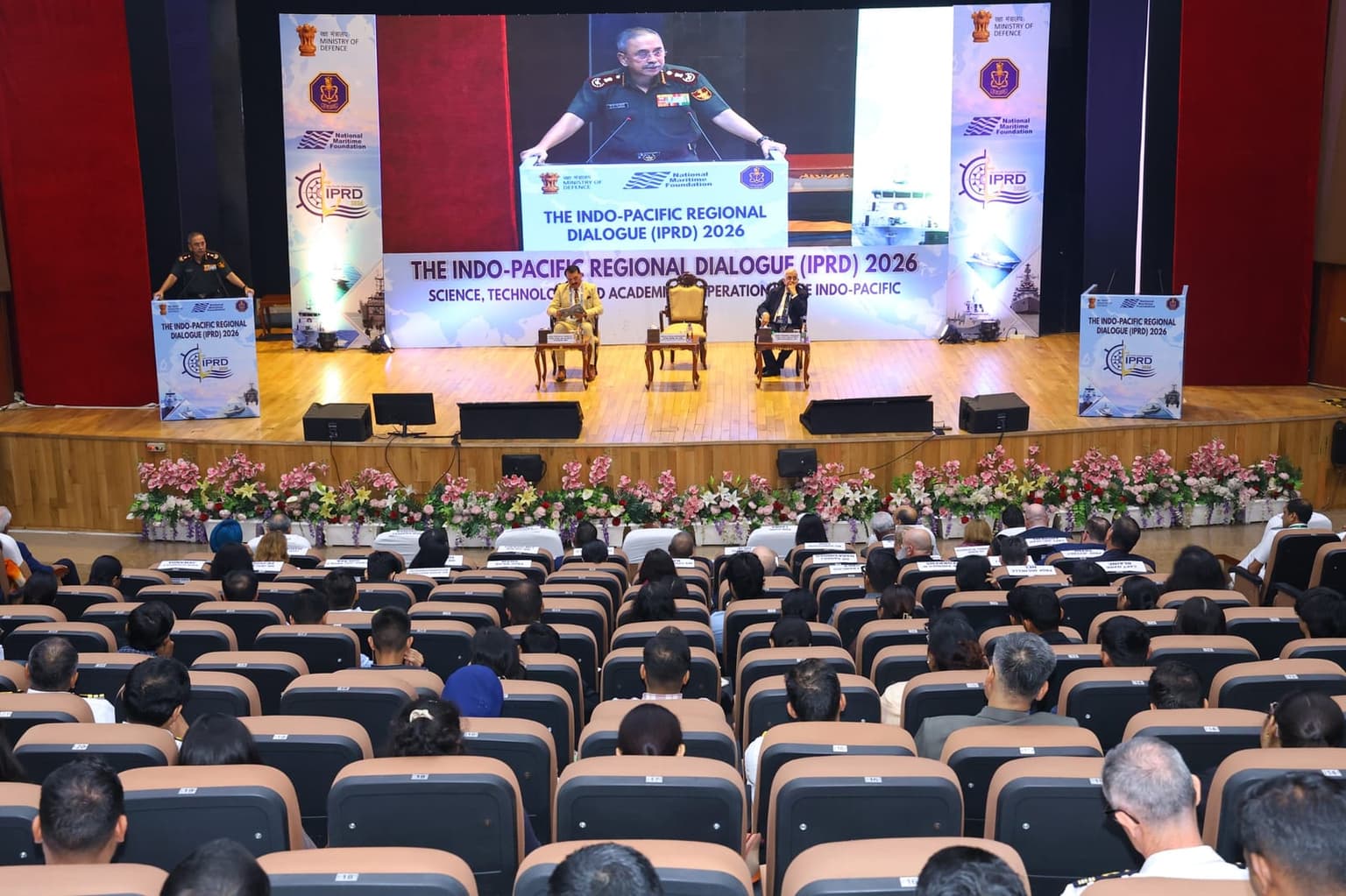
Indo-Pacific Regional Dialogue 2026 Concludes in New Delhi
The Indian Navy's three-day Indo-Pacific Regional Dialogue closed in New Delhi with over 40 experts from 20 countries debating maritime science and technology.
5 November 2026 · 2 min read
- Science & Technology
Indian Astronomers Find Star Cluster UBC 63 Is Really Two
5 November 2026 · 2 min read

UPSC Civil Services Practice Quizzes
View all- Current Affairs Quiz
UPSC Civil Services Current Affairs Quiz: 5 November 2026
25 questions25 minutesStart Quiz - Current Affairs Quiz
UPSC Civil Services Current Affairs Quiz: 4 November 2026
25 questions25 minutesStart Quiz - Current Affairs Quiz
UPSC Civil Services Current Affairs Quiz: 3 November 2026
25 questions25 minutesStart Quiz - Current Affairs Quiz
UPSC Civil Services Current Affairs Quiz: 2 November 2026
25 questions25 minutesStart Quiz - Current Affairs Quiz
UPSC Civil Services Weekly Current Affairs Quiz: 26 October – 1 November 2026
30 questions30 minutesStart Quiz - Current Affairs Quiz
UPSC Civil Services Current Affairs Quiz: 1 November 2026
25 questions25 minutesStart Quiz
UPSC CSE at a glance
These facts are as per Examination Notice No. 05/2026-CSE for the Civil Services (Preliminary) Examination, 2026, published by the Union Public Service Commission on 4 February 2026 under the Civil Services Examination Rules, 2026 notified by the Department of Personnel and Training the same day, and the Commission's press notes of 15 June and 19 August 2026. The CSE 2027 dates are from the UPSC Programme of Examinations 2027 issued on 20 May 2026.
| Item | Detail |
|---|---|
| Conducting body | Union Public Service Commission (UPSC), New Delhi |
| Services | Indian Administrative Service, Indian Foreign Service, Indian Police Service, 15 Group 'A' services and 5 Group 'B' services, 23 in all |
| Vacancies | Approx. 933 in the CSE 2026 notice, including 33 for PwBD; the Commission's press note of 15 June 2026 refers to 1,016 vacancies notified for CSE 2026 |
| Stages | Preliminary Examination (objective, screening only), Main Examination (written, nine papers) and Interview/Personality Test |
| Preliminary Examination | Two papers of 200 marks and 2 hours each: General Studies Paper-I (100 questions) and General Studies Paper-II (80 questions, qualifying at 33%); question papers in Hindi and English |
| Negative marking | One-third of the marks of the question for each wrong answer in both Prelims papers; no penalty for a blank |
| Main Examination | Two qualifying language papers of 300 marks each and seven merit papers of 250 marks each (1,750 marks); every paper of 3 hours, conventional essay type |
| Interview/Personality Test | 275 marks, no minimum qualifying marks; final total 2,025 marks |
| Eligibility | Graduate degree; 21 to 32 years as on 1 August 2026 with relaxations; 6 attempts for General and EWS, 9 for OBC, unlimited for SC and ST |
| Application fee | ₹100 for the Prelims and ₹200 for the Mains; women, SC, ST and PwBD candidates are exempt |
| Next exam | CSE 2027 Prelims on 23 May 2027 as per the UPSC calendar; the CSE 2027 notice is due on 13 January 2027 |
| Official site | upsc.gov.in; applications on upsconline.nic.in |
Selection process
The notice describes the Civil Services Examination as two successive stages, the Preliminary Examination and the Main Examination, and the Main itself has a written part and an Interview/Personality Test. For a candidate that is three hurdles spread over about a year.
- Online application on upsconline.nic.in through the Universal Registration Number (URN), the Common Application Form and the exam-specific module. For CSE 2026 the window was 4 to 24 February 2026 (6:00 PM). An application cannot be withdrawn or corrected after submission. Prelims centres (83 in CSE 2026) are allotted first-apply-first-allot, with a ceiling at every centre except Chennai, Dispur, Kolkata and Nagpur.
- Preliminary Examination, one day, two objective papers. It is a screening test only and its marks are not counted in the final merit. About twelve to thirteen times the number of vacancies are admitted to the Main Examination, on the total of General Studies Paper-I among candidates who score at least 33% in General Studies Paper-II. A candidate must appear in both papers to be evaluated. For CSE 2026 the Prelims were held on 24 May 2026, and the result of 15 June 2026 shortlisted 13,343 candidates.
- Detailed application and Mains fee in a 10-day window after the Prelims result (19 to 28 June 2026 for CSE 2026). Every qualified candidate must log in, update or reconfirm details, fill the cadre preference and pay ₹200 unless exempt, or the e-Admit Card for the Mains is not generated.
- Main Examination (written), nine conventional papers over five days at 27 centres: two qualifying language papers, Essay, four General Studies papers and two optional-subject papers. For CSE 2026 it was held from 21 to 23 August and 29 to 30 August 2026. The Essay, General Studies and optional papers are evaluated only for candidates who score 25% in Paper-A and 25% in Paper-B.
- Interview/Personality Test for candidates who reach the minimum qualifying marks the Commission fixes in the written part. About twice the number of vacancies are summoned, and a 15-day window opens after the written result to update details. The Board judges mental alertness, critical powers of assimilation, clear and logical exposition, balance of judgement, variety and depth of interest, social cohesion and leadership, and intellectual and moral integrity, in a directed conversation rather than a cross-examination.
- Final result and service allocation on the total of Papers I to VII (1,750) and the Personality Test (275). Ties are broken first on the five compulsory papers plus the Personality Test, then on those five papers alone, then by age. Services are allotted by rank and the preferences given in the application.
Representations against questions or the Prelims answer key are taken only on the Question Paper Representation Portal, from the third day after the exam to 6:00 PM of the seventh day. The e-Admit Card is released on the last working day of the week before the exam. Marks, cut-offs and answer keys of the Prelims are published only after the final result of the cycle. Face authentication at the venue is mandatory, and candidates must reach 30 minutes before each session.
Exam pattern
Preliminary Examination (objective, OMR)
| Paper | Questions | Marks | Time | Counted for |
|---|---|---|---|---|
| General Studies Paper-I | 100 | 200 | 2 hours | Shortlisting for the Mains (cut-off) |
| General Studies Paper-II (CSAT) | 80 | 200 | 2 hours | Qualifying only, minimum 33% (66.67 marks) |
| Total | 180 | 400 | 4 hours | Not counted in the final merit |
The notice fixes the marks and the duration; the question counts are printed on the cover of the CSE 2026 question papers, where all questions of a paper carry equal marks, so a Paper-I question is worth 2 marks and a Paper-II question 2.5 marks. Each question has four alternatives. A wrong answer costs one-third of the question's marks, marking more than one answer counts as wrong, and a blank costs nothing. Both papers are set in Hindi and English. Scribe-eligible PwBD candidates get 20 minutes of compensatory time per hour.
Main Examination (written)
| Paper | Subject | Marks | Nature |
|---|---|---|---|
| Paper-A | One Indian language from the Eighth Schedule, chosen by the candidate | 300 | Qualifying, 25% |
| Paper-B | English | 300 | Qualifying, 25% |
| Paper-I | Essay | 250 | Merit |
| Paper-II | General Studies-I: Indian Heritage and Culture, History and Geography of the World and Society | 250 | Merit |
| Paper-III | General Studies-II: Governance, Constitution, Polity, Social Justice and International Relations | 250 | Merit |
| Paper-IV | General Studies-III: Technology, Economic Development, Bio-diversity, Environment, Security and Disaster Management | 250 | Merit |
| Paper-V | General Studies-IV: Ethics, Integrity and Aptitude | 250 | Merit |
| Paper-VI | Optional Subject, Paper 1 | 250 | Merit |
| Paper-VII | Optional Subject, Paper 2 | 250 | Merit |
| Written total | Papers I to VII | 1,750 | Merit |
| Interview/Personality Test | – | 275 | No minimum |
| Grand total | – | 2,025 | Final ranking |
Every paper is of 3 hours and of conventional essay type. Paper-A and Paper-B are of Matriculation standard and their marks are not counted for ranking. Paper-A is not compulsory for candidates from Arunachal Pradesh, Manipur, Meghalaya, Mizoram, Nagaland and Sikkim, or for hearing-impaired PwBD candidates exempted from second or third language courses by their Board or University. Question papers other than language literature are set in Hindi and English, and a candidate may answer Papers I to VII in English or in any Eighth Schedule language. The optional subject is one of 26: Agriculture, Animal Husbandry and Veterinary Science, Anthropology, Botany, Chemistry, Civil Engineering, Commerce and Accountancy, Economics, Electrical Engineering, Geography, Geology, History, Law, Management, Mathematics, Mechanical Engineering, Medical Science, Philosophy, Physics, Political Science and International Relations, Psychology, Public Administration, Sociology, Statistics, Zoology, or the literature of one of 23 languages. Optional papers are of honours-degree level; Engineering, Medical Science and Law are at bachelor's level. Non-programmable scientific calculators are allowed in the Mains but not in the Prelims.
General Studies syllabus for Prelims
Part A of Section III of the notice gives the Prelims syllabus in seven lines for Paper-I and six for Paper-II. Paper-I decides the cut-off, so it is the paper GK24 is built around.
General Studies Paper-I (200 marks)
- Current events of national and international importance
- History of India and Indian National Movement
- Indian and World Geography: Physical, Social, Economic Geography of India and the World
- Indian Polity and Governance: Constitution, Political System, Panchayati Raj, Public Policy, Rights Issues, etc.
- Economic and Social Development: Sustainable Development, Poverty, Inclusion, Demographics, Social Sector Initiatives, etc.
- General issues on Environmental Ecology, Bio-diversity and Climate Change that do not require subject specialisation
- General Science
General Studies Paper-II (200 marks, qualifying)
- Comprehension
- Interpersonal skills including communication skills
- Logical reasoning and analytical ability
- Decision making and problem solving
- General mental ability
- Basic numeracy (numbers and their relations, orders of magnitude, etc.) and data interpretation (charts, graphs, tables, data sufficiency, etc.), both of Class X level
What follows is guidance from past papers, not from the notice. Current affairs is not a separate block of Paper-I; it is the lens through which the other six areas are asked. A question on a Ramsar site, a GI tag, a Supreme Court judgment, a scheme, a species in the news, an RBI measure or a summit is really a question on geography, culture, polity, the economy, environment or science, with the news item as the trigger. Events of the 12 to 18 months before the exam are the usual window, which for CSE 2027 means roughly January 2026 to April 2027. The Commission favours schemes and reports of ministries, Budget and Economic Survey data, international organisations and their reports, defence exercises, space missions, and environment and biodiversity news. Static and current preparation therefore go together: read the news, then revise the topic it points to.
Eligibility, age limit and attempts
Nationality
For the Indian Administrative Service, the Indian Foreign Service and the Indian Police Service a candidate must be a citizen of India. For the other services a candidate may also be a subject of Nepal or Bhutan, a Tibetan refugee who came to India before 1 January 1962 to settle permanently, or a person of Indian origin who has migrated from Pakistan, Burma, Sri Lanka, Kenya, Uganda, Tanzania, Zambia, Malawi, Zaire, Ethiopia or Vietnam to settle permanently in India; these candidates need a certificate of eligibility from the Government of India before appointment.
Educational qualification
A candidate must hold a graduate degree of a university incorporated by an Act of the central or a State legislature, an institution established by an Act of Parliament or a deemed university under Section 3 of the UGC Act, 1956, or an equivalent qualification. Candidates who have appeared or intend to appear in the final qualifying examination may sit the written parts, but must produce proof of passing within the time limit in Rule 13 of the CSE Rules if they qualify for the Interview. MBBS candidates who have passed the final professional examination but not completed the internship are admitted provisionally.
Age limit
A candidate must have attained 21 years and not attained 32 years on 1 August 2026, that is, born between 2 August 1994 and 1 August 2005. The date of birth in the Matriculation or Secondary School Leaving Certificate is the only one accepted.
| Category | Upper age relaxation |
|---|---|
| Scheduled Castes and Scheduled Tribes | Up to 5 years |
| Other Backward Classes eligible for reservation | Up to 3 years |
| Defence Services personnel disabled in operations during hostilities or in a disturbed area | Up to 3 years |
| Ex-servicemen, including Commissioned Officers, ECOs and SSCOs, with at least 5 years of military service as on 1 August 2026 | Up to 5 years |
| ECOs and SSCOs who have completed the initial 5-year assignment, with a Ministry of Defence certificate | Up to 5 years |
| Persons with Benchmark Disabilities | Up to 10 years |
SC, ST and OBC candidates who are also ex-servicemen or PwBD get both relaxations cumulatively. No other relaxation is possible.
Number of attempts
| Category | Attempts |
|---|---|
| General and EWS | 6 |
| OBC | 9 |
| SC and ST | Unlimited, within the age limit |
| PwBD | 9 for General, EWS and OBC; unlimited for SC and ST |
Appearing in even one paper of the Preliminary Examination counts as an attempt, whatever happens to the candidature later. A serving member of the IAS or IFS cannot appear. A candidate already allocated to the IPS cannot opt for the IPS again. A candidate allocated to the IPS or a Central Service Group 'A' through CSE 2026 may take a one-time exemption from training to appear in CSE 2027, and must resign to appear in any later cycle.
Important dates
| Event | CSE 2026 |
|---|---|
| Notice published | 4 February 2026 |
| Online applications | 4 to 24 February 2026 (6:00 PM) |
| Preliminary Examination | 24 May 2026 (held) |
| Prelims result | 15 June 2026; 13,343 candidates shortlisted |
| Mains application and fee window | 19 to 28 June 2026 |
| Main Examination (written) | 21 to 23 August and 29 to 30 August 2026 (held) |
| Mains question paper representations | 31 August to 4 September 2026 |
| Interview/Personality Test | After the written result; not announced as of 23 September 2026 |
| Event | CSE 2027 (UPSC calendar of 20 May 2026) |
|---|---|
| Notification | 13 January 2027 |
| Last date for applications | 2 February 2027 |
| Preliminary Examination | 23 May 2027 (Sunday), one day |
| Main Examination | From 20 August 2027 (Friday), five days |
The calendar says its dates are liable to alteration if circumstances warrant. Eligibility for CSE 2027, including the age cut-off date and the count of attempts, will be fixed by the CSE 2027 notice, and this page will be updated when it is published.
How to prepare current affairs and GK for UPSC Prelims
General Studies Paper-I is 100 questions in 2 hours with a one-third penalty, and the cut-off is decided by how many of them you can answer with confidence. The plan below is what GK24 is built for.
- Read current affairs daily and link each item to its static topic. GK24's daily current affairs for UPSC are written from official releases of the Government of India, in English and Hindi, and each item is tagged to the body, scheme, place or law it concerns. Read the day, then open the topic.
- Build the static base from the GK notes. Polity and the Constitution, Modern History and the National Movement, Indian and World Geography, the Economy and social development, Environment and biodiversity, Ancient and Medieval culture, and General Science, in that order of weight. The GK24 notes for UPSC are short, fact-first and topic-wise for revision.
- Solve previous-year questions by topic. The UPSC PYQs on GK24 show how the Commission frames a statement-based question and where the trap lies. Solve a topic's PYQs right after its note.
- Take timed quizzes and practise elimination. A GK24 quiz of 25 questions in 30 minutes trains the habit of eliminating two options and leaving a question you cannot narrow down, because each wrong answer costs 0.67 mark.
- Keep CSAT above 33% with weekly practice. Comprehension, reasoning and Class X numeracy need an hour a week, not a course; a candidate who fails Paper-II is out regardless of Paper-I.
- Revise in cycles. Monthly revision of current affairs and a second reading of every note before April keep 15 months of news usable on exam day.
Services and pay
The CSE 2026 notice lists 23 services and posts filled through the examination. Of the 33 vacancies reserved for PwBD, 7 are for blindness and low vision, 11 for deaf and hard of hearing, 8 for locomotor disability and 7 for multiple disabilities.
| Group | Services |
|---|---|
| Open to citizens of India only | Indian Administrative Service (IAS); Indian Foreign Service (IFS); Indian Police Service (IPS) |
| Group 'A' services | Indian Audit and Accounts Service; Indian Civil Accounts Service; Indian Corporate Law Service; Indian Defence Accounts Service; Indian Defence Estates Service; Indian Information Service; Indian Postal Service; Indian Post & Telecommunication Accounts and Finance Service; Indian Railway Management Service (Traffic), (Personnel) and (Accounts); Indian Railway Protection Force Service; Indian Revenue Service (Customs & Indirect Taxes); Indian Revenue Service (Income Tax); Indian Trade Service (Grade III) |
| Group 'B' services | Armed Forces Headquarters Civil Service (Section Officer's Grade); Delhi, Andaman and Nicobar Islands, Lakshadweep, Daman & Diu and Dadra & Nagar Haveli Civil Service (DANICS) and Police Service (DANIPS); Pondicherry Civil Service (PONDICS); Pondicherry Police Service (PONDIPS) |
The notice does not give pay scales, and GK24 quotes pay only from official documents, so none is given here; pay follows the service rules and the central pay matrix of each service. Services are allotted by rank and preference. Candidates who reach the Interview but are not recommended may opt into the Pratibha Setu portal, through which registered employers can see their details once the reserve list is exhausted.
Frequently Asked Questions
How many stages does the UPSC Civil Services Examination have?
Three. As per the CSE 2026 notice the Preliminary Examination (two objective papers of 200 marks each) screens candidates for the Main Examination; its marks are not counted in the final merit. The Main Examination has nine written papers, of which Papers I to VII (1,750 marks) count for merit. Candidates who clear the written part are called to the Interview/Personality Test of 275 marks, and the final ranking is on 2,025 marks.
Is there negative marking in UPSC Prelims?
Yes. For every wrong answer one-third of the marks assigned to that question is deducted, in both General Studies Paper-I and Paper-II. Marking more than one answer is treated as a wrong answer. A question left blank carries no penalty. There is no negative marking in the Main Examination, which is written in conventional essay form.
What is the qualifying mark for CSAT (General Studies Paper-II)?
General Studies Paper-II of the Prelims is qualifying with minimum marks fixed at 33%, that is 66.67 out of 200. Its marks are not added to the cut-off; only candidates who reach 33% in Paper-II are ranked on Paper-I for admission to the Mains. It is also mandatory to appear in both papers, or the candidate is disqualified.
What are the age limit and the number of attempts for UPSC CSE?
As per the CSE 2026 notice a candidate must have attained 21 years and not attained 32 years on 1 August 2026, with upper-age relaxation of up to 5 years for SC and ST, 3 years for OBC, 10 years for PwBD, and 3 or 5 years for specified defence personnel and ex-servicemen. Attempts are 6 for General and EWS candidates, 9 for OBC, unlimited for SC and ST, and for PwBD 9 (unlimited if SC or ST). Appearing in any one paper of the Prelims counts as an attempt.
When is the next UPSC Prelims?
The Civil Services (Preliminary) Examination, 2027 is scheduled for 23 May 2027 (Sunday) in the UPSC Programme of Examinations 2027 published on 20 May 2026, with the notification on 13 January 2027 and the last date for applications on 2 February 2027. The Main Examination 2027 is scheduled from 20 August 2027. The calendar says the dates may be altered if circumstances warrant. The CSE 2026 Prelims were held on 24 May 2026 and the Mains from 21 to 30 August 2026.
Can a final-year graduation student apply for UPSC CSE?
Yes. The notice admits candidates who have appeared in, or intend to appear in, the qualifying degree examination to the written parts of the examination. Those who qualify for the Interview/Personality Test must produce proof of passing the degree within the time limit prescribed in Rule 13 of the CSE Rules. Only a degree certificate, final mark sheet or provisional certificate issued after the formal declaration of results is accepted.
What is the application fee for UPSC CSE?
₹100 for the Preliminary Examination, paid online by net banking, Visa, Master or RuPay credit or debit card, or UPI. Candidates admitted to the Main Examination pay a further ₹200 in the 10-day window after the Prelims result. Women, SC, ST and PwBD candidates are exempt from both fees. Fee once paid is not refunded or carried forward.