
UPSC CDS 2026–27: Exam Pattern, Syllabus, Eligibility, Dates and Preparation
The Combined Defence Services Examination (CDS) is held twice a year by the Union Public Service Commission to select graduates for officer training at the Indian Military Academy (IMA), Dehradun, the Indian Naval Academy (INA), Ezhimala, the Air Force Academy (AFA), Hyderabad, and the Officers' Training Academy (OTA), Chennai, where the Short Service Commission courses for men and women are run. Selection is a written examination of objective papers followed by the SSB interview, and General Knowledge is one of the two papers every candidate writes: 100 of the 300 written marks for IMA, INA and AFA and 100 of 200 for OTA. This page gives the pattern, the General Knowledge syllabus, eligibility, age limits, this cycle's dates, training and pay, all as per the CDS (II) 2026 notice, with GK24's daily current affairs, GK notes, quizzes and previous-year questions for the exam.
Prepare for CDS
Latest CDS Current Affairs
View all- Summits & Conferences
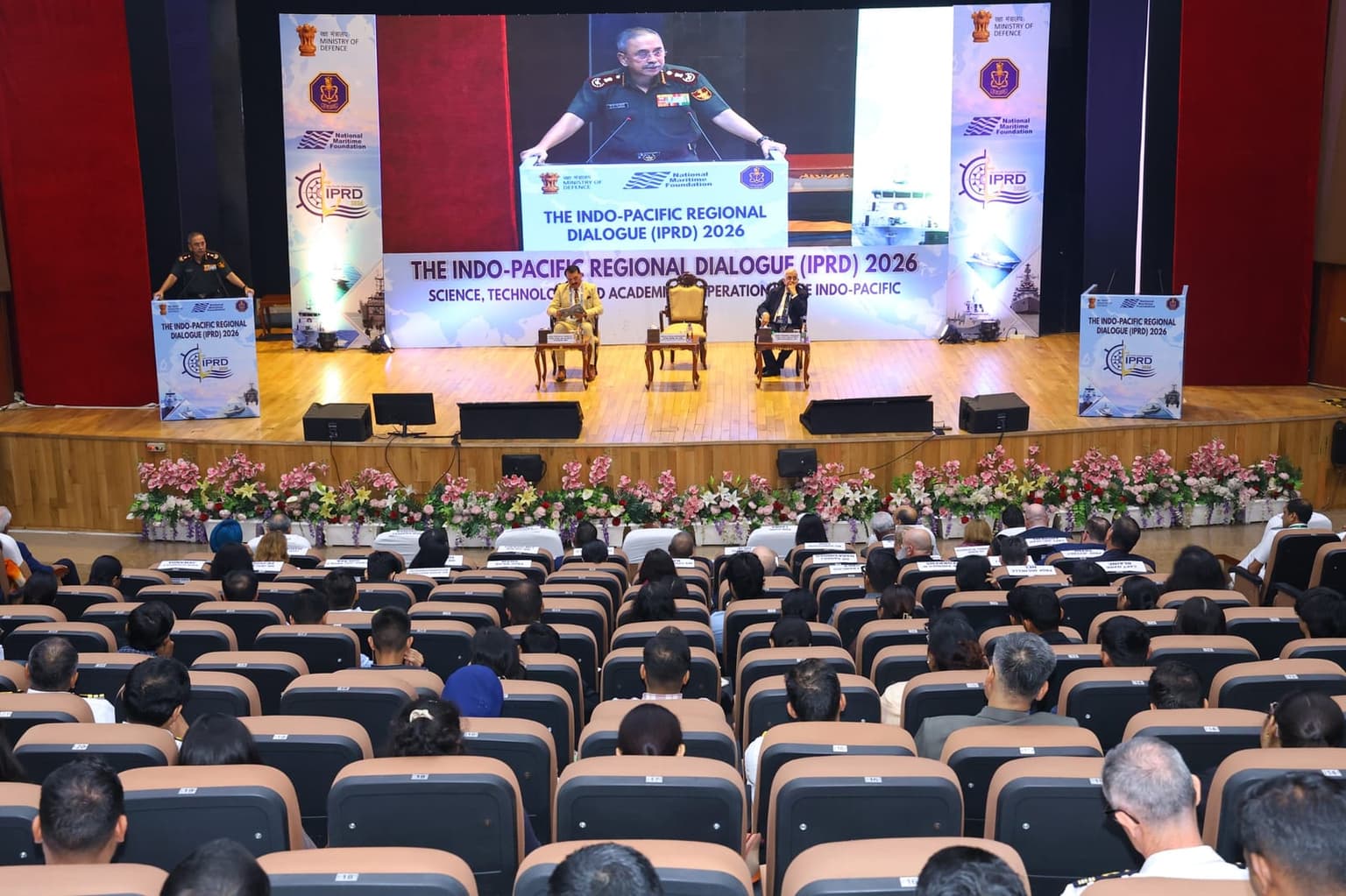
Indo-Pacific Regional Dialogue 2026 Concludes in New Delhi
The Indian Navy's three-day Indo-Pacific Regional Dialogue closed in New Delhi with over 40 experts from 20 countries debating maritime science and technology.
5 November 2026 · 2 min read
CDS Practice Quizzes
View all- Current Affairs Quiz
CDS Current Affairs Quiz: 5 November 2026
13 questions13 minutesStart Quiz - Current Affairs Quiz
CDS Current Affairs Quiz: 3 November 2026
24 questions24 minutesStart Quiz - Current Affairs Quiz
CDS Current Affairs Quiz: 1 November 2026
10 questions10 minutesStart Quiz - Current Affairs Quiz
CDS Weekly Current Affairs Quiz: 26 October – 1 November 2026
30 questions30 minutesStart Quiz - Current Affairs Quiz
CDS Current Affairs Quiz: October 2026
50 questions50 minutesStart Quiz - Current Affairs Quiz
CDS Current Affairs Quiz: 30 October 2026
15 questions15 minutesStart Quiz
CDS at a glance
These facts are as per the Combined Defence Services Examination (II), 2026 notice (Examination Notice No. 11/2026-CDS-II, published 20 May 2026), the time-table of 10 August 2026, the Commission's press note of 3 September 2026 and the question papers of 13 September 2026. The CDS (I) 2027 dates are from the UPSC Programme of Examinations 2027.
| Item | Detail |
|---|---|
| Conducting body | Union Public Service Commission (UPSC), under rules notified by the Ministry of Defence |
| Purpose | Admission to the Indian Military Academy (IMA), Dehradun; Indian Naval Academy (INA), Ezhimala; Air Force Academy (AFA), Hyderabad; and Officers' Training Academy (OTA), Chennai, for the SSC (Men) and SSC (Women) Non-Technical courses |
| Frequency | Twice a year: CDS (I) in April and CDS (II) in September (UPSC calendars for 2026 and 2027) |
| Vacancies (CDS (II) 2026) | 451: IMA 100, INA 26, AFA 32, OTA SSC Men 275, OTA SSC Women 18 |
| Stages | Written examination, SSB interview (intelligence and personality test), medical examination, final merit |
| Written examination | Objective papers on OMR sheets, one day in three sessions: English, General Knowledge and Elementary Mathematics, 100 marks and 2 hours each |
| OTA candidates | English and General Knowledge only (200 marks) |
| Questions | English 120, General Knowledge 120, Elementary Mathematics 100 (CDS (II) 2026 test booklets) |
| Negative marking | One-third of the marks of the question for each wrong answer; no penalty for a blank |
| SSB interview | 300 marks for IMA, INA and AFA; 200 marks for OTA |
| Eligibility | Graduates (subject conditions for INA and AFA), unmarried, aged 19–24 for IMA and INA, 20–24 for AFA and 19–25 for OTA |
| Application fee | ₹200; women, SC and ST candidates pay no fee |
| Official site | upsc.gov.in; applications at upsconline.nic.in |
Selection process
- Online application at upsconline.nic.in through the Universal Registration Number (URN), the Common Application Form and the exam-specific module. For CDS (II) 2026 the window ran from 20 May to 9 June 2026 (6:00 PM). An application cannot be withdrawn or corrected after submission.
- Service preferences are filled in the application. Men may list IMA, INA, AFA and OTA in order; a man competing for the SSC course alone marks OTA as his only choice, and in every other case OTA is treated as the last choice. Women choose OTA only. AFA must be the first choice, because its candidates take the Computer Pilot Selection System (CPSS) test and Air Force medicals.
- Written examination on one Sunday in three sessions. On 13 September 2026 English ran from 9:00 to 11:00 AM, General Knowledge from 12:30 to 2:30 PM and Elementary Mathematics from 4:00 to 6:00 PM. Entry closes 30 minutes before each session, face authentication is compulsory, answers are marked with a black ball pen, and calculators and scribes are not allowed.
- Representations on the questions and the provisional answer keys are taken online from the 3rd day after the exam to 6:00 PM of the 7th day.
- Written result. The Commission fixes the minimum qualifying marks at its discretion and may fix qualifying marks in any or all subjects. The CDS (II) 2026 written result has been declared: UPSC lists both the roll-number list and the list with names for this examination under What's New on upsc.gov.in. Candidates with the Army (IMA or OTA) as first choice must register on joinindianarmy.nic.in to receive the SSB call.
- SSB interview at a Services Selection Centre, in two stages. Stage I, on the day of reporting, has the Officer Intelligence Rating (OIR) tests and the Picture Perception and Description Test (PP&DT); only those who clear it stay on. Stage II runs over four days: Interview, Group Testing Officer tasks, Psychology tests and the Conference, assessed by the Interviewing Officer, the GTO and the Psychologist with equal weightage. A candidate is Recommended or Not Recommended. As per the notice, candidates who qualify for IMA, INA or AFA are called in February–March 2027 and OTA-only candidates in April–June 2027.
- Medical examination as per the Joint Order Manual of Medical Standards for Entry into Armed Forces (1st Edition). Permanent tattoos are allowed only on the inner forearm and the back of the hand.
- Final merit. A candidate must secure the minimum qualifying marks separately in the written examination and the SSB. Merit is the total of written and SSB marks, and separate lists are drawn for SSC (NT) Men and SSC (NT) Women. Ties are broken by the written total, then by General Knowledge marks, then by age. Success confers no right of admission; allotment follows merit, medical fitness and the vacancies.
Exam pattern
IMA, INA and AFA
| Paper | Code | Questions | Marks | Time |
|---|---|---|---|---|
| English | 11 | 120 | 100 | 2 hours |
| General Knowledge | 12 | 120 | 100 | 2 hours |
| Elementary Mathematics | 13 | 100 | 100 | 2 hours |
| Written total | – | 340 | 300 | One day |
| SSB interview | – | – | 300 | 5 days |
| Grand total | – | – | 600 | – |
OTA (SSC Men and SSC Women)
| Paper | Code | Questions | Marks | Time |
|---|---|---|---|---|
| English | 11 | 120 | 100 | 2 hours |
| General Knowledge | 12 | 120 | 100 | 2 hours |
| Written total | – | 240 | 200 | Two sessions |
| SSB interview | – | – | 200 | 5 days |
| Grand total | – | – | 400 | – |
All papers are objective with four options per question. The General Knowledge and Elementary Mathematics test booklets are bilingual in Hindi and English; the English paper is in English only. Elementary Mathematics is of Matriculation level; English and General Knowledge are of the level expected of a graduate of an Indian university. All items carry equal marks, so each General Knowledge question is worth about 0.83 mark and a wrong answer costs about 0.28. The question counts are from the CDS (II) 2026 test booklets; the notice gives marks and time only.
General Knowledge syllabus
The notice describes the General Knowledge paper (Code 12) in one paragraph: General Knowledge including knowledge of current events and of such matters of everyday observation and experience in their scientific aspects as may be expected of an educated person who has not made a special study of any scientific subject; the paper also includes questions on the History of India and Geography of a nature the candidate should be able to answer without special study.
The CDS (II) 2026 General Knowledge paper of 13 September 2026 shows what that means in practice. This is our reading of its 120 items, given as guidance and not an official break-up:
- Indian Polity, about 20 questions: writs, the NHRC, first-past-the-post and proportional representation, disqualification of legislators, the GST framework, delimitation, the executive power of the Union.
- Government schemes and policy, about 6: fisheries schemes, disaster management, India's climate commitments, ministry-wise programmes.
- Geography and environment, about 15: the atmosphere, earthquakes and tsunamis, the north-eastern states, Ramsar sites, mangroves, the Nanda Devi World Heritage site.
- Indian Economy, about 10: services-sector growth, fiscal deficit, the current account, Ayushman Bharat, labour force participation, energy imports.
- Physics about 10, Chemistry about 12, Biology about 15: school-level concepts such as lenses, magnetic fields, motion, moles and molarity, acids and bases, cooking soda, enzymes and human physiology.
- History of India, about 20: the Upanishads, the Shunga dynasty, Vijayanagara, temple architecture, the Sylhet referendum, the SNDP Yogam.
- Current events, about 10: the 2026 Padma awards, the 2026 International Booker Prize, NDMA exercises, DRDO's Technology Development Fund, the year's themes and observances.
- Computer basics, 2.
How GK24 maps to it: the daily current affairs cover the current-events and scheme questions; the GK notes cover Polity, History, Geography, Economy and General Science topic by topic; the quizzes and previous-year questions for CDS are tagged to the same topics, so a wrong answer leads to the note that covers it.
Eligibility and age limit
Nationality
A candidate must be a citizen of India, a subject of Nepal, or a person of Indian origin who has migrated from Pakistan, Burma, Sri Lanka, the East African countries of Kenya, Uganda, the United Republic of Tanzania, Zambia, Malawi, Zaire and Ethiopia, or Vietnam, with the intention of settling permanently in India. Subjects of Nepal and persons of Indian origin need a certificate of eligibility from the Government of India; Gorkha subjects of Nepal do not.
Age, sex and marital status (CDS (II) 2026)
| Academy | Age | Born between | Who may apply |
|---|---|---|---|
| IMA | 19–24 years | 1 July 2003 and 1 July 2008 | Unmarried men |
| INA | 19–24 years | 1 July 2003 and 1 July 2008 | Unmarried men |
| AFA | 20–24 years as on 1 July 2027 | 1 July 2003 and 1 July 2007 (holders of a valid DGCA Commercial Pilot Licence: 1 July 2001 and 1 July 2007, i.e. up to 26 years) | Men; candidates below 25 must be unmarried; married candidates aged 25 or more are eligible but get no married accommodation during training |
| OTA SSC (Men) | 19–25 years | 1 July 2002 and 1 July 2008 | Unmarried men |
| OTA SSC (Women) | 19–25 years | 1 July 2002 and 1 July 2008 | Unmarried women, issueless widows who have not remarried, issueless divorcees who have not remarried |
Male divorcees and widowers are not treated as unmarried and are not eligible. Marriage is not permitted during training; a candidate who marries after applying is not selected, and one who marries during training is discharged and must refund the expenditure on him or her. The date of birth in the Matriculation or Secondary School certificate is the only one accepted. The notice gives no category-wise relaxation in age; the only relaxation is for CPL holders applying for AFA.
Educational qualification
| Academy | Qualification |
|---|---|
| IMA and OTA | Degree of a recognised university or equivalent |
| INA | Degree in Engineering, or B.Sc. with Physics as a core or elective subject, with Physics and Mathematics at 10+2 |
| AFA | Degree of a recognised university with Physics and Mathematics at 10+2, or Bachelor of Engineering |
Final-year students may apply. Proof of passing must reach the respective headquarters by 1 July 2027 for IMA and INA, 13 May 2027 for AFA and 1 October 2027 for OTA, and a college bonafide certificate is needed at the SSB. Graduates with the Army, Navy or Air Force as first choice must show the degree or provisional certificate on the first day of the SSB. NCC 'C' certificate holders competing for the reserved vacancies in IMA, INA and AFA must have served at least three academic years in the Senior Division and not have been out of the NCC for more than 24 months on the last date of application. Candidates must meet the medical standards of Appendix III; on arrival at IMA and OTA, cadets are expected to run 2.4 km in 10 minutes 30 seconds (men) or 13 minutes (women), and do 40 (15) push-ups, 6 (2) pull-ups and 30 (25) sit-ups. Habitual spectacle wearers are not eligible for the Air Force.
Important dates
| Event | Date (CDS (II) 2026) |
|---|---|
| Notice published | 20 May 2026 |
| Online applications | 20 May to 9 June 2026 (6:00 PM) |
| Time-table released | 10 August 2026 |
| e-Admit Cards | 3 September 2026 (press note) |
| Written examination | 13 September 2026 (Sunday), three sessions |
| Question papers uploaded on upsc.gov.in | 14 September 2026 |
| Representations on answer keys | 3rd to 7th day after the exam |
| Written result | Declared; the roll-number list and the list with names are under What's New on upsc.gov.in |
| SSB interviews | February–March 2027 for IMA, INA and AFA; April–June 2027 for OTA only |
| Courses begin | July 2027 at IMA (163rd DE Course), INA and AFA (222 F(P) Course); October 2027 at OTA (126th SSC Men and SSC Women courses) |
| Next cycles (UPSC Programme of Examinations 2027, as on 20 May 2026) | Notice | Last date | Exam date |
|---|---|---|---|
| CDS (I) 2027 | 2 December 2026 | 22 December 2026 | 11 April 2027 (Sunday) |
| CDS (II) 2027 | 12 May 2027 | 1 June 2027 | 19 September 2027 (Sunday) |
The calendar says these dates are liable to alteration. The CDS (I) 2027 notice had not been published when this page was written (29 October 2026); its vacancies, age bands and dates will come from that notice.
How to prepare General Knowledge and current events for CDS
General Knowledge is a third of the written marks for IMA, INA and AFA and half for OTA, and it is the first tie-breaker after the written total. 120 questions in 120 minutes leave a minute per question, and a wrong answer costs a third of its marks, so knowing what to leave matters as much as knowing what to answer.
- Read daily current affairs. GK24 publishes daily current affairs for CDS in English and Hindi from official releases. Cover the 8 to 10 months before your exam date: awards, defence exercises and acquisitions, DRDO and ISRO, schemes, reports, sports, books and prizes.
- Build static GK topic by topic with the GK24 GK notes for CDS: Polity and Modern History first, then Geography, Economy, Ancient and Medieval History, and school-level Physics, Chemistry and Biology, which together are about a third of the paper.
- Solve previous-year questions. UPSC uploads each CDS paper the day after the exam; the CDS previous-year questions on GK24 carry the answer and an explanation and show how UPSC frames statement-based questions with "how many of the following" and "select the correct code".
- Take timed quizzes: 120 items in 120 minutes, mark only what you know, and track your accuracy by topic.
- Do not neglect the other papers: English carries 100 marks for everyone and Elementary Mathematics 100 for IMA, INA and AFA.
- Prepare for the SSB alongside: it carries as many marks as the written examination.
Training and pay
Figures are from Appendix IV of the CDS (II) 2026 notice.
| Academy | Training | Commission on passing out |
|---|---|---|
| IMA, Dehradun | About 18 months | Permanent Commission as Lieutenant |
| INA, Ezhimala | About 18 months (44-week Naval Orientation Course, then sea training) | Sub-Lieutenant |
| AFA, Hyderabad | About 74 weeks (Flying Branch) | Flying Officer |
| OTA, Chennai | About 49 weeks | Short Service Commission as Lieutenant, for 10 years extendable by 4; Permanent Commission may be considered in the 10th year |
Officer cadets and flight cadets receive a fixed stipend of ₹56,100 per month for the whole training period at IMA, INA, AFA and OTA, equal to the starting pay of Level 10. On commissioning, pay is fixed in the first cell of Level 10 and arrears of allowances for the training period are paid; training does not count as commissioned service. The Government bears the cost of training, boarding, uniforms and medical treatment. Cadets deposit ₹28,000 on arrival at OTA and ₹35,000 at INA for insurance and personal expenses. OTA cadets who pass out receive a Post Graduate Diploma in Defence Management and Strategic Studies from the University of Madras.
| Rank | Pay level | Pay (₹) |
|---|---|---|
| Lieutenant | 10 | 56,100–1,77,500 |
| Captain | 10B | 61,300–1,93,900 |
| Major | 11 | 69,400–2,07,200 |
| Lieutenant Colonel | 12A | 1,21,200–2,12,400 |
| Colonel | 13 | 1,30,600–2,15,900 |
| Brigadier | 13A | 1,39,600–2,17,600 |
| Major General | 14 | 1,44,200–2,18,200 |
Military Service Pay of ₹15,500 per month is paid from Lieutenant to Brigadier, with Dearness Allowance at civilian rates, a dress allowance of ₹20,000 a year, free rations, transport allowance of ₹7,200 plus DA in the higher TPTA cities (₹3,600 plus DA elsewhere), Children Education Allowance of ₹2,250 per month and risk and hardship allowance by area. Promotion is by time scale to Captain after 2 years, Major after 6, Lieutenant Colonel after 13 and Colonel (TS) after 26 years of reckonable commissioned service; the Air Force follows the same time scales to Group Captain. Equivalent ranks in the Navy and Air Force draw the same pay levels.
Frequently Asked Questions
Is there negative marking in the CDS exam?
Yes. As per the CDS (II) 2026 notice, one-third (0.33) of the marks assigned to a question is deducted for every wrong answer in all objective papers. Marking more than one response counts as a wrong answer even if one of them is right. A question left blank carries no penalty.
How many questions and marks does the CDS written exam have?
Three papers of 100 marks and 2 hours each for IMA, INA and AFA: English (120 questions), General Knowledge (120) and Elementary Mathematics (100), 300 marks in all, followed by a 300-mark SSB interview. OTA candidates write only English and General Knowledge (200 marks) and face a 200-mark SSB. The question counts are from the CDS (II) 2026 test booklets; the notice fixes the marks and time.
Can women apply for CDS?
Yes, for the Officers' Training Academy SSC (Women) Non-Technical course only; CDS (II) 2026 had 18 such vacancies. Unmarried women, issueless widows who have not remarried and issueless divorcees who have not remarried, aged 19 to 25 (born between 1 July 2002 and 1 July 2008 for CDS (II) 2026), with a degree of a recognised university, can apply. Women candidates pay no fee. Written results and merit lists for SSC (NT) Women are prepared separately.
What is the age limit for CDS?
It depends on the academy. For CDS (II) 2026: IMA and INA 19 to 24 years (born between 1 July 2003 and 1 July 2008), AFA 20 to 24 years as on 1 July 2027 (born between 1 July 2003 and 1 July 2007, up to 26 for Commercial Pilot Licence holders), and OTA 19 to 25 years for men and women (born between 1 July 2002 and 1 July 2008). Candidates must be unmarried, except married AFA candidates aged 25 or more. The notice gives no category-wise age relaxation.
Can a final-year student apply for CDS?
Yes. Candidates in the final year or semester of a degree course can apply, but they must carry a bonafide certificate from the college to the SSB and submit proof of passing the degree by 1 July 2027 for IMA and INA, 13 May 2027 for AFA and 1 October 2027 for OTA in the CDS (II) 2026 cycle. Candidature is cancelled if the proof does not reach in time, and no extension is given for late university results.
When is the next CDS exam?
CDS (II) 2026 was held on 13 September 2026. The UPSC Programme of Examinations 2027 (as on 20 May 2026) schedules CDS (I) 2027 on 11 April 2027 (Sunday), with the notice on 2 December 2026 and the last date for applications on 22 December 2026, and CDS (II) 2027 on 19 September 2027. The calendar says the dates are liable to alteration; the CDS (I) 2027 notice will confirm them.
What is the stipend during CDS training, and the pay after commissioning?
As per Appendix IV of the CDS (II) 2026 notice, officer cadets and flight cadets get a fixed stipend of ₹56,100 per month for the whole training period at IMA, INA, AFA and OTA. On commissioning as Lieutenant or equivalent, pay is fixed in Level 10 (₹56,100 to 1,77,500) plus Military Service Pay of ₹15,500 per month, Dearness Allowance and other allowances as given in the notice.