
UPSC NDA & NA 2026–27: Exam Pattern, Syllabus, Eligibility, Dates and Preparation
The National Defence Academy and Naval Academy Examination (NDA & NA) is held twice a year by the Union Public Service Commission to admit Class 12 students to the Army, Navy and Air Force wings of the National Defence Academy, Khadakwasla, and to the 10+2 Cadet Entry Scheme of the Indian Naval Academy, Ezhimala. Unmarried men and women can apply. Selection is a written examination of two objective papers followed by the SSB interview, and General Knowledge carries 400 of the 900 written marks as Part B of the General Ability Test. This page gives the pattern, the General Knowledge syllabus with its section weightage, eligibility, this cycle's dates, training and pay, all as per the NDA & NA (II) 2026 notice, with GK24's daily current affairs, GK notes, quizzes and previous-year questions for the exam.
Prepare for NDA
Latest NDA Current Affairs
View all- Defence
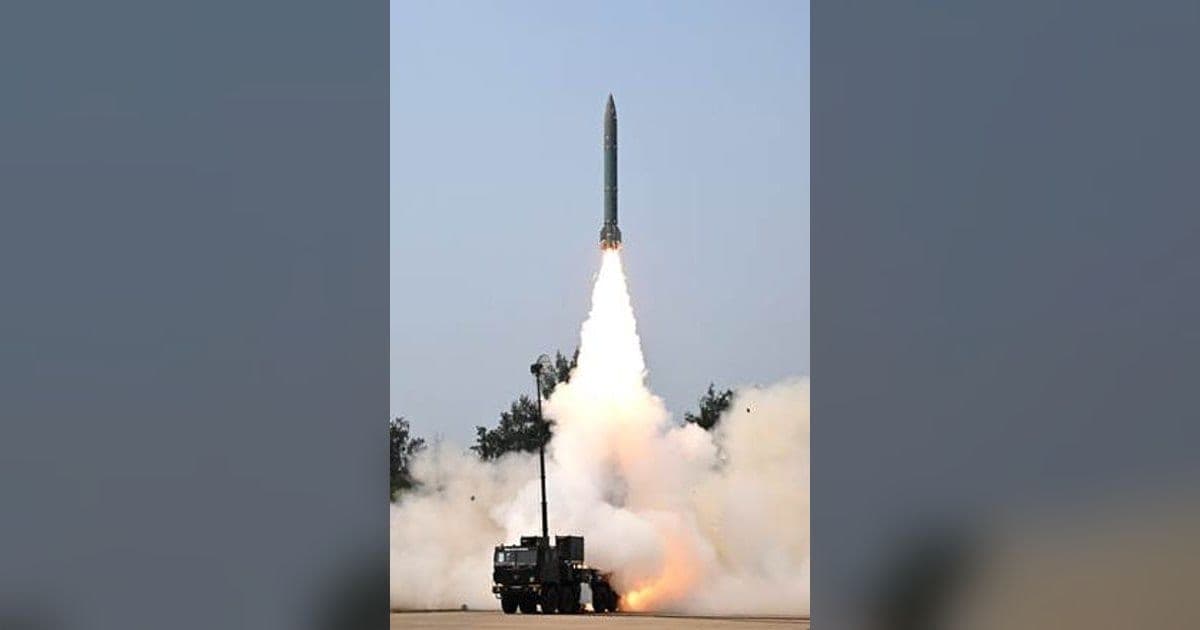
DRDO Flight-Tests Pralay Quasi-Ballistic Missile off Odisha
DRDO flight-tested the quasi-ballistic missile Pralay from Dr APJ Abdul Kalam Island off the Odisha coast on 5 November 2026, and every test objective was met.
5 November 2026 · 2 min read
- Science & Technology
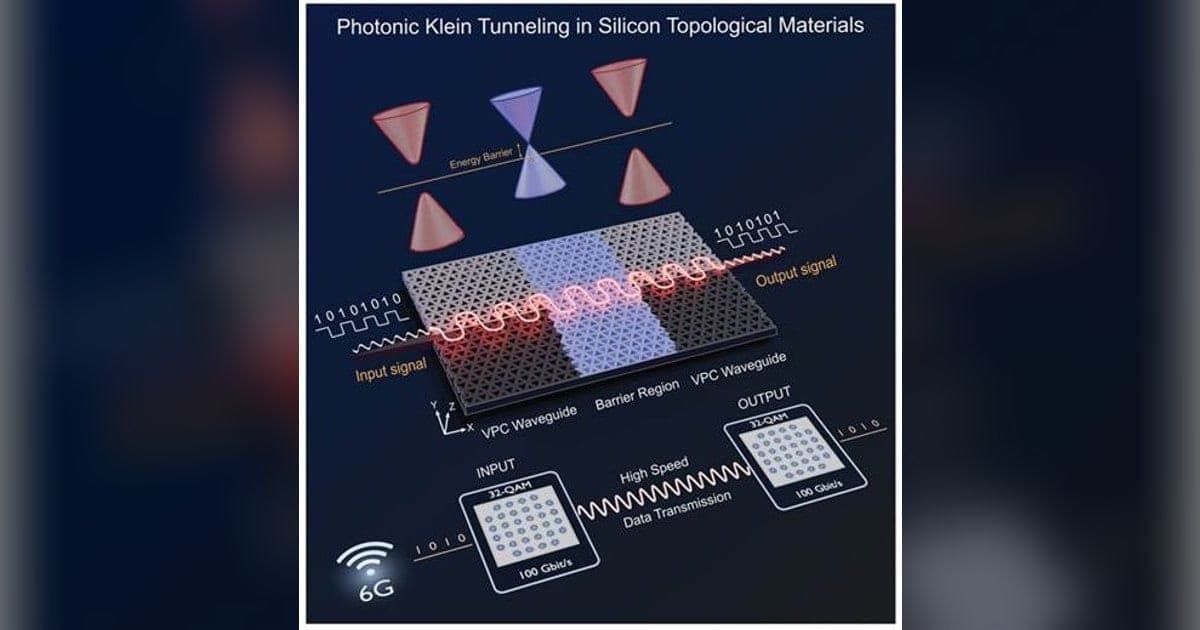
JNCASR Silicon Chip Carries Terahertz Data at 100 Gbit/s
4 November 2026 · 2 min read
NDA Practice Quizzes
View all- Current Affairs Quiz
NDA Current Affairs Quiz: 4 November 2026
16 questions16 minutesStart Quiz - Current Affairs Quiz
NDA Current Affairs Quiz: 3 November 2026
25 questions25 minutesStart Quiz - Current Affairs Quiz
NDA Current Affairs Quiz: 2 November 2026
14 questions14 minutesStart Quiz - Current Affairs Quiz
NDA Current Affairs Quiz: 1 November 2026
14 questions14 minutesStart Quiz - Current Affairs Quiz
NDA Weekly Current Affairs Quiz: 26 October – 1 November 2026
30 questions30 minutesStart Quiz - Current Affairs Quiz
NDA Current Affairs Quiz: October 2026
50 questions50 minutesStart Quiz
NDA & NA at a glance
These facts are as per the National Defence Academy and Naval Academy Examination (II), 2026 notice (Examination Notice No. 10/2026-NDA-II, published 20 May 2026), its time-table, the Commission's press note of 3 September 2026 and the question papers of 13 September 2026. The NDA & NA (I) 2027 dates are from the UPSC Programme of Examinations 2027.
| Item | Detail |
|---|---|
| Conducting body | Union Public Service Commission (UPSC), under rules notified by the Ministry of Defence |
| Courses ((II) 2026) | 158th Course of the National Defence Academy (Army, Navy and Air Force wings) and 120th Indian Naval Academy Course (10+2 Cadet Entry Scheme), both commencing 1 July 2027 |
| Frequency | Twice a year: NDA & NA (I) in April and NDA & NA (II) in September (UPSC calendar 2027) |
| Vacancies ((II) 2026) | 394: 370 for men and 24 for women |
| Stages | Written examination, SSB intelligence and personality test, medical examination, final merit |
| Written examination | Two objective papers on one day: Mathematics (300 marks) and General Ability Test (600 marks), 2½ hours each |
| Questions | Mathematics 120; General Ability Test 150 (NDA & NA (II) 2026 test booklets) |
| Negative marking | One-third of the marks of the question for each wrong answer; no penalty for a blank |
| SSB interview | 900 marks |
| Final merit | Written (900) plus SSB (900) marks, 1,800 in all |
| Eligibility | Unmarried men and women; Class 12 pass or appearing; Physics, Chemistry and Mathematics for the Air Force and Naval wings and the Naval Academy |
| Age ((II) 2026) | Born not earlier than 1 January 2008 and not later than 1 January 2011 |
| Application fee | ₹100; SC and ST candidates, women and specified wards of JCOs, NCOs and ORs pay no fee |
| Official site | upsc.gov.in; applications at upsconline.nic.in |
Selection process
- Online application at upsconline.nic.in through the Universal Registration Number (URN), the Common Application Form and the exam-specific module. For NDA & NA (II) 2026 the window ran from 20 May to 9 June 2026 (6:00 PM). The candidate lists the services he or she wants in order of preference from 1 to 4, and is considered only for those. An application cannot be withdrawn or corrected after submission.
- e-Admit Card on upsconline.nic.in on the last working day of the week before the exam. No paper admit card is sent.
- Written examination on one day: Mathematics from 10:00 AM to 12:30 PM and the General Ability Test from 2:00 PM to 4:30 PM (2026 time-table). Entry to the venue closes 30 minutes before each session, and every candidate goes through face authentication. The Commission fixes the minimum qualifying marks at its discretion.
- Representations on the questions and the provisional answer keys can be made online from the 3rd day after the exam until 6:00 PM on the 7th day.
- Written result. The (II) 2026 written result has been declared: UPSC lists both the roll-number list and the list with names for this examination under What's New on upsc.gov.in. Qualified candidates register on joinindianarmy.nic.in with the same e-mail ID they gave UPSC, and are allotted a Selection Centre and an SSB date there.
- SSB interview (Intelligence and Personality Test, 900 marks) at a Services Selection Board, Air Force Selection Board or Naval Selection Board. Stage I is the Officer Intelligence Rating (OIR) tests and the Picture Perception and Description Test (PP&DT). Only those who clear it go on to Stage II: the Interview, Group Testing Officer tasks, Psychology tests and the Conference, over four days. For (II) 2026 the notice expects SSBs from December 2026 to January 2027.
- Computerised Pilot Selection System (CPSS) for SSB-qualified candidates who opted for the Air Force and are willing. A candidate takes CPSS only once in life. One who fails it cannot apply again for the flying branch, but can be considered for Air Force Ground Duties and the other services he or she chose.
- Medical examination by a Board of Service Medical Officers for candidates recommended by the SSB. A candidate declared unfit is told how to seek an Appeal Medical Board, and after that a Review Medical Board.
- Final merit and joining. Qualified candidates are placed in one list on the total of written and SSB marks. Seats in each service are filled on merit-cum-preference, subject to eligibility and medical fitness. Men and women are selected separately against their own vacancies. A joining letter comes through the online profile, and a candidate who does not report within seven days of the reporting date without prior intimation can lose the seat.
A candidate must clear the minimum marks separately in the written examination and in the SSB's Officer Potentiality assessment. Marks are rounded to two decimals. A tie in the final marks goes first to the higher written total, then to the higher General Ability Test score, then to the older candidate. A candidate called to the SSB for the first time for a type of commission gets to-and-fro AC III-tier rail fare or bus fare.
Exam pattern
Written examination
| Paper | Code | Questions | Marks | Time | Marks per question | Deduction per wrong answer |
|---|---|---|---|---|---|---|
| Mathematics | 01 | 120 | 300 | 2½ hours | 2.5 | About 0.83 |
| General Ability Test | 02 | 150 | 600 | 2½ hours | 4 | About 1.33 |
| Written total | 270 | 900 | 5 hours | |||
| SSB Test/Interview | – | – | 900 | Stage I on the first day, Stage II over four days |
The notice gives the marks and the time. The question counts are printed on the NDA & NA (II) 2026 test booklets, which also say that every question in a paper carries equal marks. Each question has four options. One-third of the question's marks is deducted for a wrong answer, and marking more than one option counts as wrong. A blank costs nothing. Mathematics and Part B of the General Ability Test are printed in Hindi and English; Part A is in English only. Calculators and log tables are not allowed, and no scribe is allowed.
General Ability Test
| Part | Subject | Questions | Marks |
|---|---|---|---|
| Part A | English: grammar and usage, vocabulary, comprehension and cohesion in extended text | 50 | 200 |
| Part B | General Knowledge: Physics, Chemistry, General Science, History and Freedom Movement, Geography, Current Events | 100 | 400 |
With every question worth 4 marks, Part A works out to 50 questions and Part B to 100.
Part B (General Knowledge): section weightage
| Section | Subject | Weightage (notice) | About marks | About questions |
|---|---|---|---|---|
| A | Physics | 25% | 100 | 25 |
| B | Chemistry | 15% | 60 | 15 |
| C | General Science | 10% | 40 | 10 |
| D | History, Freedom Movement etc. | 20% | 80 | 20 |
| E | Geography | 20% | 80 | 20 |
| F | Current Events | 10% | 40 | 10 |
The notice calls these weightages approximate; the marks and questions here are worked out from them. Physics, Chemistry and General Science together carry about half of Part B.
General Knowledge syllabus
The notice says Part B broadly covers Physics, Chemistry, General Science, Social Studies, Geography and Current Events. Its topic list shows the scope and is not exhaustive: questions on similar topics that it does not name may also be asked.
| Section | What the notice lists | GK24 notes that cover it |
|---|---|---|
| A. Physics | Properties and states of matter, mass, weight, density, Archimedes' principle, pressure and the barometer; motion, Newton's laws, force and momentum, gravitation, work, power and energy; heat, temperature and latent heat; sound; light, mirrors, lenses and the human eye; magnets; static and current electricity, Ohm's law, X-rays; the working of the pendulum, pulleys, siphon, levers, pumps, hydrometer, pressure cooker, thermos flask, periscope, telescope, microscope, mariner's compass, lightning conductor and safety fuse | General Science: units and measurements, motion and laws of motion, work, energy and power, gravitation and pressure, heat, light, sound, electricity and magnetism, scientific instruments |
| B. Chemistry | Physical and chemical changes; elements, mixtures and compounds, symbols, formulae and simple equations; air and water; hydrogen, oxygen, nitrogen and carbon dioxide; oxidation and reduction; acids, bases and salts; forms of carbon; fertilizers; materials used in soap, glass, ink, paper, cement, paints, safety matches and gunpowder; structure of the atom, atomic and molecular weights, valency | General Science: atomic structure and periodic table, chemical bonding and reactions, acids, bases and salts, metals and non-metals, carbon and its compounds, everyday chemistry |
| C. General Science | Living and non-living; cells, protoplasm and tissues; growth and reproduction in plants and animals; the human body; common epidemics; food and balanced diet; the solar system, meteors, comets and eclipses; achievements of eminent scientists | General Science: cell and tissues, human body systems, nutrition and diseases, plant biology; Geography: the solar system and the Earth |
| D. History, Freedom Movement etc. | A broad survey of Indian history with emphasis on culture and civilisation; the freedom movement; the Indian Constitution and administration; Five Year Plans; Panchayati Raj, co-operatives and community development; Bhoodan, Sarvodaya, national integration, the welfare state and Gandhi's teachings; forces shaping the modern world (Renaissance, exploration, the American War of Independence, the French, Industrial and Russian Revolutions), the United Nations, Panchsheel, democracy, socialism and communism, and India's role in the world | Indian History (ancient times to 1947), Indian Polity, Indian Economy (planning in India and NITI Aayog), Art and Culture |
| E. Geography | The Earth, latitudes and longitudes, time and the International Date Line; the Earth's movements; rocks, weathering, earthquakes and volcanoes; ocean currents and tides; the atmosphere, winds, cyclones, humidity and precipitation, climate types and natural regions; India's climate, vegetation, minerals and power, agriculture and industry; sea ports and sea, land and air routes; India's main imports and exports | Geography: from latitudes, longitudes and time to transport, railways and ports |
| F. Current Events | Important recent events in India and the world; prominent Indian and international personalities, including those connected with cultural activities and sports | GK24 daily current affairs, Sports GK, Awards and Honours |
Guidance, not from the notice: Section D goes beyond Indian history. It asks elementary Polity, planning and rural development, Gandhian ideas and world history. GK24's GK notes have no separate world-history subject, so read the Renaissance and the four revolutions from your school history textbooks. The Physics questions of the 2026 General Ability Test included numericals on refraction, electrical resistance, circular motion and latent heat, so practise the formulas along with the facts.
Eligibility and age limit
All conditions below are for NDA & NA (II) 2026. The (I) 2027 notice will set its own age band.
Nationality
A candidate must be a citizen of India, a subject of Nepal, or a person of Indian origin who has migrated from Pakistan, Burma, Sri Lanka, Kenya, Uganda, Tanzania, Zambia, Malawi, Zaire, Ethiopia or Vietnam to settle permanently in India. Subjects of Nepal and persons of Indian origin need a certificate of eligibility from the Government of India; Gorkha subjects of Nepal do not.
Age, sex and marital status
Only unmarried men and women born not earlier than 1 January 2008 and not later than 1 January 2011 were eligible for the (II) 2026 exam. The date of birth is taken only from the Matriculation or Secondary School certificate, or an equivalent certificate, and cannot be changed later. A candidate must not marry until the full training is over. One who marries after applying is not selected, and a cadet who marries during training is discharged and must refund the cost of training.
Educational qualification
| Wing | Qualification |
|---|---|
| Army wing of NDA | Class 12 pass of the 10+2 pattern, or an equivalent examination of a State Education Board or a University |
| Air Force and Naval wings of NDA; 10+2 Cadet Entry Scheme of the Indian Naval Academy | Class 12 pass with Physics, Chemistry and Mathematics of the 10+2 pattern, or equivalent |
Students appearing in Class 12 can apply. For the (II) 2026 cycle they must send proof of passing by 10 June 2027, and the date is not extended. Students of Class 11 are not eligible. A candidate who failed CPSS or the Pilot Aptitude Battery Test earlier can still be considered for Air Force Ground Duty branches. A candidate who resigned or was withdrawn on disciplinary grounds from an armed forces training academy, or who was removed from NDA or the Naval Academy for lack of officer-like qualities, is not admitted.
Physical standards
Medical standards follow the Joint Order Manual of Medical Standards for Entry into Armed Forces (1st Edition), available on joinindianarmy.nic.in. The notice advises candidates to get minor problems such as ear wax, a deviated nasal septum, tonsillitis or being over- or underweight treated before the SSB. Permanent tattoos are allowed only on the inner forearm and the back of the hand.
Application fee
The fee is ₹100, paid online by net banking, Visa, MasterCard or RuPay credit or debit card, or UPI. SC and ST candidates and women pay no fee. Wards of serving or former JCOs, NCOs and ORs of the Army, and of equivalent ranks of the Navy and Air Force, are also exempt if they study in a Military School or a Sainik School run by the Sainik Schools Society. OBC and EWS candidates pay the full fee. A fee once paid is not refunded.
Important dates
| Event | Date |
|---|---|
| NDA & NA (II) 2026 notice | 20 May 2026 |
| Online applications | 20 May to 9 June 2026 (6:00 PM) |
| Written examination | 13 September 2026 (Sunday), held |
| Written result | Declared; the roll-number list and the list with names are under What's New on upsc.gov.in |
| SSB interviews | Likely December 2026 to January 2027 (as per the notice) |
| Proof of passing Class 12 | By 10 June 2027 |
| Course starts | 1 July 2027 (NDA 158th Course, INA 120th Course) |
| NDA & NA (I) 2027 notice | 2 December 2026 (UPSC calendar) |
| Last date to apply, (I) 2027 | 22 December 2026 |
| NDA & NA (I) 2027 exam | 11 April 2027 (Sunday) |
| NDA & NA (II) 2027 exam | 19 September 2027 (notice 12 May 2027, last date 1 June 2027) |
The (II) 2026 exam was held on 13 September 2026 in two sessions, and UPSC has published both question papers on its website. The next exam is NDA & NA (I) 2027 on 11 April 2027. Its notice is not out yet: the UPSC calendar of 20 May 2026 lists it for 2 December 2026 and says calendar dates can change. The (I) 2027 age band, vacancies and course numbers will be in that notice.
How to prepare General Knowledge and current events for NDA
This plan is GK24's guidance, not part of the notice. Part B carries 400 marks, more than the whole Mathematics paper, and half of it is science.
- Start with Physics. Section A carries about 100 marks. Read the GK24 General Science notes on motion, work and energy, gravitation and pressure, heat, light, sound and electricity, and solve the numericals in each.
- Then Chemistry and Biology. Sections B and C carry about 100 marks together. Class 9 and 10 science covers most of their topics; revise them with the GK24 notes on atoms, acids and salts, carbon, cells, the human body, nutrition and diseases.
- History and Polity together. Section D mixes Indian history, the freedom movement, the Constitution, planning and world history. Read GK24's Indian History and Indian Polity notes topic by topic.
- Geography with a map. Section E carries about 80 marks. Read the Geography notes and mark rivers, ports, minerals and crop regions on a blank map of India.
- Current affairs daily. Section F carries about 40 marks. Read GK24's daily current affairs, written from official releases in English and Hindi, and cover at least the 6 to 8 months before your exam. Note defence exercises, appointments, sports winners and awards separately.
- Test yourself. Solve the NDA previous-year questions on GK24 to see which topics return, and take the daily, weekly and monthly current-affairs quizzes and the topic quizzes. Skip a question you cannot narrow down: a wrong answer in the General Ability Test costs about 1.33 marks.
Do not neglect Part A. English carries 200 marks and is set only in English, so read a newspaper editorial every day for vocabulary and comprehension.
Training and pay
Training
- National Defence Academy, Khadakwasla, Pune: three years of academic and physical training for cadets of all three services. The first two and a half years are common to all cadets.
- Degree: Jawaharlal Nehru University awards B.Sc., B.Sc. (Computer) or B.A. to Army cadets, B.Tech to Naval cadets, and B.Tech, B.Sc. or B.Sc. (Computer) to Air Force cadets. The B.Tech is awarded after the later pre-commissioning training.
- Army cadets go to the Indian Military Academy, Dehradun, for one year and are granted Permanent Commission as Lieutenant.
- Naval cadets go to the Indian Naval Academy, Ezhimala, for one year and become Sub-Lieutenants.
- Air Force flying cadets train at the Air Force Academy, Hyderabad, for one and a half years; after one year of basic flying training they get Permanent Commission (on probation) as Flying Officer. Ground Duty (Non-Tech) cadets also go to the Air Force Academy, and Ground Duty (Tech) cadets to the Air Force Technical College, Bengaluru.
- Naval Academy (10+2 Cadet Entry Scheme) cadets train for four years at the Indian Naval Academy, Ezhimala, and get a B.Tech from JNU.
Cost and stipend during training
At NDA the Government bears the cost of training, accommodation, books, uniforms, boarding and medical treatment. Parents meet pocket and private expenses, which the notice puts at normally not more than ₹3,000 a month. Financial assistance of ₹2,500 a month can be granted if the parents' income is below ₹45,000 a month. On arrival, a cadet deposits ₹41,495 with the Commandant: five months' pocket allowance at ₹4,000, ₹7,200 for the Army Group Insurance Fund and ₹14,295 for first-semester incidentals. The cost of clothing and equipment is added in the joining instructions. The notice gives a fixed stipend of ₹56,100 a month, the starting pay of Level 10, to cadets during training in the service academies, which it describes as the training period at IMA. Several states give their own scholarships or one-time grants to NDA cadets, and the notice lists them.
Pay after commission
On commissioning, pay is fixed in the first cell of Level 10, and the training period does not count as commissioned service. Officers from Lieutenant to Brigadier also get Military Service Pay of ₹15,500 a month, plus dearness allowance and other allowances by posting.
| Army | Navy | Air Force | Pay level (₹) | Commissioned service for substantive promotion |
|---|---|---|---|---|
| Lieutenant | Sub Lieutenant | Flying Officer | Level 10 (56,100–1,77,500) | On commission |
| Captain | Lieutenant | Flight Lieutenant | Level 10B (61,300–1,93,900) | 2 years |
| Major | Lieutenant Commander | Squadron Leader | Level 11 (69,400–2,07,200) | 6 years |
| Lieutenant Colonel | Commander | Wing Commander | Level 12A (1,21,200–2,12,400) | 13 years |
| Colonel | Captain | Group Captain | Level 13 (1,30,600–2,15,900) | On selection, or 26 years (time scale) |
Higher ranks go up to Level 18 (₹2,50,000 fixed) for the Chief of the Army Staff. All figures are from the NDA & NA (II) 2026 notice.
Frequently Asked Questions
Is there negative marking in the NDA exam?
Yes. As per the NDA & NA (II) 2026 notice, one-third of the question's marks is deducted for each wrong answer: about 0.83 mark in Mathematics, where a question carries 2.5 marks, and about 1.33 marks in the General Ability Test, where a question carries 4 marks. Marking more than one option counts as a wrong answer. A question left blank carries no penalty.
How many questions and marks does the NDA written exam have?
Two objective papers of 2½ hours each on one day. Mathematics has 120 questions for 300 marks. The General Ability Test has 150 questions for 600 marks: Part A English (200 marks) and Part B General Knowledge (400 marks). The written total is 900, and the SSB interview carries another 900, so the final merit is out of 1,800.
Can girls apply for NDA?
Yes. Unmarried women are eligible on the same terms as men. In NDA & NA (II) 2026, 24 of the 394 vacancies were for women: 10 in the Army, 5 in the Navy, 6 in the Air Force (2 each in Flying, Ground Duties (Tech) and Ground Duties (Non-Tech)) and 3 in the Naval Academy. Written results and final merit lists for men and women are prepared separately.
Are Physics and Mathematics in Class 12 compulsory for NDA?
Only for the Air Force and Naval wings of NDA and the 10+2 Cadet Entry Scheme of the Indian Naval Academy, which need Class 12 with Physics, Chemistry and Mathematics. For the Army wing, Class 12 in any stream is enough. Students appearing in Class 12 can apply and must show proof of passing by the date in the notice (10 June 2027 for the (II) 2026 cycle).
What is the age limit for NDA?
For NDA & NA (II) 2026, only unmarried candidates born not earlier than 1 January 2008 and not later than 1 January 2011 were eligible. The notice gives no category-wise age relaxation. The age band moves with each cycle, and the NDA & NA (I) 2027 notice will give its own dates.
When is the next NDA exam?
NDA & NA (I) 2027 is scheduled for 11 April 2027 (Sunday). As per the UPSC calendar of 20 May 2026, its notice is due on 2 December 2026 and applications close on 22 December 2026; UPSC says these dates can change. NDA & NA (II) 2027 is scheduled for 19 September 2027.
What is the weightage of General Knowledge sections in NDA?
General Knowledge is Part B of the General Ability Test, 400 marks. The notice gives approximate weightages: Physics 25%, Chemistry 15%, General Science 10%, History and Freedom Movement 20%, Geography 20% and Current Events 10%. That is about 100, 60, 40, 80, 80 and 40 marks.