
TDB Backs Project VeerAI With Rs 130 Crore for AI Vision Chip
The Technology Development Board signed an agreement with BigEndian Semiconductors for Rs 130 crore of RDI Fund support to build an indigenous AI Vision SoC.
Why in News
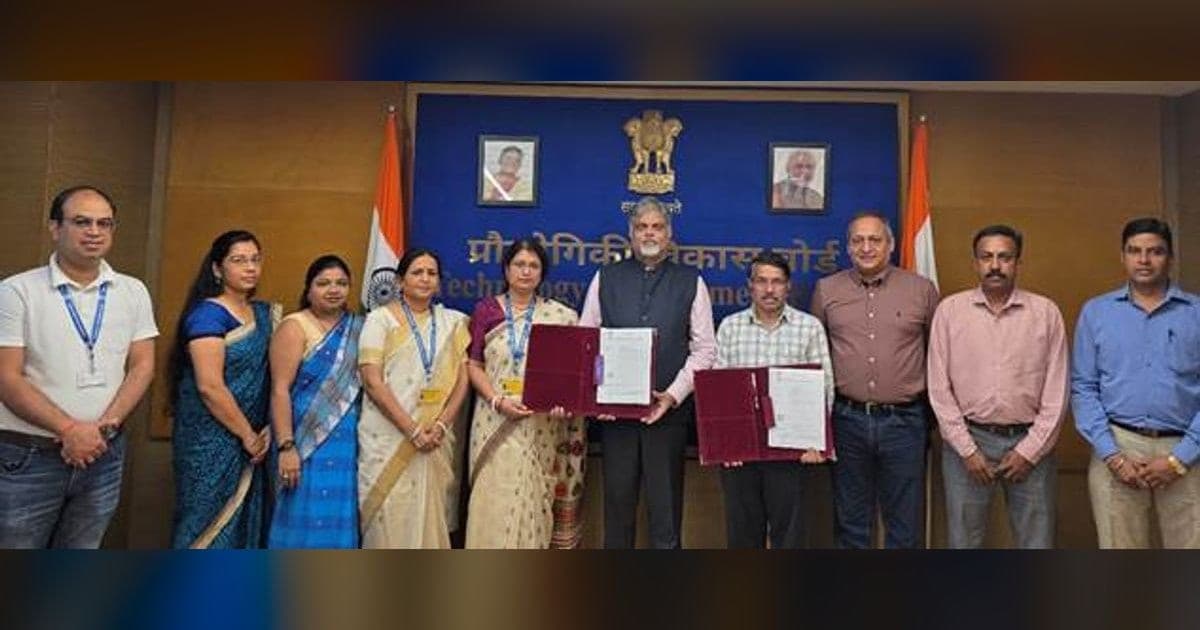
On 5 October 2026 the Technology Development Board of the Department of Science and Technology signed an agreement with BigEndian Semiconductors, Bengaluru, for Rs 130 crore of RDI Fund support to Project VeerAI, an indigenous AI Vision System-on-Chip for CCTV and surveillance.
India's push to design its own chips for critical uses gained a fresh project on 5 October 2026, when the Technology Development Board (TDB), which works under the Department of Science and Technology, signed an agreement with BigEndian Semiconductors of Bengaluru, Karnataka. The board promised the company Rs 130 crore out of the Research Development and Innovation (RDI) Fund.
What Project VeerAI will build
The venture is called Project VeerAI. Its whole cost comes to Rs 260 crore, so the board's money covers half the bill. The aim is a camera-centred AI Vision System-on-Chip: one piece of silicon that does the thinking for a camera itself, instead of sending every picture away to be read somewhere else. The chip is to rest on a sovereign technology platform, meaning the design and its ownership both stay at home.
The board's help will not arrive as a grant. It is being routed through Optional Convertible Debt, a loan the board may later turn into a shareholding.
From TRL-5 to TRL-9
The money is meant to carry the design across the gap where many Indian hardware ideas stall. The technology today stands at Technology Readiness Level 5, and the project must lift it to Technology Readiness Level 9, the stage at which a product has proved itself in real use. BigEndian will spend the support on further development, validation, integration, testing and scale-up.
Where the chip will be used
Surveillance is the first market, above all CCTV systems in India and the Global South. Such cameras now sit inside critical infrastructure, so a chip designed at home is meant to cut the country's reliance on externally built semiconductor and technology supply chains, while handling data security, privacy, device-level intelligence and connectivity on the chip itself. A roadmap carries the platform later into defence, automotive, industrial and medical uses, widening the market for home-grown AI-enabled chips.
Why a chip built for one job
The programme deliberately prefers application-specific chips to general-purpose processors, on the reasoning that a narrow design reaches buyers faster and answers one industry's needs more exactly. It also hands India's large pool of VLSI design engineers a product of their own to work on, turning design skill into a scalable platform. Rajesh Kumar Pathak, Secretary of the TDB, called semiconductors the foundation of almost every emerging technology, and said the RDI Fund exists to sustain technologies that need heavy investment to travel from advanced development to commercial deployment.
Important Facts
| Project | Project VeerAI |
|---|---|
| Support | Rs 130 crore from the Research Development and Innovation (RDI) Fund |
| Total project cost | Rs 260 crore |
| Funding body | Technology Development Board (TDB), Department of Science and Technology |
| Company | BigEndian Semiconductors, Bengaluru, Karnataka |
| Instrument | Optional Convertible Debt (OCD) |
| Technology jump | Technology Readiness Level 5 to Technology Readiness Level 9 |
| Product | Camera-focused AI Vision System-on-Chip (SoC) |
| First use | CCTV and surveillance in India and the Global South |
| TDB Secretary | Rajesh Kumar Pathak |
| Date | 5 October 2026 |
Exam Point of View
Remember the funder (TDB, under DST), the company (BigEndian Semiconductors, Bengaluru, Karnataka), the project name (VeerAI), the support (Rs 130 crore from the RDI Fund), the total cost (Rs 260 crore), the instrument (Optional Convertible Debt), the technology jump (TRL-5 to TRL-9), the product (a camera-focused AI Vision SoC for CCTV) and the TDB Secretary, Rajesh Kumar Pathak.
Practice Questions
How much support has the Technology Development Board sanctioned for Project VeerAI from the RDI Fund?
- A.Rs 100 crore
- B.Rs 130 crore
- C.Rs 260 crore
- D.Rs 500 crore
Show answer
Correct answer: B. Rs 130 crore
Explanation
The correct answer is Rs 130 crore. The Technology Development Board, which works under the Department of Science and Technology, agreed to give BigEndian Semiconductors of Bengaluru exactly this amount out of the Research Development and Innovation Fund, and the money is being routed through Optional Convertible Debt rather than as an outright grant. Option C is the trap most students fall into, because Rs 260 crore is the total cost of Project VeerAI, not the board's share; the board is paying half the bill, so the two figures must be kept apart in memory. Options A and D are round numbers that look plausible for a chip programme but match nothing in the agreement, neither the board's share nor the project's cost. A quick way to hold this is to pair the two numbers together: the whole project costs Rs 260 crore, and the Technology Development Board carries Rs 130 crore of it.
What is Project VeerAI developing?
- A.A memory chip for data centres
- B.A camera-focused AI Vision System-on-Chip
- C.A general-purpose mobile processor
- D.A quantum computing processor
Show answer
Correct answer: B. A camera-focused AI Vision System-on-Chip
Explanation
The correct answer is a camera-focused AI Vision System-on-Chip. Project VeerAI is building a single piece of silicon that lets a camera do its own thinking, combining artificial intelligence processing with security, privacy and connectivity features on a sovereign technology platform. Its first market is CCTV and surveillance in India and the Global South, with defence, automotive, industrial and medical uses planned afterwards. Option C is wrong, and is worth noting carefully, because the programme deliberately chose an application-specific chip over a general-purpose processor: a narrow design reaches buyers faster and fits one industry's needs more exactly. Option A is wrong because nothing in the project concerns memory or data centre storage. Option D is wrong because quantum computing is a separate field altogether and forms no part of this agreement. The phrase to remember is AI Vision SoC, built for cameras.
Project VeerAI aims to take its technology from Technology Readiness Level 5 to which level?
- A.TRL-6
- B.TRL-7
- C.TRL-8
- D.TRL-9
Show answer
Correct answer: D. TRL-9
Explanation
The correct answer is TRL-9. The agreement states that the project must lift the technology from Technology Readiness Level 5, where it stands now, to Technology Readiness Level 9, the stage at which a product has proved itself in actual use rather than in a laboratory. BigEndian Semiconductors will spend the board's money on further development, validation, integration, testing and scale-up precisely in order to make that climb. Options A, B and C each name an intermediate rung the technology will pass through on the way, but none of them is the destination written into the agreement, so each is incomplete rather than merely wrong. The logic behind the target is worth remembering: the Research Development and Innovation Fund is meant for technologies that need heavy investment to travel the last distance from advanced development to commercial deployment, which is exactly the stretch between TRL-5 and TRL-9.
Under which ministry or department does the Technology Development Board function?
- A.Ministry of Electronics and Information Technology
- B.Department of Science and Technology
- C.Ministry of Heavy Industries
- D.Department of Telecommunications
Show answer
Correct answer: B. Department of Science and Technology
Explanation
The correct answer is the Department of Science and Technology. The Technology Development Board, the body that signed the agreement with BigEndian Semiconductors and that administers the Research Development and Innovation Fund, works under the Department of Science and Technology, Government of India. Its Secretary is Rajesh Kumar Pathak, who described semiconductors as the foundation of almost every emerging technology. Option A is the distractor to watch, since the Ministry of Electronics and Information Technology also runs chip-related schemes, but it is not the parent of the Technology Development Board. Option C is wrong because the Ministry of Heavy Industries handles capital goods and automobile manufacturing policy, not research funding of this kind. Option D is wrong because the Department of Telecommunications deals with telecom networks and spectrum. For the exam, link three names together: TDB, the RDI Fund and the Department of Science and Technology.
Frequently Asked Questions
What is Project VeerAI?
Project VeerAI is an Indian semiconductor project to develop a camera-focused AI Vision System-on-Chip on a sovereign technology platform. Its total cost is Rs 260 crore, and the Technology Development Board is supporting it with Rs 130 crore from the RDI Fund.
How much support has the Technology Development Board given BigEndian Semiconductors?
Rs 130 crore, extended through Optional Convertible Debt from the Research Development and Innovation (RDI) Fund. BigEndian Semiconductors is based in Bengaluru, Karnataka.
Which Technology Readiness Levels does Project VeerAI span?
The project must carry the technology from Technology Readiness Level 5 to Technology Readiness Level 9, through further development, validation, integration, testing and scale-up.
Where will the AI Vision SoC be used first?
In CCTV and surveillance systems in India and the Global South. The roadmap later extends the platform to defence, automotive, industrial and medical applications.
Sources
- https://www.pib.gov.in/PressReleasePage.aspx?PRID=2319038 (opens in a new tab) — Press Information Bureau
Current Affairs 5 October 2026
- UCIL Marks Diamond Jubilee Year of Uranium MiningScience & Technology
- India, Switzerland Sign Mobility and Infrastructure AgreementsInternational
- Infrastructure Push Cuts Travel Time, 549 Trains Speeded UpNational
- Coal India Offtake Reaches 384.2 MT in First Half of 2026-27Economy
- Sanchar Saathi Portal Crosses 30 Crore Visits Against Telecom FraudScience & Technology
- Gadkari Opens Chintan Shivir 2026 on Highway InfrastructureSummits & Conferences
- DST Marks Swachhata Hi Sewa 2026, Felicitates 110 Safai MitrasGovernment Schemes
- Kuno Cheetah KJP21 Delivers Five Cubs, India Tally Reaches 60Environment
Related Current Affairs
- Science & Technology
IMC 2026 Theme Scale Without Boundaries, 10th Edition at Yashobhoomi
5 October 2026 · 2 min read
- Science & Technology
ITRA Study: Ayurveda with Yoga Cuts Bedwetting by 70 Per Cent
5 October 2026 · 2 min read
- Science & Technology
Sanchar Saathi Portal Crosses 30 Crore Visits Against Telecom Fraud
5 October 2026 · 2 min read
- Science & Technology
National Supercomputing Mission Reaches 40 Systems, 68 PF
4 October 2026 · 2 min read
- Science & Technology
India Demonstrates First 5.56 km Free-Space Quantum Key Link
3 October 2026 · 2 min read

Related GK
- Science Policy and Research Funding in India: Exam Notes
6 October 2026 · Science & Technology
- Goa GK: Liberation, Statehood, Geography and Facts
6 October 2026 · Indian States & UTs
- Statues, Towers and Landmarks of India for Exams
6 October 2026 · Static GK
Take the Quiz
- Current Affairs Quiz
State Exams Current Affairs Quiz: 5 October 2026
25 questions25 minutesStart Quiz