
India Showcases UHC Gains at UNGA81, Co-launches OneSCD
At UNGA81 India cited over 1.8 lakh Ayushman Arogya Mandirs, 900 million health IDs and 497 million e-Sanjeevani teleconsultations, and co-launched OneSCD.
Why in News
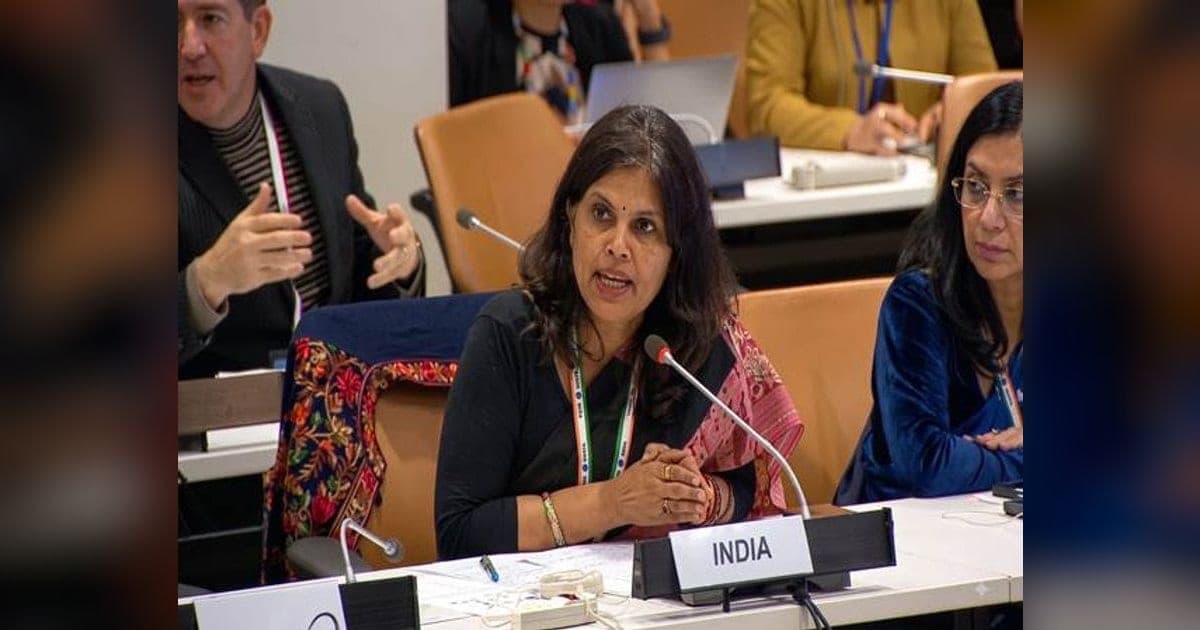
In a release of 24 September 2026, India presented its Universal Health Coverage record at the Seventh Ministerial Meeting of the Group of Friends of UHC on the sidelines of UNGA81 and co-hosted the launch of the OneSCD global partnership on sickle cell disease.
India set out its record on health at two meetings held alongside the 81st session of the United Nations General Assembly (UNGA81) in New York, in a release issued on 24 September 2026 by the Ministry of Health and Family Welfare. Union Health Secretary Punya Salila Srivastava spoke at both.
Universal Health Coverage
The first was the Seventh Annual Ministerial Meeting of the Group of Friends of Universal Health Coverage and Global Health. There the Health Secretary described a chain of care that runs from the primary level up to tertiary hospitals and is meant to keep a patient from being ruined by the cost of treatment. The numbers she placed before the meeting are the ones to carry into an examination hall.
| Ayushman Arogya Mandirs | over 1.8 lakh |
| Citizens with a unique health identity | over 900 million |
| Teleconsultations on e-Sanjeevani | over 497 million |
She named Ayushman Bharat Pradhan Mantri Jan Arogya Yojana, the publicly funded health assurance scheme, as the shield for poorer households, and added the Free Drugs and Diagnostics Service Initiative and the Prime Minister's National Dialysis Programme. On the digital side she pointed to ABHA-linked records and registries of facilities and professionals, and to teleradiology, artificial-intelligence-assisted X-rays and Mobile Medical Units.
Hepatitis elimination by 2030
At a side event on stronger global action against hepatitis, she restated the goal of ending Hepatitis B and C as public health threats by 2030. Screening now runs from nearly 1.80 lakh primary facilities up to tertiary hospitals under the National Health Mission, treatment has spread to 1,039 centres, and close to 225 million people have been screened since the National Viral Hepatitis Control Programme began in 2018. Mother-to-child transmission is being tackled through the maternal and child health framework.
OneSCD and the 2047 goal
India co-hosted the launch of OneSCD, a global partnership on sickle cell care, with the Government of Nigeria, WHO, UNICEF, Africa CDC, the World Coalition on Sickle Cell Disease and St. Jude Children's Research Hospital. India's own National Sickle Cell Anaemia Elimination Mission, begun in 2023, aims to end the disease as a public health problem by 2047. Under it more than 7.29 crore people have been screened, over 20 lakh carriers found, 2.5 lakh people diagnosed and more than 4.93 crore sickle cell cards handed out, alongside work on point-of-care testing, hydroxyurea therapy and an indigenous gene-editing treatment.
Important Facts
| Occasion | Side events of the 81st United Nations General Assembly (UNGA81), New York |
|---|---|
| India represented by | Union Health Secretary Punya Salila Srivastava |
| First meeting | Seventh Annual Ministerial Meeting of the Group of Friends of UHC and Global Health |
| Ayushman Arogya Mandirs | Over 1.8 lakh |
| Unique health identities | Over 900 million citizens |
| e-Sanjeevani teleconsultations | Over 497 million |
| Hepatitis goal | Eliminate Hepatitis B and C as public health threats by 2030 |
| Hepatitis treatment centres | 1,039; nearly 225 million screened since 2018 |
| New partnership | OneSCD, co-hosted by India with Nigeria, WHO, UNICEF and Africa CDC |
| Sickle cell mission | National Sickle Cell Anaemia Elimination Mission, launched 2023, target 2047 |
| Mission coverage | Over 7.29 crore screened, 2.5 lakh diagnosed, over 4.93 crore cards issued |
| Release date | 24 September 2026 |
Exam Point of View
Fix the three sets of figures to their programmes: 1.8 lakh Ayushman Arogya Mandirs, 900 million health IDs and 497 million e-Sanjeevani teleconsultations for UHC; 1,039 treatment centres, 225 million screened since 2018 and the 2030 goal for hepatitis; 7.29 crore screened and the 2047 goal under the National Sickle Cell Anaemia Elimination Mission of 2023. Also remember the Health Secretary's name, the partners in OneSCD and that all of it happened around UNGA81.
Practice Questions
India's two global health engagements were held on the sidelines of which session of the United Nations General Assembly?
- A.79th
- B.80th
- C.81st
- D.82nd
Show answer
Correct answer: C. 81st
Explanation
The correct answer is the 81st session, written in the release as UNGA81 and held in New York. Both engagements India took part in were side events of that session: the ministerial meeting of the Group of Friends of Universal Health Coverage and Global Health, and the launch of the OneSCD partnership on sickle cell disease. The session number is worth fixing in memory because the General Assembly meets in a fresh numbered session every year, and an examiner will often pair the number with the event rather than with the year. Options A and B name earlier sessions and option D a later one, and a candidate who remembers only that the meeting took place in New York, which is where the Assembly always convenes, will have nothing to choose between them. Note also that a side event sits alongside the Assembly rather than being an Assembly debate itself.
How many teleconsultations has e-Sanjeevani facilitated, according to India's statement at UNGA81?
- A.297 million
- B.397 million
- C.497 million
- D.597 million
Show answer
Correct answer: C. 497 million
Explanation
The correct answer is more than 497 million. The Union Health Secretary cited this figure as proof that technology is closing the distance between a patient in a remote area and a doctor, and she placed it beside the other digital health number from the same speech, namely that over 900 million citizens now hold a unique health identity. Alongside e-Sanjeevani she mentioned teleradiology, X-rays read with the help of artificial intelligence and Mobile Medical Units. Options A, B and D are close enough in size to be tempting, and the way to keep them out is to pair the teleconsultation count with the scheme that produced it rather than trying to recall a bare number. Remember also that e-Sanjeevani is a teleconsultation service, so the figure counts consultations and not patients or health records.
By which year does the National Sickle Cell Anaemia Elimination Mission aim to end the disease as a public health problem?
- A.2030
- B.2035
- C.2040
- D.2047
Show answer
Correct answer: D. 2047
Explanation
The correct answer is 2047. The mission was launched in 2023 and its target year is the centenary of independence, which is why that year recurs across so many national goals and why it is the one to remember here. Option A is the year attached to a different goal mentioned in the very same release, the elimination of Hepatitis B and C as public health threats, so a candidate who mixes the two diseases will lose the mark. Options B and C are round years that carry no goal in this release at all. Along with the year, remember the mission's numbers, which India presented at the OneSCD launch: more than 7.29 crore people screened, over 20 lakh carriers identified, 2.5 lakh diagnosed and more than 4.93 crore sickle cell cards distributed, together with work on point-of-care diagnostics, hydroxyurea therapy and an indigenous gene-editing therapy.
Which country's government co-hosted the launch of the OneSCD partnership with India?
- A.Nigeria
- B.Kenya
- C.Ghana
- D.South Africa
Show answer
Correct answer: A. Nigeria
Explanation
The correct answer is Nigeria. OneSCD, described as a global partnership to advance equity and transform sickle cell care, was launched with the Government of Nigeria among its partners, along with the World Health Organization, UNICEF, Africa CDC, the World Coalition on Sickle Cell Disease and St. Jude Children's Research Hospital. The other options are African countries as well, which is exactly why they are placed here: sickle cell disease carries a heavy burden across the continent, so any of them sounds possible, and only the partner list settles the question. For the examination hall, hold the launch, the partners and the purpose together, and remember that India's own contribution to the discussion was the National Sickle Cell Anaemia Elimination Mission with its screening drive and its target of ending the disease as a public health problem by 2047.
Frequently Asked Questions
Who represented India at the health events on the sidelines of UNGA81?
Union Health Secretary Punya Salila Srivastava. She spoke at the Seventh Annual Ministerial Meeting of the Group of Friends of Universal Health Coverage and at the launch of OneSCD.
What is OneSCD?
It is a global partnership to advance equity and transform sickle cell care, launched at UNGA81 and co-hosted by India with the Government of Nigeria, WHO, UNICEF, Africa CDC and other partners.
By when does India aim to eliminate sickle cell anaemia as a public health problem?
By 2047, under the National Sickle Cell Anaemia Elimination Mission launched in 2023. More than 7.29 crore people have been screened and over 4.93 crore sickle cell cards issued so far.
How many teleconsultations has e-Sanjeevani supported?
More than 497 million, which India cited along with over 900 million unique health identities as evidence of its digital health push at UNGA81.
Sources
Current Affairs 24 September 2026
- DDU-GKY 2.0 Raises Minimum Placement Period to Six MonthsGovernment Schemes
- PBSHABD: Prasar Bharati Free News Feed Serves 3,600 OutletsNational
- Special Campaign 6.0 to Run in Offices from 2 to 31 OctoberNational
- Roshibina Devi Takes Sanda Silver, Rowers Win Sculls BronzeSports
- Crude Sunflower Oil Import Duty Cut to Nil, Palm and Soybean to 5%Economy
- TDB Gives GalaxEye Rs 63.84 Crore for OptoSAR SatelliteScience & Technology
- INS Trishul Reaches Toulon for 24th Exercise VARUNADefence
Related Current Affairs
- Summits & Conferences
Dryland Congress 2026 Adopts Delhi Declaration on Drylands
13 September 2026 · 2 min read
- International
India-Belgium Joint Statement: Defence LoI and Investment Track
3 September 2026 · 2 min read
- International
India–New Zealand FTA to Enter into Force on 20 October 2026
21 September 2026 · 2 min read
- International
New Zealand Passes Law to Bring India-New Zealand FTA Into Force
17 September 2026 · 2 min read
- International
India-MERCOSUR PTA: Protocol Signed, Expansion Talks Begin
14 September 2026 · 2 min read

Take the Quiz
- Current Affairs Quiz
UPSC Current Affairs Quiz: 24 September 2026
24 questions24 minutesStart Quiz