
MoSPI and UN Women Hold National Conference on Gender Statistics
MoSPI and UN Women held a one-day national conference in New Delhi on 2 November 2026 to carry the findings of Women and Men in India 2025 into policy.
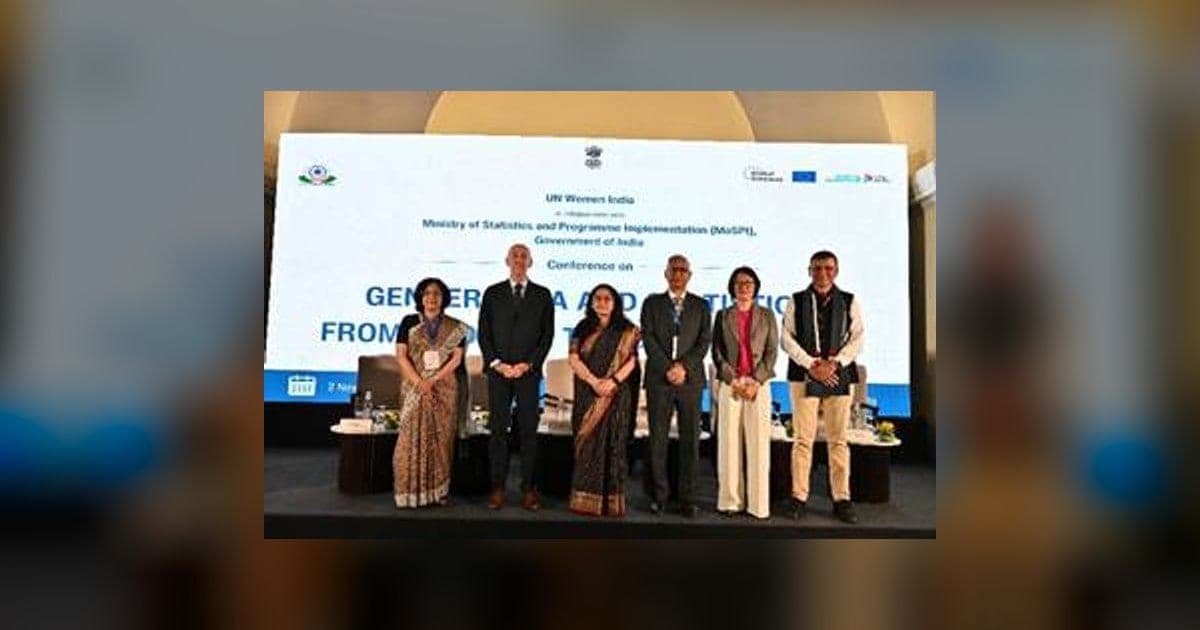
Why in News
On 2 November 2026 the Ministry of Statistics and Programme Implementation and UN Women held a one-day national conference in New Delhi on gender data and statistics, built around the findings of Women and Men in India 2025.
The Ministry of Statistics and Programme Implementation (MoSPI) and UN Women jointly held a one-day National Conference on the theme Gender Data and Statistics: From Evidence to Policy Insights in New Delhi on 2 November 2026. Policymakers, officers of Union ministries and departments, representatives of state governments, statisticians, researchers, academic institutions, technical specialists and officials of United Nations agencies sat together for the day. The single question before them was practical: how can figures already collected about women and men be turned into decisions that change lives?
Why the conference was called
The immediate purpose was to carry the findings of Women and Men in India 2025, a flagship publication of MoSPI, to the people who draft and run programmes. The organisers wanted three things from the day. First, a deeper reading of what the volume shows and how its findings connect across sectors. Second, conversation between ministries and other stakeholders that usually work apart. Third, a list of openings where gender-disaggregated figures could be put to stronger analytical and policy use.
Who spoke
- Ms Shoko Ishikawa, Country Representative of UN Women India, gave the welcome address and pressed for closing the distance between those who produce data and those who use it
- Mr Jean-Eric Paque, Ambassador of the European Union to India, spoke on the EU-India Strategic Partnership in advancing gender equality and women's economic participation
- Dr Preetam B. Yashvant, Joint Secretary in the Ministry of Women and Child Development, also addressed the gathering
- Dr Dalip Singh, Director General (Central Statistics) at MoSPI, treated the naming of gender gaps as the first condition for evidence-based policy
- Dr Shamika Ravi, Member of the Economic Advisory Council to the Prime Minister, pointed to gains in welfare delivery and women's financial empowerment, and asked for better quality of employment, state-level analysis and firmer gender statistics
The inaugural session closed with a vote of thanks by Ms Supriya Roy, Additional Director General, MoSPI.
Four technical sessions
The programme was built as four thematic technical sessions. They covered health and survival across the life course; girls' education, learning and transition; women's work, wages, formality and care; and women's livelihoods, enterprises, skills and financial inclusion. The health discussion credited progress in maternal healthcare and essential services while flagging nutrition and adolescent health. The education session welcomed better enrolment but named weak learning outcomes, thin participation in STEM and broken pathways into employment. On work, a rising female labour-force participation was acknowledged alongside job quality, wage disparity and unpaid care work. The livelihoods session recorded progress in entrepreneurship and financial inclusion, and sought easier credit, market access, sustainable livelihoods, agency and safety.
How the day ended
In the valedictory session Ms Suhela Khan, Country Programme Manager for Women's Economic Empowerment at UN Women India, and Ms Geeta Singh Rathore, Director General (NSS) at MoSPI, returned to the gaps that persist in health, education and economic participation. Ms Sunitha Bhaskar, Additional Director General at MoSPI, delivered the closing vote of thanks. The deliberations also became material for later editions of the publication, the 2026 one in particular, with calls for sharper measurement of gender gaps and tighter coordination between ministries.
Important Facts
| Event | National Conference on Gender Data and Statistics: From Evidence to Policy Insights |
|---|---|
| Date and venue | One-day conference, 2 November 2026, New Delhi |
| Organisers | Ministry of Statistics and Programme Implementation (MoSPI) with UN Women |
| Publication discussed | Women and Men in India 2025, a flagship publication of MoSPI |
| Technical sessions | Four thematic sessions |
| Welcome address | Shoko Ishikawa, Country Representative, UN Women India |
| European Union | Jean-Eric Paque, Ambassador of the European Union to India |
| MoSPI officials | Dalip Singh, DG (Central Statistics); Geeta Singh Rathore, DG (NSS); Supriya Roy and Sunitha Bhaskar, Additional Directors General |
| Economic Advisory Council | Shamika Ravi, Member, Economic Advisory Council to the Prime Minister |
| Next edition | Inputs gathered for future editions, particularly Women and Men in India 2026 |
Exam Point of View
Remember the theme Gender Data and Statistics: From Evidence to Policy Insights, the two organisers MoSPI and UN Women, the date of 2 November 2026, the venue New Delhi, the publication Women and Men in India 2025, the count of four technical sessions, and the names Shoko Ishikawa of UN Women India, Dalip Singh and Geeta Singh Rathore of MoSPI, and Shamika Ravi of the Economic Advisory Council to the Prime Minister.
Practice Questions
Which two bodies jointly organised the National Conference on Gender Data and Statistics held in New Delhi on 2 November 2026?
- A.NITI Aayog and UNICEF
- B.Ministry of Statistics and Programme Implementation and UN Women
- C.Ministry of Women and Child Development and UNDP
- D.Registrar General of India and the World Bank
Show answer
The one-day national conference on the theme Gender Data and Statistics: From Evidence to Policy Insights was organised by MoSPI in collaboration with UN Women, and it was held in New Delhi on 2 November 2026.
Read the full explanation →The findings of which MoSPI publication were discussed at the National Conference on Gender Data and Statistics?
- A.Periodic Labour Force Survey Annual Report
- B.Women and Men in India 2025
- C.National Family Health Survey
- D.Gender Budget Statement
Show answer
The conference was called to deliberate on and disseminate the findings of this flagship publication of the Ministry of Statistics and Programme Implementation, so that the people who design and run programmes could read its results more deeply and use them across sectors.
Read the full explanation →How many thematic technical sessions were held at the National Conference on Gender Data and Statistics?
- A.Two
- B.Three
- C.Four
- D.Six
Show answer
The conference featured four thematic technical sessions. The first dealt with health and survival across the life course, the second with girls education, learning and transition, the third with women work, wages, formality and care, and the fourth with women livelihoods, enterprises, skills and financial inclusion.
Read the full explanation →Frequently Asked Questions
Who organised the National Conference on Gender Data and Statistics?
The Ministry of Statistics and Programme Implementation (MoSPI) organised it in collaboration with UN Women. The one-day conference was held in New Delhi on 2 November 2026.
Which publication formed the basis of the conference?
Women and Men in India 2025, a flagship publication of MoSPI. The sessions examined its findings across sectors and gathered inputs for later editions, particularly the 2026 edition.
What did the four technical sessions cover?
Health and survival across the life course; girls education, learning and transition; women work, wages, formality and care; and women livelihoods, enterprises, skills and financial inclusion.
Sources
Current Affairs 2 November 2026
- India-EU Talks: Commerce Secretary Rajesh Agrawal Meets EC OfficialsInternational
- Sacred Piprahwa Buddha Relics Reach Tawang Monastery in ArunachalNational
- Sikkim Dairy Projects Worth Rs 251.56 Lakh Under White Revolution 2.0Government Schemes
- MoD Signs Rs 53,866.50 Crore Deal for 8 Next Generation CorvettesDefence
- Captive and Commercial Coal Mines Produce 22.03 MT in October 2026Economy
- VB-G RAM G Grievance Redressal Rules, 2026 Notified for Rural JobsGovernment Schemes
- Khet Bachaao Abhiyaan-Rabi 2026 Covers 700 Districts, 50 Lakh FarmersGovernment Schemes
- JanHIT: First National Orientation of Tribal Healers at HyderabadNational
Related Current Affairs
- Important Days
Biosphere Reserves Day: India Has 18 Reserves, 13 in UNESCO List
2 November 2026 · 2 min read
- Summits & Conferences
12th BRICS Parliamentary Forum Ends With Joint Declaration
27 October 2026 · 2 min read
Related GK
- Forts and Palaces of Rajasthan: Builders and Key Facts
21 October 2026 · Rajasthan
- Devotional Music of India: Bhajan, Kirtan and Qawwali
17 October 2026 · Art & Culture
- Chandigarh GK: Capitol Complex, Sectors and Static Facts
12 October 2026 · Indian States & UTs
Take the Quiz
- Current Affairs Quiz
Banking Current Affairs Quiz: 2 November 2026
25 questions25 minutesStart Quiz