
Jal Sanchay Jan Bhagidari Crosses 1.58 Crore Recharge Structures
More than 1.58 crore artificial groundwater recharge structures had been built under Jal Sanchay Jan Bhagidari as of 3 September 2026, a PIB backgrounder said.
Why in News
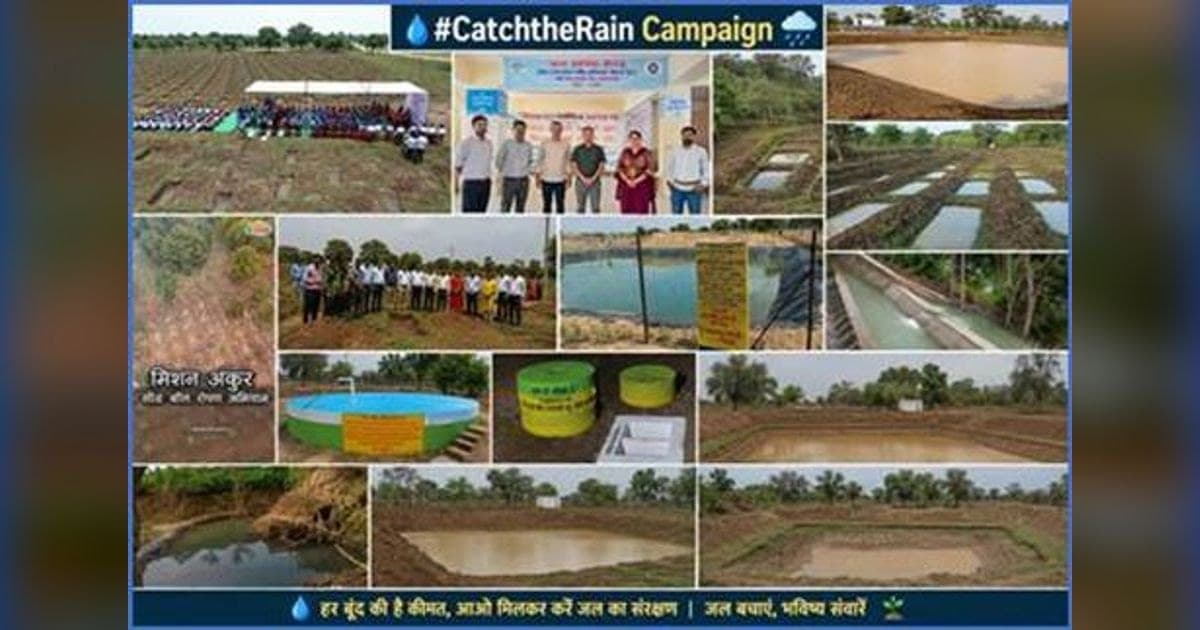
A PIB backgrounder of 3 September 2026 set out the progress of Jal Sanchay Jan Bhagidari, reporting more than 1.58 crore artificial groundwater recharge structures and the first Ministry of Jal Shakti Departmental Summit.
A PIB backgrounder of 3 September 2026 traced the progress of Jal Sanchay Jan Bhagidari, the water conservation initiative built on community partnership. It was launched on 6 September 2024. The initiative builds low-cost groundwater recharge and water storage structures and revives defunct borewells. It follows a Whole-of-Government and Whole-of-Society approach, and it is guided by the 3Cs, namely Community, Corporate Social Responsibility and Cost.
How the numbers grew
| Launched | 6 September 2024 |
| Structures under JSJB 1.0, by May 2025 | More than 27 lakh |
| JSJB 2.0 launched | June 2025 |
| Structures under JSJB 2.0, by May 2026 | More than 1.5 crore |
| Merged with Jal Shakti Abhiyan: Catch the Rain | June 2026 |
| Structures as of 3 September 2026 | More than 1.58 crore |
In June 2026 the scope of the initiative was widened. It was joined with the Jal Shakti Abhiyan: Catch the Rain campaign and renamed Jal Sanchay Jan Bhagidari: Catch the Rain.
The Jal Shakti summit
The Ministry of Jal Shakti held its Departmental Summit in New Delhi on 1 and 2 September 2026. It was the first of a series of such summits meant to strengthen cooperative federalism and closer work between the Centre and the States. Jal Sanchay Jan Bhagidari: Catch the Rain was one of the Summit's four thematic pillars. The other three were water infrastructure projects, source sustainability of drinking water systems, and rural water supply under Jal Jeevan Mission 2.0. Prime Minister Narendra Modi suggested promoting a Jal Utsav to build public awareness. He called for stronger teaching and capacity on water management in universities and higher educational institutions, for structured inter-State study visits by public representatives, officials and farmers, and for robust water data governance. The Summit was described as a step towards a Water Secure India and Viksit Bharat 2047.
Two states that show the model
In the Korea district of Chhattisgarh, farmers gave up part of their own land for water conservation. Under the Aawa Paani Jhoki movement they voluntarily set aside 5 per cent of their agricultural land for recharge ponds and terraced pits. More than 1,260 farmers adopted the model and more than 2,000 soak pits were created in the district. Groundwater levels rose by 3 to 4 metres in many villages, and springs came back to life in 17 remote tribal hamlets. Government support came as micro-watershed mapping, hydrogeological assessment and technical guidance.
In the Prakasam district of Andhra Pradesh, the villages of Murugummi, Marella and Thangella had faced erratic rainfall, falling groundwater and failing borewells. Gram Sabhas, door-to-door campaigns, Kalajathas and workshops were used to raise awareness, and a ridge-to-valley approach was adopted. Murugummi built 71 structures giving about 8.11 lakh cubic metres of storage. Marella built 53 structures, and Thangella 71. Together the work improved groundwater availability for about 5,900 people and helped reduce distress migration.
Important Facts
| Initiative | Jal Sanchay Jan Bhagidari (JSJB) |
|---|---|
| Launched on | 6 September 2024 |
| Guiding principle | The 3Cs: Community, Corporate Social Responsibility and Cost |
| JSJB 1.0 progress | More than 27 lakh structures by May 2025 |
| JSJB 2.0 launched | June 2025 |
| JSJB 2.0 progress | More than 1.5 crore structures by May 2026 |
| Merged in June 2026 with | Jal Shakti Abhiyan: Catch the Rain (JSA: CTR) |
| Total as of 3 September 2026 | More than 1.58 crore recharge structures |
| Jal Shakti Departmental Summit | New Delhi, 1 and 2 September 2026, the first of a series |
| Chhattisgarh movement | Aawa Paani Jhoki in Korea district, 5 per cent of farmland set aside |
| Andhra Pradesh district | Prakasam, with the ridge-to-valley approach |
Exam Point of View
Remember the launch date (6 September 2024), the 3Cs, the progress figures of 27 lakh by May 2025 and 1.5 crore by May 2026, the merger with Jal Shakti Abhiyan: Catch the Rain in June 2026, the total of 1.58 crore structures, and the four pillars of the Jal Shakti Departmental Summit.
Practice Questions
Jal Sanchay Jan Bhagidari is guided by the 3Cs. Which three does the term stand for?
- A.Community, Corporate Social Responsibility and Cost
- B.Catchment, Conservation and Community
- C.Cost, Capacity and Coordination
- D.Community, Conservation and Compliance
Show answer
Correct answer: A. Community, Corporate Social Responsibility and Cost
Explanation
The correct answer is Community, Corporate Social Responsibility and Cost. The backgrounder states that the initiative is guided by the 3Cs and spells them out in exactly those words. The other options are built out of words that belong to the same subject and therefore feel right, which is how such questions are set: catchment, conservation, capacity, coordination and compliance all occur in water policy writing but are not the three Cs here. The definition is worth keeping with the rest of the initiative's design: Jal Sanchay Jan Bhagidari builds low-cost groundwater recharge and water storage structures, revives defunct borewells, and promotes scientifically designed but locally suitable solutions through a Whole-of-Government and Whole-of-Society approach. It was launched on 6 September 2024, and placing community partnership and ownership at the centre of water conservation is what the 3Cs express.
As of 3 September 2026, how many artificial groundwater recharge structures had been built under Jal Sanchay Jan Bhagidari?
- A.More than 27 lakh
- B.More than 1.5 crore
- C.More than 1.58 crore
- D.More than 2.4 crore
Show answer
Correct answer: C. More than 1.58 crore
Explanation
The correct answer is more than 1.58 crore. The backgrounder gives a running series of figures, and each belongs to a different date, which is where candidates slip. Under JSJB 1.0 more than 27 lakh structures had been built by May 2025, which is option A. Under JSJB 2.0, launched in June 2025, more than 1.5 crore recharge structures had been built by May 2026, which is option B. The figure asked for here carries the cut-off date of 3 September 2026, and by then the total had reached more than 1.58 crore. Option D is invented. Note the intervening change as well, since a question may be set on it: in June 2026 the scope of the initiative was widened and it was integrated with the Jal Shakti Abhiyan: Catch the Rain campaign, becoming Jal Sanchay Jan Bhagidari: Catch the Rain.
The Aawa Paani Jhoki movement, under which farmers set aside 5 per cent of their land for water conservation, is in which district?
- A.Prakasam district, Andhra Pradesh
- B.Korea district, Chhattisgarh
- C.Kalahandi district, Odisha
- D.Barmer district, Rajasthan
Show answer
Correct answer: B. Korea district, Chhattisgarh
Explanation
The correct answer is Korea district, Chhattisgarh. The backgrounder describes farmers there voluntarily dedicating 5 per cent of their agricultural land for recharge ponds and terraced pits under the Aawa Paani Jhoki movement, and holds the model up as proof that sustainable water management needs neither large-scale displacement nor heavy capital. More than 1,260 farmers adopted it, more than 2,000 soak pits were created across the district, groundwater levels rose by 3 to 4 metres in many villages and springs were revived in 17 remote tribal hamlets. Option A is the trap: Prakasam district of Andhra Pradesh also features in the same backgrounder, but there the villages of Murugummi, Marella and Thangella used a ridge-to-valley approach with Gram Sabhas and Kalajathas. Options C and D name districts that do not appear at all. Government support in Korea came as micro-watershed mapping and hydrogeological assessment.
Frequently Asked Questions
When was Jal Sanchay Jan Bhagidari launched and what are its 3Cs?
It was launched on 6 September 2024. Its 3Cs are Community, Corporate Social Responsibility and Cost. The initiative builds low-cost groundwater recharge and water storage structures and revives defunct borewells.
How many recharge structures have been built so far?
More than 1.58 crore artificial groundwater recharge structures as of 3 September 2026. Under JSJB 1.0 more than 27 lakh structures were built by May 2025, and under JSJB 2.0 more than 1.5 crore by May 2026.
Which campaign was Jal Sanchay Jan Bhagidari merged with?
The Jal Shakti Abhiyan: Catch the Rain campaign, in June 2026. The combined initiative is called Jal Sanchay Jan Bhagidari: Catch the Rain.
What is the Aawa Paani Jhoki movement?
A farmer-led effort in Korea district of Chhattisgarh in which farmers voluntarily set aside 5 per cent of their agricultural land for recharge ponds and terraced pits. More than 1,260 farmers adopted it and groundwater rose by 3 to 4 metres in many villages.
Sources
- Jal Sanchay Jan Bhagidari: From Local Action to Water Security (opens in a new tab) — Press Information Bureau
Current Affairs 3 September 2026
- India-Belgium Joint Statement: Defence LoI and Investment TrackInternational
- Rajnath Singh Releases 'RAKSHA' Defence Diplomacy DocumentDefence
- Steel Sector Grows in April-August 2026; NMDC Sets August RecordEconomy
- NHAI Announces Green Highways Excellence Awards 2026 WinnersAwards & Honours
- CeNS Bengaluru Turns Peptides Into Piezoelectric BiomaterialsScience & Technology
- Nasha Mukt Bharat Abhiyaan Turns Six: National Pledge PlannedGovernment Schemes
- Grain Storage Plan: Godowns Built in 313 PACS by July 2026Government Schemes
Related Current Affairs
- Environment
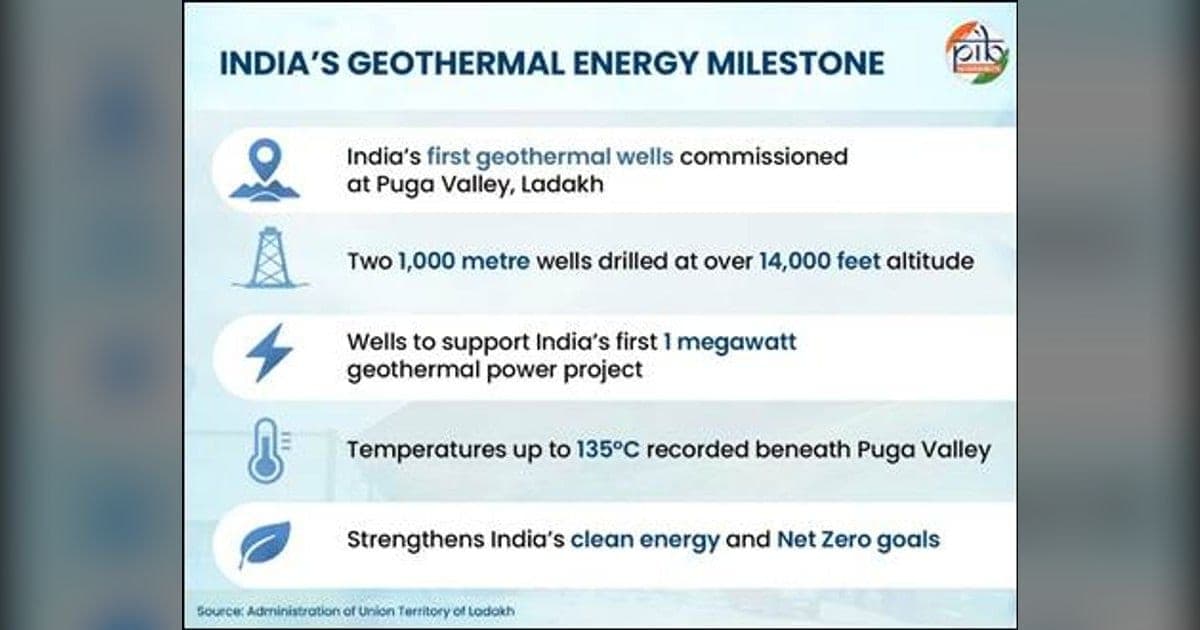
Geothermal Energy: India's First Two Wells at Puga Valley, Ladakh
23 September 2026 · 2 min read
- Environment
Gujarat Action Plan for Great Indian Bustard Released at Bhuj
23 September 2026 · 2 min read
- Environment
India to Host World Circular Economy Forum 2026 at Gandhinagar
23 September 2026 · 2 min read
- Environment
IBCA and ADB Sign MoU at Tiger Landscapes Workshop in Delhi
23 September 2026 · 2 min read
- Environment
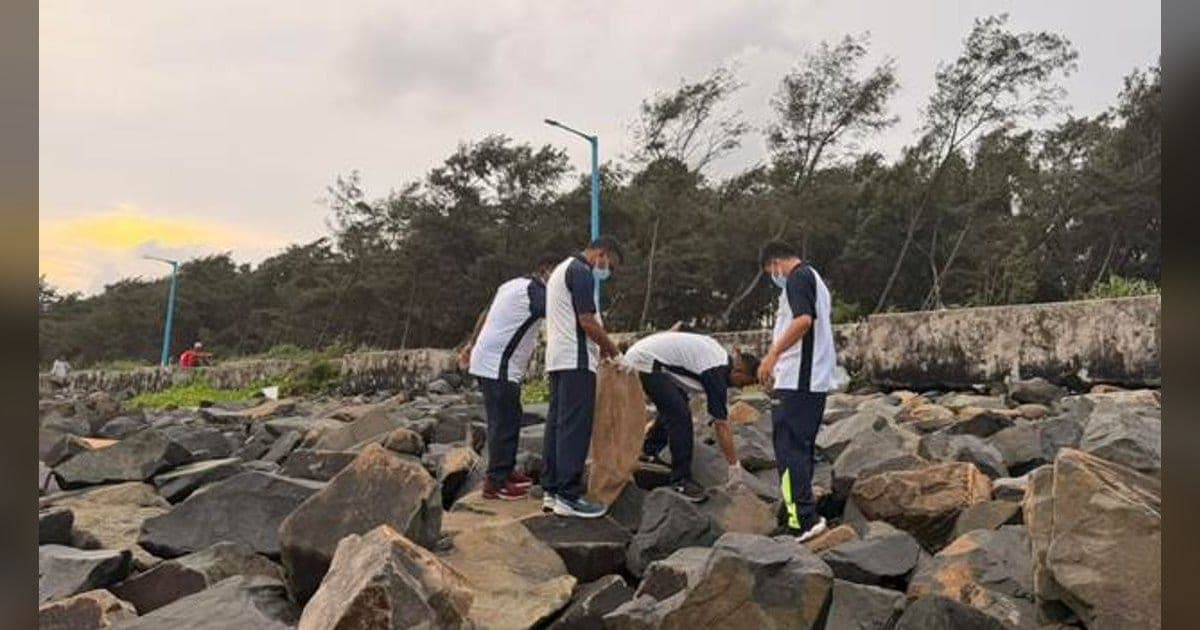
Swachh Sagar Surakshit Sagar 5.0 Launched for Ocean Cleanup
23 September 2026 · 2 min read



Related GK
- Fundamental Rights (Articles 12–35): Notes, Writs and PYQs
23 September 2026 · Indian Polity
- Preamble of the Indian Constitution: Notes, Keywords and PYQs
22 September 2026 · Indian Polity
- Making of the Indian Constitution: Notes, Key Dates and PYQs
21 September 2026 · Indian Polity
Take the Quiz
- Current Affairs Quiz
State Exams Current Affairs Quiz: 3 September 2026
22 questions22 minutesStart Quiz