
India Backs Country-Driven Just Transition Mechanism at COP31
At COP31 in Antalya, Turkiye, Bhupender Yadav sought a two-tier, Party-guided Just Transition Mechanism backed by finance, technology transfer and capacity-building.
Why in News
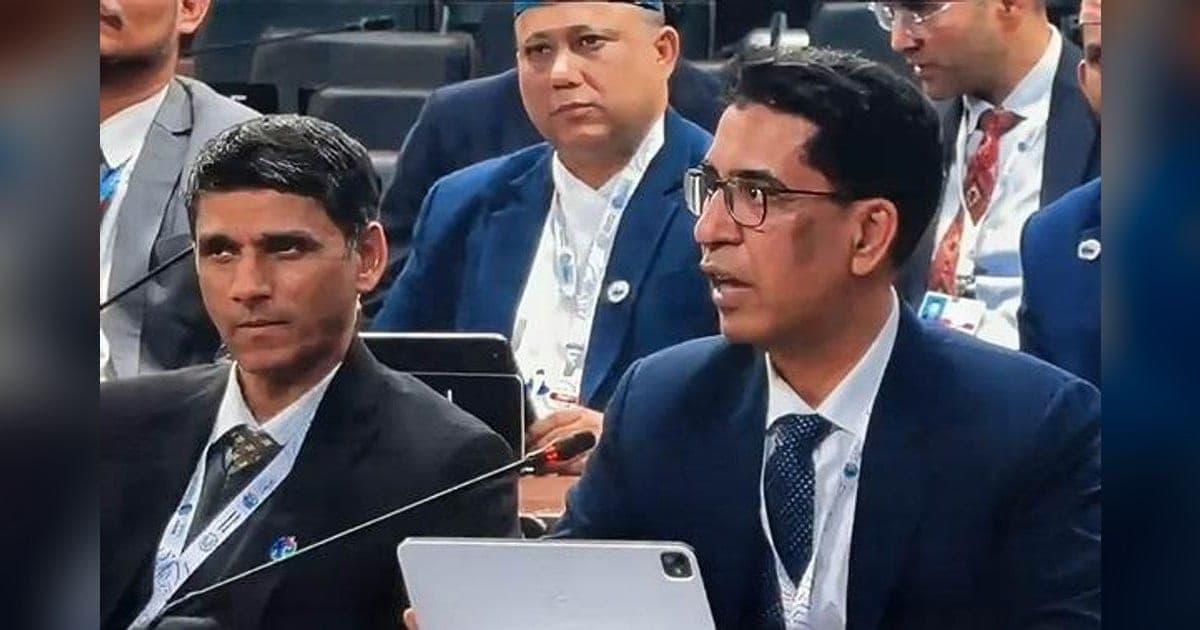
On 16 November 2026 Union Minister Bhupender Yadav told the Fourth Annual High-Level Ministerial Roundtable on Just Transition at COP31 in Antalya, Turkiye, that India supports a two-tier, Party-guided Just Transition Mechanism.
Union Minister for Environment, Forest and Climate Change Bhupender Yadav asked the world on 16 November 2026 to carry the just transition agenda beyond talk and into practical work shaped by each country itself. He was speaking at the Fourth Annual High-Level Ministerial Roundtable on Just Transition, held under the UAE Just Transition Work Programme at the UNFCCC COP31 climate conference in Antalya, Turkiye.
What India asked for
India threw its weight behind setting up a two-tier, Party-guided Just Transition Mechanism. Such a body, the Minister argued, must answer the needs of developing countries and must respect national sovereignty along with the very different circumstances in which countries find themselves. It should build on work already under way, steer clear of duplication, and open the door to adequate means of implementation. What it must not do is lay down uniform sectoral pathways or load fresh obligations on members; the point is to let each country walk its own path while making sure workers, communities and vulnerable groups are not abandoned along the way.
A whole-of-economy approach
The Minister pressed for a whole-of-economy and whole-of-society view of the transition, one that takes in employment, social protection, adaptation, poverty eradication, energy access and sustainable development together rather than one at a time. For that to happen, he said, developing countries need money in adequate measure, transfer of technology and help in building capacity, so that their own national priorities can actually be carried out.
India's own examples
Arguing that no single formula can fit every country, Shri Yadav pointed to India's experience. He cited the sub-national heat action plans and disaster management plans that address the exposure of workers and communities, and the country's expansion of renewable energy, which tries to pair low-carbon growth with electricity that people can afford. Both examples, he said, show why just transition thinking has to be folded into adaptation, livelihoods and development planning instead of being kept in a separate box.
Two instruments, two jobs
Shri Yadav drew a clear line between the existing Work Programme and the proposed Mechanism, saying their roles should be distinct and complementary.
| Instrument | Role India sees for it |
| UAE Just Transition Work Programme | A platform for dialogue and exchange of experiences |
| Proposed Just Transition Mechanism | Practical support through technical assistance, capacity-building and cooperation |
Why it matters
The Minister closed by calling COP31 an important opening to shift from swapping experiences to implementation driven by countries themselves, and said India is ready to work with every Party towards an inclusive outcome that advances just transition while protecting the development priorities of the developing world.
Important Facts
| Conference | UNFCCC COP31 |
|---|---|
| Venue | Antalya, Turkiye |
| Forum addressed | Fourth Annual High-Level Ministerial Roundtable on Just Transition |
| Parent programme | UAE Just Transition Work Programme |
| Indian minister | Bhupender Yadav, Union Minister for Environment, Forest and Climate Change |
| India's proposal | A two-tier, Party-guided Just Transition Mechanism |
| Enablers sought | Adequate finance, technology transfer and capacity-building for developing countries |
| Indian examples cited | Sub-national heat action plans, disaster management plans and renewable energy expansion |
Exam Point of View
Remember the host city and country of COP31 (Antalya, Turkiye), the Indian minister who spoke (Bhupender Yadav, Environment, Forest and Climate Change), the forum (Fourth Annual High-Level Ministerial Roundtable on Just Transition), the parent programme (UAE Just Transition Work Programme), India's demand for a two-tier, Party-guided Mechanism, and the three enablers it named: finance, technology transfer and capacity-building.
Practice Questions
UNFCCC COP31, where India presented its views on just transition, is being hosted by which city?
- A.Baku
- B.Belem
- C.Antalya
- D.Dubai
Show answer
It was there, on 16 November 2026, that Union Minister for Environment, Forest and Climate Change Bhupender Yadav addressed the Fourth Annual High-Level Ministerial Roundtable on Just Transition and set out India's position.
Read the full explanation →Which kind of Just Transition Mechanism did India support at the ministerial roundtable?
- A.A single-tier, secretariat-run mechanism with binding sectoral targets
- B.A two-tier, Party-guided mechanism respecting national sovereignty
- C.A mechanism managed by multilateral development banks
- D.A mechanism limited to coal-producing countries alone
Show answer
India backed exactly this design, adding that the body must be responsive to the needs of developing countries and mindful of the fact that national circumstances differ widely.
Read the full explanation →Which Indian measures did the Union Minister cite as proof that no one-size-fits-all just transition pathway can work?
- A.Sub-national heat action plans and disaster management plans
- B.Carbon border taxes on imports
- C.A nationwide ban on thermal power generation
- D.Compulsory retirement of all industrial workers above sixty
Show answer
Arguing against a single global formula, Bhupender Yadav offered these Indian instruments as examples that take account of the exposure of workers and communities, and he placed beside them the country's expansion of renewable energy, which seeks to match low-carbon growth with affordable energy access.
Read the full explanation →Frequently Asked Questions
Where is COP31 being held?
At Antalya in Turkiye. India's Union Minister for Environment, Forest and Climate Change, Bhupender Yadav, addressed the Fourth Annual High-Level Ministerial Roundtable on Just Transition there on 16 November 2026.
What kind of Just Transition Mechanism does India support?
A two-tier, Party-guided Mechanism that answers the needs of developing countries, respects national sovereignty and diverse national circumstances, avoids duplication, and neither prescribes uniform sectoral pathways nor creates new obligations.
Which work programme does the Just Transition roundtable come under?
The UAE Just Transition Work Programme. India wants it to remain a platform for dialogue and exchange of experiences, while the proposed Mechanism provides technical assistance, capacity-building and cooperation.
Sources
- https://www.pib.gov.in/PressReleasePage.aspx?PRID=2337158 (opens in a new tab) — Press Information Bureau
Current Affairs 16 November 2026
- India-Egypt 7th Joint Trade Committee Meets at Ministerial LevelInternational
- Modi Departs for 23rd ASEAN-India Summit in ManilaSummits & Conferences
- WPI Inflation Climbs to 12.29 Per Cent in October 2026Economy
- 31st CII Partnership Summit 2026 Held in VisakhapatnamSummits & Conferences
- Vice-President Opens 17th Odisha Assembly Orientation ProgrammeState News
- Kutch Earthquake 2001: Rebuilding, GSDMA and Key FiguresNational
- COVID-19 Response: 22.89 Crore Precaution Doses AdministeredNational
- National FRA Digital Platform Launched for Forest Rights ClaimsGovernment Schemes
Related Current Affairs
- Environment
Delhi-NCR Air Pollution Review Orders 191 Polluting Units Sealed
14 November 2026 · 3 min read
- Environment
India Seeks Fair, Ambitious Outcome at UNFCCC COP31 in Antalya
10 November 2026 · 2 min read


Related GK
- Famous Personalities of Rajasthan: Exam Notes
28 October 2026 · Rajasthan
- Districts and Divisions of Rajasthan: Exam Notes
28 October 2026 · Rajasthan
- Tourism and World Heritage Sites of Rajasthan Notes
27 October 2026 · Rajasthan
Take the Quiz
- Current Affairs Quiz
SSC CHSL Current Affairs Quiz: 16 November 2026
25 questions25 minutesStart Quiz