
Delhi-NCR Air Pollution Review Orders 191 Polluting Units Sealed
Union Environment Minister Bhupender Yadav reviewed Delhi-NCR air pollution action, ordering CPCB to seal 191 non-compliant industries and faster road repair.
Why in News
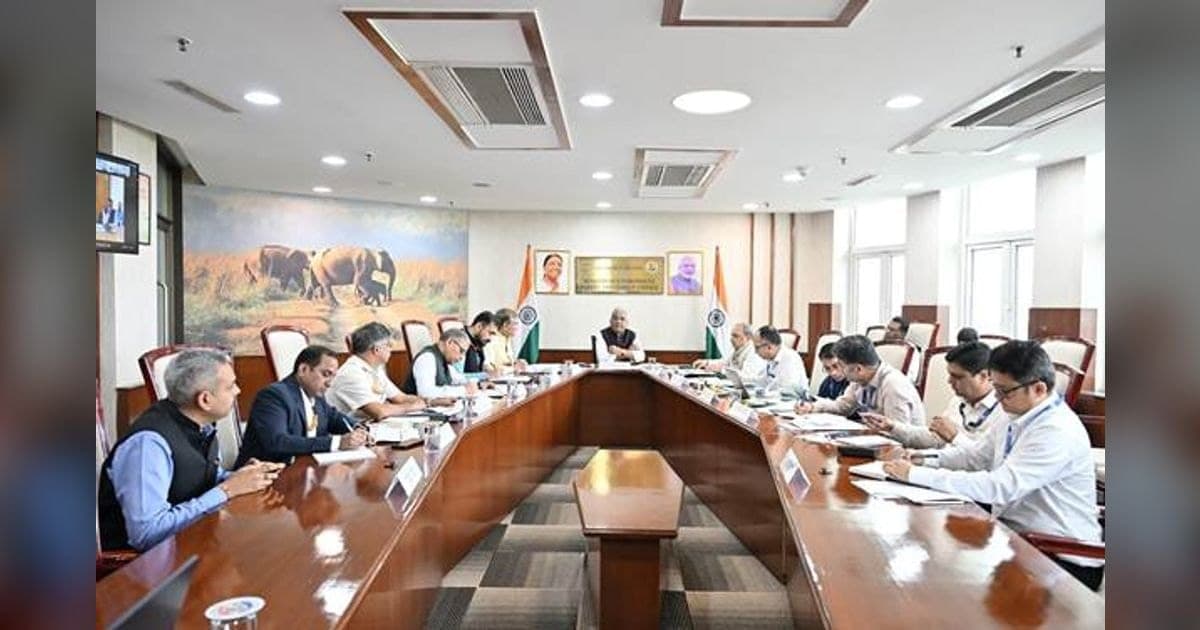
On 14 November 2026 Union Minister for Environment, Forest and Climate Change Bhupender Yadav chaired a review meeting on air pollution control in Delhi-NCR and directed the CPCB to seal 191 non-conforming polluting industries, along with time-bound action on road dust, vehicles and waste.
With winter smog thickening over the capital region, Union Minister for Environment, Forest and Climate Change Bhupender Yadav took the chair on 14 November 2026 at a meeting that went through, state by state, what Delhi, Haryana, Uttar Pradesh and Rajasthan have actually done about the air. It was the latest of more than 30 such sittings he has held with the four governments and their municipal bodies over the past year. The message he left was blunt: the plans are written, what is missing is enforcement on the ground, fixed to a timetable and the same on both sides of every state border, because smoke does not stop at one.
Who was in the room
State environment ministers Manjinder Singh Sirsa of Delhi, Rao Narbir Singh of Haryana and Arun Kumar Saxena of Uttar Pradesh joined online. Rajesh Verma, who chairs the Commission for Air Quality Management (CAQM), gave the overview of what each state has and has not delivered, while CAQM Member Secretary Tarun Pithode presented the progress. Ministry Secretary Narendra Bhooshan attended, as did Amandeep Garg, Additional Secretary in the Ministry and Chairman of the Central Pollution Control Board (CPCB), who logged in from Antalya in Türkiye.
The orders issued
The CPCB was told to seal, without further delay, the 191 polluting industries sitting in non-conforming areas that had not so much as placed an order for pollution control equipment. States were warned that if automatic number plate recognition cameras are not installed, criminal prosecution of the transport officials responsible would follow after 30 November 2026. Each state must also put a Secretary-rank officer in charge of named cities — seven in Haryana and four each in Uttar Pradesh and Rajasthan — to make field visits and report to CAQM every week, and CAQM was asked to serve notice on officers who do not perform.
Where the numbers stand
| Roads redeveloped | 3,221 km of a 5,480 km target |
| Industries on online emission monitoring | 2,298 of 2,345 (98 per cent); the other 47 shut or sealed |
| Units ordered sealed | 191 in non-conforming areas |
| Congestion points identified | 233 across NCR |
| Waste processing shortfall | 6,747 tonnes per day |
The particulate emission limit of 50 mg per normal cubic metre is to be enforced strictly, with closure, sealing or a cut in electricity for a plant that breaches it. Dusty construction and demolition work stands barred across the region from 5 to 20 November 2026 under a CAQM order of 30 October. The civic body in Delhi must finish Multi-Lane Free Flow systems at 154 border entry points by 31 December 2026, and legacy dumps at Okhla, Ghazipur, Bhalswa and Bandhwari are to be cleared, with more than 3,000 active construction waste sites physically inspected. Under the PARIVARTAN scheme, trucks and buses older than the BS-VI norm are to give way to BS-VI, CNG and electric vehicles by 2028.
Watching from a screen
The minister pointed to Delhi’s Integrated Command and Control Centre, opened on 5 October 2026, and to CAQM’s PAVAN — the Platform for Air Quality Vigilance and Analytics for NCR — which pulls air quality, emission, weather, satellite and compliance data onto one screen. Sensors, cameras and satellites, he said, must be read alongside physical inspection so that a violation is caught and acted on quickly. The CPCB’s winter enforcement procedure runs from 01.10.2026 to 28.02.2027.
Important Facts
| Meeting chaired by | Bhupender Yadav, Union Minister for Environment, Forest and Climate Change |
|---|---|
| States reviewed | Delhi, Haryana, Uttar Pradesh and Rajasthan |
| CAQM Chairperson | Rajesh Verma; Member Secretary Tarun Pithode |
| Units ordered sealed | 191 polluting industries in non-conforming areas (by CPCB) |
| Road dust progress | 3,221 km redeveloped against a target of 5,480 km |
| Emission monitoring | 2,298 of 2,345 industries (98 per cent) on OCEMS; 47 closed or sealed |
| Emission norm | 50 mg per normal cubic metre for particulate matter |
| Waste processing gap | 6,747 tonnes per day in municipal solid waste capacity |
| Monitoring platform | PAVAN — Platform for Air Quality Vigilance and Analytics for NCR (CAQM) |
| Vehicle scheme | PARIVARTAN — pre-BS-VI trucks and buses to BS-VI, CNG and electric by 2028 |
| MSME scheme | Swachh Pawan Neel Gagan, Swasth NCR (SPNG-NCR) for pollution control devices |
| Construction ban | Dust-generating C&D work barred in NCR from 5 to 20 November 2026 |
Exam Point of View
Remember the minister (Bhupender Yadav), the ministry (Environment, Forest and Climate Change), the two bodies (CAQM, chaired by Rajesh Verma, and CPCB), the platform (PAVAN, for NCR), the schemes (PARIVARTAN for pre-BS-VI vehicles by 2028 and SPNG-NCR for MSMEs) and the figures: 191 units to be sealed, 3,221 km of 5,480 km of roads redeveloped, 2,298 of 2,345 industries on OCEMS, 233 congestion points, 154 Delhi border entry points and a 6,747 TPD waste processing gap.
Practice Questions
Who chaired the November 2026 review meeting on measures to curb air pollution in Delhi-NCR?
- A.The Union Minister for Environment, Forest and Climate Change
- B.The Union Minister for Housing and Urban Affairs
- C.The Chief Minister of Delhi
- D.The Chairperson of the Commission for Air Quality Management
Show answer
The correct answer is the Union Minister for Environment, Forest and Climate Change, Bhupender Yadav, who took the chair at the review of what Delhi, Haryana, Uttar Pradesh and Rajasthan have done to cut pollution in the capital region.
Read the full explanation →How many polluting industries in non-conforming areas was the CPCB directed to seal immediately?
- A.91
- B.147
- C.191
- D.233
Show answer
These are the units standing in non-conforming areas which, in spite of being told repeatedly, had not even placed an order for air pollution control devices, and the Central Pollution Control Board was directed to seal them at once.
Read the full explanation →PAVAN, which brings air quality, emission, weather, satellite and compliance data onto one platform, belongs to which body?
- A.India Meteorological Department
- B.Commission for Air Quality Management
- C.National Green Tribunal
- D.Municipal Corporation of Delhi
Show answer
PAVAN stands for the Platform for Air Quality Vigilance and Analytics for NCR, and it is CAQM’s own platform, built so that air quality readings, emission data, meteorological information, satellite inputs and compliance records can be seen together instead of in separate silos.
Read the full explanation →In the road dust review, how much of the targeted road length in NCR had been redeveloped?
- A.3,221 km of 5,480 km
- B.5,480 km of 6,747 km
- C.2,298 km of 3,221 km
- D.2,345 km of 5,480 km
Show answer
Road-owning agencies were told to give priority to repairing potholes, damaged footpaths and central verges and to pave roads end to end as the CAQM framework requires, backed by surveys using artificial intelligence.
Read the full explanation →Frequently Asked Questions
Who chaired the review meeting on air pollution in Delhi-NCR in November 2026?
Bhupender Yadav, Union Minister for Environment, Forest and Climate Change. The meeting assessed measures taken by Delhi, Haryana, Uttar Pradesh and Rajasthan, and was attended by the state environment ministers, the Ministry Secretary and the heads of CAQM and CPCB.
What is PAVAN?
PAVAN is the Platform for Air Quality Vigilance and Analytics for NCR, developed by the Commission for Air Quality Management. It brings air quality, emissions, meteorological, satellite and compliance data together on a single platform so that violations can be identified and enforced against quickly.
What did the Minister direct the CPCB to do about polluting industries?
The CPCB was directed to immediately seal 191 identified polluting industries located in non-conforming areas which, despite repeated directions, had not even placed orders for air pollution control devices. The particulate matter norm of 50 mg per normal cubic metre is also to be enforced strictly, with closure, sealing or electricity disconnection for defaulters.
What is the PARIVARTAN scheme?
PARIVARTAN is the scheme for replacing trucks and buses older than the BS-VI norm with BS-VI, CNG and electric vehicles by 2028. The Minister asked Uttar Pradesh, Rajasthan and Haryana to speed up beneficiary registration by holding PARIVARTAN Melas at the state level.
Sources
- https://www.pib.gov.in/PressReleasePage.aspx?PRID=2336168 (opens in a new tab) — Press Information Bureau
Current Affairs 14 November 2026
- Pradhan Mantri Janjatiya Vikas Mission Backs 4,172 Van Dhan KendrasGovernment Schemes
- India-Egypt: Piyush Goyal to Co-Chair 7th Joint Trade CommitteeInternational
- National Tribal Literary Festival Ends With 27 LanguagesSummits & Conferences
- DRI Seizes 10.8 kg Amphetamine Hidden In Postal ParcelNational
- Consent Manager Registration Under DPDP Act Comes Into EffectScience & Technology
Related Current Affairs
- Environment
India Seeks Fair, Ambitious Outcome at UNFCCC COP31 in Antalya
10 November 2026 · 2 min read

Related GK
- Famous Personalities of Rajasthan: Exam Notes
28 October 2026 · Rajasthan
- Districts and Divisions of Rajasthan: Exam Notes
28 October 2026 · Rajasthan
- Tourism and World Heritage Sites of Rajasthan Notes
27 October 2026 · Rajasthan
Take the Quiz
- Current Affairs Quiz
State Exams Current Affairs Quiz: 14 November 2026
20 questions20 minutesStart Quiz