
Delhi Zoo's 21st Sunday Bird Walk Logs 42 Bird Species
The National Zoological Park, New Delhi held the 21st Sunday Bird Walk on 15 November 2026, logging 42 bird species and adding the Northern Shoveler to its checklist.
Why in News
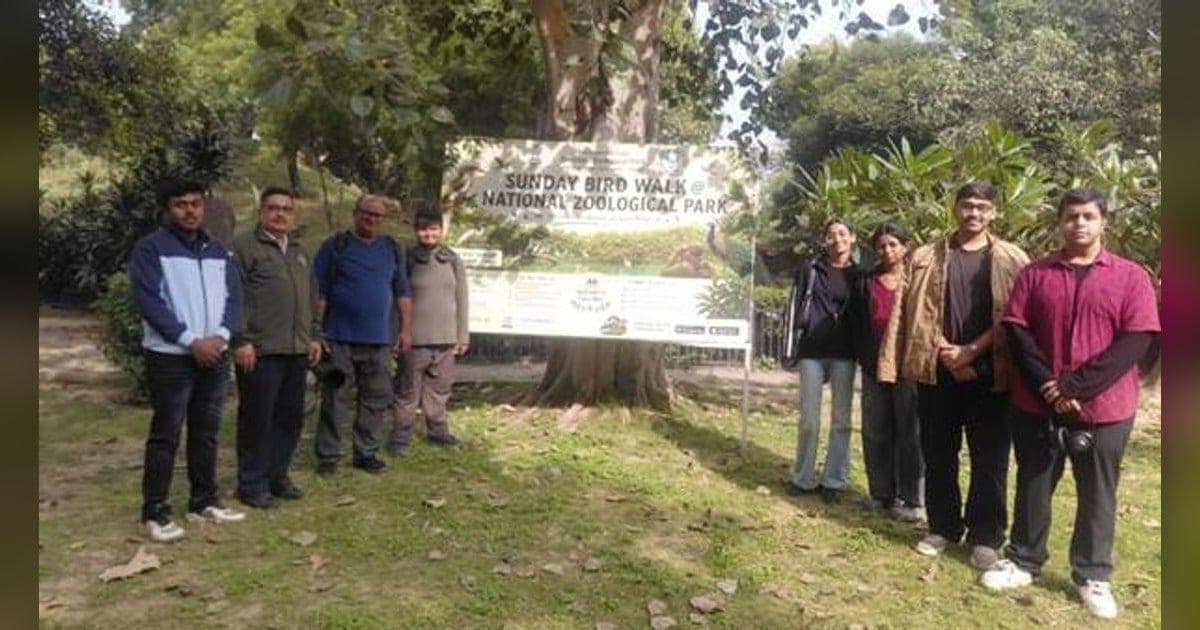
On 15 November 2026 the National Zoological Park in New Delhi held the 21st edition of its Sunday Bird Walk, during which 42 bird species and over 600 individual birds were recorded and the Northern Shoveler was added to the zoo's bird checklist for the first time.
The National Zoological Park (NZP) in New Delhi, better known as the Delhi zoo, held the 21st edition of its 'Sunday Bird Walk @ NZP' on 15 November 2026. The outing ran for three hours, from 7:30 AM to 10:30 AM. The zoo, which works under the Ministry of Environment, Forest and Climate Change, runs the walk to pull ordinary citizens into biodiversity monitoring and wildlife conservation. Bird expert Vineet Kumar guided the group, helped by the zoo's volunteers, and zoo officials walked along and answered questions.
What the walkers recorded
- Birds of 42 species were logged inside the designated area of the zoo.
- More than 600 individual birds were counted over the three hours.
- The Northern Shoveler, a duck whose scientific name is Spatula clypeata, was added to the zoo's bird checklist for the first time.
- Eight people took part, among them students, nature lovers, bird enthusiasts and wildlife photographers.
Why a new name on the checklist matters
A zoo's bird checklist is a running record of which wild species actually live in or pass through its grounds, as against the animals kept on display. The zoo treats the arrival of the Northern Shoveler on that list as a real contribution to the documentation of its avian diversity, and as a reminder that systematic monitoring is what makes conservation decisions possible. Kumar spoke to the group about bird ecology, behaviour and conservation. He pointed out that birds do measurable ecological work: they hold insect numbers down, which is natural pest control, and the mix of species found at a site is read as an indicator of how healthy that ecosystem is. The walk therefore doubled as field training, giving participants hands-on practice in identifying birds and in writing down what they had seen.
How the walks are organised
Each Sunday Bird Walk is deliberately kept small, taking only 20 to 25 participants, so that the teaching stays useful and everyone gets a turn with the expert. Registering beforehand is compulsory and places are given on a first-come, first-served basis. The registration form stays open from Monday to Friday every week, and the link is put up on the official website of the National Zoological Park and on the NZP Saathi mobile application. Exercises of this kind are called citizen science: the zoo gradually builds a long-run picture of its birds using records made by visitors, while people in the capital learn to watch and identify birds properly.
Important Facts
| Event | 21st edition of 'Sunday Bird Walk @ NZP' |
|---|---|
| Venue | National Zoological Park, New Delhi |
| Ministry | Ministry of Environment, Forest and Climate Change |
| Date and timing | 15 November 2026, 7:30 AM to 10:30 AM |
| Species recorded | 42 bird species |
| Individual birds | More than 600 |
| New checklist addition | Northern Shoveler (Spatula clypeata) |
| Expert guide | Vineet Kumar, bird expert |
| Participants | Eight, including students, nature lovers and wildlife photographers |
| Cap per walk | 20 to 25 participants, prior registration compulsory |
| Registration | NZP official website and the NZP Saathi mobile application |
Exam Point of View
Remember the edition (21st), the venue (National Zoological Park, New Delhi, under the Ministry of Environment, Forest and Climate Change), the species count (42), the number of birds (more than 600), the new checklist addition (Northern Shoveler, Spatula clypeata), the expert who led it (Vineet Kumar) and the cap of 20 to 25 participants per walk.
Practice Questions
Which bird species was added for the first time to the bird checklist of the National Zoological Park, New Delhi, during its 21st Sunday Bird Walk?
- A.Northern Shoveler
- B.Greater Flamingo
- C.Indian Pitta
- D.Sarus Crane
Show answer
The highlight of the 21st edition of the walk, held on 15 November 2026, was the recording of this duck, whose scientific name is Spatula clypeata, and its addition to the bird checklist of the National Zoological Park for the first time.
Read the full explanation →How many bird species were recorded during the 21st 'Sunday Bird Walk @ NZP' at the National Zoological Park?
- A.24 species
- B.42 species
- C.62 species
- D.84 species
Show answer
During the three-hour walk, which ran from 7:30 AM to 10:30 AM on 15 November 2026, participants recorded birds of 42 species in the designated area of the zoo, and counted more than six hundred individual birds in all.
Read the full explanation →Under which Union ministry does the National Zoological Park, New Delhi, function?
- A.Ministry of Culture
- B.Ministry of Tourism
- C.Ministry of Environment, Forest and Climate Change
- D.Ministry of Agriculture and Farmers' Welfare
Show answer
The National Zoological Park in New Delhi works under this ministry, which is why its programmes are framed around biodiversity monitoring, wildlife conservation and public environmental awareness, and why the Sunday Bird Walk is presented as an exercise in citizen science rather than as a tourist attraction.
Read the full explanation →Frequently Asked Questions
Which bird species was newly added to the Delhi zoo's checklist?
The Northern Shoveler, whose scientific name is Spatula clypeata, was recorded for the first time and added to the bird checklist of the National Zoological Park, New Delhi. The addition was made during the 21st Sunday Bird Walk on 15 November 2026, in which birds of 42 species and more than 600 individual birds were counted.
What is the Sunday Bird Walk at the National Zoological Park?
It is a weekly morning birdwatching programme run by the National Zoological Park in New Delhi, which functions under the Ministry of Environment, Forest and Climate Change, to encourage public participation in biodiversity monitoring and wildlife conservation. An expert guides each walk, places are limited to 20 to 25 participants, and prior registration through the zoo's website or the NZP Saathi mobile application is compulsory.
Why are bird counts of this kind useful for conservation?
Birds keep insect numbers down, which amounts to natural pest control, and the mix of species found at a site is treated as an indicator of how healthy the ecosystem is. Systematic counting over many editions therefore builds a record of change at the site, and records made by ordinary visitors in this way are known as citizen science.
Sources
- https://www.pib.gov.in/PressReleasePage.aspx?PRID=2336665 (opens in a new tab) — Press Information Bureau
Current Affairs 15 November 2026
- Yuge Yugeen Bharat Museum Approved at Rs 3,230 Crore in DelhiNational
- Adi Vaani Now Translates Nine Tribal Languages Using AIScience & Technology
- India-Egypt Joint Trade Committee Holds 7th Session in CairoInternational
- Buddha's Sacred Relics Reach Golden Pagoda in Namsai, ArunachalState News
- Lakhpati Didi Count Reaches 3.76 Crore Against 6 Crore TargetGovernment Schemes
- Janjatiya Gaurav Divas Marked with Tributes to Birsa MundaImportant Days
- India's Space Economy at USD 9 Billion with 440 Start-upsScience & Technology
- NITI Aayog to Hold Five Workshops on 25 Years of GovernanceNational
Related Current Affairs
- Environment
Delhi-NCR Air Pollution Review Orders 191 Polluting Units Sealed
14 November 2026 · 3 min read
- Environment
India Seeks Fair, Ambitious Outcome at UNFCCC COP31 in Antalya
10 November 2026 · 2 min read





Related GK
- Famous Personalities of Rajasthan: Exam Notes
28 October 2026 · Rajasthan
- Districts and Divisions of Rajasthan: Exam Notes
28 October 2026 · Rajasthan
- Tourism and World Heritage Sites of Rajasthan Notes
27 October 2026 · Rajasthan
Take the Quiz
- Current Affairs Quiz
SSC CHSL Current Affairs Quiz: 15 November 2026
25 questions25 minutesStart Quiz