
Hack the Fork: India's First AI Food Tech Hackathon
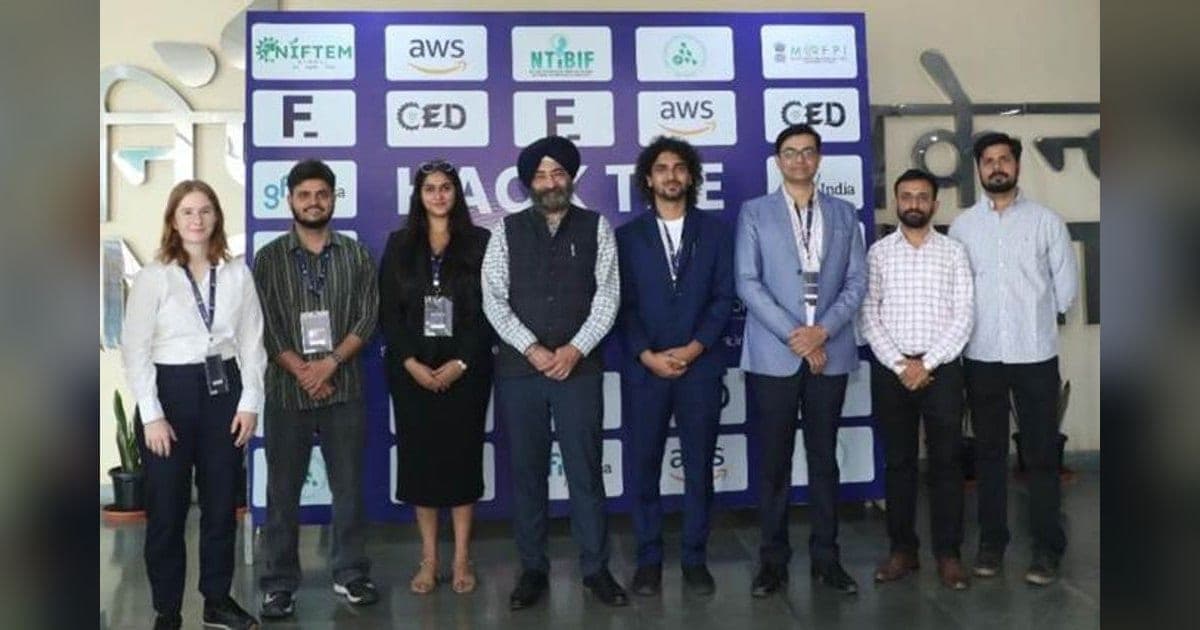
NIFTEM-Kundli hosted Hack the Fork, India's first AI and food tech hackathon on alternative proteins, with 22 teams from 10 states in the final round.
Why in News
On 25 October 2026 NIFTEM-Kundli concluded Hack the Fork, India's first hackathon on Artificial Intelligence and food technology, in which 22 teams from 10 states presented AI solutions for the alternative protein industry.
The National Institute of Food Technology Entrepreneurship and Management, Kundli (NIFTEM-K), an institute under the Ministry of Food Processing Industries, hosted Hack the Fork, described as India's first hackathon bringing Artificial Intelligence and food technology together. The 24-hour contest asked young innovators to use AI on real problems of the alternative protein industry.
When it ran and who opened it
The hackathon was inaugurated on 24 October by Ms. Alice Pjie, Director of Hack the Fork, and ended the next day, 25 October, with the teams presenting their solutions to an expert jury. Hack the Fork is a France-based non-profit initiative, and it organised the event in collaboration with NIFTEM-K.
The teams
More than 85 teams applied. Of these 25 were shortlisted for the final round, and 22 teams from 10 states, with over 90 participants in all, took part at the institute's campus. The participants came from several disciplines and from institutions including the IITs, the IIITs and the University of Delhi, which gave the contest an interdisciplinary character.
What the teams worked on
The challenge was built around the use of Artificial Intelligence to advance the alternative protein industry. The work covered plant-based food innovation, fermentation technologies and food systems more broadly, and the teams were pointed towards nutritional optimisation, food safety, sustainable food production and the reduction of food waste. The winning teams competed for prizes worth 1.5 lakh rupees along with a chance to enter the Startup Incubation Programme of NIFTEM-K.
Who guided the contest
Dr. Harinder Singh Oberoi, Director of NIFTEM-K, said India's first such hackathon would help generate new ideas and strengthen the country's food ecosystem, and encouraged the young innovators to develop practical solutions for a future-ready food-processing sector. The event was coordinated by Dr. Vimal Pant, Professor at NIFTEM-K and Chief Executive Officer of NTIBIF. Mentors included Chaitanya Chilukuri and Svarnim Samant of the Good Food Institute (GFI) India, Dr. Saurabh Jain of IIIT Sonepat and Abhishek Shukla, a research scholar at the University of Delhi, who helped teams sharpen their ideas during the round.
Why it matters
For an institute of the food processing ministry, the exercise tied technology to a sector the government is pushing: alternative proteins, sustainable food production and waste reduction. It also linked a foreign non-profit, Indian technical institutions and a government institute in one innovation event, and offered the winners incubation support rather than a prize alone.
Important Facts
| Event | Hack the Fork, India's first AI and food technology hackathon |
|---|---|
| Host | NIFTEM-Kundli (National Institute of Food Technology Entrepreneurship and Management) |
| Ministry | Ministry of Food Processing Industries |
| Organiser | Hack the Fork, a France-based non-profit initiative |
| Duration | 24-hour hackathon, 24 to 25 October |
| Inaugurated by | Ms. Alice Pjie, Director, Hack the Fork |
| Participation | Over 85 applicant teams, 25 shortlisted, 22 teams from 10 states, over 90 participants |
| Theme | Artificial Intelligence for the alternative protein industry |
| Prizes | Worth 1.5 lakh rupees, with entry to NIFTEM-K's Startup Incubation Programme |
| Director, NIFTEM-K | Dr. Harinder Singh Oberoi |
Exam Point of View
Remember the host institute (NIFTEM-Kundli, Ministry of Food Processing Industries), the event and its claim to fame (Hack the Fork, India's first AI and food tech hackathon), the organiser (Hack the Fork, a France-based non-profit), who inaugurated it (Alice Pjie), the dates (24 to 25 October), the numbers (85 applicants, 25 shortlisted, 22 teams, 10 states, over 90 participants), the theme (AI for alternative proteins) and the prize money with incubation support.
Practice Questions
Which institute hosted Hack the Fork, described as India's first hackathon on Artificial Intelligence and food technology?
- A.NIFTEM-Kundli
- B.CFTRI Mysuru
- C.IIFPT Thanjavur
- D.NDRI Karnal
Show answer
The National Institute of Food Technology Entrepreneurship and Management at Kundli, which works under the Ministry of Food Processing Industries, hosted Hack the Fork on its campus, and the event has been described as India's first hackathon to bring Artificial Intelligence and food technology together.
Read the full explanation →Which industry's problems were the Hack the Fork teams asked to solve using Artificial Intelligence?
- A.Cold chain logistics
- B.Alternative protein industry
- C.Sugar industry
- D.Marine fisheries
Show answer
The challenge was built around harnessing Artificial Intelligence to advance that industry, and the areas opened to the teams included plant-based food innovation, fermentation technologies and food systems more broadly, along with nutritional optimisation, food safety, sustainable food production and the reduction of food waste.
Read the full explanation →Hack the Fork, the organiser of the hackathon held with NIFTEM-Kundli, is a non-profit initiative based in which country?
- A.Germany
- B.Netherlands
- C.France
- D.Singapore
Show answer
Hack the Fork is a France-based non-profit initiative, and it organised the hackathon in collaboration with NIFTEM-Kundli, with its Director, Ms. Alice Pjie, inaugurating the twenty-four hour contest on 24 October.
Read the full explanation →Frequently Asked Questions
Which institute hosted India's first AI and food technology hackathon?
NIFTEM-Kundli, the National Institute of Food Technology Entrepreneurship and Management under the Ministry of Food Processing Industries, hosted Hack the Fork on 24 and 25 October.
What was the theme of Hack the Fork?
Using Artificial Intelligence to solve real problems of the alternative protein industry, covering plant-based food innovation, fermentation technologies, nutritional optimisation, food safety and food waste reduction.
How many teams reached the final round?
Of over 85 applicant teams, 25 were shortlisted and 22 teams from 10 states, with over 90 participants, took part in the final round at the institute.
Sources
- https://www.pib.gov.in/PressReleasePage.aspx?PRID=2328253 (opens in a new tab) — Press Information Bureau
Current Affairs 25 October 2026
- Ramsar Sites in India Reach 103 With Sukhna and Sauj JheelEnvironment
- India Wins Record 114 Medals at Asian Para Games 2026Sports
- Mann Ki Baat 139th Episode Flags 50 Crore e-Sanjeevani CallsNational
- Special Campaign 6: NLC India Earns 3.12 Crore From ScrapGovernment Schemes
- NITI Aayog Urges Elected Mayors at 2nd National Urban ConclaveSummits & Conferences
- Operation Trident: NCB Raids 38 Sites in Assam, Mizoram, ManipurNational
- BRICS Parliamentary Forum: India Hosts 12th Edition in DelhiSummits & Conferences
- CCPA Fines 12 Entities 58 Lakh Rupees Over Walkie-Talkie AdsNational
Related Current Affairs
- Science & Technology
BHASHINI Shows Multilingual AI for Theses at ETD-2026, IIT Delhi
24 October 2026 · 2 min read
- Science & Technology
AATAL Lab Opens in Delhi to Trace Air Pollution Sources
24 October 2026 · 2 min read
- Science & Technology
ARIES Study Explains High-Frequency QPOs Near Spinning Black Holes
23 October 2026 · 2 min read
- Science & Technology
C-DOT Opens Sixth Centre of Excellence at IIT (BHU) Varanasi
23 October 2026 · 2 min read
- Science & Technology
SAEINDIA to Host 23rd APAC Mobility Conference in New Delhi
22 October 2026 · 2 min read
- Science & Technology
RRI Study Finds Accretion Disk Around Pulsar Centaurus X-3
21 October 2026 · 2 min read


Related GK
- Major Schemes of Madhya Pradesh: Ladli Behna and Ladli Laxmi
25 October 2026 · Madhya Pradesh
- Economy and State Budget of Haryana: Facts and Articles
25 October 2026 · Haryana
- Major Schemes of the Uttar Pradesh Government: Facts and Figures
25 October 2026 · Uttar Pradesh
Take the Quiz
- Current Affairs Quiz
SSC CHSL Current Affairs Quiz: 25 October 2026
16 questions16 minutesStart Quiz