
NITI Aayog Urges Elected Mayors at 2nd National Urban Conclave
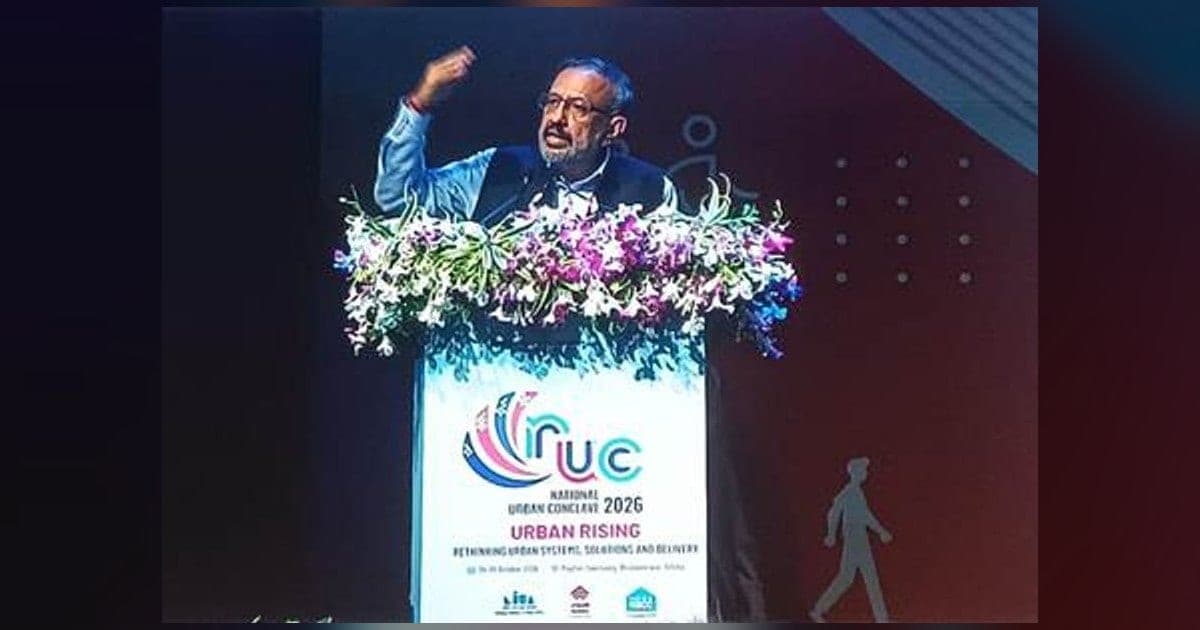
At the 2nd National Urban Conclave, NITI Aayog Member Rajiv Gauba sought directly elected mayors with five-year terms and all 18 functions for cities.
Why in News
At the valedictory session of the 2nd National Urban Conclave, NITI Aayog Member Rajiv Gauba called for empowered city governments, directly elected mayors with five-year terms and full devolution of the 18 functions listed in the 74th Amendment, saying cities cannot be run from State capitals.
India will not reach its Viksit Bharat @ 2047 goal unless the way its cities are planned, governed and paid for is rebuilt from the ground up, Rajiv Gauba, Member of NITI Aayog, said while closing the 2nd National Urban Conclave. He was speaking at the valedictory session of the conclave, and his argument through the address was a single one: towns and cities are where growth is made, and the bodies that run them are the weakest link in the chain.
The scale of the shift ahead
The country's population will keep growing for several more decades and settle at roughly 165 crore around 2060, Gauba said. By 2050 something close to half of all Indians are expected to be living in urban areas, which would take the urban population from about 50 crore at present to 85 crore. Housing, water, transport and the other basic services that many people will need cannot be supplied by the arrangements now in place.
What has gone into cities so far
Planned settlements are old in India, Gauba noted, yet cities were left relatively neglected in the decades after independence. Since 2014 that has been reversed through a series of large missions, among them Smart Cities, AMRUT, the Pradhan Mantri Awas Yojana, Swachh Bharat and the Urban Livelihoods Mission. Money set aside for the urban sector has multiplied ten times over, and metro rail and bus systems alone have drawn investment of close to three and a half lakh crore rupees and more.
| Commitment | Amount |
| Metro rail and bus systems | About 3.7 lakh crore rupees invested |
| Urban Challenge Fund (budget of 2025-26) | 1 lakh crore rupees |
| City economic regions in this year's budget | 5,000 crore rupees each for 7 regions over five years |
| Urban local bodies' share of Central Finance Commission grants | Raised to 45 per cent from 36 per cent |
Mayors who are actually elected
Gauba drew on Moving Towards Effective City Governance, a report prepared jointly by NITI Aayog and the Ministry of Housing and Urban Affairs. It asks for mayors chosen directly by voters for a full term of five years, for a Mayor-in-Council arrangement, and for municipal elections that are held when they are due rather than whenever a State finds it convenient. It also asks States to hand over every one of the 18 functions that the 74th Amendment lists for urban local bodies, master planning, water supply, fire services and traffic among them. A city, he said, cannot be run from the State capital, and only a council with real authority and real staff can answer to the people who live there.
Cities need money of their own
Municipal revenues stay low, and Gauba pressed for better recovery of property tax and user charges. Grants to urban local bodies from the Central Finance Commission have more than doubled over the previous award and their share has risen to 45 per cent from 36 per cent, but what States themselves pass down to cities remains small. He wanted State Finance Commissions constituted on schedule and a dependable flow of funds to municipal bodies.
Planning rules and rental homes
Tight floor area ratios and building norms hold back the supply of land and push up costs for homes and businesses alike, and Gauba asked for them to go. In their place he recommended mixed-use zoning, building around transit hubs and land pooling. Rental housing that migrant workers, factory labour, students and young professionals can afford was the other gap he pointed to, and he urged States to adopt the Model Tenancy Act to widen that supply. All of it, he concluded, can be carried through if States enact new Municipal Acts, and he asked the housing ministry to tie support under the urban missions to those reforms.
Important Facts
| Event | 2nd National Urban Conclave, valedictory session |
|---|---|
| Speaker | Rajiv Gauba, Member, NITI Aayog |
| Goal referred to | Viksit Bharat @ 2047 |
| Population outlook | Stabilising at about 165 crore around 2060 |
| Urban population | From about 50 crore now to 85 crore by 2050 |
| Report cited | Moving Towards Effective City Governance, by NITI Aayog and the Ministry of Housing and Urban Affairs |
| Functions to be devolved | All 18 functions of the 74th Amendment to urban local bodies |
| Mayors | Directly elected, with a term of five years, plus a Mayor-in-Council system |
| Urban Challenge Fund | 1 lakh crore rupees, announced in the budget of 2025-26 |
| City economic regions | 5,000 crore rupees each for 7 regions over five years |
| Finance Commission grants | Share of urban local bodies raised to 45 per cent from 36 per cent |
| Metro rail and bus investment | About 3.7 lakh crore rupees |
Exam Point of View
Remember the speaker (Rajiv Gauba, Member, NITI Aayog), the event (2nd National Urban Conclave), the report (Moving Towards Effective City Governance, by NITI Aayog with the Ministry of Housing and Urban Affairs), the 18 functions of the 74th Amendment, the population numbers (urban population from 50 crore to 85 crore by 2050, total stabilising near 165 crore around 2060), the 1 lakh crore rupee Urban Challenge Fund of the 2025-26 budget, 5,000 crore rupees each for 7 city economic regions, and the rise of the urban local bodies' share in Finance Commission grants to 45 per cent from 36.
Practice Questions
India's urban population is projected to rise from about 50 crore at present to how many by 2050?
- A.65 crore
- B.75 crore
- C.85 crore
- D.95 crore
Show answer
Addressing the closing session of the 2nd National Urban Conclave, Rajiv Gauba, Member of NITI Aayog, said that nearly half of all Indians are expected to be living in urban areas by 2050, and that the urban population would therefore climb from roughly 50 crore at present to 85 crore.
Read the full explanation →How many functions did NITI Aayog ask States to devolve to urban local bodies in line with the 74th Amendment?
- A.11
- B.15
- C.18
- D.29
Show answer
Drawing on the report Moving Towards Effective City Governance, prepared jointly by NITI Aayog and the Ministry of Housing and Urban Affairs, Rajiv Gauba said States must devolve all 18 functions to urban local bodies in line with the 74th Amendment, naming master planning, water supply, fire services and traffic…
Read the full explanation →What is the size of the Urban Challenge Fund announced in the budget of 2025-26?
- A.25,000 crore rupees
- B.50,000 crore rupees
- C.1 lakh crore rupees
- D.2 lakh crore rupees
Show answer
Setting out NITI Aayog's Growth Hub initiative, Rajiv Gauba pointed to the Urban Challenge Fund of 1 lakh crore rupees announced in the budget of 2025-26, meant to develop cities as hubs of growth.
Read the full explanation →The report 'Moving Towards Effective City Governance' has been prepared by NITI Aayog along with which ministry?
- A.Ministry of Home Affairs
- B.Ministry of Housing and Urban Affairs
- C.Ministry of Panchayati Raj
- D.Ministry of Road Transport and Highways
Show answer
Rajiv Gauba referred to Moving Towards Effective City Governance as a report developed jointly by NITI Aayog and that ministry, and he used its recommendations as the backbone of his address: directly elected mayors with terms of five years, a Mayor-in-Council system, municipal elections held on time, and the devolution…
Read the full explanation →Frequently Asked Questions
Who called for empowered city governments at the 2nd National Urban Conclave?
Rajiv Gauba, Member of NITI Aayog, speaking at the valedictory session. He said cities cannot be run from State capitals and sought directly elected mayors, timely municipal elections and the devolution of all 18 functions of the 74th Amendment.
How large is the Urban Challenge Fund and where was it announced?
It is 1 lakh crore rupees and was announced in the budget of 2025-26. It sits within NITI Aayog's Growth Hub initiative, which aims to turn cities into engines of growth. This year's budget separately provides 5,000 crore rupees each for 7 city economic regions over five years.
What does the report Moving Towards Effective City Governance recommend?
Prepared by NITI Aayog with the Ministry of Housing and Urban Affairs, it recommends directly elected mayors with five-year terms, a Mayor-in-Council system, municipal elections held on time, and the transfer to urban local bodies of all 18 functions listed in the 74th Amendment.
How much is India's urban population expected to grow?
From roughly 50 crore at present to 85 crore, with nearly half the country living in urban areas by 2050. India's total population is projected to keep rising for several decades and settle at about 165 crore around 2060.
Sources
- https://www.pib.gov.in/PressReleasePage.aspx?PRID=2328168 (opens in a new tab) — Press Information Bureau
Current Affairs 25 October 2026
- Ramsar Sites in India Reach 103 With Sukhna and Sauj JheelEnvironment
- India Wins Record 114 Medals at Asian Para Games 2026Sports
- Mann Ki Baat 139th Episode Flags 50 Crore e-Sanjeevani CallsNational
- Special Campaign 6: NLC India Earns 3.12 Crore From ScrapGovernment Schemes
Related Current Affairs
- Summits & Conferences
Bhubaneswar to Host 19th Urban Mobility India Conference
22 October 2026 · 2 min read
- Reports & Indices
NITI Aayog Unveils Data Centre Evaluation Framework for States
15 October 2026 · 2 min read
- Science & Technology
ESTIC 2026 Curtain-Raiser Highlights Physical AI, Robotics
15 October 2026 · 2 min read
- Government Schemes
Mission for Aatmanirbharta in Pulses Completes One Year
11 October 2026 · 2 min read




Related GK
- Sustainable Development and the SDGs: All 17 Goals
9 October 2026 · Environment & Ecology
- Planning in India and NITI Aayog: Plans, Models and Bodies
25 September 2026 · Indian Economy
Take the Quiz
- Current Affairs Quiz
State Exams Current Affairs Quiz: 25 October 2026
19 questions19 minutesStart Quiz