
DRDO Makes Maiden Live Jump of High-Altitude Parachute AHAP
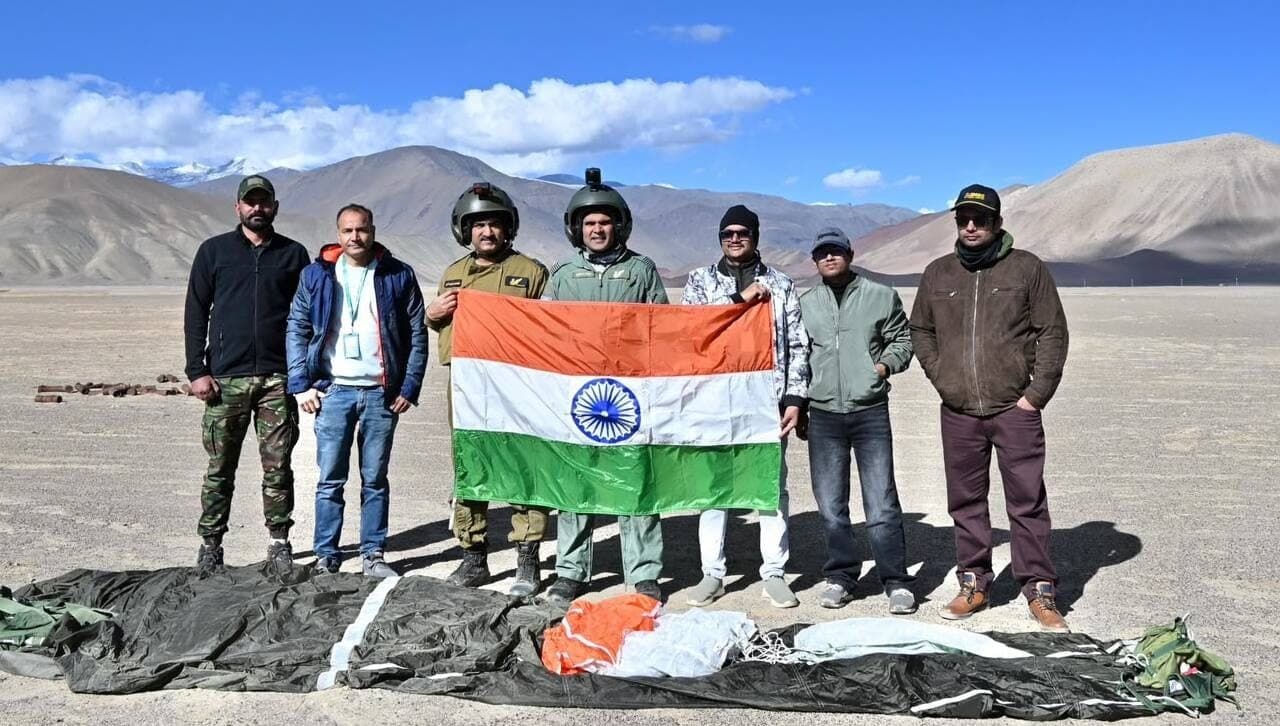
DRDO carried out the first live jump of the Advanced High-Altitude Parachute at Nyoma, from 16,000 feet above mean sea level, landing at 13,700 feet.
Why in News
On 6 October 2026 DRDO conducted the first live jump of the indigenous Advanced High-Altitude Parachute at the Nyoma (Mudh DZ) drop zone, proving its use over extremely high-altitude terrain.
The Defence Research and Development Organisation (DRDO) carried out the maiden live jump of the Advanced High-Altitude Parachute (AHAP) at Nyoma (Mudh DZ), one of the highest drop zones in use, the ministry said on 6 October 2026.
How the jump was made
The jumper exited at 16,000 feet above mean sea level. The canopy was deployed at 15,500 feet, and the landing was made at the Nyoma drop zone, which itself lies at 13,700 feet. The jump established that the parachute works and can be used tactically over extremely high-altitude terrain.
Why such a jump is difficult
A static line jump at this height is risky by its nature. Thin air gives the canopy less to grip, so the opening shock is severe and the rate of descent high. A parachute built for the plains therefore cannot simply be carried to the mountains; the system has to be designed for that air.
What AHAP is
- A static line parachute system for the mass drop of paratroopers, where the canopy opens automatically as the jumper leaves the aircraft.
- Designed and developed by the Aerial Delivery Research and Development Establishment (ADRDE), Agra.
- Manufactured by the Ordnance Parachute Factory (OPF), Kanpur.
- Inspected by DGAQA and certified by CEMILAC, RCMA Kanpur.
The system offers several deployment modes and a wide operational altitude range reaching up to 18,000 feet. Its rate of descent is described as the safest available, which is what the high-altitude terrain of the Indian forces demands.
Who said what
Defence Minister Rajnath Singh complimented DRDO, the defence forces, defence public sector undertakings and industry on the successful maiden live jump of the indigenous parachute system and called it another big step towards Aatmanirbhar Bharat. Defence Secretary and Secretary, Department of Defence R&D, and DRDO Chairman Rajesh Kumar Singh congratulated the team that designed and developed the system.
At a glance
| System | Advanced High-Altitude Parachute (AHAP) |
| Drop zone | Nyoma (Mudh DZ) |
| Exit altitude | 16,000 feet above mean sea level |
| Deployment | 15,500 feet |
| Landing elevation | 13,700 feet |
Important Facts
| System | Advanced High-Altitude Parachute (AHAP) |
|---|---|
| Event | Maiden live jump conducted by DRDO |
| Drop zone | Nyoma (Mudh DZ), one of the highest-altitude drop zones |
| Exit altitude | 16,000 feet above mean sea level |
| Deployment altitude | 15,500 feet above mean sea level |
| Landing elevation | 13,700 feet |
| Operational range | Up to 18,000 feet |
| Type | Static line parachute system for mass drop of paratroopers |
| Designed by | Aerial Delivery Research and Development Establishment (ADRDE), Agra |
| Manufactured by | Ordnance Parachute Factory (OPF), Kanpur |
| Certification | Inspected by DGAQA, certified by CEMILAC, RCMA Kanpur |
Exam Point of View
Remember the system (Advanced High-Altitude Parachute, AHAP), the drop zone (Nyoma, Mudh DZ), the three altitudes (exit at 16,000 feet, deployment at 15,500 feet, landing at 13,700 feet), the operational ceiling (18,000 feet), the designer (ADRDE, Agra) and the maker (Ordnance Parachute Factory, Kanpur).
Practice Questions
At which drop zone did DRDO conduct the maiden live jump of the Advanced High-Altitude Parachute?
- A.Agra
- B.Nyoma (Mudh DZ)
- C.Pokhran
- D.Chandipur
Show answer
Correct answer: B. Nyoma (Mudh DZ)
Explanation
The correct answer is Nyoma (Mudh DZ), described as one of the highest-altitude drop zones. The jump was executed at 16,000 feet above mean sea level, the canopy was deployed at 15,500 feet and the landing was made at the drop zone itself, which lies at 13,700 feet. The exercise proved the efficacy and tactical employability of the parachute over extremely high-altitude terrain. Option A is wrong: Agra is where the designing laboratory sits, not where this jump was made. Option C is wrong because the desert range is not the site named for this trial, and the point of the jump was high elevation rather than open desert. Option D is wrong because the coastal test range is used for missile trials, not for a high-altitude parachute jump. Candidates should remember the three altitudes of the jump along with the name of the drop zone.
At what altitude above mean sea level was the AHAP jump executed?
- A.10,000 feet
- B.13,700 feet
- C.16,000 feet
- D.22,000 feet
Show answer
Correct answer: C. 16,000 feet
Explanation
The correct answer is 16,000 feet. The jump was made from that altitude above mean sea level, after which the parachute was deployed at 15,500 feet and the landing was undertaken at the Nyoma drop zone. Option A is wrong because the exit was considerably higher than that figure. Option B is a careful distractor: that is the elevation of the landing zone itself, not the height from which the jumper exited, and the two are often confused in questions. Option D is wrong because no such exit altitude is recorded for this jump, although the system is cleared for use over a wide operational band. Static line jumps at these heights are complex and inherently risky because of the very high opening shock and rate of descent, which is why the maiden live jump counts as a milestone for the indigenous system.
Which organisation manufactures the Advanced High-Altitude Parachute?
- A.Ordnance Parachute Factory, Kanpur
- B.Hindustan Aeronautics Limited, Bengaluru
- C.Bharat Dynamics Limited, Hyderabad
- D.Mishra Dhatu Nigam, Hyderabad
Show answer
Correct answer: A. Ordnance Parachute Factory, Kanpur
Explanation
The correct answer is the Ordnance Parachute Factory (OPF), Kanpur. The system has been designed and developed by the Aerial Delivery Research and Development Establishment at Agra and manufactured at the Kanpur factory; it is inspected by DGAQA and certified by CEMILAC, RCMA Kanpur. Option B is wrong because the aircraft maker is not involved in producing this parachute. Option C is wrong because that undertaking makes missiles and related systems, not parachute canopies. Option D is wrong because that company works in special metals and alloys. The division of work is worth remembering as a chain: design at Agra, manufacture at Kanpur, inspection by DGAQA and certification by CEMILAC. The Defence Minister called the successful maiden live jump another big step towards Aatmanirbhar Bharat.
Frequently Asked Questions
From what height was the maiden AHAP jump made?
The jump was executed at 16,000 feet above mean sea level. The parachute was deployed at 15,500 feet and the landing was made at the Nyoma (Mudh DZ) drop zone, which lies at 13,700 feet.
What kind of parachute is AHAP?
It is a static line parachute system meant for the mass drop of paratroopers, with several deployment modes, an operational altitude range reaching up to 18,000 feet and a rate of descent described as the safest available.
Who designed and who manufactures AHAP?
The Aerial Delivery Research and Development Establishment at Agra designed and developed it, and the Ordnance Parachute Factory at Kanpur manufactures it. DGAQA inspects the system and CEMILAC, RCMA Kanpur certifies it.
Sources
- https://www.pib.gov.in/PressReleasePage.aspx?PRID=2319589 (opens in a new tab) — Press Information Bureau
Current Affairs 6 October 2026
- eSanjeevani Crosses 50 Crore Teleconsultations in IndiaGovernment Schemes
- VB-G RAM G Schedule Notifies 375 Permissible Rural WorksGovernment Schemes
- Steel Ministry to Set Up Steel Industry Safety Council (SISC)Economy
- MoD Signs Rs 661.50 Crore BrahMos Fire Control System DealDefence
- First Fleet Support Ship Surya Launched at HSL VisakhapatnamDefence
- ARIES Study Tracks Blazar OJ 287 Twin Black Holes for a DecadeScience & Technology
- India Joins 153rd IPU Assembly at Arusha in TanzaniaInternational
- ESTIC 2026 Ocean Sciences Curtain Raiser Held at KochiSummits & Conferences
Related Current Affairs
- Defence
DRDO Signs First High-Value TDF Deep Tech Pact with Quantum Start-up
24 September 2026 · 2 min read
- Defence
43rd Indian Coast Guard Commanders' Conference Begins in New Delhi
17 September 2026 · 2 min read




Related GK
- Missile Systems of India: Agni, BrahMos and IGMDP
29 September 2026 · Science & Technology
- Indian Organisations and Headquarters: City-wise List
29 September 2026 · Static GK
- DRDO and Defence Technology: Missiles and Labs
29 September 2026 · Science & Technology
Take the Quiz
- Current Affairs Quiz
Defence Current Affairs Quiz: 6 October 2026
12 questions12 minutesStart Quiz