
AATAL Lab Opens in Delhi to Trace Air Pollution Sources
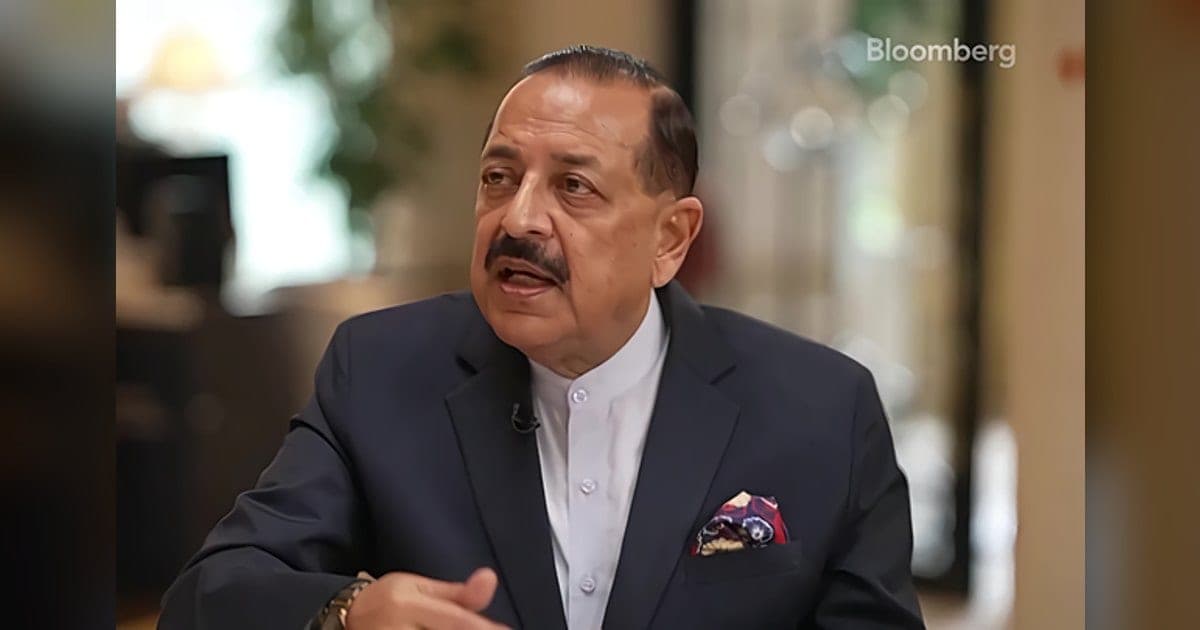
Dr Jitendra Singh opened AATAL, called the world's first integrated air pollution analysis laboratory for Delhi NCR, at the IITM Delhi branch under Mission Mausam.
Why in News
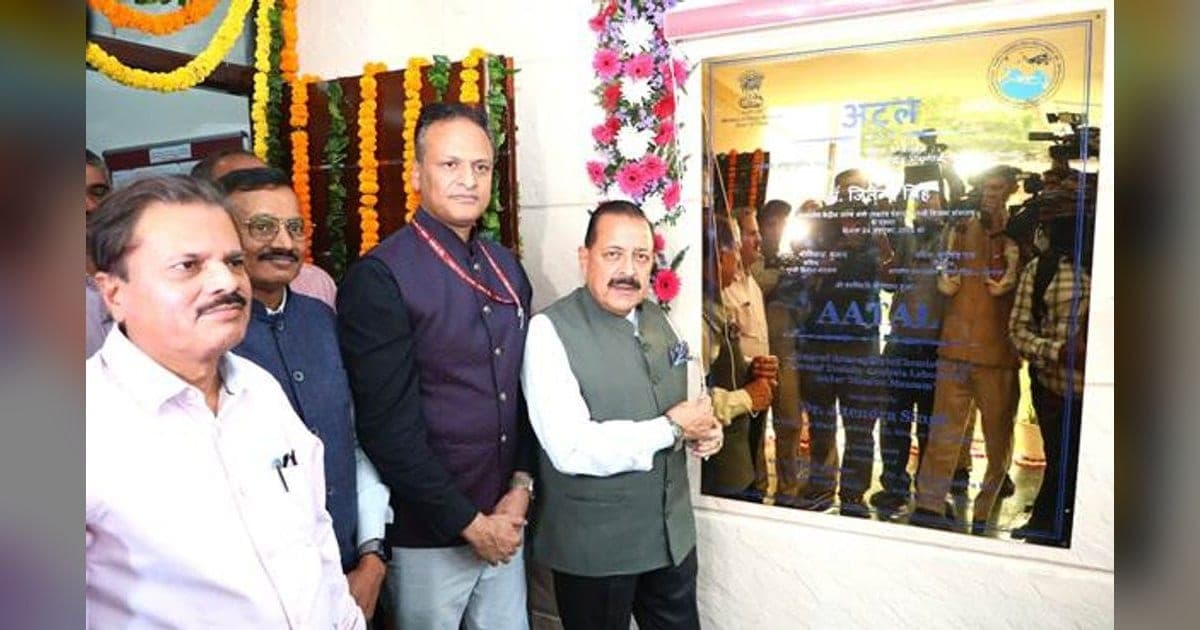
On 24 October 2026 Dr Jitendra Singh inaugurated AATAL, the Integrated Atmospheric Chemistry and Aerosol Toxicity Analysis Laboratory, at the Delhi branch of IITM, a facility for Delhi NCR that identifies the sources of air pollution in real time under Mission Mausam.
The Union Ministry of Earth Sciences has opened AATAL, short for the Integrated Atmospheric Chemistry and Aerosol Toxicity Analysis Laboratory, a facility built to tell Delhi NCR not merely how dirty its air is but what the dirt is made of and where it drifts in from. Minister of State (Independent Charge) for Science and Technology and Earth Sciences Dr Jitendra Singh inaugurated it at the Delhi branch of the Indian Institute of Tropical Meteorology, describing it as the first integrated facility of its kind anywhere in the world. Delhi NCR was picked for it because of the public alarm over the air there.
What the laboratory does
A reading of the pollution level alone cannot say which activity caused it. AATAL is equipped to split the load in the air among its sources in real time: vehicular exhaust, industrial activity, biomass and crop-residue burning, construction and road dust, and pollution carried in from neighbouring regions. Each source gets a share against its name, so an agency can see which activity is driving a bad day. The minister pointed to a screen during the launch that showed transport accounting for roughly 25 per cent of the capital's pollution at that moment, with the overall level near 180.
Chemistry and toxicity under one roof
Instruments at the laboratory break down the chemical make-up of atmospheric gases and aerosols, including fine particulate matter (PM2.5), metals and other toxic elements. Two particles of the same weight need not carry the same risk, so composition and likely toxicity are measured alongside concentration. That gives health authorities evidence on which kinds of particulate pollution are the more harmful, and a basis for working with scientific and environmental bodies on the health effects.
Tied to the AIRWISE forecast system
AATAL feeds IITM's AIRWISE, the Air Quality Warning and Integrated Decision Support System for Emissions. AIRWISE issues forecasts at a spatial resolution of 400 metres for the following 72 hours, fine enough to separate one pocket of Delhi from the next and to name the sources likely to spoil the air in a given locality. Dr Jitendra Singh said the combined capability would offer live readings together with an outlook for the next four days. Dr Sachin Ghude, Project Director of MAQWS, called the resolution a match for forecasting systems abroad and said it could be extended to other cities.
Who will use the evidence
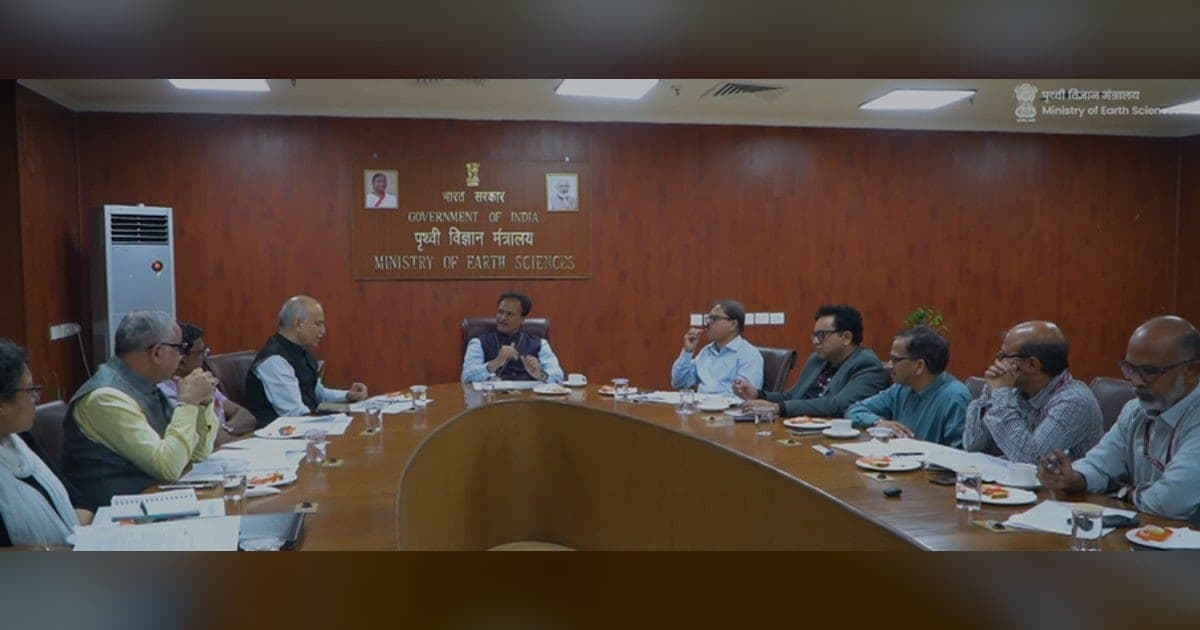
The Commission for Air Quality Management and other enforcement agencies get measurement-based grounds for choosing the sector and the locality to act on first, and for judging afterwards whether the action worked, including steps taken under the Graded Response Action Plan. The facility sits under Mission Mausam, announced by Prime Minister Narendra Modi, and the minister called it an example of a whole-of-government approach. Secretary, Ministry of Earth Sciences, Dr T. Srinivasa Kumar, IITM Director Dr A. Suryachandra Rao and IMD Director General Dr Mahapatra were present at the inauguration.
Important Facts
| Facility | Integrated Atmospheric Chemistry and Aerosol Toxicity Analysis Laboratory (AATAL) |
|---|---|
| Inaugurated by | Dr Jitendra Singh, Minister of State (Independent Charge) for Science and Technology and Earth Sciences |
| Ministry | Ministry of Earth Sciences |
| Venue | Delhi branch of the Indian Institute of Tropical Meteorology (IITM) |
| Mission | Mission Mausam, announced by Prime Minister Narendra Modi |
| Linked system | AIRWISE, the Air Quality Warning and Integrated Decision Support System for Emissions |
| Forecast detail | 400 metres spatial resolution for the next 72 hours |
| Shown at launch | Transport contributing about 25 per cent of Delhi's pollution, overall level around 180 |
| Agencies served | Commission for Air Quality Management (CAQM) and action under the Graded Response Action Plan (GRAP) |
| Claim | First integrated air pollution analysis facility of its kind in the world |
Exam Point of View
Remember the full form of AATAL, the ministry behind it (Earth Sciences), the host institute (IITM, Delhi branch), who inaugurated it (Dr Jitendra Singh), the mission it falls under (Mission Mausam), the linked system AIRWISE with its 400-metre resolution and 72-hour forecast, and the agencies it serves, CAQM and the Graded Response Action Plan.
Practice Questions
What does AATAL, the new facility set up for Delhi NCR, stand for?
- A.Advanced Aerosol Tracking and Atmospheric Laboratory
- B.Integrated Atmospheric Chemistry and Aerosol Toxicity Analysis Laboratory
- C.All India Air Toxicity Assessment Laboratory
- D.Atmospheric Analysis and Thermal Aerosol Laboratory
Show answer
That is the full form of AATAL, the facility inaugurated for Delhi NCR by Dr Jitendra Singh at the Delhi branch of the Indian Institute of Tropical Meteorology.
Read the full explanation →Under which mission has the AATAL air pollution analysis laboratory for Delhi NCR been established?
- A.Mission LiFE
- B.National Clean Air Programme
- C.Mission Mausam
- D.Mission Vayu Shakti
Show answer
The laboratory has been established under Mission Mausam, announced by Prime Minister Narendra Modi, to deepen the scientific understanding of atmospheric pollution and to supply usable evidence for managing air quality in Delhi NCR.
Read the full explanation →At what spatial resolution, and for how long ahead, does the AIRWISE system linked with AATAL forecast air quality?
- A.400 metres, for the next 72 hours
- B.1 kilometre, for the next 48 hours
- C.100 metres, for the next 24 hours
- D.4 kilometres, for the next 96 hours
Show answer
AIRWISE, the Air Quality Warning and Integrated Decision Support System for Emissions, issues air-quality forecasts at a spatial resolution of 400 metres for the following 72 hours.
Read the full explanation →Which share of Delhi's air pollution was shown as coming from transport on the screen at the inauguration of AATAL?
- A.About 10 per cent
- B.About 25 per cent
- C.About 45 per cent
- D.About 60 per cent
Show answer
Explaining what real-time source apportionment means, Dr Jitendra Singh pointed to a screen showing that at that moment transport was contributing roughly 25 per cent of the air pollution in Delhi, while the overall pollution level stood at around 180.
Read the full explanation →Frequently Asked Questions
What is AATAL?
AATAL is the Integrated Atmospheric Chemistry and Aerosol Toxicity Analysis Laboratory, opened for Delhi NCR at the Delhi branch of IITM. It analyses the chemical make-up of gases and aerosols and identifies the sources of air pollution in real time.
Which system is AATAL integrated with, and what does that system forecast?
It is integrated with AIRWISE, the Air Quality Warning and Integrated Decision Support System for Emissions, which forecasts air quality at a resolution of 400 metres for the next 72 hours across different pockets of Delhi.
Under which mission has the laboratory been set up?
Under Mission Mausam, announced by Prime Minister Narendra Modi, and implemented through the Ministry of Earth Sciences. Dr Jitendra Singh inaugurated the facility.
Sources
- https://www.pib.gov.in/PressReleasePage.aspx?PRID=2327957 (opens in a new tab) — Press Information Bureau
Current Affairs 24 October 2026
- Great Indian Bustard Rewilding Begins at Desert National ParkEnvironment
- 11 Crore Farmer IDs Created Under Digital Agriculture MissionGovernment Schemes
- VB-G RAM G Guarantees 125 Days of Rural Wage EmploymentGovernment Schemes
- 8th All India Conference of GRP Chiefs Concludes in New DelhiNational
- Piyush Goyal Ends Germany Visit With Berlin Industry MeetingsInternational
- Shram Samvad Campaign Covers 316 Districts on Labour CodesGovernment Schemes
Related Current Affairs
- Science & Technology
ARIES Study Explains High-Frequency QPOs Near Spinning Black Holes
23 October 2026 · 2 min read
- Science & Technology
C-DOT Opens Sixth Centre of Excellence at IIT (BHU) Varanasi
23 October 2026 · 2 min read
- Science & Technology
SAEINDIA to Host 23rd APAC Mobility Conference in New Delhi
22 October 2026 · 2 min read
- Science & Technology
RRI Study Finds Accretion Disk Around Pulsar Centaurus X-3
21 October 2026 · 2 min read
- Science & Technology
MoES-AcSIR MoU: 10 Earth Science Institutes to Award PhDs
19 October 2026 · 2 min read

Related GK
- Panchayati Raj and Urban Local Bodies of Madhya Pradesh Notes
24 October 2026 · Madhya Pradesh
- Punjab and Haryana High Court, HPSC and State Commissions
24 October 2026 · Haryana
- Panchayati Raj and Urban Local Bodies of Bihar: Tiers and Articles
24 October 2026 · Bihar
Take the Quiz
- Current Affairs Quiz
State Exams Current Affairs Quiz: 24 October 2026
24 questions24 minutesStart Quiz