
Swachh Bharat Mission and Its Behaviour Change Journey
A PIB backgrounder traces how the Swachh Bharat Mission, launched on 2 October 2014, used communication to turn sanitation into a shared social habit.
Why in News
A PIB backgrounder published on 2 October 2026 explains the Social and Behaviour Change Communication approach of the Swachh Bharat Mission, from Swachhagrahis and Nigrani Samitis to celebrity campaigns and certification protocols.
A background paper released on 2 October 2026 sets out how the Swachh Bharat Mission (SBM) used Social and Behaviour Change Communication, or SBCC, to make cleanliness a matter of daily habit rather than of construction alone.
The mission in brief
SBM was launched on 2 October 2014 and works through two components, SBM-Grameen for villages and SBM-Urban for towns and cities. The goal set at the start was a clean India by the 150th birth anniversary of Mahatma Gandhi in 2019, and rural India was declared free of open defecation on 2 October 2019. The logo of the mission shows the spectacles of Mahatma Gandhi, a device that made the campaign instantly recognisable.
Gandhi as the moral anchor
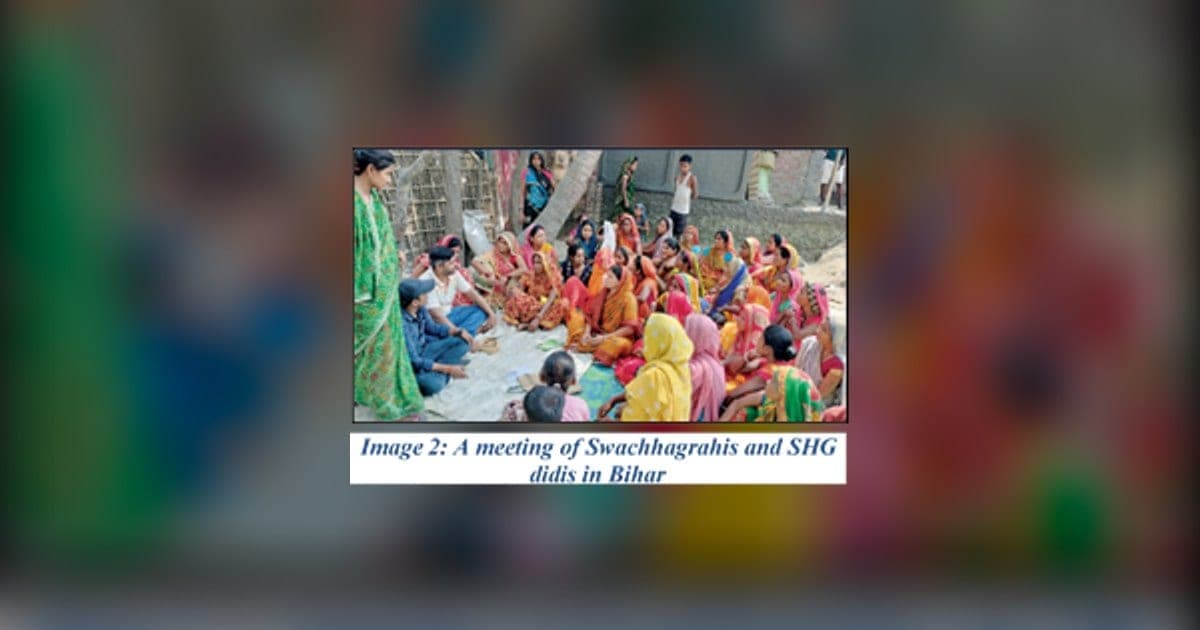
The paper notes that Mahatma Gandhi began his cleanliness work from Champaran during the Satyagraha, that his book Ashram Observances in Action called sanitary service sacred, and that his Sevagram Ashram expected inmates to clean the premises by turns. The word Swachhagrahi was coined from Satyagraha, casting volunteers as participants in a collective Swachhagraha. Swachhagrahis made household visits and strengthened village Nigrani Samitis, which kept watch at common open defecation spots in the morning and evening; their field kit included a torch and a whistle.
Media, cinema and digital tools
Puppet shows, magic shows and nukkad natak carried the message in village squares, while wall paintings put it on public walls. More than 67,000 public toilet blocks in over 3,300 cities were placed on Google Maps, and the Swachhata App became a single window for cleanliness complaints. Film stars were enlisted as well: Amitabh Bachchan and Sachin Tendulkar featured in campaigns in 2016, the Darwaza Band campaign of 2017 brought in Anushka Sharma, and in 2018 Akshay Kumar and Bhumi Pednekar promoted twin-pit toilet technology.
Dignity, protocols and rewards
A study done with the Ministry of Jal Shakti found that 93 percent of women no longer feared being hurt while relieving themselves and 91 percent saved as much as an hour of time. In Bihar toilets came to be called Izzatghars. Outcomes are certified through ODF, ODF+, ODF++, Water+ and the Star Rating protocol for Garbage Free Cities. In Panchayat Halqa Hiller in Jammu and Kashmir, a Give Polythene Get Gold drive offered gold coins against fixed quantities of plastic waste.
Important Facts
| Launch | Swachh Bharat Mission, 2 October 2014 |
|---|---|
| Components | SBM-Grameen for rural areas and SBM-Urban for cities |
| Original target | A clean India by the 150th birth anniversary of Mahatma Gandhi in 2019 |
| Rural ODF declaration | 2 October 2019 |
| Logo | The spectacles of Mahatma Gandhi |
| Digital mapping | Over 67,000 public toilet blocks in more than 3,300 cities on Google Maps |
| Certification ladder | ODF, ODF+, ODF++, Water+ and the Star Rating protocol for Garbage Free Cities |
| Local incentive example | Give Polythene Get Gold in Panchayat Halqa Hiller, Jammu and Kashmir |
Exam Point of View
Remember the launch date of the Swachh Bharat Mission, its two components, the 150th birth anniversary target and the open defecation free declaration for rural India in 2019, the spectacles in the logo, the meaning of Swachhagrahi and Nigrani Samiti, the ladder of ODF, ODF+, ODF++ and Water+, the Star Rating protocol for Garbage Free Cities, and the figure of 67,000 public toilet blocks on Google Maps.
Practice Questions
The Swachh Bharat Mission was launched on which date?
- A.2 October 2014
- B.15 August 2014
- C.2 October 2019
- D.1 April 2015
Show answer
Correct answer: A. 2 October 2014
Explanation
The correct answer is 2 October 2014. The mission was launched on that date and grew into one of the largest government-led sanitation movements in the country, working through two components, one for rural areas and one for urban areas. Option B is wrong because that date is Independence Day of the same year, when the idea was spoken of but the mission itself had not been rolled out. Option C is wrong because that date marks the declaration of rural India as free of open defecation and the anniversary set as the original target, not the launch. Option D is wrong because it names the start of a financial year and has no link with the launch. A simple way to hold the dates together is that the mission started on a Gandhi Jayanti and reported its rural milestone on another Gandhi Jayanti five years later.
What does the logo of the Swachh Bharat Mission depict?
- A.The charkha of Mahatma Gandhi
- B.The spectacles of Mahatma Gandhi
- C.The walking stick of Mahatma Gandhi
- D.The sandals of Mahatma Gandhi
Show answer
Correct answer: B. The spectacles of Mahatma Gandhi
Explanation
The correct answer is the spectacles of Mahatma Gandhi. The logo of the mission is built around the round glasses associated with the Father of the Nation. The backgrounder explains that this helped build brand value for the campaign, carried the emotion attached to cleanliness and let ordinary people connect with the mission quickly and easily. Option A is wrong because the spinning wheel, though strongly tied to Gandhi and to Khadi, is not the symbol used in the logo. Option C and option D name other objects associated with Gandhi in popular memory, but neither of them appears in the mission mark. Alongside the logo, candidates should also remember that the term Swachhagrahi was deliberately coined from Satyagraha, so that volunteers were seen as taking part in a collective Swachhagraha.
Which certification protocol covers the safe containment, evacuation, transportation and processing of faecal sludge?
- A.ODF
- B.ODF+
- C.ODF++
- D.Water+
Show answer
Correct answer: C. ODF++
Explanation
The correct answer is ODF++. This protocol goes beyond the availability and upkeep of toilets and looks at what happens to faecal sludge after it leaves the toilet, covering its safe containment, evacuation, transportation and processing so that untreated sludge does not flow into open drains, water bodies or fields. Option A is wrong because the plain ODF protocol is about ensuring that every citizen has access to a toilet. Option B is wrong because ODF+ extends that focus to community and public toilets that are functional, usable and properly maintained, which helps prevent slippage back to open defecation. Option D is wrong because Water+ is the next rung, dealing with untreated black water and grey water and encouraging reuse of a share of treated wastewater. Learn the ladder in order: ODF, ODF+, ODF++ and then Water+.
Frequently Asked Questions
When was the Swachh Bharat Mission launched and what was its target?
It was launched on 2 October 2014 with the aim of a clean India by the 150th birth anniversary of Mahatma Gandhi in 2019. Rural India was declared open defecation free on 2 October 2019.
What does the Swachh Bharat Mission logo show?
The spectacles of Mahatma Gandhi. The device gave the mission a brand value that people could associate with quickly, linking cleanliness to the ideals of the Father of the Nation.
What is the difference between ODF+ and ODF++?
ODF+ covers functional and well-maintained community and public toilets, while ODF++ adds the safe containment, evacuation, transport and processing of faecal sludge so that untreated sludge does not reach drains or water bodies.
Sources
- https://www.pib.gov.in/PressReleasePage.aspx?PRID=2318140 (opens in a new tab) — Press Information Bureau
Current Affairs 2 October 2026
- Survey of India Marks 28 Standard Place Names in LadakhNational
- Special Campaign 6 Starts With E-Waste Disposal in FocusGovernment Schemes
- Meghwal Leads Ek Ped Maa Ke Naam Drive at IIAC in DelhiEnvironment
- RoDTEP Export Scheme Extended Up to 31 December 2026Economy
- RELIEF Timelines Extended for West Asia Route ExportersEconomy
- Goyal at G20 Trade Ministers Meeting in Milwaukee, USSummits & Conferences
- APEDA Sends Bihar Makhana From Purnea to GreeceEconomy
- NITI Aayog Holds SDG Budgeting Workshop in KolkataNational
Related Current Affairs
- Government Schemes
Innovative Public Toilets Mark 12 Years of Swachh Bharat
2 October 2026 · 2 min read
- Government Schemes
Special Campaign 6 Starts With E-Waste Disposal in Focus
2 October 2026 · 2 min read
- Government Schemes
SETU NSP App Brings Scholarship Services to One Platform
1 October 2026 · 2 min read
Related GK
- Artificial Intelligence and the IndiaAI Mission: Exam Notes
2 October 2026 · Science & Technology
- Chhattisgarh GK: Formation, Minerals and Culture
2 October 2026 · Indian States & UTs
- Famous Cities and Their Nicknames: Full List
2 October 2026 · Static GK
Take the Quiz
- Current Affairs Quiz
SSC CHSL Current Affairs Quiz: 2 October 2026
23 questions23 minutesStart Quiz