
Goyal at G20 Trade Ministers Meeting in Milwaukee, US
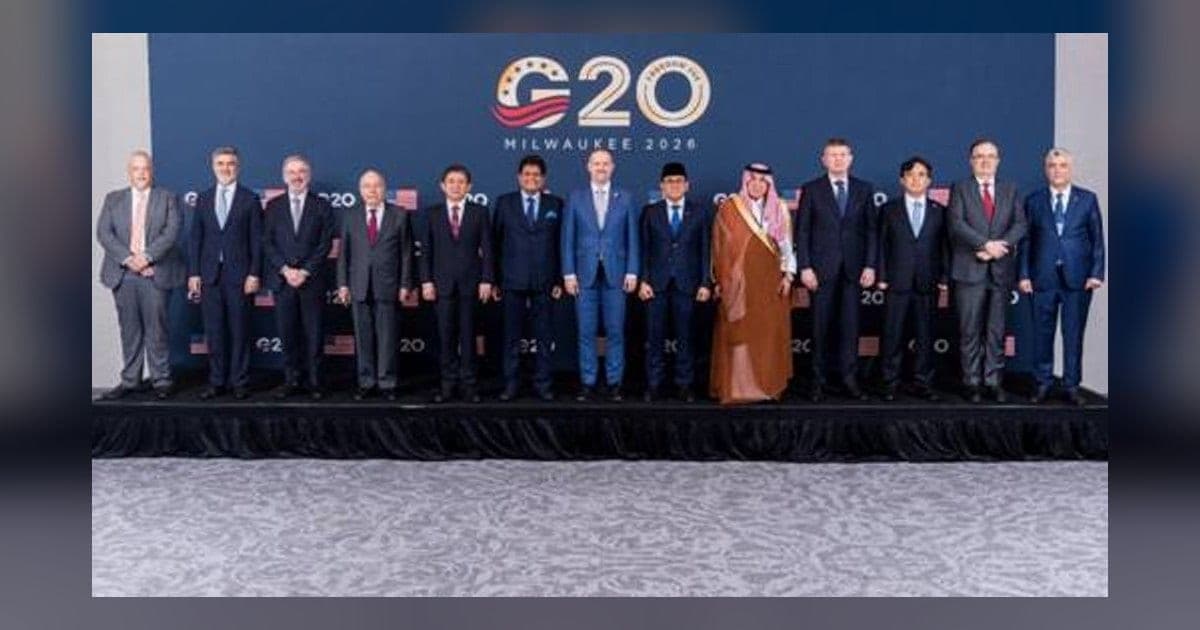
Piyush Goyal attended the closing day of the G20 Trade Ministers Meeting at Milwaukee and asked that trade distortions be corrected only through WTO-consistent means.
Why in News
On 2 October 2026 the Ministry of Commerce and Industry reported that Piyush Goyal, on the concluding day of the G20 Trade Ministers Meeting in Milwaukee, Wisconsin, pressed for a WTO-compliant route to correcting global trade distortions and for evidence-based trade measures on forced labour.
India took the floor on the last day of the G20 Trade Ministers Meeting held at Milwaukee, in the American state of Wisconsin. Union Minister of Commerce and Industry Piyush Goyal spoke in the sessions on structural excess capacity and production, on refreshing the Most-Favoured-Nation principle, on putting an end to forced labour in global supply chains, and in the closing session.
On excess capacity
Mr Goyal described India as the fastest growing large economy in the world, one driven by its own demand and serving a population of 1.4 billion, and said the country is assembling manufacturing value chains that run from design through to the finished article. In the sectors the G20 Presidency had singled out, he said, India carries no structural excess capacity. He agreed with the worry many members hold that trade-distorting support in certain economies can end in dumping and predatory pricing, but said the cure lies in measures the World Trade Organization permits, such as anti-dumping and countervailing duties, resting on evidence and open to judicial review. Industrial capacity by itself is not the problem, he argued; distortion creeps in when production clusters in one geography because of hidden subsidies.
On the MFN principle
He called Most-Favoured-Nation treatment the central guarantee of a rules-based system, the rule that makes the same terms apply to the smallest trader and the largest alike. Consensus, he said, remains the heart of the WTO, special and differential treatment must be kept so that developing countries can close the gap, and the two-tier dispute settlement system should be restored.
On forced labour
India opposition to forced labour is absolute and unconditional, the minister said. He pointed to Article 23 of the Constitution, which forbids forced labour as a fundamental right enforceable by the Supreme Court, to India ratification of ILO Conventions 29 and 105, and to the amendment of the Foreign Trade Policy in July 2026 barring the import of goods made with forced labour. Action at the border, he added, must rest on specific and verifiable evidence rather than on presumptions about whole countries or sectors, and the International Labour Organization is the competent universal tripartite body on labour standards.
Closing notes
Mr Goyal thanked the United States Presidency for the arrangements and extended India full support to the United Kingdom for its G20 Presidency in 2027. On the margins he met the trade ministers of Australia, Saudi Arabia, France, the Republic of Korea and Canada.
Important Facts
| Event | G20 Trade Ministers Meeting, concluding day |
|---|---|
| Venue | Milwaukee, Wisconsin, United States |
| India represented by | Piyush Goyal, Union Minister of Commerce and Industry |
| Current G20 Presidency | United States |
| Next G20 Presidency backed by India | United Kingdom, in 2027 |
| Constitutional provision cited | Article 23, which prohibits forced labour as a fundamental right |
| ILO Conventions ratified by India | Conventions 29 and 105 on forced labour |
| Trade policy change cited | Foreign Trade Policy amended in July 2026 to prohibit import of goods produced with forced labour |
| Dispute settlement demand | Restoration of the two-tier dispute settlement system at the WTO |
| Bilateral meetings | Trade ministers of Australia, Saudi Arabia, France, the Republic of Korea and Canada |
Exam Point of View
Hold the venue and host: Milwaukee in Wisconsin, under the United States G20 Presidency, with the United Kingdom taking the Presidency in 2027. The four themes Goyal spoke on are a ready list. On forced labour, three facts repay memorising: Article 23 of the Constitution, ILO Conventions 29 and 105 ratified by India, and the Foreign Trade Policy amendment of July 2026 banning imports of goods made with forced labour. Also note the demand to restore the two-tier dispute settlement system and to keep special and differential treatment.
Practice Questions
In which American city was the G20 Trade Ministers Meeting attended by Piyush Goyal held?
- A.Chicago, Illinois
- B.Milwaukee, Wisconsin
- C.Detroit, Michigan
- D.Minneapolis, Minnesota
Show answer
Correct answer: B. Milwaukee, Wisconsin
Explanation
The correct answer is Milwaukee, Wisconsin, where the Union Minister of Commerce and Industry joined the concluding day of the G20 Trade Ministers Meeting under the United States Presidency. Options A, C and D name other large cities of the American Midwest, close enough geographically to be tempting, but the meeting was not held in any of them. Candidates should fix two further markers along with the city. First, the host of the current G20 Presidency is the United States, and India extended full support to the United Kingdom for the Presidency that follows in 2027. Second, the Indian minister spoke in four sessions at the meeting: on structural excess capacity and production, on updating the Most-Favoured-Nation principle, on ending forced labour in global supply chains, and in the closing session. Pairing the venue with the host country and the next host is the safest way to answer whichever form the question takes.
Which Article of the Constitution of India, cited by the minister at the G20 meeting, prohibits forced labour as a fundamental right?
- A.Article 19
- B.Article 21
- C.Article 23
- D.Article 32
Show answer
Correct answer: C. Article 23
Explanation
The correct answer is Article 23. Speaking on ending forced labour in global supply chains, the minister said India commitment to eliminating forced labour is absolute and unconditional, and that the Constitution forbids forced labour as a fundamental right enforceable by the Supreme Court. Option A, Article 19, carries the freedoms of speech, assembly, association, movement, residence and profession, not this prohibition. Option B, Article 21, protects life and personal liberty. Option D, Article 32, is the right to move the Supreme Court for enforcement of fundamental rights, which is the route by which the prohibition is enforced rather than the prohibition itself, and that proximity makes it the strongest distractor. Alongside the Article, remember the two international instruments the minister named, the forced labour conventions of the International Labour Organization numbered twenty-nine and one hundred and five, both ratified by India.
Which country did India back for the G20 Presidency in 2027 at the Milwaukee meeting?
- A.France
- B.Canada
- C.Republic of Korea
- D.United Kingdom
Show answer
Correct answer: D. United Kingdom
Explanation
The correct answer is the United Kingdom, to which India extended its full support for the G20 Presidency that follows the American one. The three wrong options are not random: the Indian minister held bilateral meetings on the sidelines of the Milwaukee meeting with the Minister for Trade and Tourism of Australia, the Minister of Commerce of Saudi Arabia, the Minister Delegate for Foreign Trade and Economic Attractiveness of France, the Minister for Trade of the Republic of Korea and the Minister of International Trade of Canada. France, Canada and Korea therefore appear in the same news item, which is exactly why an examiner would place them beside the right answer. Keep the two lists apart in memory: the country taking the next Presidency, and the five countries whose trade ministers India met bilaterally at the venue.
Which of the following did the Indian minister seek at the G20 Trade Ministers Meeting?
- A.Abolition of special and differential treatment for developing countries
- B.Restoration of the two-tier dispute settlement system at the WTO
- C.Replacement of the Most-Favoured-Nation principle with bilateral preference
- D.A new monitoring mechanism for G20 members on labour standards
Show answer
Correct answer: B. Restoration of the two-tier dispute settlement system at the WTO
Explanation
The correct answer is the restoration of the two-tier dispute settlement system at the WTO. Speaking on updating the Most-Favoured-Nation principle, the minister said India trade with G20 members rests on a transparent, non-discriminatory and rules-based system, that this treatment guarantees the same terms to the smallest and the largest trader, and that consensus remains central to the organisation. Option A is the opposite of what he urged, since he asked that special and differential treatment be preserved so that developing countries can catch up with developed economies. Option C is also inverted: he defended the Most-Favoured-Nation rule rather than seeking to replace it. Option D contradicts his position on cooperation over forced labour, which he supported only so long as it does not involve monitoring of members, create fresh obligations, or let information become the basis for unilateral trade action.
Frequently Asked Questions
Where was the G20 Trade Ministers Meeting held?
At Milwaukee in the state of Wisconsin, United States, under the American G20 Presidency. India was represented by Commerce and Industry Minister Piyush Goyal on the concluding day.
Which Article of the Indian Constitution prohibits forced labour?
Article 23. Piyush Goyal cited it at the meeting as a fundamental right enforceable by the Supreme Court, alongside India ratification of ILO Conventions 29 and 105.
Which country will hold the G20 Presidency in 2027?
The United Kingdom. India extended its full support to the United Kingdom for that Presidency at the Milwaukee meeting.
What change in India trade policy on forced labour was mentioned?
The Foreign Trade Policy was amended in July 2026 to prohibit the import of goods produced using forced labour.
Sources
- https://www.pib.gov.in/PressReleasePage.aspx?PRID=2318096 (opens in a new tab) — Press Information Bureau
Current Affairs 2 October 2026
- Survey of India Marks 28 Standard Place Names in LadakhNational
- Special Campaign 6 Starts With E-Waste Disposal in FocusGovernment Schemes
- Meghwal Leads Ek Ped Maa Ke Naam Drive at IIAC in DelhiEnvironment
- RoDTEP Export Scheme Extended Up to 31 December 2026Economy
- RELIEF Timelines Extended for West Asia Route ExportersEconomy
- APEDA Sends Bihar Makhana From Purnea to GreeceEconomy
- NITI Aayog Holds SDG Budgeting Workshop in KolkataNational
- Innovative Public Toilets Mark 12 Years of Swachh BharatGovernment Schemes
Related Current Affairs
- Summits & Conferences
G20 Trade Ministers Meet at Milwaukee Under US Presidency
1 October 2026 · 2 min read
- Summits & Conferences
India at G20 Energy Abundance Ministerial Meeting in Houston
17 September 2026 · 2 min read
- Science & Technology
India Endorses Call to Action for 6G Leadership and Security
9 September 2026 · 2 min read
- Summits & Conferences
G20 Innovation Ministerial: Jitin Prasada Leads India at Chapel Hill
7 September 2026 · 2 min read
- Summits & Conferences
5th Kautilya Economic Conclave: Resilience in an Age of Flux
1 October 2026 · 2 min read
- Summits & Conferences
India Mining Week 2026: Global Connect Draws 19 Missions
30 September 2026 · 2 min read
Take the Quiz
- Current Affairs Quiz
Banking Current Affairs Quiz: 2 October 2026
25 questions25 minutesStart Quiz