
KAVACH 4.0 Goes Live First Time on South Central Railway
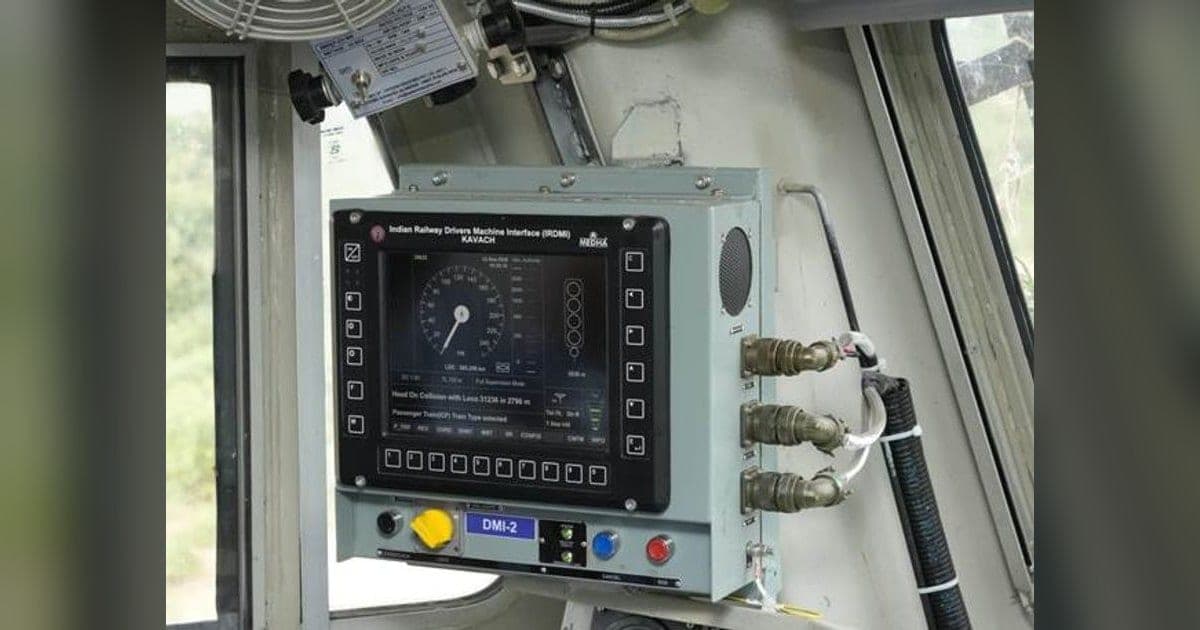
Indian Railways commissioned KAVACH Version 4.0 for the first time on South Central Railway, covering 108 route kilometres of the Malkajgiri-Kamareddi section.
Why in News
The Ministry of Railways announced on 23 September 2026 that KAVACH Version 4.0 had been commissioned for the first time anywhere on Indian Railways, on 108 route kilometres of the Malkajgiri-Kamareddi section of South Central Railway.
Indian Railways has switched on KAVACH Version 4.0 over the South Central Railway (SCR), the first time this edition of the country's own train protection system has carried live traffic anywhere. The stretch chosen runs between Malkajgiri and Kamareddi in the Hyderabad Division, where 108 route kilometres were moved up from Version 3.2 to Version 4.0.
Why this stretch
South Central Railway was already the zone with the deepest KAVACH experience. Version 3.2 runs there across 1,465 route kilometres, and the lessons drawn from operating that network fed straight into the design of the newer edition. Railways plans to take Version 4.0 to the rest of the country on a large scale, so the Hyderabad Division stretch works as the proving ground.
What Version 4.0 adds
- Train position is fixed more accurately than before.
- Signal aspects are reported better inside large yards, so crews know more about what lies ahead.
- One station's KAVACH now talks to the next through optical fibre cable.
- The system plugs straight into the electronic interlocking already installed, instead of needing a separate bridge.
How the system guards a train
KAVACH is an Automatic Train Protection system designed and built in India. It watches over the Loco Pilot: if the speed limit is crossed, or a signal showing danger is about to be passed, the equipment applies the brakes itself when the driver does not. That is how it works against Signal Passing at Danger, or SPAD, and against collisions, and it keeps trains running safely when fog or rain hides the signals.
Because so much rides on it, the equipment has to clear Safety Integrity Level-4 (SIL-4), the strictest of the safety grades.
What a KAVACH section needs
Fitting a section is not a single installation. Station KAVACH goes up at stations and on block sections, RFID tags are laid along the whole length of track, telecom towers are raised across the section, optical fibre cable is buried beside the rails, and every locomotive working the route carries Loco KAVACH on board.
Important Facts
| System | KAVACH Version 4.0, an Automatic Train Protection (ATP) system |
|---|---|
| Zone | South Central Railway (SCR) |
| Division and section | Hyderabad Division, Malkajgiri-Kamareddi |
| Length upgraded | 108 route kilometres, from Version 3.2 to Version 4.0 |
| Version 3.2 spread on SCR | 1,465 route kilometres |
| Safety certification | Safety Integrity Level-4 (SIL-4) |
| Ministry | Ministry of Railways |
| Origin | Indigenously developed in India |
Exam Point of View
Remember the version (4.0), the zone (South Central Railway), the division (Hyderabad), the section (Malkajgiri-Kamareddi), the length upgraded (108 route kilometres), the earlier Version 3.2 spread on the zone (1,465 route kilometres), the full form of KAVACH's role (Automatic Train Protection), the hazard it prevents (SPAD) and the certification it carries (SIL-4).
Practice Questions
On which zone of Indian Railways was KAVACH Version 4.0 commissioned for the first time?
- A.Northern Railway
- B.South Central Railway
- C.Western Railway
- D.East Coast Railway
Show answer
Correct answer: B. South Central Railway
Explanation
The correct answer is South Central Railway. The Ministry of Railways said that Version 4.0 of the train protection system was put into service for the first time on this zone, on the Malkajgiri-Kamareddi section of the Hyderabad Division. The zone was the natural choice because the previous edition, Version 3.2, was already working there across a long stretch of route, and the operating experience gathered from it shaped the improvements built into the newer version. Northern Railway is wrong, because the release names no such commissioning on that zone. Western Railway is wrong for the same reason; the announcement is confined to the southern zone named in it. East Coast Railway is also wrong, as the section upgraded lies in the Hyderabad Division, which belongs to South Central Railway and not to the eastern coastal zone. Candidates should tie the version number, the zone, the division and the section together, since a question may name any one of them.
How many route kilometres of the Malkajgiri-Kamareddi section were upgraded from KAVACH Version 3.2 to Version 4.0?
- A.108 route kilometres
- B.208 route kilometres
- C.1,465 route kilometres
- D.512 route kilometres
Show answer
Correct answer: A. 108 route kilometres
Explanation
The correct answer is 108 route kilometres. That is the length of the Malkajgiri-Kamareddi section in the Hyderabad Division on which the system was carried up from the older edition to the newer one. The figure of 208 is wrong; no such length is mentioned anywhere in the announcement and it is offered only as a near-miss distractor. The figure of 1,465 is the trap in this question: that is the spread of the earlier Version 3.2 across South Central Railway as a whole, not the stretch newly upgraded, and aspirants who read hurriedly often swap the two. The figure of 512 is wrong as well, since it appears nowhere in the release. The safest way to hold this pair in memory is to remember that the newly upgraded piece is small and the older version's footprint on the zone is more than ten times larger.
Which safety certification level is required for the KAVACH system?
- A.Safety Integrity Level-2
- B.Safety Integrity Level-3
- C.Safety Integrity Level-4
- D.Safety Integrity Level-5
Show answer
Correct answer: C. Safety Integrity Level-4
Explanation
The correct answer is Safety Integrity Level-4, usually written SIL-4. The release describes the train protection system as heavily dependent on technology and therefore obliged to carry safety certification of the highest order, which it identifies as SIL-4. Level-2 is wrong because it is a lower grade and would not satisfy a system that can apply brakes on a running train without human action. Level-3 is wrong for the same reason; it is one step below the grade actually named. Level-5 is wrong because the release names Level-4 as the highest order of certification here, so a fifth level is not what the system is held to. In examinations this fact is often paired with the system's purpose, so remember together that KAVACH is an indigenous Automatic Train Protection system, that it guards against Signal Passing at Danger, and that it is certified at SIL-4.
Frequently Asked Questions
What is KAVACH 4.0 and where was it commissioned first?
KAVACH is India's own Automatic Train Protection system. Version 4.0 was commissioned for the first time on South Central Railway, over 108 route kilometres of the Malkajgiri-Kamareddi section in the Hyderabad Division.
What does KAVACH do for a moving train?
It assists the Loco Pilot in holding the train within the permitted speed and applies the brakes on its own when the driver does not, guarding against Signal Passing at Danger and collisions, including in poor weather.
What safety grade does KAVACH have to meet?
Safety Integrity Level-4, written SIL-4, which is the highest certification demanded of a safety system of this kind.
Sources
Current Affairs 23 September 2026
- Ayushman Bharat Completes Eight Years, 60 Crore BeneficiariesGovernment Schemes
- SEMICON India 2026: Whole-of-Industry Push for SemiconductorsEconomy
- IMEI Tampering Draws Three-Year Jail Under Telecom Act, 2023National
- WAVES OTT and MyWAVES Turn Viewers Into Content CreatorsScience & Technology
- Special Campaign 6: MHA Targets Pendency and SwachhataNational
- NRAA Holds REWARD Meeting on Watershed Guidelines for PMKSYEnvironment
Related Current Affairs
- Science & Technology
WAVES OTT and MyWAVES Turn Viewers Into Content Creators
23 September 2026 · 2 min read
- Science & Technology
SEMICON India 2026: 'Silicon to Systems' Shows India's Chip Ecosystem
22 September 2026 · 2 min read
- Science & Technology
Office of PSA Holds First State Nodal Officers Meeting on I-STEM
22 September 2026 · 2 min read

Related GK
- Fundamental Rights (Articles 12–35): Notes, Writs and PYQs
23 September 2026 · Indian Polity
- Preamble of the Indian Constitution: Notes, Keywords and PYQs
22 September 2026 · Indian Polity
- Making of the Indian Constitution: Notes, Key Dates and PYQs
21 September 2026 · Indian Polity
Take the Quiz
- Current Affairs Quiz
State Exams Current Affairs Quiz: 23 September 2026
21 questions21 minutesStart Quiz