
IMEI Tampering Draws Three-Year Jail Under Telecom Act, 2023
A PIB backgrounder explains IMEI tampering, the Device Setu-ICDR portal and the Telecommunications Act, 2023, which allows three years in jail or a Rs 50 lakh fine.
Why in News
A PIB backgrounder published on 23 September 2026 explained IMEI tampering as a threat to digital sovereignty, setting out how IMEIs are allotted and verified, the duties of manufacturers and sellers, and the penalties laid down in the Telecommunications Act, 2023.
India's active wireless mobile subscriber base stood at 1,204.01 million in July 2026, and with payments, public services and governance all riding on those handsets, the identity of the device itself has become a security question. A backgrounder from the Department of Telecommunications sets out what the IMEI is, how it is misused, and what the law now does about it.
Reading an IMEI
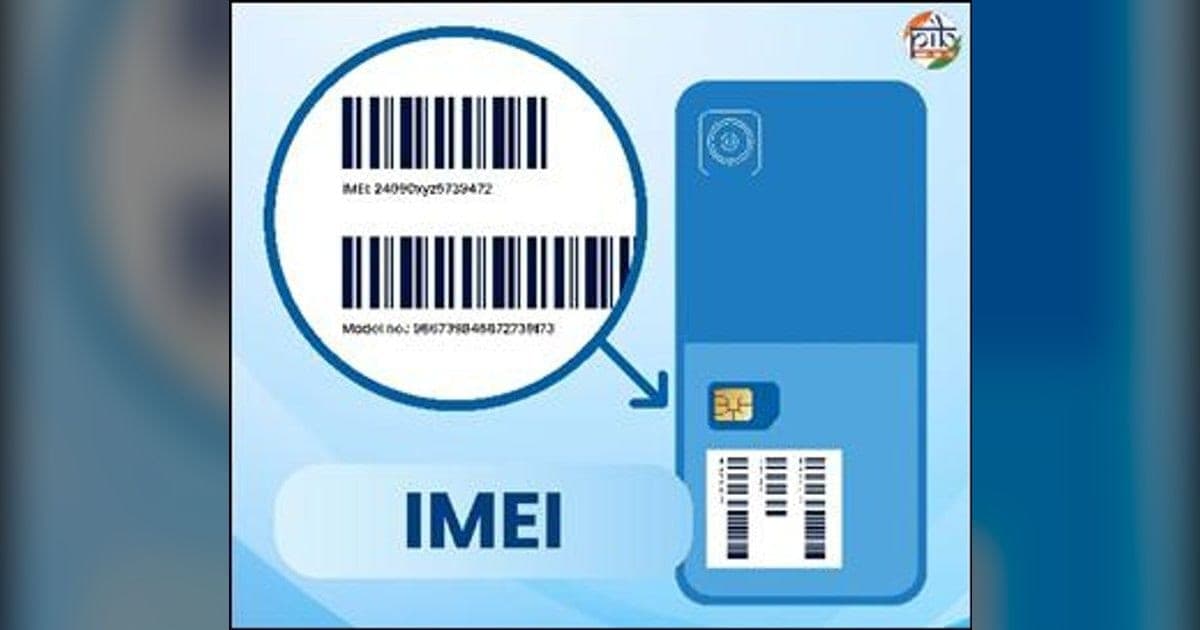
- The International Mobile Equipment Identity is a 15-digit number that marks out one handset on a telecom network.
- Its first eight digits form the Type Allocation Code (TAC), which says what model or type the device is.
- The GSMA handles global allocation of the TAC, giving codes to manufacturers and brand owners, who then put unique IMEIs on individual handsets.
- A dual-SIM phone normally carries two IMEIs, one per slot. Any user can see theirs by dialling *#06#.
- Details can be checked on the Sanchar Saathi portal or app, or by sending KYM followed by the IMEI to 14422 by SMS.
Who is responsible
Manufacturers must register the IMEIs of devices made in India with the government before the first sale, test or research use, through the Device Setu-ICDR portal. Importers must register before bringing equipment in. Resellers and retailers have to make sure the handsets they sell carry valid, untampered numbers, and those trading in used phones should check the number against the government's central database of tampered and blacklisted devices. Brand owners must have their brands registered on the same portal and linked to the relevant TAC.
What the law says
Removing, erasing or altering a device identity number on purpose is unlawful, as is knowingly holding or trafficking in hardware or software configured to do it. The Telecommunications Act, 2023 covers this through Section 42(3)(c), while Section 42(3)(e) deals with obtaining SIMs or identifiers by fraud, cheating or impersonation. Punishment runs to three years of imprisonment, a fine of up to Rs 50 lakh, or both, and under Section 42(7) such offences are cognizable and non-bailable. Section 42(6) extends the same punishment to anyone who abets the offence.
If a phone is lost
File a police report and keep a copy, get a duplicate SIM, then register the blocking request on the Sanchar Saathi CEIR portal with the report and an ID proof to receive a Request ID. Because SMS is restricted for 24 hours on a re-issued SIM, the OTP-based request has to wait that long.
Important Facts
| IMEI length | 15 digits |
|---|---|
| First eight digits | Type Allocation Code (TAC) |
| Global allocation of TAC | GSMA (Global System for Mobile Communications Association) |
| Code to display IMEI | *#06# |
| SMS verification | KYM with the IMEI, sent to 14422 |
| Verification platform | Sanchar Saathi portal and app; CEIR for blocking |
| Registration portal | Device Setu-Indian Counterfeited Device Restriction (ICDR) |
| Law | Telecommunications Act, 2023, Sections 42(3)(c) and 42(3)(e) |
| Punishment | Up to three years imprisonment, fine up to Rs 50 lakh, or both |
| Nature of offence | Cognizable and non-bailable under Section 42(7) |
| Subscriber base | 1,204.01 million active wireless mobile subscribers in July 2026 |
Exam Point of View
Remember the length of an IMEI (15 digits), the first eight digits (Type Allocation Code), the allotting body (GSMA), the code to see an IMEI (*#06#), the SMS number for verification (14422), the platform (Sanchar Saathi and its CEIR portal), the registration portal (Device Setu-ICDR), the subscriber base (1,204.01 million in July 2026) and the law with its sections: Telecommunications Act, 2023, Sections 42(3)(c), 42(3)(e), 42(6) and 42(7), with three years in jail or a Rs 50 lakh fine.
Practice Questions
How many digits does an IMEI number contain?
- A.Ten digits
- B.Twelve digits
- C.Fifteen digits
- D.Eighteen digits
Show answer
Correct answer: C. Fifteen digits
Explanation
The correct answer is fifteen digits. The International Mobile Equipment Identity is described as a unique number of that length which identifies a mobile device on a telecom network, and the first eight of those digits make up the Type Allocation Code that identifies the model or type of the handset. Ten digits is wrong; that is the length of a mobile telephone number in India and the two are often confused, but a telephone number belongs to the connection while this number belongs to the device. Twelve digits is wrong as well and matches no identifier described in the backgrounder. Eighteen digits is wrong because it overstates the length, and no identifier of that size is named. Candidates should also remember the way to read one off a handset, which is by dialling the short code given in the release, and that a dual-SIM phone normally carries two such numbers, one for each slot.
Which body oversees the global allocation of the Type Allocation Code used in IMEI numbers?
- A.GSMA
- B.TRAI
- C.Department of Telecommunications
- D.International Telecommunication Union
Show answer
Correct answer: A. GSMA
Explanation
The correct answer is the GSMA, the Global System for Mobile Communications Association. The backgrounder says it oversees the worldwide allocation of the Type Allocation Code, handing codes to manufacturers and brand owners, who then assign unique device identities to individual handsets. TRAI is wrong, because the regulator appears in the release only in connection with the rule restricting messaging for a day after a re-issued SIM is activated, not with code allocation. The Department of Telecommunications is wrong as well; it advises citizens on what to avoid and runs the registration and verification machinery in India, but the global code pool is not its to allocate. The International Telecommunication Union is wrong because the release does not assign it this role. A useful chain to memorise is that the association allocates the code, the manufacturer assigns the full identity, and the Indian portals then register it.
Under the Telecommunications Act, 2023, what punishment can tampering with a telecommunication identifier attract?
- A.Imprisonment up to one year or a fine up to Rs 10 lakh
- B.Imprisonment up to three years or a fine up to Rs 50 lakh, or both
- C.Only a fine, with no provision for imprisonment
- D.Imprisonment up to seven years with no fine
Show answer
Correct answer: B. Imprisonment up to three years or a fine up to Rs 50 lakh, or both
Explanation
The correct answer is imprisonment of up to three years or a fine of up to fifty lakh rupees, or both. The prohibition itself sits in Section 42(3)(c) of the Act, which bars tampering with telecommunication identifiers, while the neighbouring clause covers obtaining SIMs or identifiers through fraud, cheating or impersonation. The first option is wrong because it understates both the jail term and the maximum fine laid down. The third option is wrong because the statute plainly provides for imprisonment as well as a fine, and indeed allows both together. The fourth option is wrong on two counts: it stretches the term of imprisonment beyond what the Act prescribes and it wrongly removes the fine. Two further points are worth carrying: such offences are cognizable and non-bailable under Section 42(7), and under Section 42(6) a person who abets or promotes the offence is liable to the same punishment as the offender.
Frequently Asked Questions
What is an IMEI and how long is it?
The International Mobile Equipment Identity is a 15-digit number that identifies a mobile handset on a telecom network. Its first eight digits form the Type Allocation Code, which identifies the device model or type.
How can a citizen check an IMEI?
By dialling *#06# on the handset to display it, and by verifying details on the Sanchar Saathi portal or app, or by sending KYM followed by the IMEI to 14422 through SMS.
What punishment does the law prescribe for IMEI tampering?
Under the Telecommunications Act, 2023, it can mean imprisonment of up to three years, a fine of up to Rs 50 lakh, or both. The offence is cognizable and non-bailable, and abettors face the same punishment.
Which portal is used to register IMEIs?
The Device Setu-Indian Counterfeited Device Restriction (ICDR) portal, on which manufacturers and importers register IMEIs and brand owners register their brands against the relevant Type Allocation Code.
Sources
- IMEI Tampering (opens in a new tab) — Press Information Bureau
Current Affairs 23 September 2026
- KAVACH 4.0 Goes Live First Time on South Central RailwayScience & Technology
- Ayushman Bharat Completes Eight Years, 60 Crore BeneficiariesGovernment Schemes
- SEMICON India 2026: Whole-of-Industry Push for SemiconductorsEconomy
- WAVES OTT and MyWAVES Turn Viewers Into Content CreatorsScience & Technology
- Special Campaign 6: MHA Targets Pendency and SwachhataNational
- NRAA Holds REWARD Meeting on Watershed Guidelines for PMKSYEnvironment
Related Current Affairs
- National
India Cine Hub: NFDC's Single-Window Portal for Film Shooting Permits
22 September 2026 · 2 min read
- National
TRAI Mandates Voice-and-SMS-Only Recharge Packs of 30 Days or Less
22 September 2026 · 2 min read
- National
PM Mementos e-Auction 2026: Gujarat's Heritage Goes Under the Hammer
22 September 2026 · 2 min read
- National
Kathakali Festival Opens in Chennai: Three Schools, Three Nights
19 September 2026 · 2 min read





Related GK
- Fundamental Rights (Articles 12–35): Notes, Writs and PYQs
23 September 2026 · Indian Polity
- Preamble of the Indian Constitution: Notes, Keywords and PYQs
22 September 2026 · Indian Polity
- Making of the Indian Constitution: Notes, Key Dates and PYQs
21 September 2026 · Indian Polity
Take the Quiz
- Current Affairs Quiz
State Exams Current Affairs Quiz: 23 September 2026
21 questions21 minutesStart Quiz