
Jal Jeevan Mission 2.0 Review at IIM Bangalore Sets Reforms
A regional review of Jal Jeevan Mission 2.0 at IIM Bangalore heard that rural tap connections have risen to 15.96 crore households from 3.27 crore at the launch.
Why in News
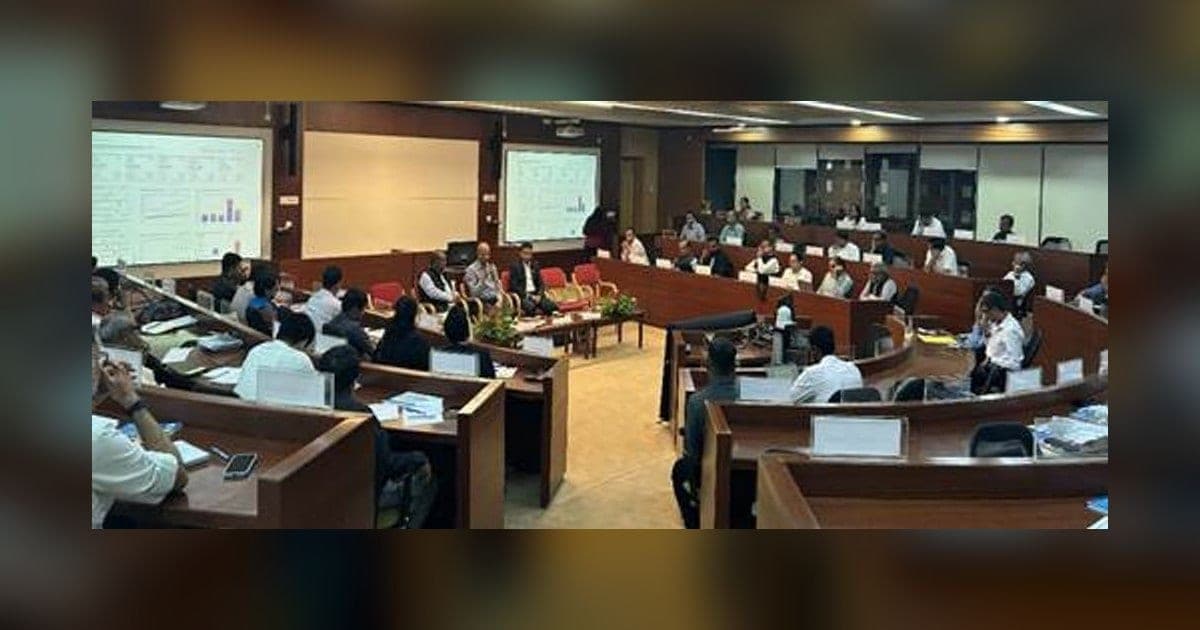
On 7 October 2026 the Ministry of Jal Shakti reported a regional review meeting of States and Union Territories under Jal Jeevan Mission 2.0 held at IIM Bangalore, which put out updated tap water coverage figures and reform priorities.
The Department of Drinking Water and Sanitation (DDWS) of the Ministry of Jal Shakti held a regional review meeting of States and Union Territories under Jal Jeevan Mission (JJM) 2.0 at the Indian Institute of Management Bangalore. Secretary, DDWS, Ashok K. K. Meena, chaired it, with Kamal Kishore Soan, Additional Secretary and Mission Director of the National Jal Jeevan Mission, present.
The headline figures
The Secretary said the Mission has changed rural access to drinking water, with more than 15.96 crore rural households now holding tap water connections, against only 3.27 crore households when the Mission was launched in August 2019.
| Meeting | Regional review of States and UTs under JJM 2.0 |
| Venue | IIM Bangalore |
| Chaired by | Ashok K. K. Meena, Secretary, DDWS |
| Tap connections now | More than 15.96 crore rural households |
| At launch | 3.27 crore households, August 2019 |
What JJM 2.0 changes
The Secretary described the second phase as a shift away from building infrastructure towards sustainable and accountable service delivery. He asked States to spend faster on approved schemes but to make sure the money becomes fully functional systems, with source-to-household connectivity, sound digital records and working monitoring. Single-village and multi-village schemes were to be pushed, especially in quality-affected areas.
Findings placed before the meeting
Drawing on the Jal Seva Adhayan, he said pipeline leakages and breakages remain the leading cause of supply disruption, followed by power cuts and low-voltage problems. The Mission Director added that poor power quality continues to hurt service in several areas, and that cutting power costs would improve operational sustainability. Talks are on with the Ministry of New and Renewable Energy to examine solarisation of drinking water assets.
Professor Gopal Naik, JJM Professor Chair at IIM Bangalore, presented a study on power cost optimisation in JJM schemes, comparing grid-based and solar-powered configurations and their effect on operating and life-cycle costs. Another presentation used Water Quality Management Information System data and reported better compliance on several drinking water quality parameters since the Mission began.
Reform priorities
States and Union Territories discussed State Implementation Plans, financial reconciliation, Har Ghar Jal certification in PM-JANMAN villages, Jal Arpan, digital governance and water quality management. The Secretary pressed for independent water quality surveillance, for water quality information to reach Gram Panchayats and for Gram Sabhas to review findings. The Mission Director asked States to complete Jal Arpan, the formal handing over of schemes to Gram Panchayats and Village Water and Sanitation Committees, in all Har Ghar Jal villages, to speed up testing in Anganwadi centres and to use the Decision Support System for source sustainability planning.
Important Facts
| Meeting | Regional review of States and UTs under Jal Jeevan Mission 2.0 |
|---|---|
| Venue | Indian Institute of Management Bangalore |
| Department | Department of Drinking Water and Sanitation, Ministry of Jal Shakti |
| Chaired by | Ashok K. K. Meena, Secretary, DDWS |
| Mission Director | Kamal Kishore Soan, Additional Secretary and Mission Director, NJJM |
| Tap connections now | More than 15.96 crore rural households |
| At the launch | 3.27 crore households, August 2019 |
| Focus of JJM 2.0 | Sustainable and accountable service delivery |
| Leading cause of disruption | Pipeline leakages and breakages |
| Study presented by | Professor Gopal Naik, JJM Professor Chair, IIM Bangalore |
Exam Point of View
Remember the venue (IIM Bangalore), the department and ministry (DDWS, Ministry of Jal Shakti), the Secretary and the Mission Director, the coverage figures of more than 15.96 crore households now against 3.27 crore at launch in August 2019, the shift JJM 2.0 represents, the Jal Seva Adhayan finding on leakages, and the terms Jal Arpan, Har Ghar Jal, WQMIS and PM-JANMAN.
Practice Questions
How many rural households were reported to have tap water connections under the Jal Jeevan Mission?
- A.More than 3.27 crore
- B.More than 11.50 crore
- C.More than 15.96 crore
- D.More than 19.20 crore
Show answer
Correct answer: C. More than 15.96 crore
Explanation
The correct answer is more than 15.96 crore. At the regional review of Jal Jeevan Mission 2.0, the Secretary of the Department of Drinking Water and Sanitation said that rural drinking water access has been transformed, with more than 15.96 crore rural households now holding tap water connections. Option A is wrong because 3.27 crore is the number of households that had tap connections when the Mission was launched, that is the base figure rather than the present one. Option B is wrong because no such intermediate figure was placed before the meeting. Option D is wrong because it overstates the coverage reported. The pair of numbers is what matters for the examination: 3.27 crore at the start and more than 15.96 crore now, which together show the scale of the change claimed.
The regional review meeting of States and Union Territories under Jal Jeevan Mission 2.0 was held at which institution?
- A.IIM Bangalore
- B.IIM Ahmedabad
- C.IIT Madras
- D.IIM Kozhikode
Show answer
Correct answer: A. IIM Bangalore
Explanation
The correct answer is IIM Bangalore. The Department of Drinking Water and Sanitation of the Ministry of Jal Shakti organised the regional review meeting at the Indian Institute of Management Bangalore, where Professor Gopal Naik, who holds the JJM Professor Chair at that institute, also presented a study on power cost optimisation in Mission schemes. Option B is wrong because no meeting is reported at Ahmedabad. Option C is wrong because the venue was a management institute and not an institute of technology. Option D is wrong because the Kozhikode campus had no role in this review. Aspirants should link the institute to the JJM Professor Chair and to the study comparing grid-based and solar-powered water supply configurations and their effect on life-cycle costs.
According to the Jal Seva Adhayan findings presented at the meeting, what is the leading cause of rural water supply disruption?
- A.Power cuts
- B.Pipeline leakages and breakages
- C.Groundwater depletion
- D.Shortage of trained operators
Show answer
Correct answer: B. Pipeline leakages and breakages
Explanation
The correct answer is pipeline leakages and breakages. Drawing on the findings of the Jal Seva Adhayan, the Secretary told the meeting that leakages and breakages in pipelines continue to be the single largest cause of disruption in rural water supply, and that power cuts and low-voltage problems come next. Option A is wrong precisely because power related problems were placed second rather than first, although the Mission Director did stress that poor power quality hurts service in several areas and that reducing power costs would improve operational sustainability. Option C is wrong because groundwater depletion, while a wider concern addressed through source sustainability work, was not named as the leading cause here. Option D is wrong because no such finding on staffing was reported at this review.
Frequently Asked Questions
How many rural households now have tap water connections under Jal Jeevan Mission?
More than 15.96 crore rural households, compared with only 3.27 crore households at the time the Mission was launched in August 2019.
Where was the regional review meeting under JJM 2.0 held?
At the Indian Institute of Management Bangalore. It was chaired by Ashok K. K. Meena, Secretary of the Department of Drinking Water and Sanitation, Ministry of Jal Shakti.
What does JJM 2.0 shift its focus to?
From creating infrastructure to sustainable and accountable service delivery, with source sustainability, water quality surveillance, digital governance, community participation and functional schemes.
Sources
- https://www.pib.gov.in/PressReleasePage.aspx?PRID=2320327 (opens in a new tab) — Press Information Bureau
Current Affairs 7 October 2026
- Pre-COP31 in Fiji: Bhupender Yadav Leads Indian DelegationEnvironment
- Additive Manufacturing: MeitY's NSAM Moves to NSAM 2.0 PhaseScience & Technology
- TRAI Drive Test Grades Mobile Networks in Balasore CityReports & Indices
- Fleet Support Ship FSS-1 Launched at Hindustan ShipyardDefence
- 153rd IPU Assembly: Harivansh Leads India in ArushaInternational
- Piyush Goyal Meets Top US Firms in New York on InvestmentEconomy
- MoSPI Releases Environmental Accounts Strategy for 2026-2030Reports & Indices
- Textiles Ministry Wraps Up Swachhata Hi Seva 2026 DriveGovernment Schemes
Related Current Affairs
- Government Schemes
PMGSY Chintan Shivir: PMGSY-IV Targets 62,500 km of Roads
7 October 2026 · 2 min read
- Government Schemes
Textiles Ministry Wraps Up Swachhata Hi Seva 2026 Drive
7 October 2026 · 2 min read
- Government Schemes
MY Bharat Starts Points, Rewards and Recognition Mechanism
6 October 2026 · 2 min read
- Government Schemes
Viksit Bharat Quiz Draws 1,45,26,013 Attempts for VBYLD 2027
6 October 2026 · 2 min read
- Government Schemes
VB-G RAM G Schedule Notifies 375 Permissible Rural Works
6 October 2026 · 3 min read

Related GK
- Arunachal Pradesh GK: Tawang, Tribes, Rivers and Exam Facts
7 October 2026 · Indian States & UTs
- Geographical Epithets of the World: Nicknames of Places
7 October 2026 · Static GK
- Cyber Security and Digital Public Infrastructure: Notes
7 October 2026 · Science & Technology
Take the Quiz
- Current Affairs Quiz
RRB NTPC Current Affairs Quiz: 7 October 2026
25 questions25 minutesStart Quiz