
CAQM Reviews Stubble Burning Curbs in Amritsar, Tarn Taran
A CAQM team led by Dr. S.D. Attri reviewed stubble burning curbs with the Amritsar and Tarn Taran administrations and visited hotspot villages in Punjab.
Why in News
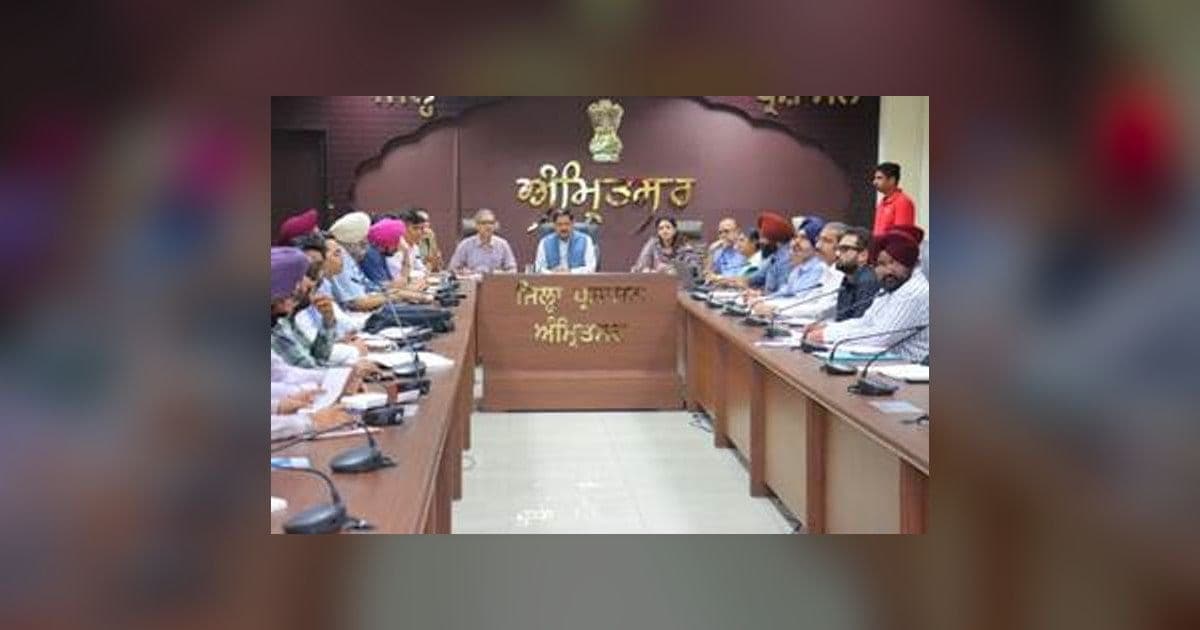
On 10 October 2026 a CAQM team led by Dr. S.D. Attri, Member (Technical), held a review meeting at Amritsar with the Amritsar and Tarn Taran district administrations on preventing paddy stubble burning, after visiting hotspot villages.
A high-level team of the Commission for Air Quality Management in NCR and Adjoining Areas (CAQM) went to the Amritsar and Tarn Taran districts of Punjab during the paddy harvesting season now under way. The team was led by Dr. S.D. Attri, Member (Technical) of the Commission. Both districts are counted among the hotspots for paddy stubble burning, which is one of the chief causes of winter air pollution in the National Capital Region and the areas around it.
The review meeting
Besides visiting fields, the team held a review meeting at Amritsar on 10 October 2026 with the Deputy Commissioners and other district officials of Amritsar and Tarn Taran. The talks centred on how ready the departments and the district administration are, and how well they work together, for the in-situ use of straw inside the field and its ex-situ use outside it. The Commission pressed for timely supply of Crop Residue Management (CRM) machines to farmers, along with awareness drives and Information, Education and Communication work.
What the districts reported
Field visits were made on 9 and 10 October 2026 to selected hotspot villages and facilities. In Amritsar, officials reported on harvesting and procurement and on the deployment of CRM machinery. Balers from Amritsar and nearby districts are collecting paddy straw, and a supply chain has been built with industries that run boilers, with farmers and aggregators linked to them for ex-situ use. The district has set up a Control Room and Help Desk at the District Administrative Complex to find farmers who need machines, and a district helpline for reporting fires. In Tarn Taran, officials said the district had largely met its targets on procurement and availability of CRM machinery, and described field patrolling and surveillance through Nodal and Cluster Officers.
Flying Squads across Punjab
As part of its monitoring machinery, the Commission has deployed Flying Squads in 18 districts of Punjab for the period from 1 October to 30 November 2026. The districts are Sangrur, Tarn Taran, Firozpur, Muktsar, Bathinda, Amritsar, Moga, Mansa, Fazilka, Patiala, Ludhiana, Kapurthala, Faridkot, Barnala, Malerkotla, Gurdaspur, Jalandhar and Fatehgarh Sahib. CAQM also asked for low-cost sensors and other monitoring methods to be used without a lapse in hotspots, and for closer coordination among farmers, aggregators and industries so that the ex-situ supply chain, balers, control rooms and field staff are used to the full.
Important Facts
| Body | Commission for Air Quality Management in NCR and Adjoining Areas (CAQM) |
|---|---|
| Team led by | Dr. S.D. Attri, Member (Technical), CAQM |
| Districts visited | Amritsar and Tarn Taran, Punjab |
| Review meeting | Amritsar, 10 October 2026, with Deputy Commissioners of both districts |
| Field visits | Hotspot villages on 9 and 10 October 2026 |
| Flying Squads | Deployed in 18 districts of Punjab, 1 October to 30 November 2026 |
| Machinery | Crop Residue Management (CRM) machines and balers for in-situ and ex-situ use |
| Ministry | Ministry of Environment, Forest and Climate Change |
Exam Point of View
Remember that CAQM is the Commission for Air Quality Management in NCR and Adjoining Areas, that Dr. S.D. Attri is its Member (Technical), that Amritsar and Tarn Taran are stubble burning hotspot districts of Punjab, that Flying Squads are deployed in 18 Punjab districts from 1 October to 30 November 2026, and the difference between in-situ and ex-situ management of paddy straw with CRM machinery and balers.
Practice Questions
Which two districts of Punjab did the CAQM team visit for its review of stubble burning prevention?
- A.Ludhiana and Patiala
- B.Amritsar and Tarn Taran
- C.Sangrur and Bathinda
- D.Moga and Mansa
Show answer
Explanation
The correct answer is Amritsar and Tarn Taran. The high-level CAQM team visited these two districts during the paddy harvesting season because both have been identified as hotspots for paddy stubble burning, and the review meeting with Deputy Commissioners was held at Amritsar. Options A, C and D all name districts of Punjab, and each of them appears in the separate list of eighteen districts where the Commission has posted Flying Squads for the season, but none of them was the subject of this particular visit and review meeting. Ludhiana and Patiala, Sangrur and Bathinda, and Moga and Mansa are therefore plausible but wrong. The distinction to hold on to is between the two districts reviewed on the ground and the wider set of districts under Flying Squad surveillance.
In how many districts of Punjab has CAQM deployed Flying Squads for the paddy harvesting season?
- A.12
- B.15
- C.18
- D.22
Show answer
Explanation
The correct answer is 18. As part of its monitoring mechanism the Commission has deployed Flying Squads in eighteen districts of Punjab for the period running from the first of October to the last day of November in the same year. The named districts include Sangrur, Tarn Taran, Firozpur, Muktsar, Bathinda, Amritsar, Moga, Mansa, Fazilka, Patiala, Ludhiana, Kapurthala, Faridkot, Barnala, Malerkotla, Gurdaspur, Jalandhar and Fatehgarh Sahib. Options A, B and D give smaller or larger counts that do not match this list, so they are wrong. Candidates should also note that the Flying Squads are only one layer of surveillance; district, nodal and cluster officers, low-cost sensors, control rooms and helplines form the rest of the monitoring arrangement described by the Commission.
Who led the high-level CAQM team that reviewed stubble burning prevention measures in Punjab?
- A.The Chairperson of CAQM
- B.Dr. S.D. Attri, Member (Technical), CAQM
- C.The Deputy Commissioner of Amritsar
- D.The Chairman of the Punjab Pollution Control Board
Show answer
Explanation
The correct answer is Dr. S.D. Attri, Member (Technical), CAQM, under whose chairmanship the high-level team visited the two hotspot districts and held the review meeting. Option A is wrong because the visit was led by the Member (Technical) and not by the head of the Commission. Option C is wrong because the Deputy Commissioners of Amritsar and Tarn Taran were the district officials who attended and reported to the visiting team, not its leaders. Option D is wrong because State Pollution Control Boards are among the agencies whose measures the Commission monitors and reviews, so the Punjab board's chairman would be on the receiving side of such a review rather than leading it. The team's brief was to assess preparedness for in-situ and ex-situ use of paddy straw.
Frequently Asked Questions
What does CAQM stand for?
The Commission for Air Quality Management in NCR and Adjoining Areas. Its team, led by Member (Technical) Dr. S.D. Attri, reviewed stubble burning prevention with the Amritsar and Tarn Taran district administrations in Punjab.
In how many Punjab districts has CAQM deployed Flying Squads?
In 18 districts, for the period from 1 October to 30 November 2026, among them Sangrur, Tarn Taran, Firozpur, Muktsar, Bathinda, Amritsar, Moga, Mansa, Patiala, Ludhiana, Jalandhar and Fatehgarh Sahib.
What is the difference between in-situ and ex-situ management of paddy straw?
In-situ management mixes or uses the straw within the field itself, usually with CRM machinery, while ex-situ management takes it off the field through balers and aggregators for use in industries that run boilers.
Sources
Current Affairs 10 October 2026
- Forest Rights Act Review Conference Held in Kolkata for Eight StatesNational
- Exercise Tarang Shakti 2026 Second Edition Held at JodhpurDefence
- Milton Dick of Australia Elected President of the IPU at ArushaInternational
- BRICS Traditional Sports Demonstration Games to Open in AhmedabadSports
- Vice-President Addresses Second Convocation of AIIMS DeogharNational
- 94th Fit India Sundays on Cycle to Be Held in VaranasiGovernment Schemes
- Lighthouse Tourism Grows to 18.63 Lakh Visitors in 2024-25National
- PM Dhan-Dhaanya Krishi Yojana Completes One Year in 100 DistrictsGovernment Schemes
Related Current Affairs
- Environment
NBA Disburses Rs 2.02 Crore of Seed Sector ABS Funds to States
10 October 2026 · 2 min read




Related GK
- State-wise Dances, Festivals and Symbols for Exams
10 October 2026 · Indian States & UTs
- Lead Bank Scheme and Service Area Approach: SLBC and DCC
10 October 2026 · Banking & Financial Awareness
- Bronze Sculpture in India: Chola Bronzes to Dhokra
10 October 2026 · Art & Culture
Take the Quiz
- Current Affairs Quiz
State Exams Current Affairs Quiz: 10 October 2026
25 questions25 minutesStart Quiz