
BSIP Pollen Study Maps 2700 Years of Monsoon at Bandhavgarh
A BSIP study of pollen from a Bandhavgarh Tiger Reserve wetland has reconstructed 2700 years of Indian Summer Monsoon and forest change in central India.
Why in News
On 20 November 2026 the Department of Science and Technology announced that the Birbal Sahni Institute of Palaeosciences had reconstructed about 2700 years of Indian Summer Monsoon and forest change from pollen in a wetland of Bandhavgarh Tiger Reserve.
A study at Bandhavgarh Tiger Reserve has reconstructed how the Indian Summer Monsoon (ISM) and the forests around it have changed over roughly 2700 years. The work was carried out by the Birbal Sahni Institute of Palaeosciences (BSIP), an autonomous institute of the Department of Science and Technology (DST), and announced on 20 November 2026. The findings appear in the journal Quaternary Research.
How it was done
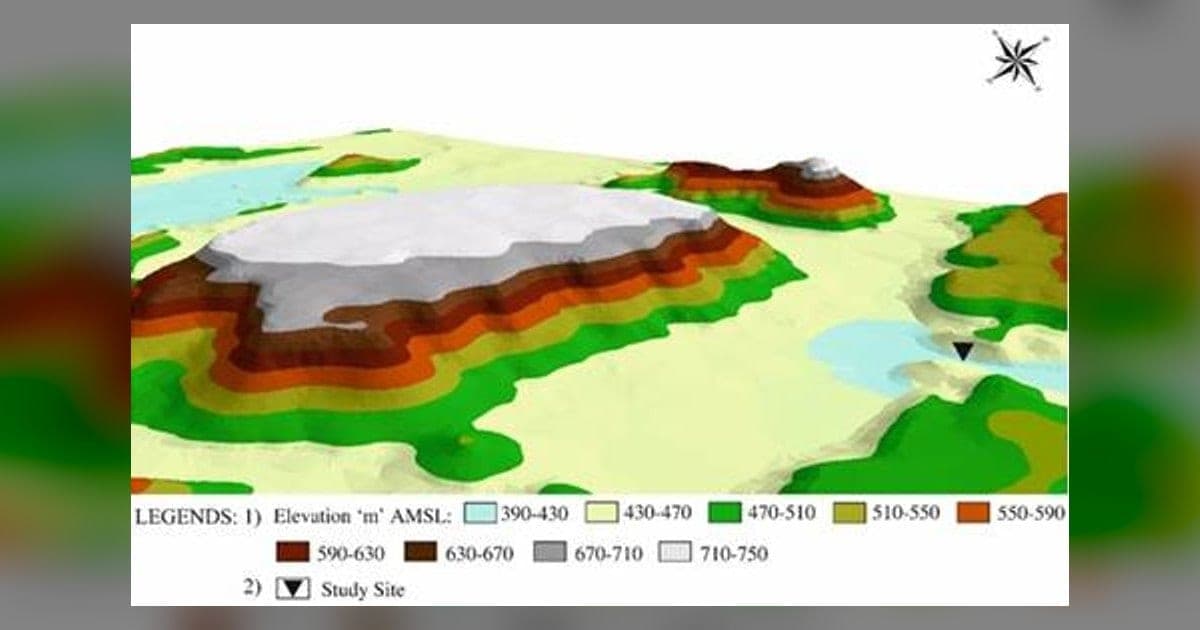
Dr. Anjali Trivedi, with Anupam Nag and Prof. M. G. Thakkar of BSIP, studied a sediment core from the Chakradhara Wetland inside the reserve, which lies in Umaria district of north-eastern Madhya Pradesh and falls in the Core Monsoon Zone (CMZ) of central India. The core was segmented and sampled for radiocarbon dating and pollen analysis. The pollen record was then compared with an Earth System Palaeoclimate Simulation (ESPS) model built for the past three millennia, so that the two lines of evidence could check each other. High-resolution Late Holocene climate records from the Core Monsoon Zone have been scarce until now.
What the pollen shows
Between about 2700 and 2300 years before present (BP) a strengthened monsoon supported dense moist deciduous forests in which Sal, or Shorea robusta, was dominant; its spread points to annual rainfall of roughly 1100 to 1200 mm or more with a timely monsoon onset. From about 2300 to 1600 years BP the region passed through several phases of high humidity, long drought, gradual recovery and renewed monsoon strength, and the make-up and spread of the forest shifted with them. Between 1600 and 820 years BP the monsoon was comparatively steady and tropical forests stayed dense.
Farming and recovery
From 820 to 400 years BP a weakening monsoon shrank the moist deciduous forest and let dry deciduous vegetation spread, while rising Cerealia and other cultivated pollen marked growing farming, land-use change and human influence. Over the last 400 years a strengthening monsoon brought the moist deciduous forest back, showing the resilience and regenerative capacity of tropical forest ecosystems when the climate turns favourable.
Why it matters
The monsoon drives India's climate, ecosystems and water resources, and even small shifts in its strength or timing affect crop output, food security and the economy. Records of this kind feed into climate adaptation, sustainable agriculture and climate resilience planning.
Important Facts
| Institute | Birbal Sahni Institute of Palaeosciences (BSIP), an autonomous institute of the Department of Science and Technology |
|---|---|
| Researchers | Dr. Anjali Trivedi, Anupam Nag and Prof. M. G. Thakkar |
| Study site | Chakradhara Wetland, Bandhavgarh Tiger Reserve, Umaria district, Madhya Pradesh |
| Region | Core Monsoon Zone (CMZ) of central India |
| Period reconstructed | About 2700 years, with model simulations over three millennia |
| Method | Radiocarbon dating and pollen analysis with the Earth System Palaeoclimate Simulation (ESPS) model |
| Dominant tree | Sal (Shorea robusta) in the moist deciduous phase |
| Rainfall estimate | About 1100 to 1200 mm or more a year between 2700 and 2300 years BP |
| Farming evidence | Rising Cerealia pollen between 820 and 400 years BP |
| Journal | Quaternary Research |
Exam Point of View
Remember the institute (BSIP, an autonomous institute of DST), the site (Chakradhara Wetland, Bandhavgarh Tiger Reserve, Umaria district, Madhya Pradesh, in the Core Monsoon Zone), the span reconstructed (about 2700 years), the dominant tree (Sal, Shorea robusta), the rainfall estimate of 1100 to 1200 mm, the ESPS model and the journal Quaternary Research.
Practice Questions
Which institute reconstructed about 2700 years of monsoon history using pollen from Bandhavgarh Tiger Reserve?
- A.Wildlife Institute of India
- B.Birbal Sahni Institute of Palaeosciences
- C.Indian Institute of Tropical Meteorology
- D.Botanical Survey of India
Show answer
The correct answer is the Birbal Sahni Institute of Palaeosciences, an autonomous institute of the Department of Science and Technology, where Dr. Anjali Trivedi, Anupam Nag and Prof. M. G. Thakkar studied a sediment core from the Chakradhara Wetland of the reserve.
Read the full explanation →The sediment core for the study was taken from which wetland, and in which district does it lie?
- A.Chakradhara Wetland, Umaria district
- B.Chilika Lagoon, Puri district
- C.Chakradhara Wetland, Shahdol district
- D.Keoladeo Wetland, Bharatpur district
Show answer
The wetland lies inside Bandhavgarh Tiger Reserve in Umaria district of north-eastern Madhya Pradesh, which falls within the Core Monsoon Zone of central India, the region from which high-resolution Late Holocene climate records had been missing.
Read the full explanation →Which tree dominated the dense moist deciduous forests between about 2700 and 2300 years before present?
- A.Teak (Tectona grandis)
- B.Sal (Shorea robusta)
- C.Banyan (Ficus benghalensis)
- D.Mahua (Madhuca longifolia)
Show answer
In the phase between roughly 2700 and 2300 years before present, a strengthened Indian Summer Monsoon supported widespread dense moist deciduous forest in which Sal was the dominant species, and its spread indicates sustained annual rainfall of about 1100 to 1200 mm or more with a timely monsoon onset.
Read the full explanation →Frequently Asked Questions
Which institute carried out the Bandhavgarh pollen study?
The Birbal Sahni Institute of Palaeosciences, an autonomous institute of the Department of Science and Technology. Dr. Anjali Trivedi, Anupam Nag and Prof. M. G. Thakkar studied a sediment core from the Chakradhara Wetland of Bandhavgarh Tiger Reserve and published the findings in Quaternary Research.
What did the study find about the monsoon between 2700 and 2300 years BP?
The Indian Summer Monsoon was strong in that period and supported dense moist deciduous forests dominated by Sal, or Shorea robusta. The spread of Sal indicates sustained annual rainfall of about 1100 to 1200 mm or more, along with a timely onset of the monsoon.
What happened to the forests between 820 and 400 years BP?
The monsoon weakened, moist deciduous forests shrank and dry deciduous vegetation spread. Cerealia and other cultivated pollen increased, which points to growing agriculture, land-use change and human influence. Over the last 400 years the monsoon strengthened again and moist deciduous forests recovered.
Sources
- https://www.pib.gov.in/PressReleasePage.aspx?PRID=2339006 (opens in a new tab) — Press Information Bureau
Current Affairs 20 November 2026
- Swachh Shauchalay Garimamay Bhavishya Campaign Launched by DDWSGovernment Schemes
- CGST Faridabad Seizes Four Pan Masala Machines in RewariEconomy
- Cheetah KOMG 3 Has Four Cubs, India's Cheetah Count Hits 62Environment
- Basmati Rice Exports Rise 25.4% to US$ 1.60 Billion in Half-YearEconomy
- Aadi Mahotsav 2026 at Dilli Haat With 115 Tribal StallsNational
- World Television Day: India's Analogue to Digital TV JourneyImportant Days
- NFDC Ties Up With Svayam for Accessible 57th IFFI in GoaNational
- MeitY Holds Talks With UN Rapporteur Heba Hagrass on AccessInternational
Related Current Affairs
- Environment
CSIR-NEERI Holds Clean Air Workshop for Indo-Gangetic Plains
21 November 2026 · 2 min read
- Environment
Zero Tolerance Ordered on Air Pollution Violations in Delhi-NCR
19 November 2026 · 2 min read
- Environment
India Seeks an Open, Equitable Second Global Stocktake at COP31
18 November 2026 · 2 min read


Related GK
- Famous Personalities of Rajasthan: Exam Notes
28 October 2026 · Rajasthan
- Districts and Divisions of Rajasthan: Exam Notes
28 October 2026 · Rajasthan
- Tourism and World Heritage Sites of Rajasthan Notes
27 October 2026 · Rajasthan
Take the Quiz
- Current Affairs Quiz
Madhya Pradesh Current Affairs Quiz: 20 November 2026
12 questions12 minutesStart Quiz