
India-France Space Ties Widen to Gaganyaan, TRISHNA and Start-ups
French Space Minister Philippe Baptiste met Dr Jitendra Singh in New Delhi as India and France widened space ties to TRISHNA, Gaganyaan and 400 start-ups.
Why in News
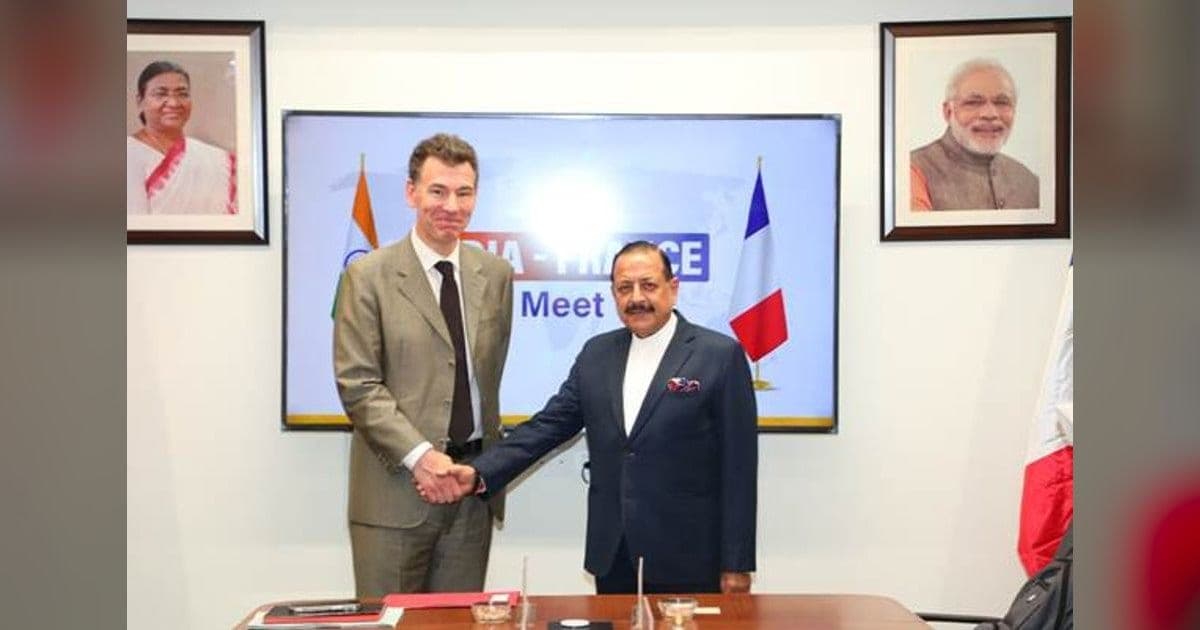
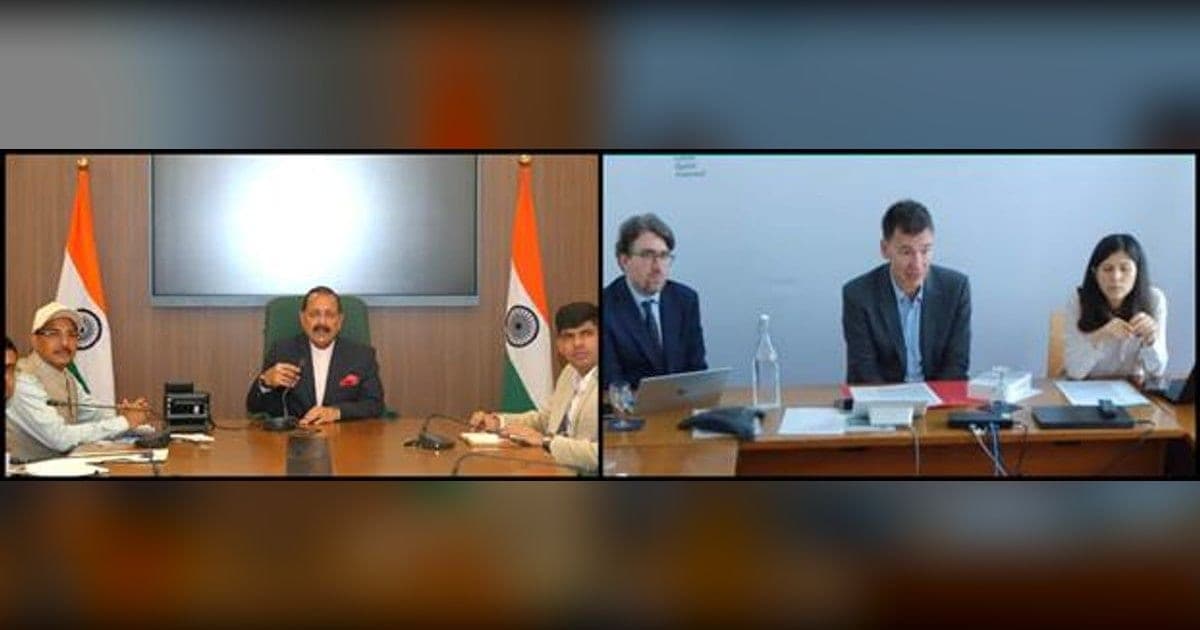
A French ministerial delegation led by Prof. Philippe Baptiste met Dr Jitendra Singh in New Delhi and agreed to widen India-France space cooperation into human spaceflight, microgravity research and start-up collaboration.
A senior French delegation headed by Prof. Philippe Baptiste, France's Minister for Higher Education, Research and Space, called on Dr Jitendra Singh in New Delhi. Dr Jitendra Singh is Union Minister of State (Independent Charge) for Science & Technology and Earth Sciences, and Minister of State in the PMO, Personnel, Public Grievances, Pensions, Atomic Energy and Space. The talks covered the Space Summit, the Year of Innovation, CEFIPRA and the Blue Economy.
Six decades of joint work
The minister traced the relationship back to sounding rocket trials of the 1960s, saying the two countries began working together almost as soon as their space agencies were born. He named two satellites already flown jointly by ISRO and CNES — Megha-Tropiques and SARAL — along with engine work for launch vehicles, as landmarks of that record.
TRISHNA and human spaceflight
Work on the third joint satellite, TRISHNA, is moving ahead well, the minister said. He thanked CNES for helping the Gaganyaan human spaceflight programme, both by supplying consumables and by training flight surgeons. Teams on the two sides have opened talks on microgravity research and parabolic flights, which support astronaut health studies. A Water Cycle and TRISHNA Mission event is due in Bengaluru on October 11, where ISRO will provide outreach material and senior officials will speak on the satellite.
Start-ups enter the picture
Reforms have changed who builds space hardware in India. More than 400 Indian space start-ups now work on rockets, satellites and downstream applications, and the minister argued that the next stage of the partnership should draw in industry and these young firms, not only the two governments and their agencies.
Wider science canvas
The Year of Innovation, opened by Prime Minister Narendra Modi and the French President in February, frames the wider effort. Cooperation also runs through biotechnology, digital sciences and ocean sciences, with CEFIPRA and Indo-French joint centres as the standing channels. Dr Jitendra Singh pointed to the Deep Ocean Mission as a further opening under the Blue Economy. Prof. Baptiste called TRISHNA a strong example of what the two countries can build together and backed closer work on astronaut health and microgravity.
Important Facts
| Indian minister | Dr Jitendra Singh, MoS (IC) Science & Technology and Earth Sciences |
|---|---|
| French minister | Prof. Philippe Baptiste, Minister for Higher Education, Research and Space |
| Venue | New Delhi |
| Joint satellites flown | Megha-Tropiques and SARAL (ISRO-CNES) |
| Third joint satellite | TRISHNA |
| Human spaceflight | CNES supplies consumables and trains flight surgeons for Gaganyaan |
| Space start-ups in India | More than 400 |
| Upcoming event | Water Cycle and TRISHNA Mission event, Bengaluru, October 11 |
| Bilateral framework | India-France Year of Innovation; CEFIPRA |
Exam Point of View
Remember the two ministers, the two joint ISRO-CNES satellites already flown (Megha-Tropiques and SARAL), the third joint satellite TRISHNA, CNES support to Gaganyaan, the figure of 400-plus Indian space start-ups, the Year of Innovation and the October 11 Bengaluru event.
Practice Questions
TRISHNA, in the news recently, is the third joint satellite of India with which country?
- A.Japan
- B.France
- C.Germany
- D.Israel
Show answer
Correct answer: B. France
Explanation
The correct answer is France. TRISHNA is described as the third joint satellite of India and France, and its realisation is progressing well. The two earlier joint satellites built by the Indian Space Research Organisation and the French space agency CNES are Megha-Tropiques and SARAL. Japan is wrong because the satellite discussed here belongs to the Indian-French track, not to any Indo-Japanese mission; the French minister himself called TRISHNA a strong example of what the two countries can achieve together. Germany is wrong for the same reason: the delegation that met Dr Jitendra Singh in New Delhi was French, led by Prof. Philippe Baptiste, and the cooperation named in the talks runs between the Indian and French agencies. Israel is wrong because no Israeli agency figures in this partnership; the discussion covered space, CEFIPRA and the Blue Economy, all of them Indo-French channels of cooperation.
Which of the following satellites was built jointly by ISRO and the French space agency CNES?
- A.Megha-Tropiques
- B.Oceansat-3
- C.RISAT-2B
- D.EMISAT
Show answer
Correct answer: A. Megha-Tropiques
Explanation
The correct answer is Megha-Tropiques. It is named, along with SARAL, as a satellite jointly built by ISRO and CNES, and both were cited as milestones of a partnership that goes back to sounding rocket experiments of the 1960s. Oceansat-3 is wrong because it is an Indian ocean observation satellite of the Oceansat series and was not presented as a joint Indo-French build. RISAT-2B is wrong because it belongs to India's radar imaging series and does not appear among the joint missions named by the minister. EMISAT is wrong for the same reason: it is an Indian electronic intelligence satellite and finds no mention in the list of joint satellites, which covers Megha-Tropiques, SARAL and the forthcoming TRISHNA. Cooperation between the two countries also extends to launch vehicle engine development.
According to the minister, how many space start-ups are now working in India?
- A.More than 100
- B.More than 250
- C.More than 400
- D.More than 800
Show answer
Correct answer: C. More than 400
Explanation
The correct answer is more than 400. Dr Jitendra Singh said that reforms in the space sector and the growth of the private ecosystem have brought more than 400 Indian space start-ups into areas such as rocket building, satellite building and space applications. He argued that the next phase of Indo-French cooperation should therefore bring together government institutions, industries and start-ups on both sides, creating a larger ecosystem and a wider resource pool rather than limiting the partnership to the two space agencies. The options giving a hundred, two hundred and fifty and eight hundred are all wrong because the minister gave only the one figure, and it was cited as evidence of how far the private space ecosystem has already grown after the reforms.
Frequently Asked Questions
Which satellites have ISRO and CNES built together?
Megha-Tropiques and SARAL have already been built jointly by ISRO and CNES. TRISHNA is the third joint satellite and work on it is progressing well.
How is France helping India's Gaganyaan programme?
CNES is supplying consumables and training flight surgeons for Gaganyaan. The two sides have also opened discussions on microgravity research and parabolic flights.
How many space start-ups does India have?
More than 400 Indian space start-ups are working in areas such as rocket building, satellite building and space applications, following the reforms in the space sector.
Sources
Current Affairs 28 September 2026
- PM-AJAY: 18,093 Villages Declared Adarsh Gram by September 2026Government Schemes
- KAZIND-2026: Indian Contingent Departs for Kazakhstan ExerciseDefence
- PM-MKSSY Bears 40% of Aquaculture Insurance Premium CostGovernment Schemes
- Sadhana Shrinkhla 2026: Four Workshops on Training InstitutesSummits & Conferences
- PM E-DRIVE: GARC Gets Rs 221.13 Crore for EV TestingScience & Technology
- Swachhata Hi Seva 2026: 10th Edition Ends on 2 OctoberNational
- 46th FIDE Chess Olympiad: PM Hails Indian PlayersSports
- IIP Grows 8.0% in August 2026 on Manufacturing and PowerEconomy
Related Current Affairs
- Summits & Conferences
PM Modi Addresses First International Space Summit in Paris
10 September 2026 · 2 min read
- International
India-France Space Talks Ahead of Paris International Space Summit
4 September 2026 · 2 min read
- Science & Technology
ISRO Launches EOS-05 on GSLV-F17: A Geosynchronous First
4 September 2026 · 2 min read
- Science & Technology
Ashwagandha Extract Safe Over 24 Weeks in 1,200-Adult Trial
28 September 2026 · 2 min read
- Science & Technology
PM E-DRIVE: GARC Gets Rs 221.13 Crore for EV Testing
28 September 2026 · 2 min read
Related GK
- Gaganyaan and Human Spaceflight: Mission, Vehicle, Astronauts
27 September 2026 · Science & Technology
- ISRO Launch Vehicles: PSLV, GSLV, LVM3 and SSLV Notes
26 September 2026 · Science & Technology
Take the Quiz
- Current Affairs Quiz
State Exams Current Affairs Quiz: 28 September 2026
25 questions25 minutesStart Quiz