
PAVAN-I3C Centre Tracks Delhi-NCR Air Quality in Real Time
Environment Minister Bhupender Yadav reviewed CAQM's new PAVAN integrated command and control centre, which pulls over 30 air quality data streams together.
Why in News
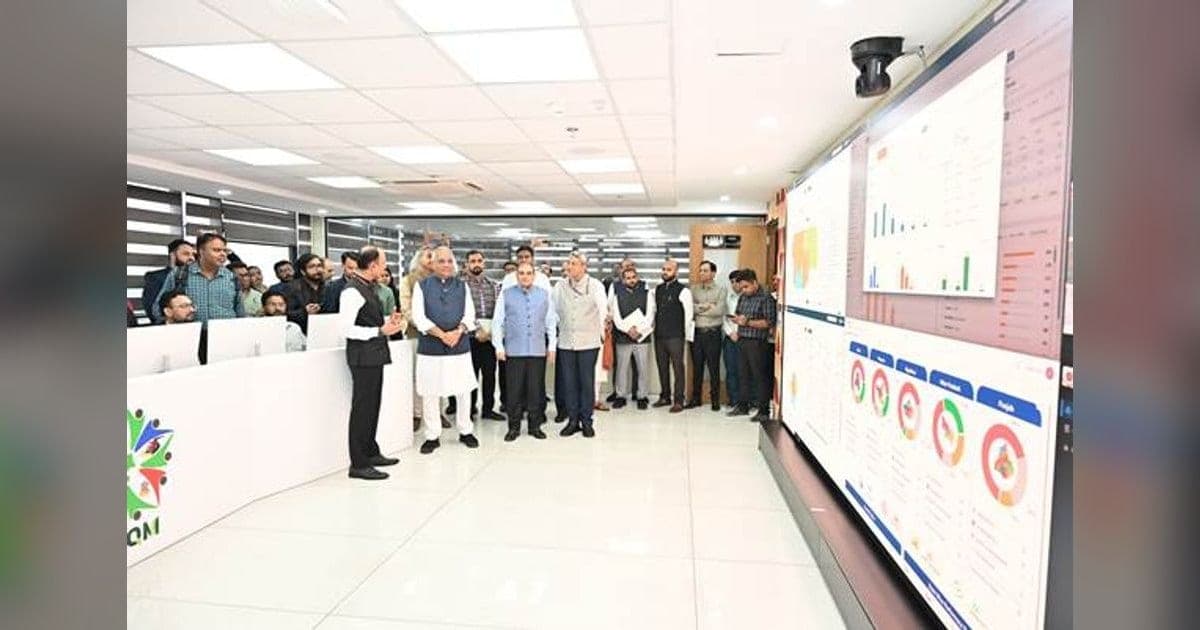
On 30 October 2026 Union Environment Minister Bhupender Yadav reviewed CAQM's PAVAN Integrated Command and Control Centre in New Delhi, which brings more than 30 air quality related data streams for Delhi-NCR onto one platform.
Union Minister for Environment, Forest and Climate Change Bhupender Yadav visited the newly built Integrated Command and Control Centre of the Commission for Air Quality Management (CAQM) in New Delhi on 30 October 2026 and went through its technology and its readiness to operate. The centre is named PAVAN, short for Platform for Air quality Vigilance and Analytics for NCR, and is meant to work as a single-window digital nerve centre for the capital region.
What feeds the platform
PAVAN pulls together more than 30 application programming interfaces and data streams covering air quality, emissions, weather, satellite images, cameras, traffic, public complaints and compliance records held by different agencies. Among the sources are:
- 111 continuous ambient air quality monitoring stations working across Delhi and the national capital region
- Over 2,300 industries and more than 3,200 active construction sites
- Online continuous emission monitoring systems reporting particulate matter, sulphur dioxide, oxides of nitrogen and carbon monoxide
- Satellite data on crop residue burning from IARI, ISRO and FIRMS, set against fire events of the previous six years
- Vehicle data through VAHAN, congestion hotspots, live feeds from the Okhla, Bhalswa, Ghazipur, Greater Noida and Bandhwari landfills, and tracking of mechanical road sweeping machines
- Citizen complaints routed through the Green Delhi and SAMEER apps
How it is meant to work
The platform runs on the principle of detect, analyse and act. When a reading strays from a prescribed norm or a statutory direction, an alert is raised and escalated to the agency responsible, which shifts the Commission away from monitoring that depended on each agency reporting its own performance. The minister said the centre ends the lag in operations and breaks the silos in which data used to sit, letting state pollution control boards work from one verified source and fix responsibility on polluters within minutes. A farm fire, a smoking stack or an uncovered building site, he said, can now be seen, flagged and acted upon as it happens.
A construction halt in November
The minister also announced that construction and demolition work across the national capital region will be stopped from 5 to 20 November to hold down pollution. A separate module tracks pending items in the state action plans of Delhi, Haryana, Punjab, Rajasthan and Uttar Pradesh across crop residue, vehicles, road dust, solid waste, industry, diesel generator sets and green crematoria. CAQM Chairperson Rajesh Verma and CPCB Chairperson Amandeep Garg were present.
Important Facts
| Platform | PAVAN: Platform for Air quality Vigilance and Analytics for NCR |
|---|---|
| Built by | Commission for Air Quality Management (CAQM) |
| Reviewed by | Union Environment Minister Bhupender Yadav |
| Data streams | More than 30 APIs and data streams |
| Monitoring stations | 111 continuous ambient air quality monitoring stations |
| Industries and sites | Over 2,300 industries and more than 3,200 construction sites |
| Working principle | Detect, Analyse, Act |
| Construction halt | C and D activity stopped across NCR from 5 to 20 November |
| CAQM Chairperson | Rajesh Verma |
| States in action plan module | Delhi, Haryana, Punjab, Rajasthan and Uttar Pradesh |
Exam Point of View
Remember the full form of PAVAN, the body that built it (CAQM), the minister who reviewed it, the number of data streams (over 30) and monitoring stations (111), the industries and construction sites covered, the working principle of detect, analyse and act, and the construction halt from 5 to 20 November.
Practice Questions
In the name of CAQM's new command centre, what does PAVAN stand for?
- A.Pollution Alert and Vigilance Agency Network
- B.Platform for Air quality Vigilance and Analytics for NCR
- C.Programme for Air Ventilation and Atmospheric Nowcasting
- D.Platform for Ambient Verification and Air Numbers
Show answer
The Commission for Air Quality Management built this Integrated Command and Control Centre in New Delhi as a single-window digital nerve centre for the capital region, and the Union Environment Minister reviewed its technological framework and operational readiness.
Read the full explanation →How many continuous ambient air quality monitoring stations feed data into the PAVAN platform?
- A.88
- B.96
- C.111
- D.134
Show answer
The platform integrates readings from 111 continuous ambient air quality monitoring stations that are operational across Delhi and the national capital region, installed by the Central Pollution Control Board, the India Meteorological Department and the state pollution control boards.
Read the full explanation →On which principle does the PAVAN Integrated Command and Control Centre operate?
- A.Detect, Analyse, Act
- B.Measure, Report, Verify
- C.Monitor, Warn, Penalise
- D.Observe, Forecast, Inform
Show answer
The minister explained that the centre works on this principle, bringing data from many agencies onto a common platform for real-time and historical study of pollution levels, identification of sources, assessment of trends and tracking of compliance in the field against prescribed standards.
Read the full explanation →Frequently Asked Questions
What does PAVAN stand for?
Platform for Air quality Vigilance and Analytics for NCR. It is the Integrated Command and Control Centre of the Commission for Air Quality Management in New Delhi.
How many monitoring stations feed into PAVAN?
Data from 111 continuous ambient air quality monitoring stations working in Delhi and the national capital region, besides over 2,300 industries and more than 3,200 active construction sites.
When will construction and demolition work be halted in the NCR?
From 5 to 20 November, as announced by Union Environment Minister Bhupender Yadav while reviewing the new centre.
Sources
- https://www.pib.gov.in/PressReleasePage.aspx?PRID=2330449 (opens in a new tab) — Press Information Bureau
Current Affairs 30 October 2026
- National Social Security Board for Gig Workers NotifiedNational
- Fisheries Sector Gets Rs 39,272 Crore Push for Value AdditionGovernment Schemes
- Buddha's Piprahwa Relics Head to Arunachal Pradesh ExpositionNational
- Indian Navy's First Training Squadron Departs ColomboDefence
- DRI Busts Synthetic Drug Laboratory in Jalaun, Seizes 1,100 kgNational
- Digital Life Certificate Campaign 5 Begins in 2000 DistrictsGovernment Schemes
- 19th India-BLEU Joint Economic Commission Meets in LuxembourgInternational
- CGIAR Science and Partnership Week 2027 to be Held in New DelhiSummits & Conferences
Related Current Affairs
- Science & Technology
India's New-Age Space Technologies: NGLV, SpaDeX, NavIC
28 October 2026 · 2 min read
- Science & Technology
India-France Space Ties Widen to Gaganyaan, TRISHNA and Start-ups
28 September 2026 · 2 min read
- Summits & Conferences
PM Modi Addresses First International Space Summit in Paris
10 September 2026 · 2 min read
- International
India-France Space Talks Ahead of Paris International Space Summit
4 September 2026 · 2 min read






Related GK
- Maps, Map Projections and Remote Sensing for Exams
12 October 2026 · Geography
- Satellite Orbits and Space Debris: LEO, GEO, SSO and Kessler
11 October 2026 · Science & Technology
- Research Institutes of India and Their Locations
11 October 2026 · Static GK
Take the Quiz
- Current Affairs Quiz
IBPS Current Affairs Quiz: 30 October 2026
25 questions25 minutesStart Quiz