
India Plans First Human Deep-Sea Mission to 6,000 m by 2028
Dr Jitendra Singh told IPRD 2026 in New Delhi that India will send its first human deep-sea mission to depths of up to 6,000 metres by the year 2028.
Why in News
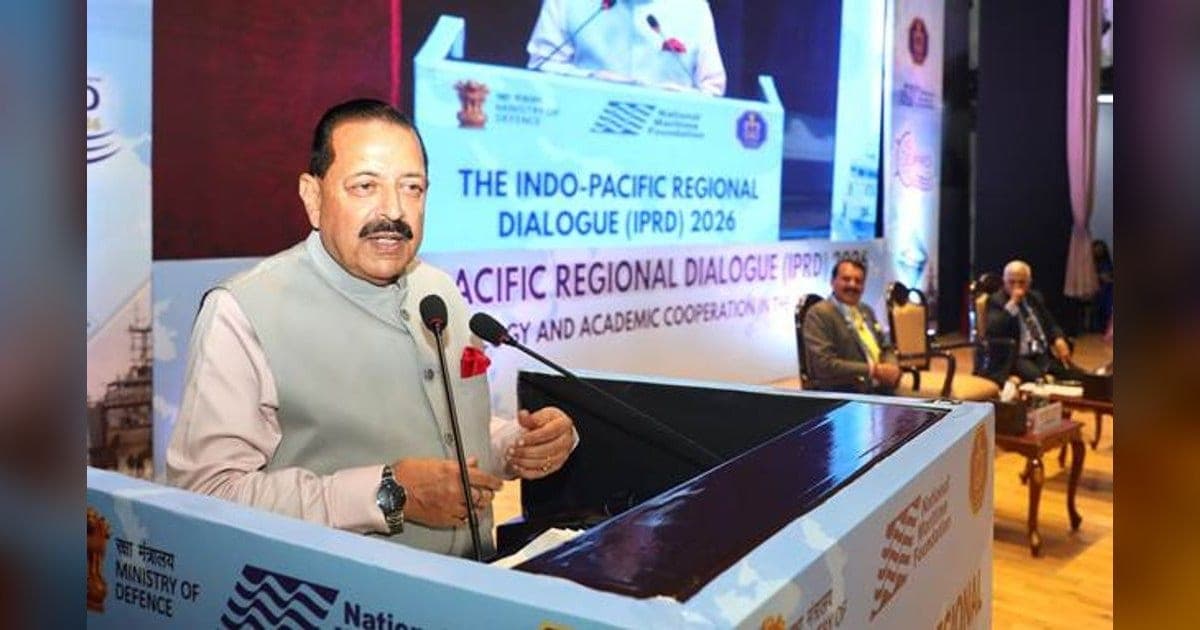
Addressing the Indo-Pacific Regional Dialogue 2026 on 4 November 2026, Dr Jitendra Singh said India is progressing towards its first human deep-sea mission to a depth of up to 6,000 metres by 2028 under the Samudrayaan Mission.
India will send its first crewed deep-sea mission to a depth of as much as 6,000 metres by 2028, Union Minister of State (Independent Charge) for Science and Technology and Earth Sciences Dr Jitendra Singh said while addressing the Indo-Pacific Regional Dialogue (IPRD) 2026 on 4 November 2026. The dialogue is organised by the National Maritime Foundation under the Ministry of Defence. The Minister said the country is aiming at global competitiveness in ocean research through indigenous capability, international cooperation and global co-creation.
Samudrayaan and the Matsya submersible
The crewed dive comes under the Samudrayaan Mission, whose submersible Matsya is built to carry three aquanauts to depths between 5,000 and 6,000 metres. The National Institute of Ocean Technology (NIOT), Chennai, has already developed the ability to run trials at that depth range in the Central Indian Ocean Basin. The Minister also mentioned the Ocean Mineral Explorer, which allows high-resolution survey of hydrothermal sulphide deposits, several of which have been located. He drew a parallel with the human spaceflight programme and spoke of a day when one Indian descends to nearly 6,000 metres while another travels into space at almost the same time.
Science across departments
Scientific work in recent years, he said, has moved to a mission-mode design in which ocean science, space technology, nuclear science, geology, electronics and robotics converge instead of staying inside single ministries. Satellites now feed ocean research with readings of ocean colour, sea-surface temperature and wind vectors, and the same data could later help tap renewable energy from the sea. Nuclear technology contributes through seawater desalination, including the plant at Kalpakkam set up with support from the Bhabha Atomic Research Centre, which helps supply drinking water in coastal and island areas. The Minister noted that the Prime Minister has referred to the Deep Ocean Mission twice in Independence Day addresses, which he read as a sign of the priority given to ocean resources.
Funding and cooperation
On research funding, the Minister pointed to the Anusandhan National Research Foundation and the Research, Development and Innovation Fund of one lakh crore rupees, which follows a 50:50 equity-based approach so that private investors come in alongside the government. Answering a question on nuclear-powered vessels, he recalled the opening of the nuclear sector to private participation under the SHANTI Act and the target of 100 GW of nuclear capacity by 2047. He said the guiding principle for the region should be One Ocean, Shared Knowledge and Equitable Prosperity, since pollution and warming water do not stop at national borders, and he listed priorities such as closing observation gaps, better forecasting of extreme events, regional climate services for coasts and islands, and fair use of ocean resources. An annual ocean-cleanliness campaign, begun during the commemoration of 75 years of Independence, now draws in coastal district administrations, the Indian Navy, the Indian Coast Guard and voluntary bodies.
Important Facts
| Announcement | First Indian human deep-sea mission to a depth of up to 6,000 metres by 2028 |
|---|---|
| Made by | Dr Jitendra Singh, MoS (IC) for Science and Technology and Earth Sciences |
| Occasion | Indo-Pacific Regional Dialogue (IPRD) 2026, organised by the National Maritime Foundation |
| Mission and submersible | Samudrayaan Mission; submersible Matsya for three aquanauts at 5,000 to 6,000 metres |
| Institute | National Institute of Ocean Technology (NIOT), Chennai |
| Trial area | Central Indian Ocean Basin |
| RDI Fund | One lakh crore rupees, on a 50:50 equity-based approach |
| Nuclear target | 100 GW of nuclear capacity by 2047; sector opened to private players under the SHANTI Act |
| Guiding principle | One Ocean, Shared Knowledge and Equitable Prosperity |
Exam Point of View
Remember the depth and deadline of the first crewed dive (up to 6,000 metres by 2028), the submersible Matsya and its three aquanauts, the mission name Samudrayaan, NIOT Chennai and the Central Indian Ocean Basin, the one lakh crore rupee RDI Fund with its 50:50 equity approach, the 100 GW nuclear target for 2047 and the slogan One Ocean, Shared Knowledge and Equitable Prosperity.
Practice Questions
According to Dr Jitendra Singh at IPRD 2026, by which year will India send its first human deep-sea mission to a depth of up to 6,000 metres?
- A.2026
- B.2027
- C.2028
- D.2030
Show answer
The Minister said India is progressing towards sending its first crewed deep-sea mission to a depth of as much as six thousand metres by that year, which he called an important milestone in an exploration programme built on indigenous capability.
Read the full explanation →How many aquanauts is the Matsya submersible designed to carry?
- A.Two
- B.Three
- C.Four
- D.Six
Show answer
The submersible of the Samudrayaan Mission is built to take three aquanauts down to depths between five and six thousand metres, and it is the vehicle behind the plan for a crewed Indian dive later this decade.
Read the full explanation →Which principle did Dr Jitendra Singh propose as the guide for Indo-Pacific cooperation in ocean science?
- A.One Ocean, Shared Knowledge and Equitable Prosperity
- B.One Earth, One Family, One Future
- C.Security and Growth for All in the Region
- D.Blue Economy for Shared Wealth
Show answer
The Minister offered this as the principle that should steer cooperation across the Indo-Pacific, arguing that oceans ignore political boundaries and that marine pollution or a change in ocean temperature has effects far beyond the country where it begins.
Read the full explanation →Frequently Asked Questions
When will India send its first human deep-sea mission?
By 2028, to a depth of up to 6,000 metres, under the Samudrayaan Mission. The submersible Matsya is designed to carry three aquanauts to depths of 5,000 to 6,000 metres.
Which institute has built India deep-ocean trial capability?
The National Institute of Ocean Technology, Chennai, which can conduct trials at depths of 5,000 to 6,000 metres in the Central Indian Ocean Basin.
What is the RDI Fund mentioned by the Minister?
The Research, Development and Innovation Fund of one lakh crore rupees, announced to speed up private participation in research, works on a 50:50 equity-based approach alongside the Anusandhan National Research Foundation.
Sources
- https://pib.gov.in/PressReleasePage.aspx?PRID=2332636 (opens in a new tab) — Press Information Bureau
Current Affairs 4 November 2026
- India-Poland Trade Push: Jitin Prasada Visits WarsawInternational
- NLMC Phase II RINL Land Auction Fetches Rs 218 CroreEconomy
- Railways Freight Loading Hits 145.07 MT in October 2026Economy
- CSIR and DAKSHIN-RIS Sign Pact for Global South ScienceScience & Technology
- Ayush Minister Ties Dhanteras to Preventive HealthcareImportant Days
- Schedule M Amendment Aligns Grade A Limits With WHO NormsNational
- Cabinet Clears Rs 2,814 Crore Critical Mineral Capex SchemeGovernment Schemes
- Cabinet Approves Rs 4,371.10 Crore VISTAR Statistics SchemeEconomy
Related Current Affairs
- Science & Technology
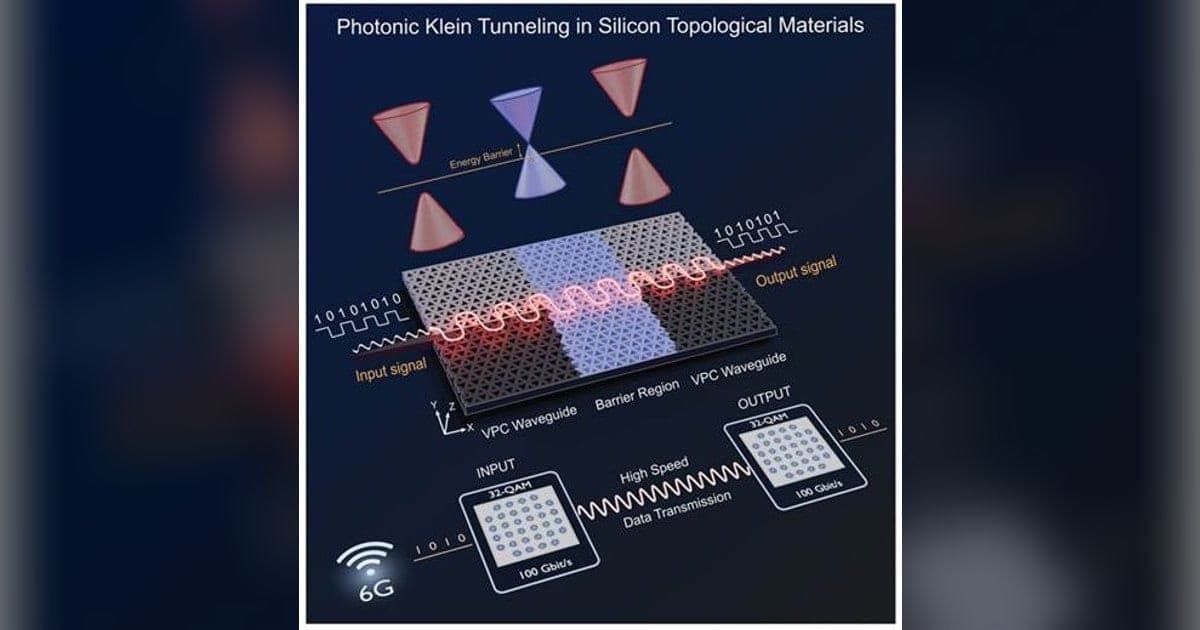
JNCASR Silicon Chip Carries Terahertz Data at 100 Gbit/s
4 November 2026 · 2 min read
- Science & Technology
TRAI Launches Network Anubhav Platform for Network Quality
4 November 2026 · 2 min read
- Science & Technology
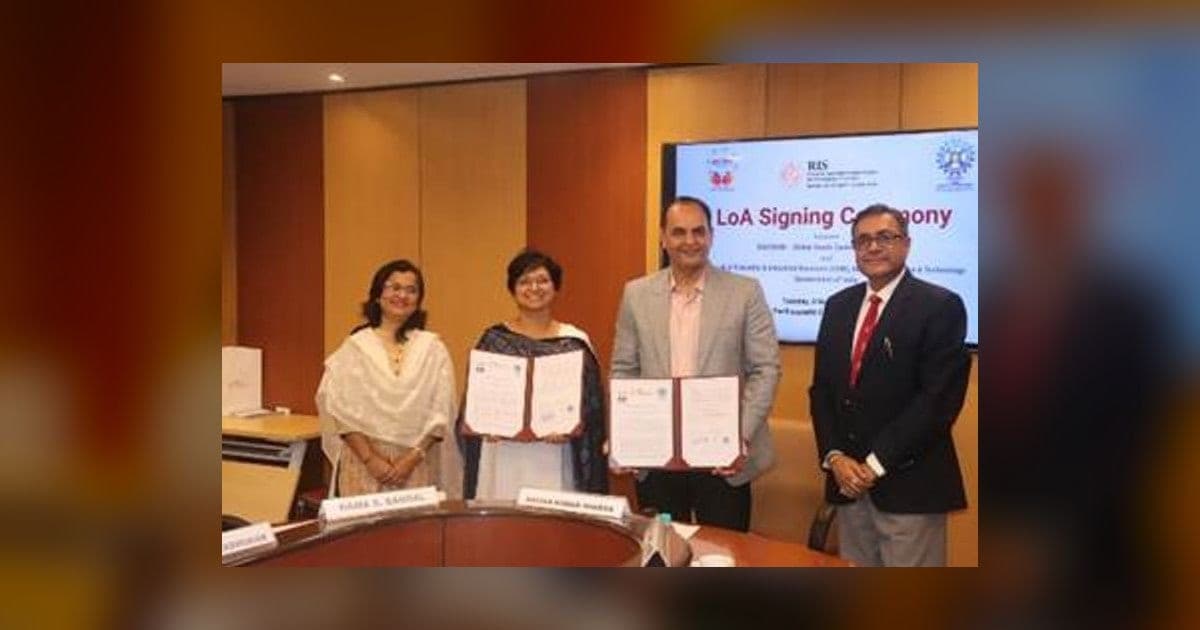
CSIR and DAKSHIN-RIS Sign Pact for Global South Science
4 November 2026 · 2 min read
- Science & Technology
IndiaAI Mission Releases EKA-1 and Dhir Foundation Models
3 November 2026 · 2 min read
- Science & Technology
Aditya-L1 VELC Finds Solar Eruption Expands Asymmetrically
3 November 2026 · 2 min read
Related GK
- Famous Personalities of Rajasthan: Exam Notes
28 October 2026 · Rajasthan
- Districts and Divisions of Rajasthan: Exam Notes
28 October 2026 · Rajasthan
- Tourism and World Heritage Sites of Rajasthan Notes
27 October 2026 · Rajasthan
Take the Quiz
- Current Affairs Quiz
SSC CHSL Current Affairs Quiz: 4 November 2026
19 questions19 minutesStart Quiz