
CSIR and DAKSHIN-RIS Sign Pact for Global South Science
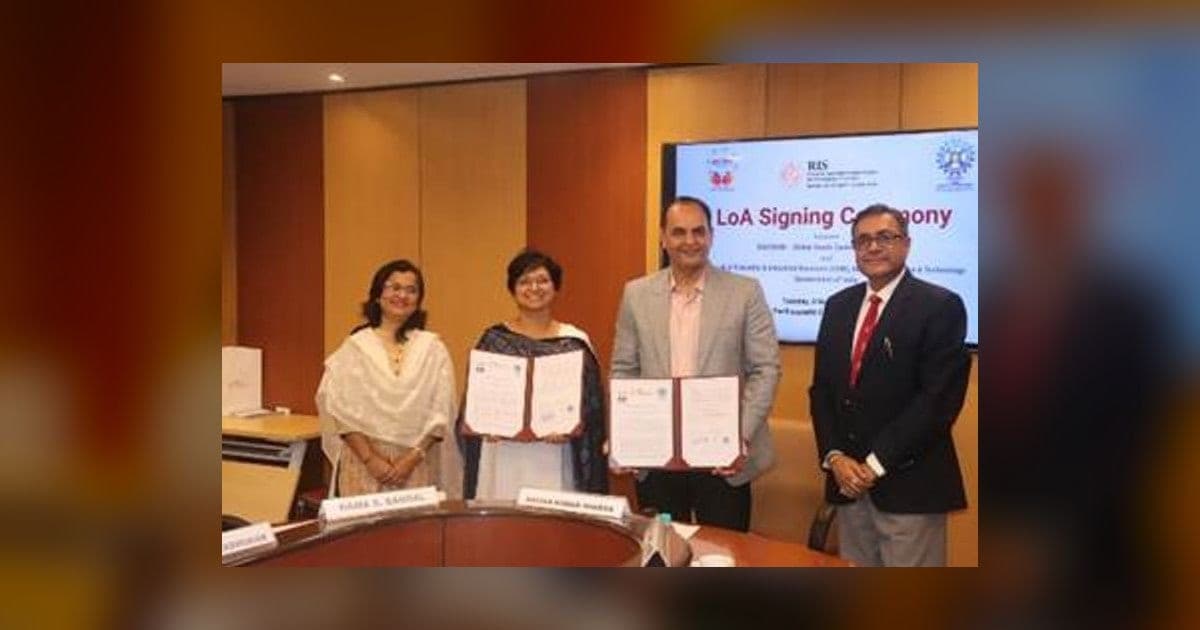
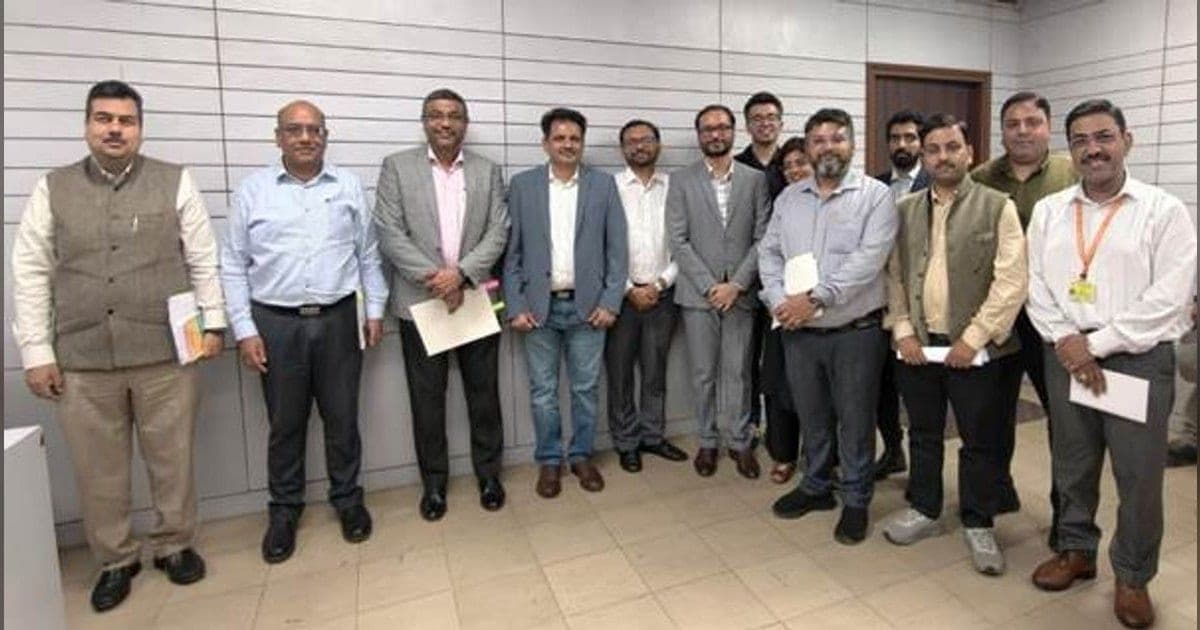
CSIR and DAKSHIN, the Global South Centre of Excellence at RIS, signed a Letter of Association on 3 November 2026 to share science and technology with partner nations.
Why in News
On 4 November 2026 the Ministry of Science and Technology announced that CSIR and DAKSHIN, the Global South Centre of Excellence at RIS, had signed a Letter of Association on 3 November 2026 to advance science, technology and innovation for countries of the Global South.
The Council of Scientific and Industrial Research (CSIR) and DAKSHIN, the Global South Centre of Excellence housed at the Research and Information System for Developing Countries (RIS), put their names to a Letter of Association on 3 November 2026. The Ministry of Science and Technology announced the agreement on 4 November 2026. The two bodies will work together on capacity building, joint research and technology partnerships for countries of the Global South.
What DAKSHIN sets out to do
DAKSHIN is built around the idea that developing countries learn fastest from one another. It encourages the making of solutions that are sustainable, affordable and fitted to local conditions, and it works through pooled resources, transfer of technology, exchange of experience and shared strategy. The aim is to tackle problems these countries face in common and to speed up progress towards the Sustainable Development Goals.
What CSIR brings
CSIR carries into the tie-up a wide base of scientific and technical knowledge along with a shelf of technologies that are ready to deploy, cheap enough to afford and simple enough to adapt. These are held to suit the development needs of partner countries, and they open room for wider spread, for industry to take them up and for new enterprise to grow around them.
Who said what
Dr. Rama Swami Bansal, Head of the International Science and Technology Affairs Directorate at CSIR, stressed how much developing countries gain from engaging one another and pointed to the scope for fresh models of joint working on shared priorities. Professor Sachin Kumar Sharma, Director General of RIS, called the tie-up a milestone in turning scientific skill and invention into practical joint solutions, and singled out healthcare, infrastructure, agriculture, the blue economy and the digital economy as the fields that hold the most promise.
The four objectives
- Running joint policy studies to find answers suited to each setting
- Bringing in institutions and agencies that can scale up development work
- Pushing capacity building, human resource development and skill upgrades
- Recording and circulating development experience, best practice and success stories to build collective self-reliance
Why it matters
The arrangement is meant to serve as a platform for South-South cooperation, drawing in international partners and easing the transfer, adaptation and rollout of suitable science and technology. By placing CSIR's laboratory strength alongside DAKSHIN's reach abroad, the partners hope to put affordable and locally fitting technology into use across the Global South.
Important Facts
| Signatories | Council of Scientific and Industrial Research (CSIR) and DAKSHIN at RIS |
|---|---|
| Instrument | Letter of Association (LoA) |
| Date of signing | 3 November 2026 |
| DAKSHIN | Global South Centre of Excellence |
| Host institution | Research and Information System for Developing Countries (RIS) |
| Ministry | Ministry of Science and Technology |
| CSIR official | Dr. Rama Swami Bansal, Head, International S&T Affairs Directorate |
| RIS official | Professor Sachin Kumar Sharma, Director General |
| Priority areas | Healthcare, infrastructure, agriculture, blue economy and digital economy |
| Larger goal | South-South cooperation and the Sustainable Development Goals |
Exam Point of View
Remember the two signatories (CSIR and DAKSHIN at RIS), the instrument signed (Letter of Association, not an MoU), the date of signing (3 November 2026), what DAKSHIN stands for (Global South Centre of Excellence), the full form of RIS, the two officials named, the five priority fields and the ministry that announced it (Science and Technology).
Practice Questions
CSIR signed a Letter of Association with DAKSHIN, which is hosted at which institution?
- A.Research and Information System for Developing Countries (RIS)
- B.Indian Council of World Affairs
- C.NITI Aayog
- D.Indian Institute of Foreign Trade
Show answer
DAKSHIN, the Global South Centre of Excellence, is housed at RIS, and it was in that capacity that it signed the Letter of Association with CSIR on 3 November 2026.
Read the full explanation →DAKSHIN, which signed a pact with CSIR, stands for which of the following?
- A.Development Assistance Knowledge Hub for Innovation
- B.Global South Centre of Excellence
- C.Southern Science and Technology Mission
- D.Developing Asia Knowledge Network
Show answer
That is what DAKSHIN is, and it sits at the Research and Information System for Developing Countries, working to spread knowledge and mutual learning among developing countries.
Read the full explanation →Which of the following was NOT named as a key area of cooperation under the CSIR-DAKSHIN Letter of Association?
- A.Healthcare
- B.Blue economy
- C.Space launch services
- D.Digital economy
Show answer
The Director General of RIS, Professor Sachin Kumar Sharma, named five areas as holding particular promise: healthcare, infrastructure, agriculture, the blue economy and the digital economy.
Read the full explanation →The CSIR-DAKSHIN agreement is chiefly aimed at strengthening which kind of cooperation?
- A.North-North cooperation
- B.South-South cooperation
- C.Trans-Atlantic cooperation
- D.Arctic cooperation
Show answer
The whole design of the pact rests on it: DAKSHIN works for the countries of the Global South, and CSIR is bringing its ready-to-deploy, affordable and adaptable technologies to that group.
Read the full explanation →Frequently Asked Questions
What did CSIR and DAKSHIN-RIS sign, and when?
They signed a Letter of Association on 3 November 2026. The pact covers capacity building, research collaboration and technology partnerships for countries of the Global South, and was announced by the Ministry of Science and Technology.
What is DAKSHIN and where is it based?
DAKSHIN is the Global South Centre of Excellence, housed at the Research and Information System for Developing Countries (RIS). It promotes knowledge sharing and mutual learning among developing countries through sustainable, affordable and locally relevant solutions.
Which areas were identified for cooperation under the pact?
The Director General of RIS, Professor Sachin Kumar Sharma, highlighted healthcare, infrastructure, agriculture, the blue economy and the digital economy as the key fields where CSIR and DAKSHIN can work together.
What are the main objectives of the Letter of Association?
Joint policy studies for context-specific solutions, engaging institutions to scale up development work, promoting capacity building and skill upgrades, and documenting and sharing development experience to strengthen collective self-reliance.
Sources
- https://www.pib.gov.in/PressReleasePage.aspx?PRID=2332389 (opens in a new tab) — Press Information Bureau
Current Affairs 4 November 2026
- India-Poland Trade Push: Jitin Prasada Visits WarsawInternational
- NLMC Phase II RINL Land Auction Fetches Rs 218 CroreEconomy
- Railways Freight Loading Hits 145.07 MT in October 2026Economy
- Ayush Minister Ties Dhanteras to Preventive HealthcareImportant Days
- Schedule M Amendment Aligns Grade A Limits With WHO NormsNational
- Cabinet Clears Rs 2,814 Crore Critical Mineral Capex SchemeGovernment Schemes
- Cabinet Approves Rs 4,371.10 Crore VISTAR Statistics SchemeEconomy
- Cabinet Clears Rs 14,500 Crore VGF for 92 GWh Energy StorageEnvironment
Related Current Affairs
- Science & Technology
India Plans First Human Deep-Sea Mission to 6,000 m by 2028
4 November 2026 · 2 min read
- Science & Technology
JNCASR Silicon Chip Carries Terahertz Data at 100 Gbit/s
4 November 2026 · 2 min read
- Science & Technology
TRAI Launches Network Anubhav Platform for Network Quality
4 November 2026 · 2 min read
- Science & Technology
IndiaAI Mission Releases EKA-1 and Dhir Foundation Models
3 November 2026 · 2 min read
- Science & Technology
Aditya-L1 VELC Finds Solar Eruption Expands Asymmetrically
3 November 2026 · 2 min read

Related GK
- Famous Personalities of Rajasthan: Exam Notes
28 October 2026 · Rajasthan
- Districts and Divisions of Rajasthan: Exam Notes
28 October 2026 · Rajasthan
- Tourism and World Heritage Sites of Rajasthan Notes
27 October 2026 · Rajasthan
Take the Quiz
- Current Affairs Quiz
State Exams Current Affairs Quiz: 4 November 2026
25 questions25 minutesStart Quiz