
TDB Signs Rs 150 Crore Quantum Security Deal With QNu Labs
The Technology Development Board signed an agreement with Bengaluru's QNu Labs for Rs 150 crore of RDI Fund support to build India's quantum-secure technology stack.
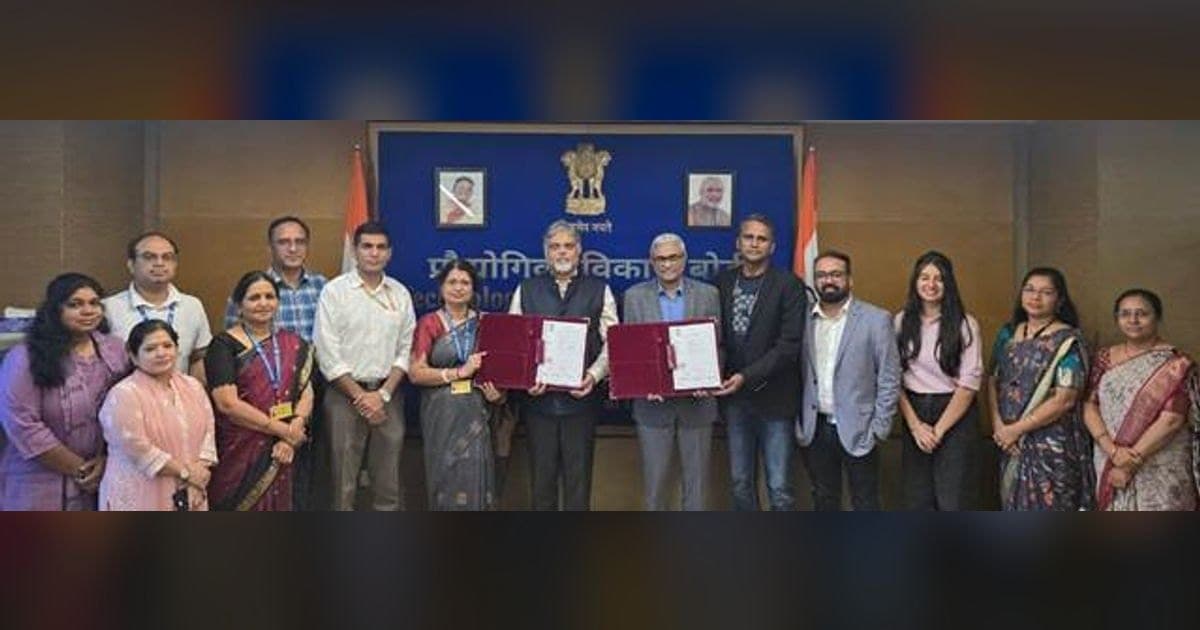
Why in News
On 16 October 2026 the Technology Development Board of the Department of Science and Technology signed an agreement with QNu Labs Private Limited, Bengaluru, for Rs 150 crore of RDI Fund support towards a sovereign quantum-secure technology stack.
India's push into quantum-secure communication got a large funding commitment on 16 October 2026. The Technology Development Board (TDB), which works under the Department of Science and Technology (DST), signed an agreement with QNu Labs Private Limited of Bengaluru, Karnataka, for financial support of Rs 150 crore from the Research Development and Innovation (RDI) Fund.
The project in numbers
| Total project cost | Rs 300 crore |
| TDB support | Rs 150 crore |
| Mode of support | Optionally Convertible Debt (OCD) |
| Readiness target | From TRL 4-5 to TRL-9 |
The money goes into an indigenous technology backbone for India's Quantum Secure and Sensing Networks (IQSN). The aim is to lift a bundle of technologies from Technology Readiness Levels 4 and 5 up to TRL-9, the stage at which a system is proven in actual operation, by paying for the development, integration and validation of a sovereign quantum-security and sensing stack.
The four pillars
The programme is organised around four connected pillars:
- Identity security: quantum-secure physical unclonable functions (PUFs) and quantum-safe trusted platform modules (TPMs) that tie a device's identity to its hardware, so a copied or compromised device can be caught.
- Location integrity: compact quantum magnetometers to detect electromagnetic tampering and to allow navigation where satellite positioning is denied or spoofed, with uses in defence and other mission-critical platforms.
- Network security: chip-based quantum key distribution (QKD), satellite-based QKD, quantum-secure communication modules and encryption systems for safe traffic over both terrestrial and long-distance links.
- Time integrity: indigenous atomic clock technology and tamper-resistant time synchronisation using QKD-authenticated distribution, which telecom networks, financial systems and defence all depend on.
Why it matters
As digital systems get more tightly connected, the authenticity of devices, the integrity of navigation, the reliability of time synchronisation and the confidentiality of messages all become security problems at once. Conventional cryptography can struggle against evolving cyber threats, and quantum methods offer a different route. Taken together, the four pillars are meant to form an integrated quantum trust framework.
What officials said
Shri Rajesh Kumar Pathak, Secretary, TDB, said quantum technologies are opening new ways to address hard problems in cybersecurity, communications, navigation and critical infrastructure, and that the RDI Fund exists to carry advanced technologies from research and engineering through to deployable systems. The founder of QNu Labs said the support would speed up the company's research roadmap and extend its quantum security work into chip-based and satellite-based QKD, quantum sensing and artificial intelligence, for use by India's defence, telecom, financial and critical infrastructure sectors.
Important Facts
| Agreement signed by | Technology Development Board (TDB), Department of Science and Technology |
|---|---|
| Company | QNu Labs Private Limited, Bengaluru, Karnataka |
| Support | Rs 150 crore from the Research Development and Innovation (RDI) Fund |
| Total project cost | Rs 300 crore |
| Mode of funding | Optionally Convertible Debt (OCD) |
| Target | Technologies from TRL 4-5 to TRL-9 |
| Programme | India's Quantum Secure and Sensing Networks (IQSN) |
| Four pillars | Identity security, location integrity, network security, time integrity |
| TDB Secretary | Rajesh Kumar Pathak |
Exam Point of View
Remember the board (Technology Development Board under DST), the company (QNu Labs, Bengaluru), the support amount (Rs 150 crore) and total cost (Rs 300 crore), the fund (Research Development and Innovation Fund), the instrument (Optionally Convertible Debt), the target readiness level (TRL-9), the network name (IQSN) and the four pillars.
Practice Questions
The Technology Development Board signed an agreement for quantum-secure technology support with which company?
- A.QNu Labs Private Limited, Bengaluru
- B.QpiAI India Private Limited, Pune
- C.BosonQ Psi Private Limited, Bhopal
- D.Quantum Ecosystems Technology Council of India
Show answer
The Technology Development Board, which functions under the Department of Science and Technology, signed the agreement with this Karnataka-based company for financial support from the Research Development and Innovation Fund.
Read the full explanation →What is the amount of TDB support and the total cost of the QNu Labs quantum project?
- A.Support of Rs 100 crore in a project of Rs 250 crore
- B.Support of Rs 150 crore in a project of Rs 300 crore
- C.Support of Rs 200 crore in a project of Rs 400 crore
- D.Support of Rs 250 crore in a project of Rs 500 crore
Show answer
The Technology Development Board is contributing half the project's cost from the Research Development and Innovation Fund, and the support is routed through Optionally Convertible Debt.
Read the full explanation →Which of the following is NOT one of the four pillars of the quantum programme supported by TDB?
- A.Identity security
- B.Location integrity
- C.Time integrity
- D.Climate resilience
Show answer
The four pillars are identity security, location integrity, network security and time integrity. Under identity security the project develops quantum-secure physical unclonable functions and quantum-safe trusted platform modules so that device identity is anchored in hardware.
Read the full explanation →Frequently Asked Questions
How much support has TDB given QNu Labs and from which fund?
Rs 150 crore from the Research Development and Innovation (RDI) Fund, provided through Optionally Convertible Debt. The project's total cost is Rs 300 crore and it will build a sovereign quantum-security and sensing technology stack.
What are the four pillars of the QNu Labs programme?
Identity security, location integrity, network security and time integrity. Together they are meant to create an integrated quantum trust framework covering device authenticity, trusted navigation, secure communication and tamper-resistant timing.
What does TRL-9 mean in this project?
TRL stands for Technology Readiness Level. The programme will carry technologies that are now at levels 4 and 5 up to TRL-9, the stage at which a technology is fully developed, integrated and validated for actual deployment.
Sources
- https://www.pib.gov.in/PressReleasePage.aspx?PRID=2324307 (opens in a new tab) — Press Information Bureau
Current Affairs 16 October 2026
- India Builds Safer Navigation on 111 National WaterwaysNational
- APEDA Flags Off Maiden Palmyra Jaggery Export to BulgariaEconomy
- Polish Youth Delegation Ends Jamsaheb Memorial Exchange in IndiaInternational
- Ayush Patent Report Records 4,077 Filings Since 2014-15Reports & Indices
- First Kanda Express Takes 440 MT Onions to AgartalaEconomy
- BHASHINI and IISc Build Sourashtra Text-to-Speech ModelsScience & Technology
- Textiles Ministry Holds Special Campaign 6 Cyber WorkshopsNational
- INS Samarthak Joins Navy as First Indigenous Multi-Purpose VesselDefence
Related Current Affairs
- Science & Technology
Indian Scientists Identify Martian Analogue Sites in Tamil Nadu
16 October 2026 · 2 min read
- Science & Technology
BHASHINI and IISc Build Sourashtra Text-to-Speech Models
16 October 2026 · 2 min read
- Science & Technology
TDB Supports Development of Indigenous 32-Slice CT Scanner
15 October 2026 · 2 min read
- Science & Technology
ARCI Workshop Marks National Hydrogen and Fuel Cell Day
15 October 2026 · 2 min read
- Science & Technology
ESTIC 2026 Curtain-Raiser Highlights Physical AI, Robotics
15 October 2026 · 2 min read
- Science & Technology
BHASHINI Division and Manipur Sign MoU on Multilingual AI
15 October 2026 · 2 min read



Related GK
- Population and Tribes of MP: Bhil, Gond and Baiga
16 October 2026 · Madhya Pradesh
- Industries of Madhya Pradesh: Pithampur, Cement and Mills
16 October 2026 · Madhya Pradesh
- Industries and Minerals of Haryana: Towns and Products
16 October 2026 · Haryana
Take the Quiz
- Current Affairs Quiz
State Exams Current Affairs Quiz: 16 October 2026
25 questions25 minutesStart Quiz