
ARCI Workshop Marks National Hydrogen and Fuel Cell Day
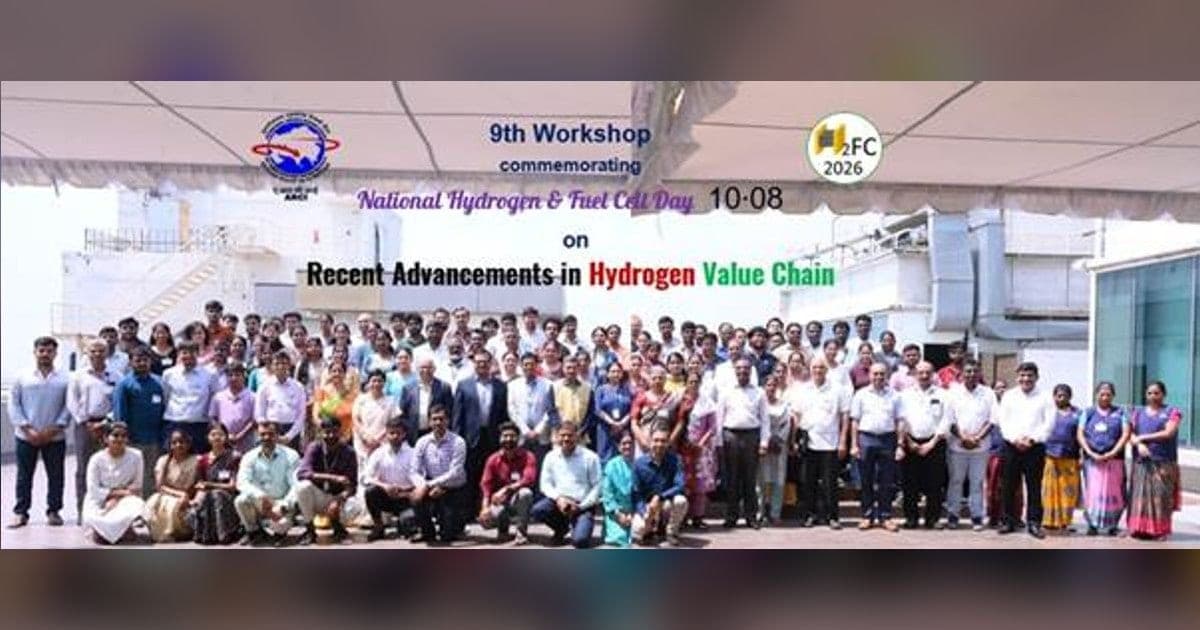
About 150 delegates met at IIT Madras Research Park for the 9th workshop on the hydrogen value chain, held by ARCI to mark Hydrogen and Fuel Cell Day.
Why in News
A workshop organised by ARCI under the Department of Science and Technology to commemorate National Hydrogen and Fuel Cell Day was held at the IIT Madras Research Park in Chennai on 13 October 2026, with about 150 delegates discussing the hydrogen value chain.
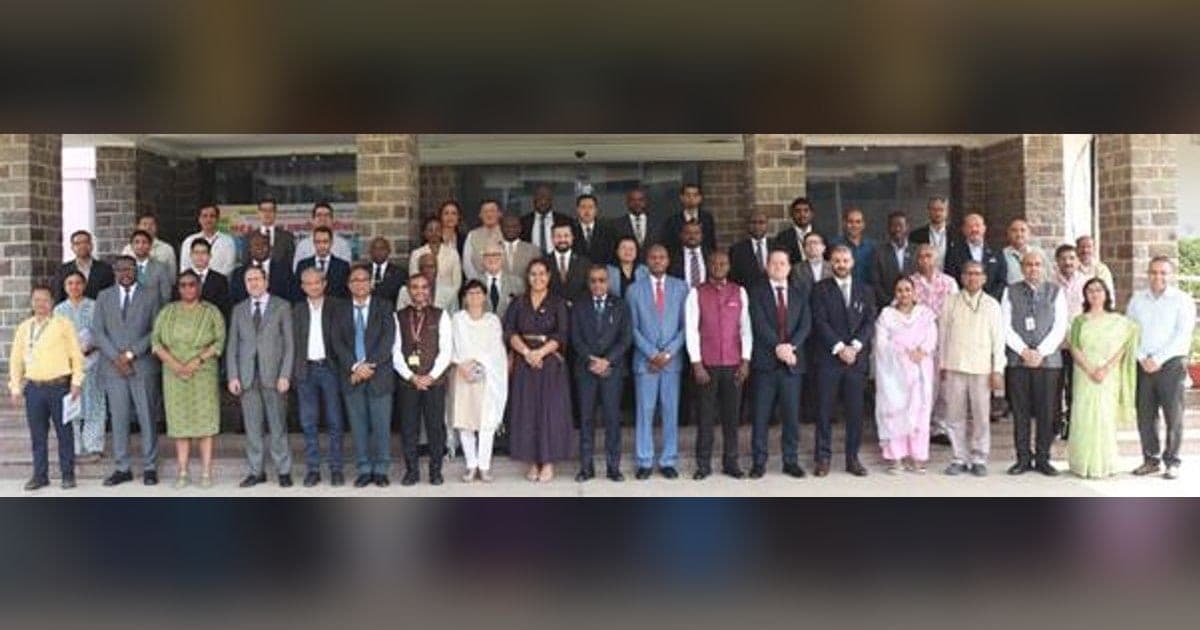
A workshop held to mark National Hydrogen and Fuel Cell Day brought scientists, academics, industry experts, technologists, research scholars and students together to review where India stands on the hydrogen value chain. The meeting was organised by the International Advanced Research Centre for Powder Metallurgy and New Materials (ARCI), an autonomous research and development centre of the Department of Science and Technology (DST), and was held at the IIT Madras Research Park in Chennai on 13 October 2026. It was the 9th Workshop on Recent Advancements in Hydrogen Value Chain, and about 150 delegates from academia, research institutes and industry took part, several of them delivering lectures in the technical sessions.
The materials India is building
Dr R. Vijay, Director of ARCI, said the country is working on research and development of advanced materials for home-grown hydrogen and fuel-cell technology. He listed the components involved:
- Electrocatalysts
- Bipolar plates
- Membrane electrode assemblies
- Fuel-cell stacks
- Alkaline electrolysers for producing hydrogen
Five sovereign commitments
Professor R. R. Sonde of IIT Delhi-Abu Dhabi, the Guest of Honour, set out five sovereign commitments covering energy independence, economic development, net-zero emissions and industrial decarbonisation, universal access to energy, and a clean environment. He argued for using several hydrogen production routes built on locally available biomass, so that a domestic hydrogen ecosystem comes up faster, a sound hydrogen economy takes shape and national energy independence is strengthened.
What the sessions covered
| Organiser | ARCI, an autonomous R&D centre of DST |
| Venue and date | IIT Madras Research Park, Chennai, 13 October 2026 |
| Edition | 9th Workshop on Recent Advancements in Hydrogen Value Chain |
| Participation | About 150 delegates |
The deliberations ran across hydrogen generation, storage, purification and use, with particular weight on fuel-cell technology, mobility applications, safety, standards and industrial deployment. Dr R. Subasri, Associate Director of ARCI, spoke of the growing need to move towards cleaner and more sustainable energy technology to protect the environment and keep the planet safe for later generations. Taken together, the sessions showed how many disciplines hydrogen technology draws on, from basic materials research and component engineering to production, storage, system integration and deployment in industry.
Important Facts
| Occasion | National Hydrogen and Fuel Cell Day |
|---|---|
| Event | 9th Workshop on Recent Advancements in Hydrogen Value Chain |
| Organiser | ARCI, International Advanced Research Centre for Powder Metallurgy and New Materials |
| Parent department | Department of Science and Technology, Government of India |
| Venue | IIT Madras Research Park, Chennai |
| Date of workshop | 13 October 2026 |
| Participation | About 150 delegates |
| ARCI Director | Dr R. Vijay |
| Guest of Honour | Prof. R. R. Sonde, IIT Delhi-Abu Dhabi |
| Associate Director, ARCI | Dr R. Subasri |
| Materials discussed | Electrocatalysts, bipolar plates, membrane electrode assemblies, fuel-cell stacks, alkaline electrolysers |
Exam Point of View
Remember that ARCI stands for the International Advanced Research Centre for Powder Metallurgy and New Materials and works under DST, that its Director is Dr R. Vijay, that this was the 9th workshop on the hydrogen value chain, the venue IIT Madras Research Park in Chennai, the participation of about 150 delegates, and the five sovereign commitments named by Prof. R. R. Sonde.
Practice Questions
The 9th Workshop on Recent Advancements in Hydrogen Value Chain was organised by which centre?
- A.ARCI, the International Advanced Research Centre for Powder Metallurgy and New Materials
- B.National Institute of Solar Energy
- C.Central Power Research Institute
- D.National Physical Laboratory
Show answer
It organised the workshop at the IIT Madras Research Park in Chennai to commemorate National Hydrogen and Fuel Cell Day, and about 150 delegates from academia, research institutes and industry attended.
Read the full explanation →Where was the workshop commemorating National Hydrogen and Fuel Cell Day held?
- A.IIT Delhi, New Delhi
- B.IIT Madras Research Park, Chennai
- C.IISc Bengaluru
- D.ARCI campus, Hyderabad
Show answer
The correct answer is the IIT Madras Research Park in Chennai, where the 9th Workshop on Recent Advancements in Hydrogen Value Chain was held on 13 October 2026.
Read the full explanation →Which of the following was NOT among the five sovereign commitments outlined at the workshop?
- A.Energy independence
- B.Net-zero emissions and industrial decarbonisation
- C.Universal energy access
- D.Nuclear fuel self-sufficiency
Show answer
Professor R. R. Sonde of IIT Delhi-Abu Dhabi, the Guest of Honour, outlined five sovereign commitments covering energy independence, economic development, net-zero emissions and industrial decarbonisation, universal energy access, and a clean environment.
Read the full explanation →Frequently Asked Questions
Which institution organised the workshop on the hydrogen value chain?
ARCI, the International Advanced Research Centre for Powder Metallurgy and New Materials, an autonomous research and development centre of the Department of Science and Technology. The 9th edition was held at the IIT Madras Research Park, Chennai.
What were the five sovereign commitments named at the workshop?
Energy independence, economic development, net-zero emissions and industrial decarbonisation, universal energy access, and a clean environment. Prof. R. R. Sonde of IIT Delhi-Abu Dhabi set them out as Guest of Honour.
Which components of fuel-cell technology is India working on?
Electrocatalysts, bipolar plates, membrane electrode assemblies, fuel-cell stacks and alkaline electrolysers for hydrogen generation, according to ARCI Director Dr R. Vijay.
How many delegates attended the workshop?
About 150, drawn from academia, research and development institutes and industry, with several of them delivering lectures during the technical sessions on the hydrogen value chain.
Sources
- https://www.pib.gov.in/PressReleasePage.aspx?PRID=2323786 (opens in a new tab) — Press Information Bureau
Current Affairs 15 October 2026
- DDU-GKY 2.0 Captive Employer CXO Meet Held in JaipurGovernment Schemes
- BHASHINI Division and Manipur Sign MoU on Multilingual AIScience & Technology
- Tribal Languages Working Group Meets for the First TimeNational
- Bhupender Yadav Chairs 27th G.B. Pant Society MeetingEnvironment
- Special Campaign 6 Review Covers 84 MinistriesNational
- Women's Labour Force Participation Rate Rises to 40 Per CentEconomy
- Rajnath Singh Flags 5D Security Threat at Defence ConclaveDefence
- Vice-President Inaugurates KAUMARACON-2026 at AIIA DelhiSummits & Conferences
Related Current Affairs
- Science & Technology
ESTIC 2026 Curtain-Raiser Highlights Physical AI, Robotics
15 October 2026 · 2 min read
- Science & Technology
BHASHINI Division and Manipur Sign MoU on Multilingual AI
15 October 2026 · 2 min read
- Science & Technology
CEA Conference on Making Indian Power Sector AI Enabled
14 October 2026 · 2 min read
- Science & Technology
First MEA-CSIR Tech Familiarization Programme Held in Delhi
14 October 2026 · 2 min read
- Science & Technology
AI for Good Build-a-thon 5.0 Held at India Mobile Congress
14 October 2026 · 2 min read
- Science & Technology
NIPER Raebareli, AstraZeneca Tie Up for 25 Trial Sites
14 October 2026 · 2 min read
Related GK
- UP Minerals, Industries and ODOP: Districts and Products
15 October 2026 · Uttar Pradesh
- Rajasthan Irrigation and Water Projects: Canals and Dams
15 October 2026 · Rajasthan
- MP Minerals and Energy: Panna Diamonds and Singrauli
15 October 2026 · Madhya Pradesh
Take the Quiz
- Current Affairs Quiz
SSC CHSL Current Affairs Quiz: 15 October 2026
13 questions13 minutesStart Quiz