
National Workshop on Coastal Resilience Opens in Delhi
A two-day national workshop on coastal resilience opened in New Delhi under the Green Climate Fund's GCF-ECRICC project, drawing close to 150 participants.
Why in News
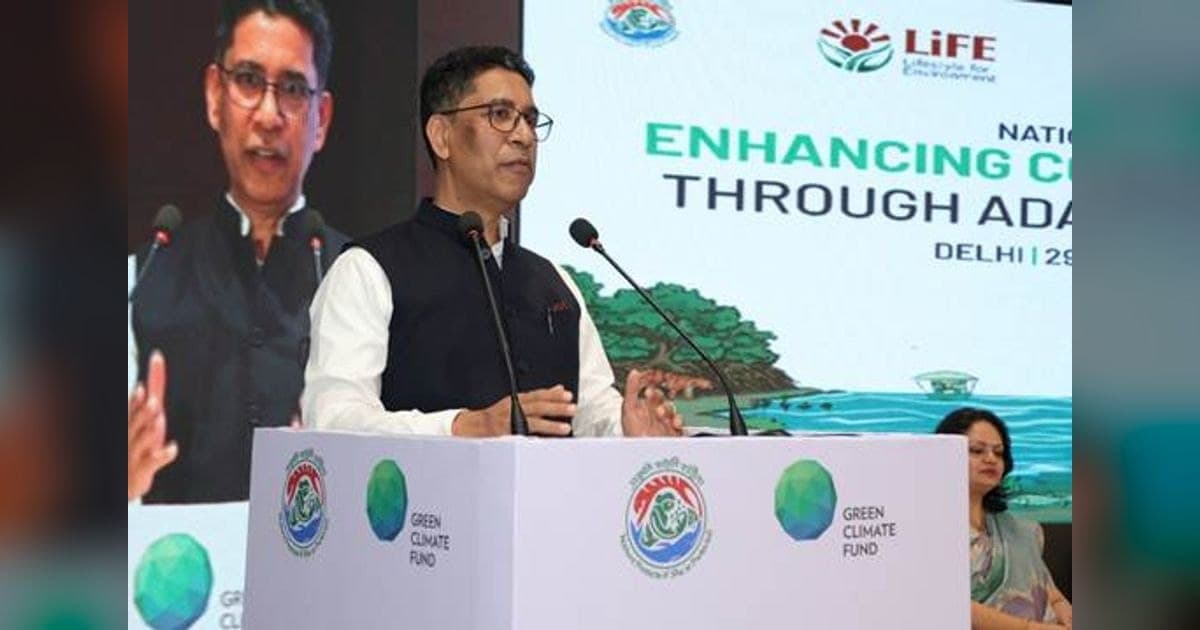
On 29 October 2026 the Ministry of Environment, Forest and Climate Change opened a two-day National Workshop on 'Enhancing Coastal Resilience through Adaptive Strategies' in New Delhi under the Green Climate Fund's GCF-ECRICC project.
The Union Ministry of Environment, Forest and Climate Change began a two-day national workshop in New Delhi on 29 October 2026 under the title 'Enhancing Coastal Resilience through Adaptive Strategies'. It runs through 30 October 2026. The workshop sits inside the Green Climate Fund project named Enhancing Climate Resilience of India's Coastal Communities, which officials refer to as GCF-ECRICC.
What the project does
GCF-ECRICC works on bringing back the coast's most important natural systems: mangroves, coastal watersheds, seagrass, salt marshes and corals. Alongside that ecological work it tries to put the livelihoods of people in the most exposed stretches on firmer ground. The project is running in Andhra Pradesh, Maharashtra and Odisha, and its progress in those three States, together with the scope for copying the approach elsewhere, was placed before the gathering.
What the Ministry said
Narendra Bhooshan, Secretary in the Ministry, told the opening session that strengthening the coast against a changing climate while safeguarding livelihoods is something India must do if the Viksit Bharat 2047 goal is to be met. He pointed to the value of mangroves, seagrasses, salt marshes and coral reefs for biodiversity, for earnings and as a shield for the shore. He said the scientific groundwork for coastal planning has been built up through shoreline-change assessment, hazard-line mapping, coastal vulnerability assessment and ecosystem information, and that the work now is to carry this evidence out of reports and maps and into real planning, infrastructure and investment choices at State, district and local level. The National Coastal Mission, he said, would act as the pivot for that effort, building on what GCF-ECRICC has produced.
Other speakers
Rajasree Ray, Senior Economic Advisor in the Ministry, gave the welcome address and argued for pulling national and State views, science, field experience and financing together. She showcased the project's Climate Champion model, in which women drawn mostly from coastal villages, called ECRICC Didi, translate technical knowledge into something local communities can act on. Tanvi Garg, Joint Secretary, spoke on the National Coastal Mission's place in coastal resilience and climate adaptation with the coastal States and Union Territories. Angela Lusigi, Resident Representative of UNDP India, said restoring coastal ecosystems supports livelihoods and helps women grow their own enterprises. Sushil Saigal, Interim Managing Director of The Nature Conservancy India, spoke on exchanging knowledge to spread proven practice.
Who attended and what follows
Close to 150 participants took part, among them senior officers of the Ministry and other ministries, representatives of UNDP and The Nature Conservancy, Coastal Zone Management Authorities, State and Union Territory forest departments, research institutions, non-government organisations, financial institutions and philanthropic bodies. The recommendations are to feed into broad guidelines for adaptive coastal resilience in India, drawing on national policy, State priorities and field experience, in line with the vision of a Blue Revolution and an ocean economy symbolised by the blue chakra in the national flag.
Important Facts
| Workshop | National Workshop on 'Enhancing Coastal Resilience through Adaptive Strategies' |
|---|---|
| Dates and venue | 29 and 30 October 2026, New Delhi |
| Organised by | Ministry of Environment, Forest and Climate Change (MoEFCC) |
| Project | Enhancing Climate Resilience of India's Coastal Communities (GCF-ECRICC) |
| Funding | Green Climate Fund (GCF) |
| Project States | Andhra Pradesh, Maharashtra and Odisha |
| Ecosystems covered | Mangroves, coastal watersheds, seagrass, salt marshes and corals |
| MoEFCC Secretary | Narendra Bhooshan |
| Women volunteers | ECRICC Didi, under the Climate Champion model |
| UNDP India | Angela Lusigi, Resident Representative |
| Participants | Close to 150 |
| Guiding mission | National Coastal Mission, linked to Viksit Bharat 2047 |
Exam Point of View
Remember the workshop's theme, the dates (29-30 October 2026) and venue (New Delhi), the ministry (MoEFCC), the funding project (GCF-ECRICC under the Green Climate Fund), the three project States (Andhra Pradesh, Maharashtra, Odisha), the ecosystems covered, the ECRICC Didi Climate Champion model, the National Coastal Mission as fulcrum and the attendance of close to 150 participants.
Practice Questions
Which ministry organised the National Workshop on 'Enhancing Coastal Resilience through Adaptive Strategies'?
- A.Ministry of Jal Shakti
- B.Ministry of Earth Sciences
- C.Ministry of Environment, Forest and Climate Change
- D.Ministry of Fisheries, Animal Husbandry and Dairying
Show answer
It held the workshop in New Delhi on 29 and 30 October 2026 under the Green Climate Fund project known as GCF-ECRICC, and its Secretary, Narendra Bhooshan, addressed the opening session.
Read the full explanation →In which three States is the GCF-ECRICC project being implemented?
- A.Gujarat, Kerala and Tamil Nadu
- B.Andhra Pradesh, Maharashtra and Odisha
- C.West Bengal, Odisha and Tamil Nadu
- D.Goa, Karnataka and Kerala
Show answer
Progress under the project in these three States, and the chance of replicating or scaling up what has worked, was presented at the workshop in the welcome address.
Read the full explanation →Which mission did the MoEFCC Secretary describe as the fulcrum for coastal resilience?
- A.National Coastal Mission
- B.National Mission on Himalayan Studies
- C.National Water Mission
- D.National Mission for Green India
Show answer
Narendra Bhooshan, Secretary in the Ministry of Environment, Forest and Climate Change, said at the inaugural session that this mission would work as the fulcrum for coastal resilience and adaptive intervention, building on what the GCF-ECRICC project has produced.
Read the full explanation →Under the GCF-ECRICC project, who are the Climate Champions known as ECRICC Didi?
- A.Forest officers posted on the coast
- B.Women, mostly from coastal communities
- C.School teachers in coastal districts
- D.Scientists from research institutions
Show answer
The Climate Champion model of GCF-ECRICC puts such women to work as the link between technical knowledge and the villages that have to act on it, and they are called ECRICC Didi.
Read the full explanation →Frequently Asked Questions
What is GCF-ECRICC?
A Green Climate Fund project called Enhancing Climate Resilience of India's Coastal Communities. It restores mangroves, coastal watersheds, seagrass, salt marshes and corals while strengthening livelihoods in highly vulnerable areas, and runs in Andhra Pradesh, Maharashtra and Odisha.
What was the theme of the national workshop held in New Delhi?
'Enhancing Coastal Resilience through Adaptive Strategies'. The Ministry of Environment, Forest and Climate Change organised it on 29 and 30 October 2026 and close to 150 participants attended.
Who are the ECRICC Didi?
Women, mostly from coastal communities, who work as Climate Champions under GCF-ECRICC. They turn the project's technical knowledge into advice local communities can use, and the model was showcased at the workshop for wider replication.
Which mission will carry the work forward?
The National Coastal Mission. MoEFCC Secretary Narendra Bhooshan said it would act as the fulcrum for coastal resilience and adaptive intervention, building on the outputs of the GCF-ECRICC project.
Sources
- https://www.pib.gov.in/PressReleasePage.aspx?PRID=2330131 (opens in a new tab) — Press Information Bureau
Current Affairs 29 October 2026
- ESIC Extends New Amnesty Scheme 2025 Till 31 December 2026Government Schemes
- Rajnath Singh Addresses 13th ADMM-Plus Meeting in CebuSummits & Conferences
- Rabi MSP for 2027-28: Safflower Gets the Biggest RiseEconomy
- ESTIC 2026 Session Takes Up Physical AI and RoboticsScience & Technology
- Cyclone Arnab: Amit Shah Speaks to Four Chief MinistersNational
- India Tops World in Green Hydrogen Offtake CommitmentsEnvironment
- MeghRaj 2.0 Cloud Now Serves 2,330 Government DepartmentsScience & Technology
- Ganga Flood Control Board's 19th Meeting Launches Punah Bharan AppNational
Related Current Affairs
- Summits & Conferences
12th BRICS Parliamentary Forum Ends With Joint Declaration
27 October 2026 · 2 min read
- Summits & Conferences
BRICS Parliamentary Forum: India Hosts 12th Edition in Delhi
25 October 2026 · 2 min read


Related GK
- Forts and Palaces of Rajasthan: Builders and Key Facts
21 October 2026 · Rajasthan
- Devotional Music of India: Bhajan, Kirtan and Qawwali
17 October 2026 · Art & Culture
- Chandigarh GK: Capitol Complex, Sectors and Static Facts
12 October 2026 · Indian States & UTs
Take the Quiz
- Current Affairs Quiz
Teaching Current Affairs Quiz: 29 October 2026
11 questions11 minutesStart Quiz