
PRIP First Round Clears 41 Projects With Rs 1,600 Crore Aid
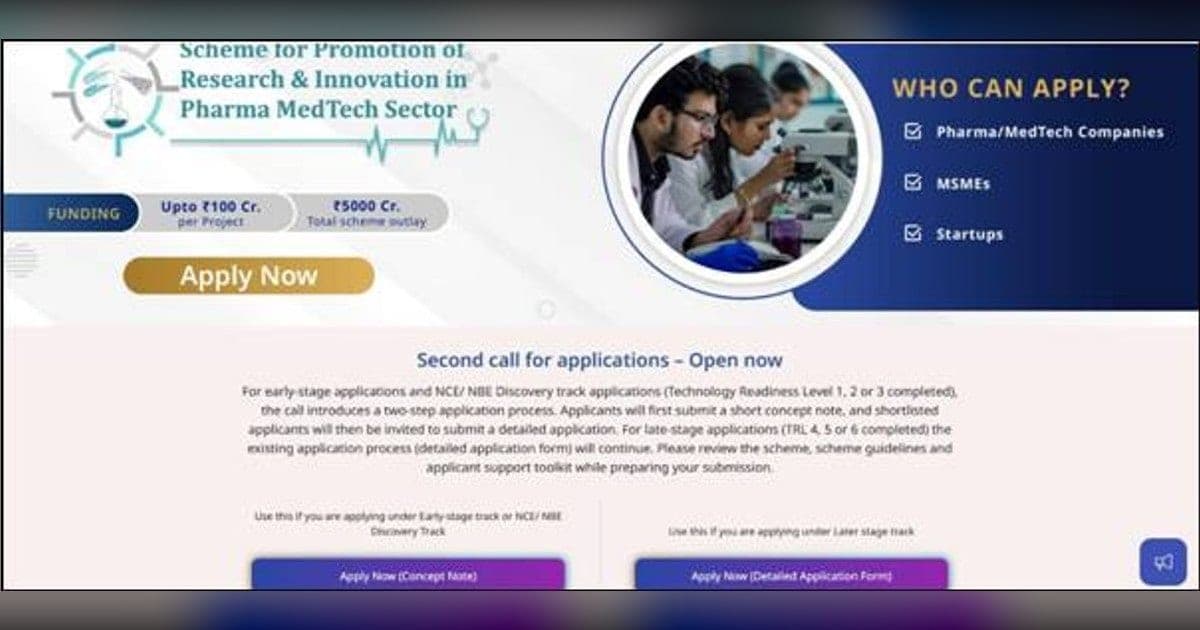
The Department of Pharmaceuticals approved 41 projects worth about Rs 1,600 crore in financial assistance under the first call of the PRIP scheme for pharma and MedTech.

Why in News
On 30 September 2026 the Department of Pharmaceuticals announced that the first call of the PRIP scheme has approved 41 pharma and MedTech innovation projects for about Rs 1,600 crore of assistance, expected to take total research spending on them to Rs 4,620 crore.
The Department of Pharmaceuticals, under the Ministry of Chemicals and Fertilizers, announced on 30 September 2026 that 41 projects have been approved in the first call of the scheme for Promotion of Research and Innovation in Pharma MedTech Sector, known by its short name PRIP. The financial assistance committed to these projects is about Rs 1,600 crore.
How the money adds up
The government money is expected to pull in a further Rs 3,020 crore of private investment, which takes the research and development spending on this set of projects to roughly Rs 4,620 crore. That ratio is the point of the scheme: public money is meant to reduce the risk of early research so that companies put in more of their own.
The shape of the approved list
| Split | Projects |
| Early stage | 12 |
| Later stage | 29 |
| Startups and MSMEs | 19 |
| Large companies | 22 |
| New Medicines | 27 |
| Complex Generics and Biosimilars | 5 |
| Novel Medical Devices | 9 |
The three priority areas in the last rows of the table are the categories the department itself uses to sort the portfolio, and New Medicines takes the largest share of the 41.
Who is on the list
Names in the approved portfolio include Biocon, Bharat Biotech, Sun Pharma, Wockhardt, Zydus and Mankind Pharma among established firms, and Pandorum Technologies, Cellogen Therapeutics, Aurigene Oncology and Bugworks Research among newer innovators. The work supported runs from novel drug discovery through clinical development to medical devices.
The science being funded
The department gave examples of the work on the list. One project is an antibacterial for infections caused by Gram-negative bacteria that shrug off several drugs at once. Another is a regenerative treatment for disease of the cornea built on exosomes. The list also carries a CAR-T platform designed to work inside the body, breast cancer organoids grown from tissue taken from patients, an antiviral technology that can be programmed to go after RNA, a plasmonic PCR device small enough to diagnose infection where the patient is, and a microfluidic platform built to detect tuberculosis.
The strategic priority framework
Stronger support is available under a strategic priority framework for neglected tropical diseases, rare diseases, antimicrobial resistance in pathogens of concern for India, pathogens that could cause outbreaks or a pandemic, and vaccines for diseases that vaccines can prevent. Six projects have come through this route so far, covering bacterial pneumonia and meningitis, dengue, influenza and next-generation tuberculosis vaccines. Evaluation of the remaining applications in the first round is still going on, and more results are expected over the coming month. The department reads the portfolio as a shift away from a pharmaceutical industry built mainly on volume towards one built on innovation.
Important Facts
| Scheme | PRIP, Promotion of Research and Innovation in Pharma MedTech Sector |
|---|---|
| Implementing department | Department of Pharmaceuticals, Ministry of Chemicals and Fertilizers |
| Projects approved in the first round | 41 |
| Financial assistance | About Rs 1,600 crore |
| Private investment expected | Rs 3,020 crore |
| Total research and development investment | About Rs 4,620 crore |
| Priority areas | New Medicines 27 projects, Complex Generics and Biosimilars five, Novel Medical Devices nine |
| Strategic priority framework | Six projects, including next-generation tuberculosis vaccines |
Exam Point of View
Fix the full form of PRIP (Promotion of Research and Innovation in Pharma MedTech Sector), the department and ministry, the 41 projects of the first round, the assistance of Rs 1,600 crore, the private investment of Rs 3,020 crore, the total of Rs 4,620 crore and the three priority areas.
Practice Questions
How much financial assistance was approved for 41 projects in the first round of the PRIP scheme?
- A.About Rs 800 crore
- B.About Rs 1,600 crore
- C.About Rs 2,400 crore
- D.About Rs 3,200 crore
Show answer
Correct answer: B. About Rs 1,600 crore
Explanation
The correct answer is about Rs 1,600 crore. That is the assistance the Department of Pharmaceuticals committed to the 41 projects cleared in the first call of the scheme. The figure matters because of what sits beside it: the projects are expected to draw a further Rs 3,020 crore of private money, so the whole research and development spend on them comes to roughly Rs 4,620 crore. Option A halves the government share and would not support a portfolio of this size. Option C and option D are both larger than the assistance actually sanctioned, and option D comes close to the private investment figure, which is exactly the confusion an examiner sets up when three related amounts appear in one release. The safe way to hold the fact is as a chain: assistance, then private investment, then the total.
Under which ministry does the Department of Pharmaceuticals, which runs the PRIP scheme, function?
- A.Ministry of Health and Family Welfare
- B.Ministry of Science and Technology
- C.Ministry of Chemicals and Fertilizers
- D.Ministry of Commerce and Industry
Show answer
Correct answer: C. Ministry of Chemicals and Fertilizers
Explanation
The correct answer is the Ministry of Chemicals and Fertilizers, which houses the Department of Pharmaceuticals, and it is that department which announced the approvals under PRIP. Option A, the Ministry of Health and Family Welfare, handles public health, hospitals and drug regulation through its own bodies, and candidates often place pharmaceuticals there by instinct, but the industrial promotion of the sector is not its charge. Option B, the Ministry of Science and Technology, funds research through its departments and is a reasonable guess for a research scheme, yet PRIP is not its programme. Option D, the Ministry of Commerce and Industry, deals with trade and industrial policy broadly rather than this scheme. Remember the pairing, since questions on drug price control, bulk drug parks and pharma production schemes all lead back to the same department.
In the first round of PRIP, which priority area accounted for the largest number of approved projects?
- A.New Medicines
- B.Complex Generics and Biosimilars
- C.Novel Medical Devices
- D.Clinical trial infrastructure
Show answer
Correct answer: A. New Medicines
Explanation
The correct answer is New Medicines, which took 27 of the 41 approved projects. Option B, Complex Generics and Biosimilars, accounted for five projects, so it is the smallest of the three real categories rather than the largest. Option C, Novel Medical Devices, accounted for nine projects, which places it second but still well behind New Medicines. Option D, clinical trial infrastructure, is not one of the priority areas named in the announcement at all, and it is included to test whether a candidate recognises the three-way split the department actually uses. The same announcement gives two other splits worth remembering: 12 projects are at an early stage against 29 at a later stage, and 19 belong to startups and MSMEs against 22 to large companies.
Frequently Asked Questions
What does PRIP stand for?
Promotion of Research and Innovation in Pharma MedTech Sector. It is run by the Department of Pharmaceuticals under the Ministry of Chemicals and Fertilizers.
How much assistance was approved in the first round of PRIP?
About Rs 1,600 crore for 41 projects. With Rs 3,020 crore of expected private investment, total research and development spending on them comes to about Rs 4,620 crore.
Which areas get enhanced support?
The strategic priority framework covers neglected tropical diseases, rare diseases, antimicrobial resistance in India-priority pathogens, pathogens with outbreak or pandemic potential, and vaccines for vaccine-preventable diseases.
Sources
Current Affairs 30 September 2026
- CAFE Norms 2027-32 Notified, Fuel Use to Fall 16.7 Per CentEnvironment
- UPSC Completes 100 Years of Merit-Based RecruitmentNational
- Second Naval Commanders Conference 2026 Opens in New DelhiDefence
- MHI Industry Accelerator Impact Report Released at NavigyaanScience & Technology
- SBM 2.0: Rs 11,785 Crore Approved for Sewage Treatment PlantsEnvironment
- TRAI Releases Mobile Network Drive Test Findings for SonitpurScience & Technology
- Special Campaign 6 to Run from 2 to 31 October 2026National
- PSS Buying of Rs 5,547.99 Crore Cleared for Kharif 2026-27Government Schemes
Related Current Affairs
- Government Schemes
PRIP Scheme Adds Discovery Track With Aid up to Rs 50 Crore
30 September 2026 · 2 min read
- Government Schemes
PSS Buying of Rs 5,547.99 Crore Cleared for Kharif 2026-27
30 September 2026 · 2 min read
- Government Schemes
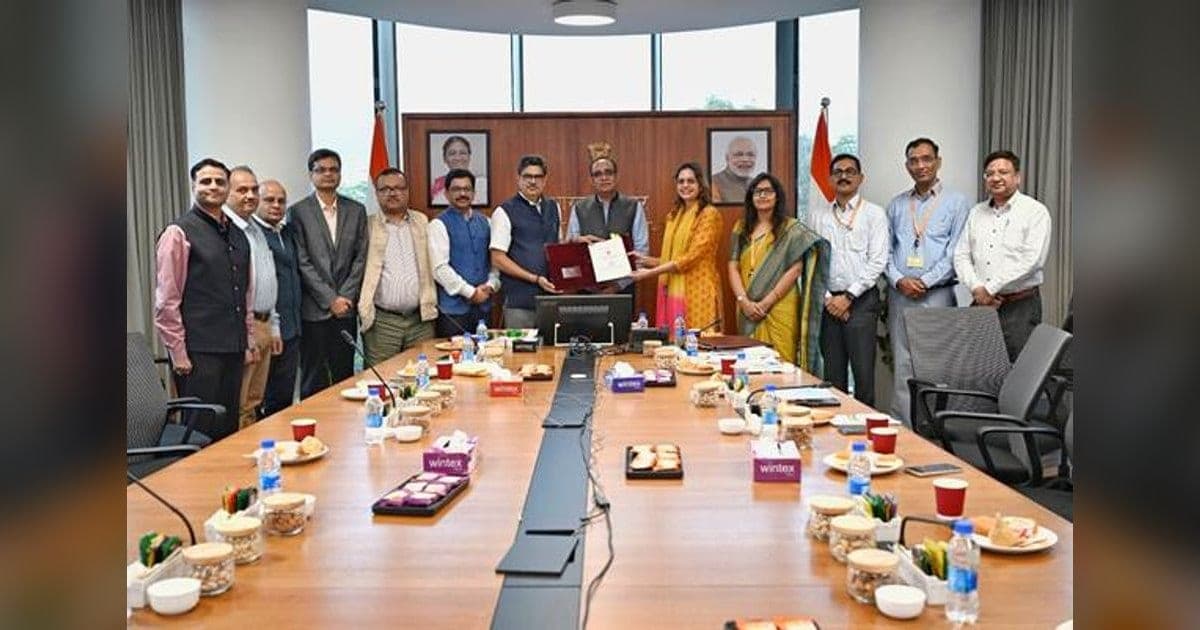
NRIDA and IIM Kolkata Sign MoU on PMGSY-IV Impact Study
29 September 2026 · 2 min read
- Government Schemes
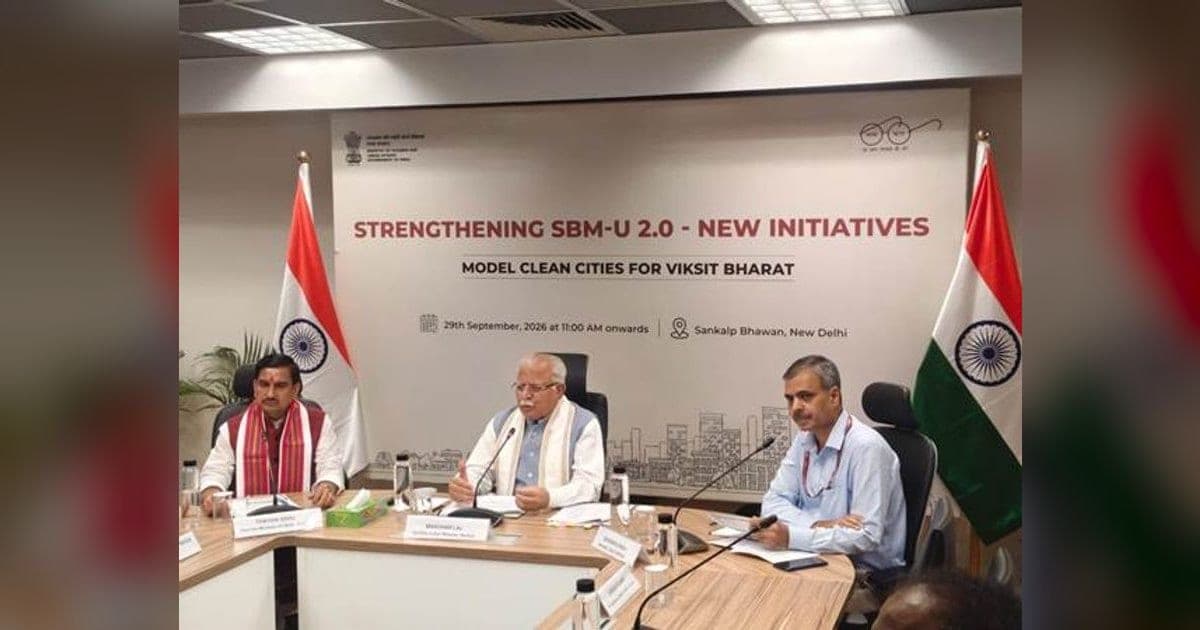
PRAGATI-50 Launched to Build 50 Model Cities for Swachhata
29 September 2026 · 2 min read
- Government Schemes
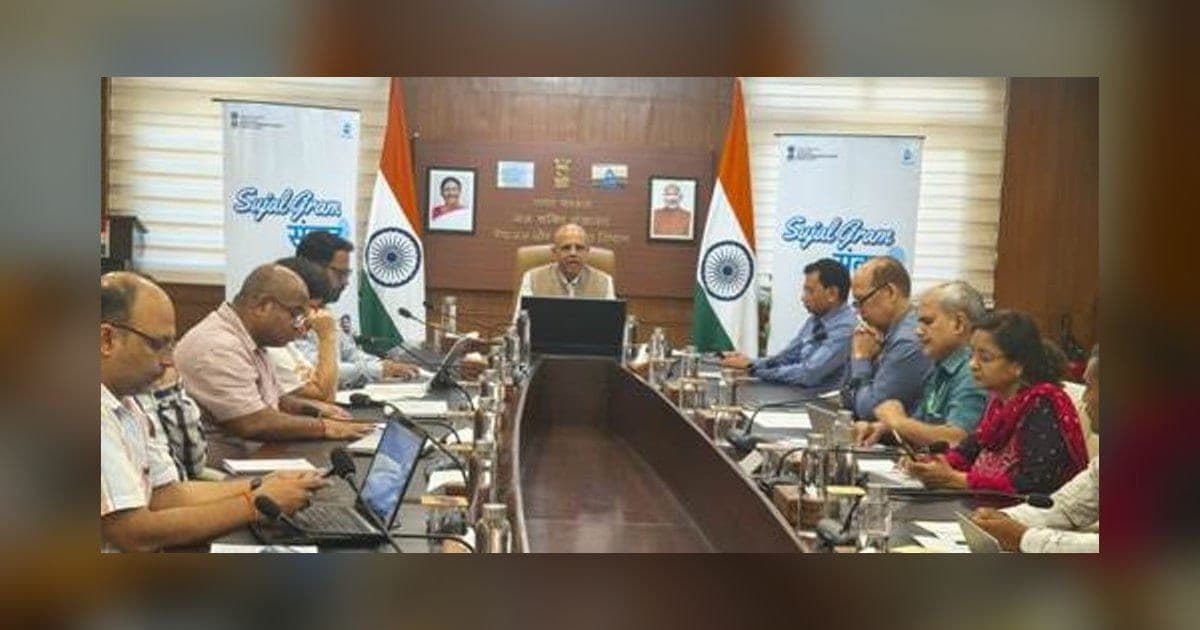
Jal Shakti Ministry Holds 11th Sujal Gram Samvad on Rural Water
29 September 2026 · 2 min read
- Government Schemes
VB-G RAM G Act Guarantees 125 Days of Rural Wage Work
29 September 2026 · 2 min read

Related GK
- Punjab GK: Formation, Rivers, History and Exam Facts
30 September 2026 · Indian States & UTs
- Indian Defence Forces and Missiles: Static GK and PYQs
30 September 2026 · Static GK
- Biotechnology in Agriculture and Health: Notes and PYQs
30 September 2026 · Science & Technology
Take the Quiz
- Current Affairs Quiz
Railway Current Affairs Quiz: 30 September 2026
25 questions25 minutesStart Quiz