
SBM 2.0: Rs 11,785 Crore Approved for Sewage Treatment Plants
Under Swachh Bharat Mission 2.0, projects worth Rs 11,785 crore have been approved for sewage treatment plants in small cities, adding 4,900 MLD of capacity.
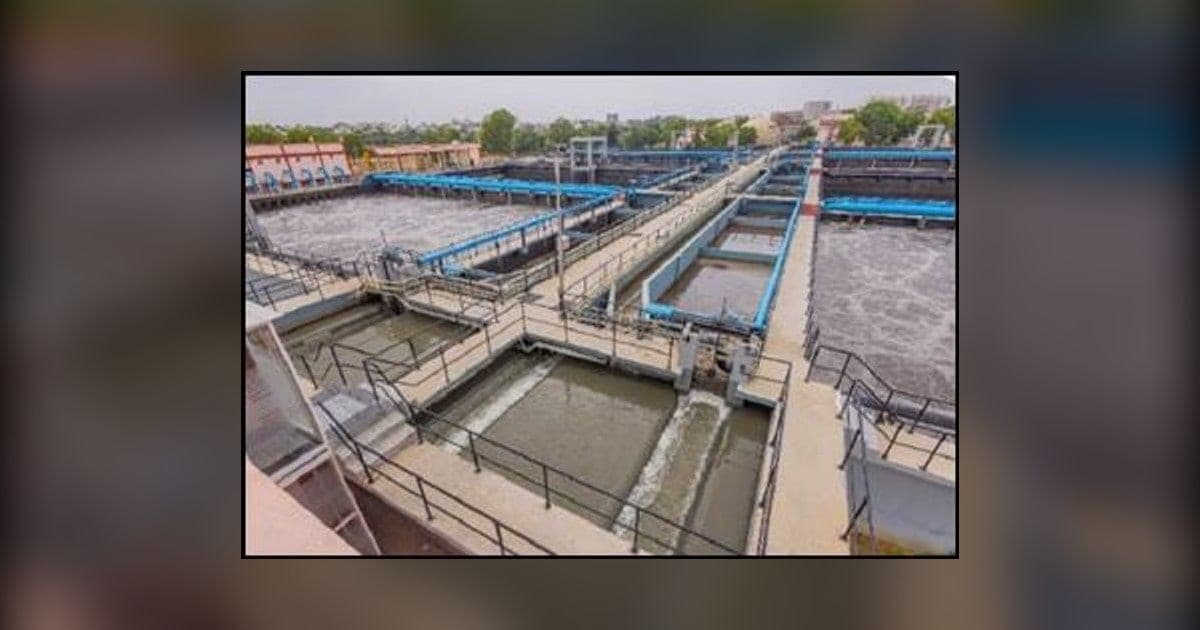
Why in News
A PIB backgrounder issued on 30 September 2026 set out how Used Water Management under the Swachh Bharat Mission-Urban is turning sewage into a resource, listing the money approved under SBM 2.0 and the reuse models of Jaipur, Indore, Surat, Navi Mumbai and Tirupati.
Used water is being treated as a resource rather than a waste under the Swachh Bharat Mission-Urban (SBM-U). Its Used Water Management (UWM) component asks cities to treat what leaves homes and shops, keep untreated sewage out of rivers and lakes, and put the treated water back to work. Sewage Treatment Plants (STPs) sit at the centre of this effort, supported by the Water Plus certification and the ODF++ protocols, which also cover faecal sludge and septage.
The money and the capacity
Under SBM 2.0, projects worth Rs 11,785 crore have been approved for setting up sewage treatment plants in small cities. These will add 4,900 million litres per day (MLD) of treatment capacity. Urban Local Bodies are being asked to draw up long-term, city-level plans for reusing wastewater.
Four cities, four approaches
| City | What it did |
| Jaipur | The Dehlawas STP, built over 22.50 hectares during 2020-23, has the largest sewage treatment capacity in Rajasthan at 215 MLD; it is fully automated through SCADA, uses a Sequencing Batch Reactor, sends treated water to the Dravyavati river and has more than 30,000 plants around it |
| Indore | The first city in the country to receive Water+ certification; by 2020 it had seven decentralised STPs alongside three centralised ones and more than 200 kilometres of piped network for treated wastewater, and in 2022 it installed over 1.25 lakh rainwater harvesting units |
| Surat | Four tertiary treatment plants with a combined installed capacity of 116 MLD, and 170 sewer-cleaning machines including robotic equipment |
| Navi Mumbai | The only city in Maharashtra with a five-star rating along with Water+ certification; its STPs are designed for a population of 30 lakh and sewer lines and septic tanks are fully mechanically cleaned |
Earning from treated water
Tirupati, also declared Water Plus, runs a self-sustaining plant at Thukivakam. Built at a cost of Rs 19 crore with a capacity of 50 MLD, it serves 1,04,057 households. Of the water it treats, 24 MLD is reused: 5 MLD is sold to Srikalahasthi Pipes Ltd, earning net revenue of about Rs 6 lakh a month, and 18 MLD goes free to farmers. Across these cities treated water now waters gardens and road medians, washes buses and roads, feeds industry and revives lakes.
Important Facts
| Mission | Swachh Bharat Mission-Urban; Used Water Management component |
|---|---|
| Approved under SBM 2.0 | Rs 11,785 crore for sewage treatment plants in small cities |
| Capacity added | 4,900 MLD |
| First Water+ city | Indore |
| Largest STP in Rajasthan | Dehlawas, Jaipur, 215 MLD, built over 22.50 hectares |
| Surat | Four tertiary treatment plants, 116 MLD combined; 170 sewer-cleaning machines |
| Navi Mumbai | Only city in Maharashtra with five-star rating and Water+ certification; STPs designed for 30 lakh people |
| Tirupati STP | Thukivakam, Rs 19 crore, 50 MLD, serves 1,04,057 households |
| Certifications | Water Plus certification and ODF++ protocols |
Exam Point of View
Remember the SBM 2.0 figure of Rs 11,785 crore and the 4,900 MLD of added capacity, that Indore was the first Water+ certified city, that Jaipur’s Dehlawas plant at 215 MLD is the largest in Rajasthan, Surat’s 116 MLD of tertiary treatment, Navi Mumbai as the only five-star plus Water+ city in Maharashtra, and Tirupati’s 50 MLD revenue model.
Practice Questions
Which was the first city in India to receive the Water+ certification?
- A.Surat
- B.Indore
- C.Navi Mumbai
- D.Tirupati
Show answer
Correct answer: B. Indore
Explanation
The correct answer is Indore. The city set out to keep untreated wastewater out of the environment altogether, and that approach made it the first to be given Water+ certification; today no untreated wastewater flows through its rivers or its natural and man-made stormwater drains. Option A, Surat, took a different route, treating used water as a resource with economic value through tertiary treatment plants and large-scale non-potable reuse. Option C, Navi Mumbai, is notable as the only city in Maharashtra to hold a five-star rating together with Water+ certification, but it was not the first in the country. Option D, Tirupati, has also been declared Water Plus and is known for a revenue-earning plant, again not for being first. Indore’s model went on to encourage several smaller cities.
How much treatment capacity will the sewage treatment plant projects approved under SBM 2.0 add?
- A.1,500 MLD
- B.2,750 MLD
- C.4,900 MLD
- D.7,200 MLD
Show answer
Correct answer: C. 4,900 MLD
Explanation
The correct answer is 4,900 MLD, or million litres per day. Projects approved under Swachh Bharat Mission 2.0 for setting up sewage treatment plants in small cities are expected to add exactly this much capacity, and the money behind them runs into several thousand crore rupees. Options A, B and D do not match the approved figure. For the examination, keep the pair together: the amount of money approved and the capacity it buys, both of which relate to small cities rather than the metros. Note also that this capacity sits alongside the Water Plus certification framework and the ODF++ protocols, which judge whether sewage, faecal sludge and septage are safely managed, so capacity alone is not the whole measure of a city’s performance.
The Dehlawas sewage treatment plant, the largest in Rajasthan, is located in which city?
- A.Jodhpur
- B.Udaipur
- C.Kota
- D.Jaipur
Show answer
Correct answer: D. Jaipur
Explanation
The correct answer is Jaipur. The Dehlawas plant was built over 22.50 hectares during 2020-23 and has the highest sewage treatment capacity in Rajasthan, at 215 MLD. It is fully automated through a SCADA system and uses a Sequencing Batch Reactor, in which wastewater passes through a Parshall flume, a primary clarifier and a basin before the chlorine tank. Treated water is reused for irrigation and industry, part of it goes to a nearby colony for gardening, and the rest is discharged into the Dravyavati river, with more than 30,000 plants raised around the site. Options A, B and C name other large Rajasthan cities, Jodhpur, Udaipur and Kota, none of which hosts this plant. Link the plant name, the city and the capacity together.
Frequently Asked Questions
How much has been approved for sewage treatment plants under SBM 2.0?
Projects worth Rs 11,785 crore have been approved for setting up sewage treatment plants in small cities, and these will add 4,900 MLD of treatment capacity.
Which was the first city in India to get Water+ certification?
Indore. It kept untreated wastewater out of its rivers and stormwater drains, and by 2020 it had seven decentralised STPs, three centralised STPs and over 200 kilometres of piped network for treated water.
How does Tirupati earn from its sewage treatment plant?
Its 50 MLD Thukivakam plant sells 5 MLD of treated water to Srikalahasthi Pipes Ltd for net revenue of about Rs 6 lakh a month, while 18 MLD is given free to farmers.
Sources
- Beyond Wastewater: Turning Used Water into a Resource (opens in a new tab) — Press Information Bureau
Current Affairs 30 September 2026
- CAFE Norms 2027-32 Notified, Fuel Use to Fall 16.7 Per CentEnvironment
- UPSC Completes 100 Years of Merit-Based RecruitmentNational
- Second Naval Commanders Conference 2026 Opens in New DelhiDefence
- MHI Industry Accelerator Impact Report Released at NavigyaanScience & Technology
- TRAI Releases Mobile Network Drive Test Findings for SonitpurScience & Technology
- Special Campaign 6 to Run from 2 to 31 October 2026National
Related Current Affairs
- Environment
CAFE Norms 2027-32 Notified, Fuel Use to Fall 16.7 Per Cent
30 September 2026 · 2 min read
- Environment
India's First PRAMAAN Forest Certificates Handed Over in Delhi
29 September 2026 · 2 min read
- Environment
India Backs Science-Led Whale Conservation at IWC-70 in Hobart
28 September 2026 · 2 min read
- Environment
Delhi Winter Air Plan: 37 Hotspots and No PUCC, No Fuel Drive
28 September 2026 · 2 min read

Related GK
- Punjab GK: Formation, Rivers, History and Exam Facts
30 September 2026 · Indian States & UTs
- Indian Defence Forces and Missiles: Static GK and PYQs
30 September 2026 · Static GK
- Biotechnology in Agriculture and Health: Notes and PYQs
30 September 2026 · Science & Technology
Take the Quiz
- Current Affairs Quiz
State Exams Current Affairs Quiz: 30 September 2026
19 questions19 minutesStart Quiz