
Jal Shakti Ministry Holds 11th Sujal Gram Samvad on Rural Water
The Drinking Water and Sanitation Department held the eleventh Sujal Gram Samvad, a multilingual dialogue with four Gram Panchayats on running rural water supply schemes.
Why in News
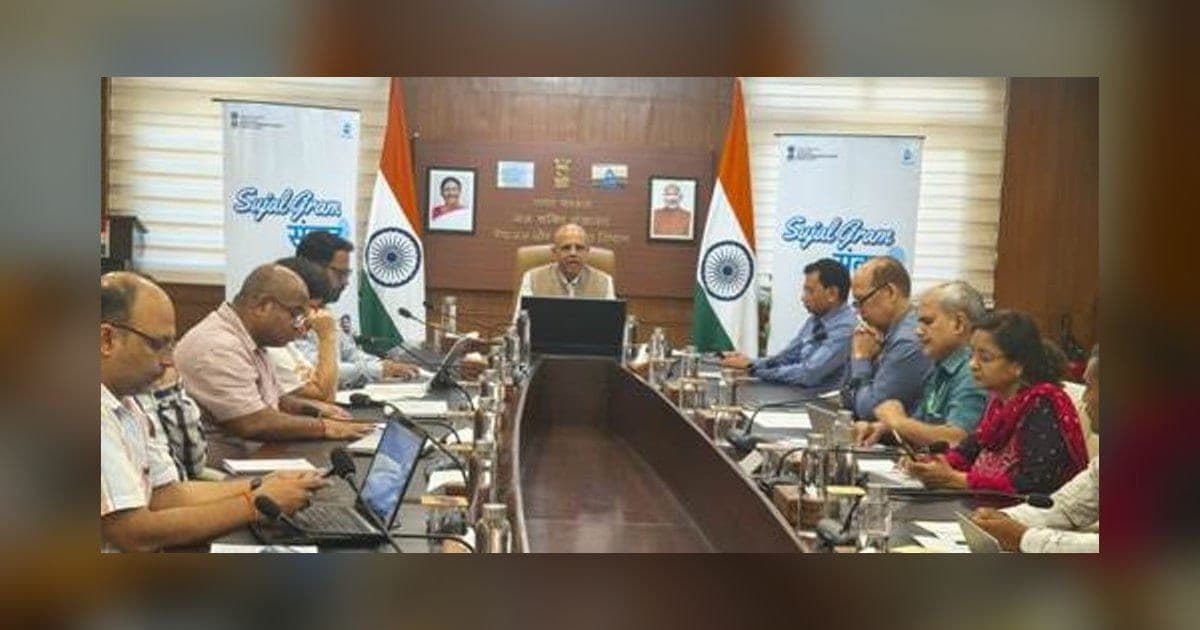
On 29 September 2026 the Department of Drinking Water and Sanitation under the Ministry of Jal Shakti organised the eleventh edition of the multilingual Sujal Gram Samvad, a dialogue with four Gram Panchayats on the operation and maintenance of rural drinking water systems under Jal Jeevan Mission 2.0.
The Department of Drinking Water and Sanitation (DDWS) under the Ministry of Jal Shakti held the eleventh edition of its multilingual dialogue, Sujal Gram Samvad, on 29 September 2026. The virtual platform puts officials in direct conversation with Gram Panchayat representatives and villagers about the operation and maintenance of rural drinking water systems, which is the central concern of Jal Jeevan Mission 2.0: not laying a pipe but keeping the water flowing through it.
Who led it
The Samvad was chaired by Ashok K. K. Meena, Secretary, DDWS, with Kamal Kishore Soan, Additional Secretary and Mission Director of the National Jal Jeevan Mission, in attendance. The Secretary pressed Gram Panchayats to take fuller ownership of operation and maintenance, to strengthen the collection of user charges for financial sustainability, and to take up source sustainability work such as groundwater recharge and rainwater harvesting. He described the dialogue as a place where innovations from the grassroots travel from one Panchayat to another.
The four villages heard this time
| Gram Panchayat | District and State | What was reported |
| Sakaria | Ujjain, Madhya Pradesh | Jal Arpan held on 16 March 2026; user charge of Rs 150 a month collected digitally; weekly water quality testing |
| Dashinpara | Alipurduar, West Bengal | Villagers spoke in Nepali; tap water in every home, school and Anganwadi centre; Pani Samiti monitors quality |
| Gorabali South | Bokaro, Jharkhand | Jal Sahiya model led by women; about 15 community-led models running in the district |
| Partapur | Nubra, Ladakh | Supply continues even at nearly minus 30 degrees Celsius through engineering measures |
What the villages said
Sakaria reported that before the Mission villagers depended on wells and tube wells, and that the village has since reached Har Ghar Jal status with billing done on digital platforms. Dashinpara said tap water has cut water-borne illness and eased the burden of fetching water, with women active in the Pani Samiti. Bokaro officials described outreach such as Jal Samvad, where officials visit Panchayats, and Hamare Gaon Hamare Log, held every Saturday. Partapur in Ladakh reported year-round water at home where villagers once melted snow in winter.
Money, manuals and the Gram Sabha
Panchayats were asked to use the e-Gram Swaraj portal to plan and track spending and to make effective use of 16th Finance Commission tied grants for drinking water infrastructure and source protection. The Mission Director asked States to prepare simplified operation and maintenance manuals in local languages so that Panchayat members and Village Water and Sanitation Committee members understand their duties. He also urged Panchayats to use the 2 October Gram Sabha to push water conservation and sanitation, and to hold Jal Arpan programmes once Har Ghar Jal certification is complete.
Important Facts
| Event | Eleventh edition of Sujal Gram Samvad, a multilingual dialogue |
|---|---|
| Organised by | Department of Drinking Water and Sanitation, Ministry of Jal Shakti |
| Chaired by | Ashok K. K. Meena, Secretary, DDWS |
| Also present | Kamal Kishore Soan, Additional Secretary and Mission Director, National Jal Jeevan Mission |
| Mission | Jal Jeevan Mission 2.0, community-led water governance |
| Villages covered | Four Gram Panchayat headquartered villages |
| Madhya Pradesh | GP Sakaria, Ujjain; Jal Arpan on 16 March 2026; user charge of Rs 150 a month |
| West Bengal | GP Dashinpara, Alipurduar; interaction in Nepali; Pani Samiti active |
| Jharkhand | GP Gorabali South, Bokaro; Jal Sahiya model; about 15 community-led models in the district |
| Ladakh | GP Partapur, Nubra; supply maintained at nearly minus 30 degrees Celsius |
| Funds and tools | e-Gram Swaraj portal and 16th Finance Commission tied grants |
Exam Point of View
Remember the edition (11th), the department (DDWS) and ministry (Jal Shakti), that it is a multilingual dialogue held under Jal Jeevan Mission 2.0, the chair (Secretary Ashok K. K. Meena), the four Gram Panchayats and their districts, the Rs 150 monthly user charge at Sakaria with Jal Arpan on 16 March 2026, the Jal Sahiya model of Bokaro and the e-Gram Swaraj portal with 16th Finance Commission tied grants.
Practice Questions
Which edition of the multilingual Sujal Gram Samvad was organised by the Department of Drinking Water and Sanitation on 29 September 2026?
- A.Ninth
- B.Tenth
- C.Eleventh
- D.Twelfth
Show answer
Correct answer: C. Eleventh
Explanation
The correct answer is the eleventh edition. The Department of Drinking Water and Sanitation, which works under the Ministry of Jal Shakti, organised the eleventh Sujal Gram Samvad as a virtual multilingual dialogue with Gram Panchayat representatives and village communities on operating and maintaining rural drinking water systems. Options A, B and D are wrong because the edition announced was the eleventh, not the ninth, tenth or twelfth; the dialogue is a running series and each edition takes up a fresh set of villages. This edition featured grassroots interactions across four Gram Panchayat headquartered villages, in Ujjain district of Madhya Pradesh, Alipurduar in West Bengal, Bokaro in Jharkhand and Nubra in Ladakh, and it was chaired by the Secretary of the Department, Ashok K. K. Meena, with the Mission Director of the National Jal Jeevan Mission also taking part.
Sujal Gram Samvad is organised by which department?
- A.Department of Rural Development
- B.Department of Drinking Water and Sanitation
- C.Department of Water Resources, River Development and Ganga Rejuvenation
- D.Department of Panchayati Raj
Show answer
Correct answer: B. Department of Drinking Water and Sanitation
Explanation
The correct answer is the Department of Drinking Water and Sanitation, known as DDWS, which functions under the Ministry of Jal Shakti and runs the Jal Jeevan Mission. The Samvad is its platform for speaking directly to Gram Panchayat representatives, Village Water and Sanitation Committee members and villagers about keeping rural water supply schemes working. Option A is wrong because rural development handles a different set of programmes and was not the organiser here. Option C is wrong because that department deals with river development and water resources rather than household drinking water service delivery, although it also sits under the Ministry of Jal Shakti. Option D is wrong because Panchayati Raj institutions were the participants in this dialogue, not its organiser; the Secretary of DDWS chaired the session and stressed that Panchayats must own operation and maintenance, collect user charges and protect their water sources.
In which district is Sakaria Gram Panchayat, which reported collecting a monthly user charge of Rs 150 for drinking water?
- A.Bokaro, Jharkhand
- B.Alipurduar, West Bengal
- C.Ujjain, Madhya Pradesh
- D.Nubra, Ladakh
Show answer
Correct answer: C. Ujjain, Madhya Pradesh
Explanation
The correct answer is Ujjain in Madhya Pradesh. Representatives of Gram Panchayat Sakaria said that villagers once depended on wells and tube wells, that every household now has a piped connection and Har Ghar Jal status has been achieved, that Jal Arpan was organised on 16 March 2026, and that drinking water service is supported by a user charge of Rs 150 a month with billing and payment through digital platforms, backed by weekly water quality testing. Option A is wrong because Bokaro in Jharkhand is where Gorabali South Gram Panchayat described the women-led Jal Sahiya model. Option B is wrong because Alipurduar in West Bengal is the district of Dashinpara Gram Panchayat, whose representatives spoke in Nepali. Option D is wrong because Partapur in Nubra, Ladakh, reported year-round supply even when temperatures fall to nearly minus 30 degrees Celsius.
Frequently Asked Questions
Which edition of Sujal Gram Samvad was held on 29 September 2026?
The eleventh edition. It is a multilingual dialogue organised by the Department of Drinking Water and Sanitation under the Ministry of Jal Shakti, and this time it covered four Gram Panchayat headquartered villages in Madhya Pradesh, West Bengal, Jharkhand and Ladakh.
What user charge is collected in Sakaria Gram Panchayat?
Rs 150 a month, collected with billing and payment through digital platforms. Sakaria, in Ujjain district of Madhya Pradesh, has achieved Har Ghar Jal status, held Jal Arpan on 16 March 2026 and tests water quality every week.
What is the Jal Sahiya model?
It is the Jharkhand practice highlighted by Gorabali South Gram Panchayat in Bokaro, under which women lead community mobilisation, user-charge collection, grievance redressal and awareness work. District officials said about 15 community-led models are running across the district.
Sources
- DDWS organises Eleventh Edition of Sujal Gram Samvad (opens in a new tab) — Press Information Bureau
Current Affairs 29 September 2026
- Literacy Rate Reaches 81.1% as Ten States Declare Full LiteracyReports & Indices
- India's First PRAMAAN Forest Certificates Handed Over in DelhiEnvironment
- NIFT Wins Two Silver Medals at WorldSkills Shanghai 2026Awards & Honours
- Special Campaign 6.0 to Run from 2 to 31 October 2026National
- PM-RKVY: Rs 1200 Crore Sanctioned to 10 States at Rabi MeetGovernment Schemes
- VB-G RAM G Act Guarantees 125 Days of Rural Wage WorkGovernment Schemes
- Two Officials Held for Bribery over FCRA RegistrationNational
- Indian Railways Clears Two New MEMU Services for Meerut CityNational
Related Current Affairs
- Government Schemes
VB-G RAM G Act Guarantees 125 Days of Rural Wage Work
29 September 2026 · 2 min read
- Government Schemes
PM-RKVY: Rs 1200 Crore Sanctioned to 10 States at Rabi Meet
29 September 2026 · 2 min read
- Government Schemes
PM-MKSSY Bears 40% of Aquaculture Insurance Premium Cost
28 September 2026 · 2 min read
- Government Schemes
PM-AJAY: 18,093 Villages Declared Adarsh Gram by September 2026
28 September 2026 · 2 min read
- Government Schemes
Nasha Mukt Yuva Abhiyan Runs 100 Weeks for Viksit Bharat
27 September 2026 · 2 min read
- Government Schemes
Mission Yuva Raksha Drive Reaches Jaora Polytechnic Students
26 September 2026 · 2 min read
Related GK
- Famous Personalities and Their Nicknames: Exam List
29 September 2026 · Static GK
- Missile Systems of India: Agni, BrahMos and IGMDP
29 September 2026 · Science & Technology
- Maharashtra GK: Districts, Rivers, Forts and Exam Facts
29 September 2026 · Indian States & UTs
Take the Quiz
- Current Affairs Quiz
State Exams Current Affairs Quiz: 29 September 2026
25 questions25 minutesStart Quiz