
National Quantum Mission Crosses 1,000 km Quantum-Secure Link
India has achieved 1,000 km of quantum-secure communication against an eight-year target of 2,000 km under the National Quantum Mission, said Jitendra Singh.
Why in News
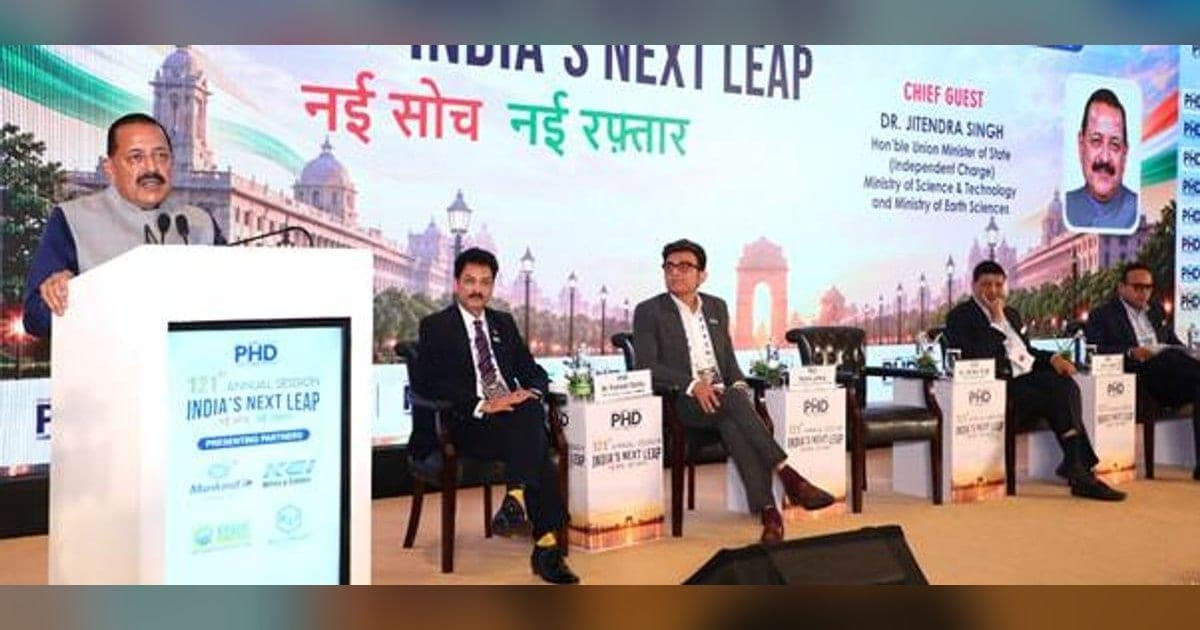
At the 121st Annual Session of PHDCCI on 10 October 2026, Dr. Jitendra Singh said India had reached 1,000 km of quantum-secure communication against a 2,000 km eight-year target, and placed the bioeconomy at about US$196 billion.
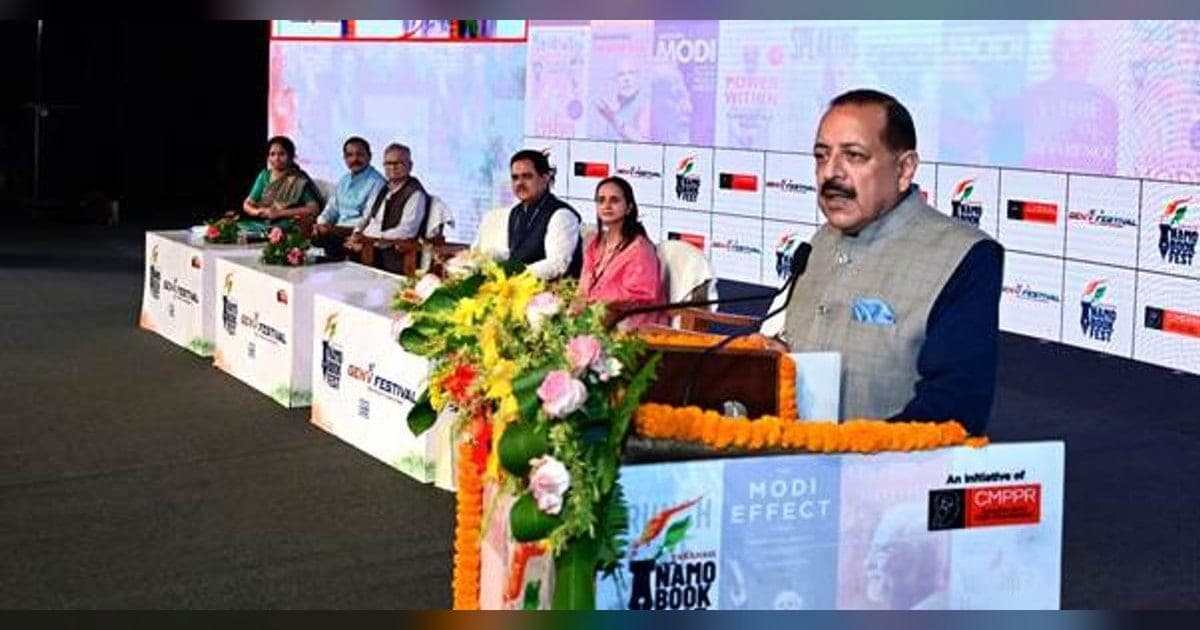
Dr. Jitendra Singh, Union Minister of State (Independent Charge) for Science and Technology and Earth Sciences, and Minister of State in the Prime Minister’s Office, Personnel, Public Grievances and Pensions, the Department of Atomic Energy and the Department of Space, addressed the 121st Annual Session of the PHD Chamber of Commerce and Industry (PHDCCI) in New Delhi on 10 October 2026. He asked industry to take Indian research out of the laboratory and into the market, so that the country reaches its goals for 2047 and holds its own in strategic technologies.
Quantum communication milestone
Speaking on the National Quantum Mission, the Minister said the country had set itself an eight-year target of 2,000 kilometres of quantum-secure communication and had already covered the 1,000-kilometre mark in three years. Quantum communication, he noted, carries weight for both security and strategy, which makes home-grown capability in such frontier areas a national requirement rather than a commercial choice.
Bioeconomy figures
The Minister placed India’s bioeconomy at roughly US$196 billion, past the US$195 billion mark, against about US$10 billion in 2014. The stated ambition is US$300 billion by 2030. He pointed to the spread of biotechnology start-ups as proof that life sciences and advanced research can throw up new enterprises and fresh economic value.
| Indicator | Figure |
| Quantum-secure communication achieved | 1,000 km in three years |
| National Quantum Mission target | 2,000 km in eight years |
| Bioeconomy now | About US$196 billion |
| Bioeconomy target | US$300 billion by 2030 |
From laboratory to market
Dr. Jitendra Singh argued that the next stage of growth cannot rest on technology borrowed from elsewhere; it has to produce indigenous answers with worldwide relevance. The widening of the space ecosystem after policy reform, and the entry of private firms into strategic areas, show what follows when scientific strength meets a permissive policy. He wanted industry to come in at the start of a research project rather than at the end, so that scientists understand what a market actually needs and design for deployment from the first day. Bodies such as PHDCCI, he said, can knit researchers to businesses, bring in investment and carry an idea from the bench to a prototype and then to a saleable product.
Referring to the Government’s Research, Development and Innovation (RDI) initiative, he said private money in research is what will speed up the conversion of discoveries into applications. He also linked India’s plans in artificial intelligence, data infrastructure and advanced manufacturing to two conditions: indigenous technology and dependable energy. Faster execution, stronger partnerships between government, industry, academia and start-ups, and the ability to scale what works would, in his view, decide how far the country gets by 2047.
Important Facts
| Event | 121st Annual Session of the PHD Chamber of Commerce and Industry (PHDCCI), New Delhi |
|---|---|
| Speaker | Dr. Jitendra Singh, Union MoS (Independent Charge), Science and Technology and Earth Sciences |
| Quantum-secure communication achieved | 1,000 km in three years |
| National Quantum Mission target | 2,000 km of quantum-secure communication in eight years |
| Bioeconomy size | Crossed US$195 billion, about US$196 billion, from roughly US$10 billion in 2014 |
| Bioeconomy target | US$300 billion by 2030 |
| Government initiative cited | Research, Development and Innovation (RDI) initiative |
| Long-term goal | Strategic sovereignty and national objectives set for 2047 |
Exam Point of View
Remember the National Quantum Mission numbers (1,000 km achieved in three years against a 2,000 km eight-year target), the bioeconomy figures (about US$10 billion in 2014, around US$196 billion now, US$300 billion targeted by 2030), the 121st Annual Session of PHDCCI, the RDI initiative, the 2047 goal of strategic sovereignty, and Dr. Jitendra Singh’s portfolios.
Practice Questions
How much quantum-secure communication has India achieved under the National Quantum Mission?
- A.500 km
- B.1,000 km
- C.1,500 km
- D.2,000 km
Show answer
Explanation
The correct answer is 1,000 km. Under the National Quantum Mission the country set an eight-year target of covering 2,000 kilometres of quantum-secure communication, and the 1,000-kilometre milestone was reached in three years, which is well ahead of the pace that target implied. Option D, 2,000 km, is the target for the full eight-year period and not the distance achieved so far, which makes it the sharpest distractor in this set. Options A and C name distances that do not appear in the account at all. Quantum communication matters for both security and strategy, and the Minister used the milestone to argue that India must build domestic strength in frontier technologies rather than import them. Candidates should store the pair of numbers together, 1,000 kilometres achieved against a 2,000-kilometre target, because questions on the mission usually turn on telling the two apart.
What is the target set for India’s bioeconomy by 2030?
- A.US$150 billion
- B.US$196 billion
- C.US$300 billion
- D.US$500 billion
Show answer
Explanation
The correct answer is US$300 billion. The bioeconomy has grown from roughly US$10 billion in 2014 to about US$196 billion, crossing the US$195 billion mark, and the ambition stated is to take it to US$300 billion by 2030. Option B, US$196 billion, is the present size rather than the target, and is therefore the most tempting wrong answer: a candidate who remembers only one figure will often pick the one just read. Option A understates the current size, so it cannot be a forward target. Option D names a round number that has not been set for this decade. The Minister tied the growth to an expanding biotechnology start-up ecosystem, presenting life sciences and advanced research as a source of new enterprises, domestic capability and economic value rather than only of published papers.
Dr. Jitendra Singh made these remarks while addressing the annual session of which industry body?
- A.FICCI
- B.PHD Chamber of Commerce and Industry
- C.CII
- D.ASSOCHAM
Show answer
Explanation
The correct answer is the PHD Chamber of Commerce and Industry. The Minister spoke at the 121st Annual Session of PHDCCI in New Delhi, where industry leaders, entrepreneurs and other stakeholders had gathered to discuss growth and innovation priorities. He said such chambers can act as the bridge between researchers and businesses, facilitating investment and helping an innovation travel from the laboratory to a prototype and then to a market-ready product. Options A, C and D name FICCI, CII and ASSOCHAM, which are also major Indian industry associations, but the address in question was delivered at the PHDCCI session and the edition number, the 121st, belongs to that body. Remember the edition along with the name, since paper setters often ask for the number of the session rather than only the host organisation.
By which year does the Government aim to achieve the national objectives of strategic sovereignty referred to by the Minister?
- A.2030
- B.2035
- C.2040
- D.2047
Show answer
Explanation
The correct answer is 2047. The Minister asked industry to accelerate innovation and scale up technological capability so that India meets the national objectives set for 2047 and strengthens its strategic sovereignty, a year that marks a century of independence. Option A, 2030, is wrong in this context because that year is attached to a different goal in the same speech, the bioeconomy target of US$300 billion, and mixing the two is the commonest error here. Options B and C name years that do not appear in the address. The Minister also linked the 2047 goal to practical conditions: indigenous technology, dependable energy supply, private participation in research under the Research, Development and Innovation initiative, and partnerships among government, industry, academia and start-ups that can scale a successful innovation quickly.
Frequently Asked Questions
How much quantum-secure communication has India achieved under the National Quantum Mission?
1,000 kilometres, reached in three years, against an eight-year target of 2,000 kilometres of quantum-secure communication. Dr. Jitendra Singh cited this while addressing the 121st Annual Session of PHDCCI.
What is India’s bioeconomy target for 2030?
US$300 billion. The bioeconomy has grown from about US$10 billion in 2014 to roughly US$196 billion, crossing the US$195 billion mark, helped by an expanding biotechnology start-up ecosystem.
What is the RDI initiative?
The Government’s Research, Development and Innovation initiative, which seeks greater private-sector participation in research and development so that scientific discoveries move faster into commercial applications.
Sources
- https://www.pib.gov.in/PressReleasePage.aspx?PRID=2321723 (opens in a new tab) — Press Information Bureau
Current Affairs 10 October 2026
- Forest Rights Act Review Conference Held in Kolkata for Eight StatesNational
- Exercise Tarang Shakti 2026 Second Edition Held at JodhpurDefence
- Milton Dick of Australia Elected President of the IPU at ArushaInternational
- BRICS Traditional Sports Demonstration Games to Open in AhmedabadSports
- Vice-President Addresses Second Convocation of AIIMS DeogharNational
- 94th Fit India Sundays on Cycle to Be Held in VaranasiGovernment Schemes
- Lighthouse Tourism Grows to 18.63 Lakh Visitors in 2024-25National
- PM Dhan-Dhaanya Krishi Yojana Completes One Year in 100 DistrictsGovernment Schemes
Related Current Affairs
- Science & Technology
Bharat 6G Alliance Signs Five MoUs at 3rd 6G Symposium
9 October 2026 · 2 min read
- Science & Technology
India Mobile Congress 2026 Draws Over 100 Countries to Yashobhoomi
9 October 2026 · 2 min read
- Science & Technology
MeitY Pavilion at IMC 2026 Shows Digital India Platforms
9 October 2026 · 2 min read
- Science & Technology
Scindia Opens 3rd International Bharat 6G Symposium 2026
8 October 2026 · 2 min read
- Science & Technology
Space Sector Opening Curbed Brain Drain: Jitendra Singh
8 October 2026 · 3 min read
Related GK
- State-wise Dances, Festivals and Symbols for Exams
10 October 2026 · Indian States & UTs
- Lead Bank Scheme and Service Area Approach: SLBC and DCC
10 October 2026 · Banking & Financial Awareness
- Bronze Sculpture in India: Chola Bronzes to Dhokra
10 October 2026 · Art & Culture
Take the Quiz
- Current Affairs Quiz
State Exams Current Affairs Quiz: 10 October 2026
25 questions25 minutesStart Quiz