
Namami Gange: Ganga Basin GPI Compliance Reaches 86% in 2025
Under Namami Gange, compliance among grossly polluting industries in the Ganga basin rose from 39% in 2017 to 86% in 2025, with BOD load down 72.46%.
Why in News
On 13 October 2026 the Ministry of Jal Shakti detailed industrial pollution abatement under the Namami Gange programme, reporting that compliance among grossly polluting industries in the Ganga basin climbed from 39% in 2017 to 86% in 2025 and that the basin BOD load fell by 72.46%.
A Ministry of Jal Shakti review issued on 13 October 2026 sets out how the Namami Gange programme has tightened its grip on factory effluent. The account traces a shift away from occasional raids towards a settled cycle of yearly checks, laboratory evidence and trade-wise targets for the units it calls Grossly Polluting Industries, or GPIs.
Who inspects, and how
Yearly inspection of these units began in 2017, with the Central Pollution Control Board acting as the national regulatory authority. The aim is to reach every GPI in the Ganga basin, and the fieldwork is handed to outside bodies, chiefly technical institutes of national importance, which upload what they find through web portals and phone apps. Each team must carry two or more experts from such an institute alongside an officer of the State Pollution Control Board, with the state mission for a clean Ganga and district committees also taking part. For the 2026 round, 40 institutes have been listed, against 25 used a year earlier.
Scale of the 2025 round
The 2025 cycle examined 3,703 units in all, 1,296 of them in the Ganga basin and 2,407 in the Yamuna basin. Industries spread over 113 districts in six states and one Union Territory were visited, and between them they could release waste into 46 tributaries and smaller streams. Teams drew samples at treatment plant inlets, outlets and aeration tanks, measured pH, BOD, COD, TSS and TDS, verified online monitoring links, searched for hidden bypass channels and photographed defaults with location stamps. Among the 3,145 units working at the time, 2,715 cleared the norms while 448 did not; state boards issue show-cause notices and may order closure in those cases.
What changed between 2017 and 2025
| Measure (Ganga basin) | 2017 | 2025 |
| Compliance | 39% | 86% |
| BOD load | 26 TPD | 7.16 TPD |
| Effluent discharge | 349 MLD | 274.88 MLD |
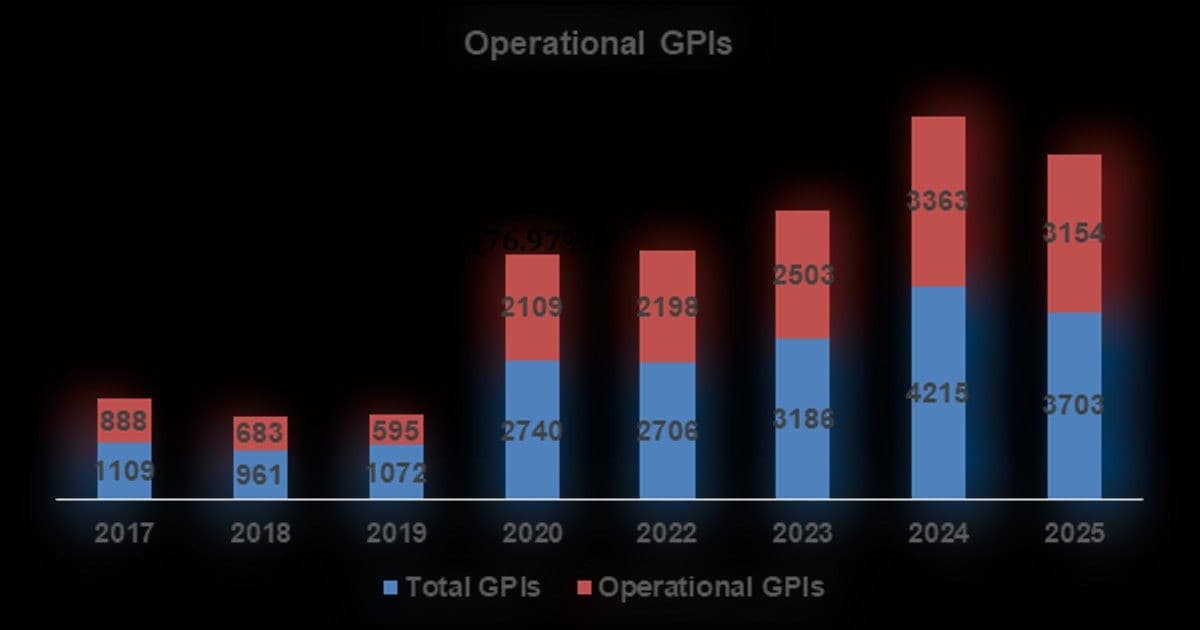
Taking both basins together, compliance moved from 39% to 70% and the BOD load eased from 26 TPD to 12.02 TPD, while the number of working units climbed from 888 to 3,154. The Ganga basin on its own recorded a 72.46% cut in BOD load and a 21.24% fall in effluent flow.
Charters and the water saved
Five trades carry charters of their own, pulp and paper, sugar, distillery, textile and tannery, because they made up roughly 70% of basin GPIs and 88% of the load in an earlier reckoning. Sugar mills cut fresh water use from 155 litres for every tonne of cane to 58 litres, and 60 recycled-fibre paper mills now run on zero liquid discharge, sparing an estimated 928.89 MLD of groundwater. Of 41 common effluent treatment plants checked in the same year, 40 were in operation, holding 514.53 MLD of capacity against 286.31 MLD actually used, and 27 met the prescribed rules. Daily groundwater savings are put near 719 million litres, with yearly energy savings of about 1,277.6 MW and a carbon cut estimated at 1,162.6 tonnes of carbon dioxide equivalent. Water quality has improved in streams such as the Ramganga, Kosi, Dhela and Bahela.
Important Facts
| Programme | Namami Gange, Ministry of Jal Shakti |
|---|---|
| National regulatory authority | Central Pollution Control Board (CPCB) |
| GPIs assessed in 2025 | 3,703 (Ganga basin 1,296; Yamuna basin 2,407) |
| Spread | 113 districts in six states and one Union Territory; 46 tributaries and sub-tributaries |
| Ganga basin compliance | 39% in 2017 to 86% in 2025 |
| Ganga basin BOD load | 26 TPD to 7.16 TPD, a fall of 72.46% |
| Ganga basin effluent discharge | 349 MLD to 274.88 MLD, down 21.24% |
| Operational GPIs | Up from 888 in 2017 to 3,154 in 2025 |
| Inspecting institutes | 40 nominated for the 2026 cycle, 25 engaged in 2025 |
| CETPs assessed | 41, of which 40 operational and 27 compliant |
| Charter trades | Pulp and paper, sugar, distillery, textile, tannery |
| Groundwater saved | About 719 million litres a day |
Exam Point of View
Remember the 2025 figures: 3,703 GPIs assessed, 1,296 in the Ganga basin and 2,407 in the Yamuna basin, over 113 districts and feeding 46 tributaries. Ganga basin compliance went from 39% in 2017 to 86% in 2025; BOD load from 26 TPD to 7.16 TPD, a 72.46% cut; effluent flow down 21.24%. CPCB is the national regulatory authority, 40 technical institutes are named for the 2026 cycle, and the five charter trades are pulp and paper, sugar, distillery, textile and tannery.
Practice Questions
Under the Namami Gange programme, what was the compliance level of grossly polluting industries in the Ganga basin in 2025?
- A.39%
- B.86%
- C.70%
- D.95%
Show answer
Explanation
The correct answer is 86%. The Ministry of Jal Shakti review records that compliance among grossly polluting industries in the Ganga basin climbed from 39% in 2017 to 86% in 2025, a steady gain produced by annual inspection, independent technical assessment and sector charters. Option A, 39%, is wrong because that was the starting level in 2017, the year the annual inspection mechanism began with support from the Central Pollution Control Board, not the level reached in 2025. Option C, 70%, is wrong because that figure describes compliance across all the assessed units in both the Ganga and Yamuna basins taken together, a wider set than the Ganga basin alone. Option D, 95%, does not appear anywhere in the assessment and is simply a higher invented value. Alongside the compliance gain, the basin BOD load dropped from 26 TPD to 7.16 TPD, a cut of 72.46%, while effluent discharge eased from 349 MLD to 274.88 MLD.
How many grossly polluting industries were assessed in the 2025 inspection cycle under Namami Gange?
- A.1,296
- B.2,407
- C.3,703
- D.3,154
Show answer
Explanation
The correct answer is 3,703. The 2025 inspection cycle covered 3,703 grossly polluting industries in all, spread over 113 districts in six states and one Union Territory, with the potential to discharge into 46 tributaries and sub-tributaries of the Ganga and Yamuna. Option A, 1,296, is wrong because that is only the Ganga basin share of the total. Option B, 2,407, is wrong for the same reason in reverse: it is the Yamuna basin share, and the two parts added together give the full figure. Option D, 3,154, is wrong because it counts the units found to be operational in 2025, up from 888 in 2017, rather than the number assessed. Inspections involve sampling at treatment plant inlets and outlets, readings of pH, BOD, COD, TSS and TDS, checks on online monitoring links and geo-tagged evidence of any bypass.
Which organisation acts as the national regulatory authority for the annual inspection of grossly polluting industries?
- A.National Mission for Clean Ganga
- B.Central Pollution Control Board
- C.Central Ground Water Board
- D.National Green Tribunal
Show answer
Explanation
The correct answer is the Central Pollution Control Board. The annual inspection mechanism for grossly polluting industries in the Ganga basin began in 2017 with the support of the Central Pollution Control Board, described in the review as the national regulatory authority for this work. The inspections themselves are carried out by third-party agencies, mainly technical institutes of national importance, and 40 institutes have been nominated for the 2026 cycle against 25 engaged a year earlier. Each inspection team must include at least two experts from a technical institute along with a State Pollution Control Board officer. Option A is wrong because the clean Ganga mission runs the programme rather than serving as the regulator named here. Option C is wrong because groundwater assessment is only one element of the inspection method. Option D is wrong because the tribunal is a judicial forum and is not named in this inspection framework.
By how much did the BOD load in the Ganga basin fall between 2017 and 2025?
- A.21.24%
- B.39%
- C.72.46%
- D.65%
Show answer
Explanation
The correct answer is 72.46%. The review reports that the BOD load in the Ganga basin came down from 26 TPD in 2017 to 7.16 TPD in 2025, which works out to a reduction of 72.46%. Option A, 21.24%, is wrong because that figure measures the fall in effluent discharge in the same basin, from 349 MLD to 274.88 MLD, and not the organic load. Option B, 39%, is wrong because it is the compliance level of grossly polluting industries in 2017, the starting point for a rise to 86% by 2025. Option D, 65%, is wrong because that reduction belongs to the separate drive on high pollution-load units identified in 2022, whose load fell from 18.68 TPD to 6.381 TPD. Across both basins together, the BOD load eased from 26 TPD to 12.02 TPD over the same period.
Frequently Asked Questions
How much has compliance improved among grossly polluting industries in the Ganga basin?
It rose from 39% in 2017 to 86% in 2025 under the Namami Gange programme. Over the same years the basin BOD load fell from 26 TPD to 7.16 TPD, a reduction of 72.46%, and effluent discharge dropped from 349 MLD to 274.88 MLD.
How many grossly polluting industries were assessed in the 2025 inspection cycle?
A total of 3,703 units, made up of 1,296 in the Ganga basin and 2,407 in the Yamuna basin. They lay in 113 districts across six states and one Union Territory and could discharge into 46 tributaries and sub-tributaries.
Which body is the national regulatory authority for these annual inspections?
The Central Pollution Control Board. Annual inspection of GPIs started in 2017 with its support, the work is carried out by third-party technical institutes, and 40 such institutes have been nominated for the 2026 cycle against 25 in the previous year.
Sources
- https://www.pib.gov.in/PressReleasePage.aspx?PRID=2322666 (opens in a new tab) — Press Information Bureau
Current Affairs 13 October 2026
- Ashtalakshmi Darshan Programme Takes 590 Students to NortheastGovernment Schemes
- Khadi Sales Touch Record Rs 1.87 Lakh Crore in 2025-26Government Schemes
- Bloomberg New Economy Forum Held in India for the First TimeSummits & Conferences
- BHASHINI Runs Live Translation at NCGG Mussoorie ProgrammeScience & Technology
- DARPG Releases 53rd CPGRAMS Monthly Report for September 2026Reports & Indices
- Indian Railways Freight Loading Rises 6.14% in September 2026Economy
- NLMC's First End-to-End E-Auction Sells 150 RINL Land PlotsEconomy
- Delhi Gets 150 Electric Buses and 13 New CAAQMS StationsEnvironment
Related Current Affairs
- Environment
NBA Disburses Rs 2.02 Crore of Seed Sector ABS Funds to States
10 October 2026 · 2 min read




Related GK
- Haryana National Parks and Wildlife Sanctuaries Notes
14 October 2026 · Haryana
- Haryana Climate, Soils and Forests: Complete GK Notes
14 October 2026 · Haryana
- UP Agriculture, Crops and Livestock: Notes with PYQs
14 October 2026 · Uttar Pradesh
Take the Quiz
- Current Affairs Quiz
UPSC Current Affairs Quiz: 13 October 2026
25 questions25 minutesStart Quiz