
Jal Jeevan Mission 2.0: First Regional Conference in Tiruchirappalli
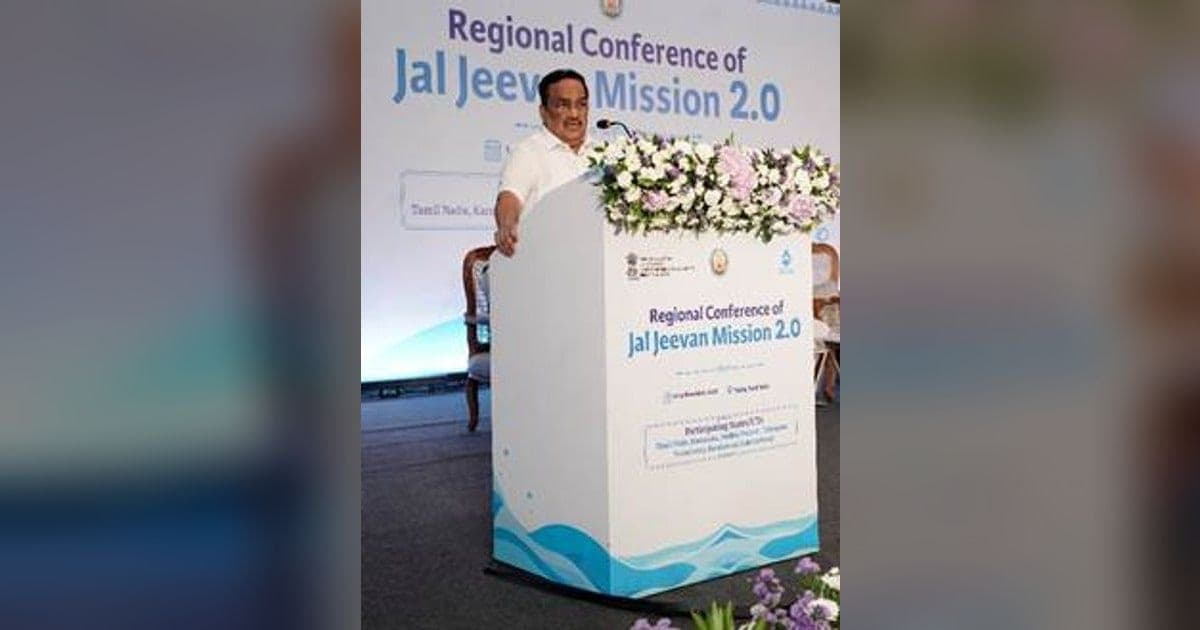
Union Jal Shakti Minister C. R. Paatil addressed the first Regional Conference on Jal Jeevan Mission 2.0 at Tiruchirappalli, with seven southern States and UTs.
Why in News
On 12 November 2026 Union Jal Shakti Minister C. R. Paatil addressed the first Regional Conference on Jal Jeevan Mission 2.0 at Tiruchirappalli, where seven southern States and Union Territories reviewed rural drinking water reforms.
Union Jal Shakti Minister C. R. Paatil addressed the first Regional Conference on Jal Jeevan Mission (JJM) 2.0 at Tiruchirappalli in Tamil Nadu. The two-day conference has been organised by the Department of Drinking Water and Sanitation along with the Government of Tamil Nadu.
Who is taking part
Senior officials and representatives of seven southern States and Union Territories - Tamil Nadu, Karnataka, Kerala, Andhra Pradesh, Telangana, Puducherry and Lakshadweep - are reviewing progress, raising difficulties and working on steadier rural drinking water services. The Secretary of the Department said this is the first of five regional conferences planned to turn the decisions of the Departmental Summit on Water, held on 1 and 2 September 2026, into action on the ground.
What the Minister said
Recalling that the Mission was launched in 2019 to take tap water to every rural home, Mr Paatil said household tap connections have reached close to 16 crore rural households, easing life especially for women. He asked States to finish the remaining work within the approved Mission timeline of December 2028, and to try for December 2027 wherever it can be done. He described JJM 2.0 as a shift from building infrastructure to assured service delivery, and pressed States to put in place the prescribed reforms on operation and maintenance, institutional accountability and long-term functionality. Groundwater recharge, rainwater harvesting and community-led conservation, including Jal Sanchay Jan Bhagidari, were held up as the route to water security.
The priorities set out
- Source sustainability, sound operation and maintenance arrangements and financial sustainability of schemes.
- A skilled local workforce, with training and certification of village-level functionaries.
- Gram Panchayat-led water governance, with drinking water written into Gram Panchayat Development Plans and Finance Commission grants put to use.
- Digital monitoring through platforms such as Sujalam Bharat, and inter-ministerial convergence with PM-JANMAN, Dharti Aaba Janjatiya Gram Utkarsh Abhiyan and rural development programmes.
Technology on show
The National Institute of Ocean Technology presented its indigenous Low Temperature Thermal Desalination technology, with eight plants already set up in Lakshadweep to supply safe drinking water with little harm to the environment, along with an Ocean Thermal Energy Conversion project that joins renewable power generation to desalination for island water security. Each of the seven States and Union Territories also presented its achievements, challenges and time-bound action plans, covering geo-tagging of water supply assets, Jal Arpan and Har Ghar Jal certification and community participation.
Important Facts
| Event | First Regional Conference on Jal Jeevan Mission 2.0 |
|---|---|
| Venue | Tiruchirappalli, Tamil Nadu |
| Addressed by | Union Jal Shakti Minister C. R. Paatil |
| Organisers | Department of Drinking Water and Sanitation with the Government of Tamil Nadu |
| Participants | Tamil Nadu, Karnataka, Kerala, Andhra Pradesh, Telangana, Puducherry, Lakshadweep |
| Series | First of five regional conferences after the Departmental Summit on Water, 1-2 September 2026 |
| Mission launched | 2019, for tap water to every rural household |
| Coverage | About 16 crore rural households with tap water connections |
| Timeline | Approved Mission timeline December 2028; States urged to finish by December 2027 where feasible |
| Technology shown | NIOT's Low Temperature Thermal Desalination, eight plants in Lakshadweep |
Exam Point of View
Remember the host city (Tiruchirappalli, Tamil Nadu), the Minister (C. R. Paatil), the organising department (Drinking Water and Sanitation), the seven participating States and UTs and that this is the first of five regional conferences following the Departmental Summit on Water of 1-2 September 2026. Also note the Mission timeline of December 2028, the push for December 2027, about 16 crore tap connections and NIOT's LTTD plants in Lakshadweep.
Practice Questions
Where was the first Regional Conference on Jal Jeevan Mission 2.0 held?
- A.Chennai
- B.Tiruchirappalli
- C.Bengaluru
- D.Hyderabad
Show answer
The Department of Drinking Water and Sanitation held the two-day conference there with the Government of Tamil Nadu, and the Union Jal Shakti Minister chaired the ministerial session.
Read the full explanation →What is the approved timeline for completing the remaining works under Jal Jeevan Mission?
- A.December 2026
- B.December 2027
- C.December 2028
- D.March 2030
Show answer
The correct answer is December 2028, the approved timeline of the Mission within which the remaining works must be finished.
Read the full explanation →Which institution presented its Low Temperature Thermal Desalination technology, with eight plants in Lakshadweep, at the conference?
- A.National Institute of Ocean Technology
- B.Central Water Commission
- C.National Water Development Agency
- D.Central Ground Water Board
Show answer
Its project director explained the indigenous Low Temperature Thermal Desalination technology, under which eight plants have been set up in Lakshadweep to give islanders safe drinking water with minimal damage to the environment, and also described an Ocean Thermal Energy Conversion project that pairs renewable power generation with desalination to…
Read the full explanation →Frequently Asked Questions
Where was the first Regional Conference on Jal Jeevan Mission 2.0 held?
At Tiruchirappalli in Tamil Nadu, organised by the Department of Drinking Water and Sanitation with the State government. Union Jal Shakti Minister C. R. Paatil addressed the ministerial session.
Which States and Union Territories took part in the conference?
Seven southern States and UTs: Tamil Nadu, Karnataka, Kerala, Andhra Pradesh, Telangana, Puducherry and Lakshadweep. It is the first of five regional conferences planned by the Department.
What is the approved timeline for Jal Jeevan Mission works?
December 2028. The Union Minister urged States to complete the remaining works by December 2027 wherever feasible, and described JJM 2.0 as a move from infrastructure creation to assured service delivery.
Sources
- https://www.pib.gov.in/PressReleasePage.aspx?PRID=2335598 (opens in a new tab) — Press Information Bureau
Current Affairs 12 November 2026
- One Nation One Ration Card Reaches All 36 States and UTsGovernment Schemes
- National Naturopathy Day 2026 Set for 18 November in KarnatakaImportant Days
- Buddha's Sacred Relics Draw 50,000 Devotees in ArunachalNational
- Rajnath Singh Opens Air Force Commanders' Conference 2026 in DelhiDefence
- TDB Gives Rs 64.05 Crore for Astrome AI-ELINT Satellite ProjectScience & Technology
- INSA Endorses S20 Joint Statement Ahead of G20 Summit in MiamiSummits & Conferences
- 57th IFFI Goa 2026: WaveX Startup Pavilion Entries Close 13 NovemberNational
- Retail Inflation Rises to 6.09% in October 2026, Food at 8.94%Economy
Related Current Affairs
- Government Schemes
Jal Sanchay Jan Bhagidari 2.0 Feedback Open Till 30 November
12 November 2026 · 2 min read
- Government Schemes
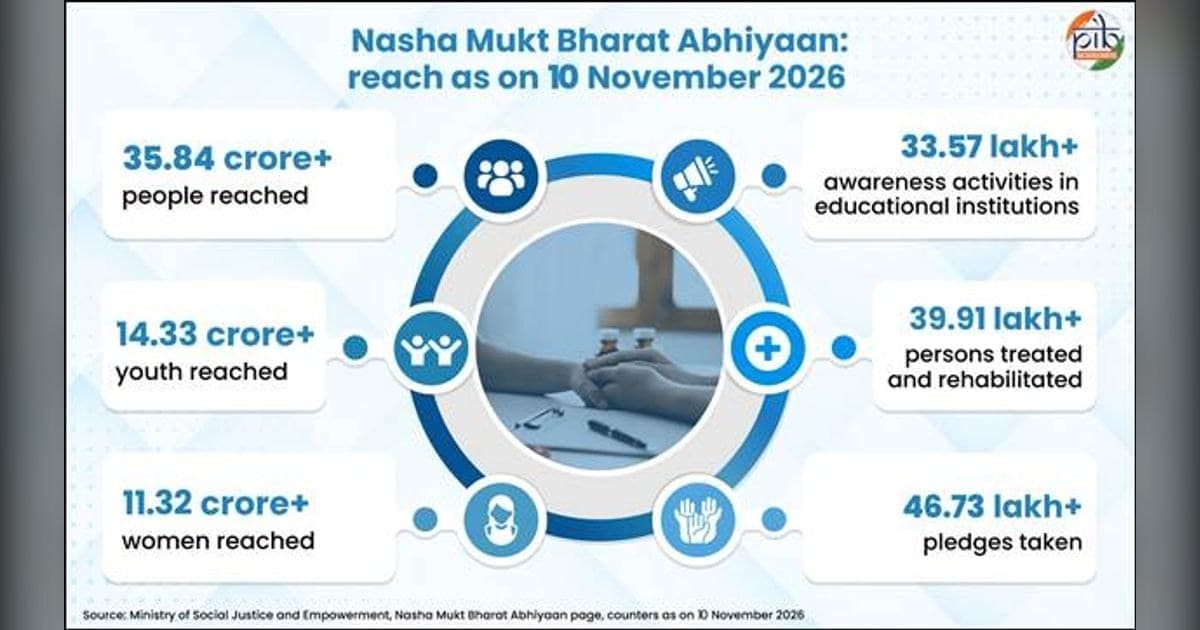
Nasha Mukt Bharat Abhiyaan Reaches 35.88 Crore People
12 November 2026 · 2 min read
- Government Schemes
One Nation One Ration Card Reaches All 36 States and UTs
12 November 2026 · 3 min read
- Government Schemes
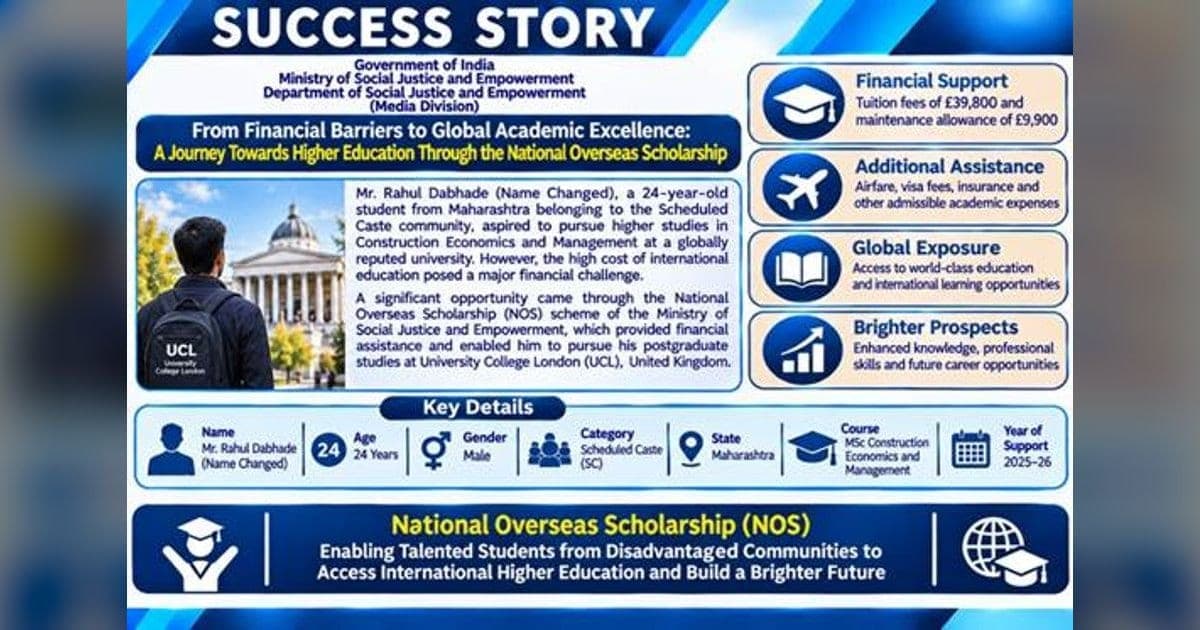
National Overseas Scholarship Funds SC Student's MSc at UCL
11 November 2026 · 2 min read
- Government Schemes
Stand-Up India Extended to 2031 With Rs 4,111 Crore Corpus
11 November 2026 · 2 min read
- Government Schemes
Nasha Mukt Bharat Abhiyaan Reaches 35.84 Crore in Six Years
11 November 2026 · 2 min read
Related GK
- Famous Personalities of Rajasthan: Exam Notes
28 October 2026 · Rajasthan
- Districts and Divisions of Rajasthan: Exam Notes
28 October 2026 · Rajasthan
- Tourism and World Heritage Sites of Rajasthan Notes
27 October 2026 · Rajasthan
Take the Quiz
- Current Affairs Quiz
SSC CGL Current Affairs Quiz: 12 November 2026
25 questions25 minutesStart Quiz