
Jal Arpan Held in Over 1,850 Gram Panchayats Under JJM 2.0
More than 1,850 gram panchayats observed Jal Arpan under Jal Jeevan Mission 2.0, handing completed rural water schemes to village bodies on Gandhi Jayanti.
Why in News
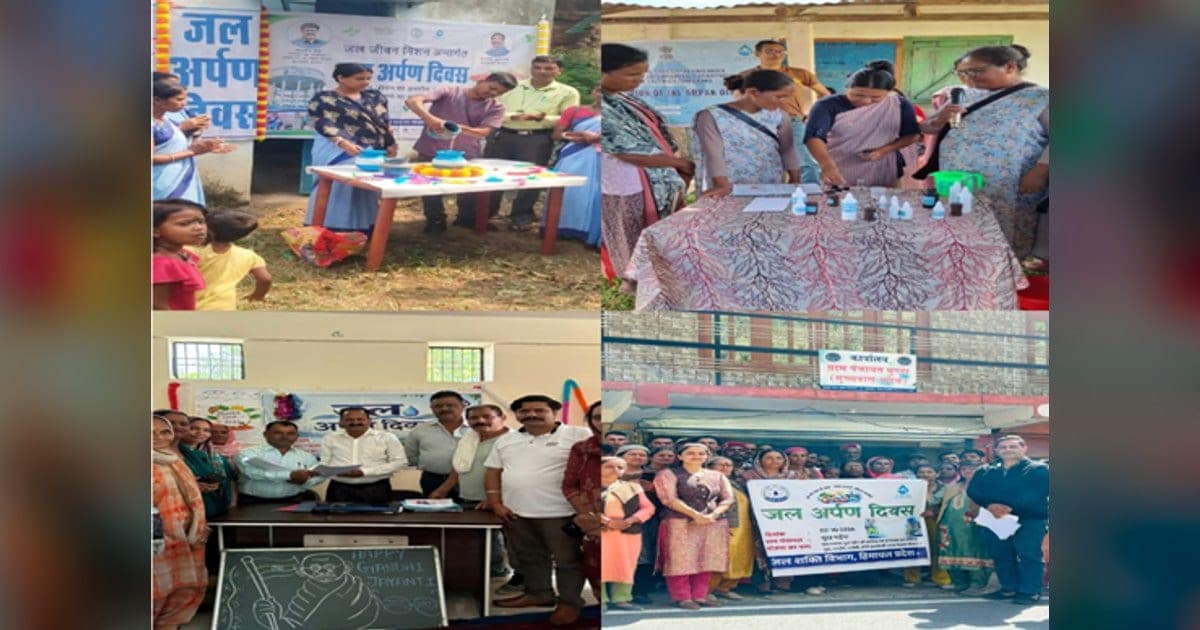
The Ministry of Jal Shakti reported that Jal Arpan, a community ownership reform under Jal Jeevan Mission 2.0, was observed in more than 1,850 gram panchayats during the special gram sabhas on Gandhi Jayanti, with 346 Har Ghar Jal certificates issued in regional languages for the first time.
Jal Arpan, a reform that transfers rural drinking water systems to the villages that use them, was observed in more than 1,850 gram panchayats and villages across the country during the special gram sabhas held on Gandhi Jayanti. The programme runs under Jal Jeevan Mission 2.0 and was reported by the Ministry of Jal Shakti on 3 October 2026, a day after the observance.
What Jal Arpan does
Under Jal Arpan, rural water supply schemes that have been completed and commissioned, after the prescribed trial run, are formally handed over to gram panchayats and to Village Water and Sanitation Committees, known as VWSCs. The committees then take charge of running and maintaining the systems. The shift is from construction by the government to management by the community, which is how the Mission expects the supply to stay reliable over the long term.
Certificates in regional languages
For the first time, the Jal Arpan digital module issued Har Ghar Jal certificates in regional languages. 346 such certificates were generated for eligible gram panchayats and villages. The module now prints the certificate in Hindi, English and seventeen other languages, among them Assamese, Bengali, Bodo, Gujarati, Kannada, Kashmiri, Konkani, Malayalam, Manipuri, Marathi, Nepali, Odia, Punjabi, Sanskrit, Tamil, Telugu and Urdu.
Geotagging under Sujalam Bharat
Digital asset management is being built up through Sujalam Bharat, under which water supply assets and piped supply sources are geotagged. On the same occasion 2691 water supply assets were geotagged nationally, including about 700 sources, adding to a digital inventory of drinking water assets that supports planning and monitoring.
Where the Mission stands
| Programme | Jal Arpan, a reform under Jal Jeevan Mission 2.0 |
| Occasion | Special gram sabhas on Gandhi Jayanti, 2 October 2026 |
| Coverage | More than 1,850 gram panchayats and villages |
| Certificates issued | 346 Har Ghar Jal certificates, in regional languages for the first time |
| Assets geotagged | 2691, including about 700 sources |
| Tap connections | More than 15.96 crore rural households, over 82 per cent of rural households |
| Ministry | Jal Shakti, Department of Drinking Water and Sanitation |
As things stand, more than 15.96 crore rural households, which is over 82 per cent of all rural households in the country, have a tap water connection under the Jal Jeevan Mission. Villages also held Jal Sankalp and Jal Bandhan activities, demonstrated water testing with field test kits and carried out post-monsoon testing of sources, with women taking a leading part in community-led quality monitoring.
Important Facts
| Reform | Jal Arpan, under Jal Jeevan Mission 2.0 |
|---|---|
| Ministry | Ministry of Jal Shakti, Department of Drinking Water and Sanitation |
| Occasion | Special gram sabhas on Gandhi Jayanti, 2 October 2026 |
| Gram panchayats covered | More than 1,850 |
| Certificates | 346 Har Ghar Jal certificates, issued in regional languages for the first time |
| Languages supported | Hindi, English and seventeen other regional languages |
| Handed over to | Gram panchayats and Village Water and Sanitation Committees (VWSCs) |
| Geotagging platform | Sujalam Bharat |
| Assets geotagged | 2691, including about 700 sources |
| Tap water coverage | More than 15.96 crore rural households, over 82 per cent |
Exam Point of View
Remember the reform (Jal Arpan under Jal Jeevan Mission 2.0), the coverage (over 1,850 gram panchayats), the first (Har Ghar Jal certificates in regional languages, 346 issued), the geotagging figure under Sujalam Bharat (2691 assets, about 700 sources), the bodies receiving the schemes (gram panchayats and VWSCs) and the coverage figure of 15.96 crore households.
Practice Questions
Jal Arpan, observed in more than 1,850 gram panchayats, is a reform under which mission?
- A.Swachh Bharat Mission (Grameen)
- B.Jal Jeevan Mission 2.0
- C.Atal Bhujal Yojana
- D.National River Conservation Plan
Show answer
Correct answer: B. Jal Jeevan Mission 2.0
Explanation
The correct answer is Jal Jeevan Mission 2.0. Jal Arpan is described as a key reform under that mission, and it places rural drinking water systems in the hands of the communities that use them by handing completed schemes to gram panchayats and to Village Water and Sanitation Committees. Option A, the Swachh Bharat Mission (Grameen), is wrong because that mission deals with sanitation and waste management rather than the handover of piped drinking water schemes, even though special gram sabhas on Gandhi Jayanti covered both subjects. Option C, Atal Bhujal Yojana, is wrong because it concerns groundwater management in water-stressed areas and is not the mission under which this handover reform sits. Option D, the National River Conservation Plan, is wrong because it addresses pollution in rivers, not village water supply. For revision, tie the name Jal Arpan to Jal Jeevan Mission 2.0 and to the two recipients of the schemes, namely the gram panchayat and the Village Water and Sanitation Committee.
How many Har Ghar Jal certificates were generated in regional languages through the Jal Arpan module?
- A.246
- B.346
- C.546
- D.1,850
Show answer
Correct answer: B. 346
Explanation
The correct answer is 346. That many Har Ghar Jal certificates were generated for eligible gram panchayats and villages, and the issue of these certificates in regional languages through the Jal Arpan module was itself described as a first. The module now provides the certificate in Hindi, English and seventeen other regional languages, which is how the certification is being made easier for villagers to use. Options A and C are wrong because they are near misses on the certificate count and do not match the figure recorded for the occasion. Option D is wrong for a different and instructive reason: that figure is the number of gram panchayats and villages where Jal Arpan was observed, not the number of certificates issued, and mixing up two figures from the same announcement is the commonest way such a question is got wrong. Keep the two apart in revision, one for coverage and one for certificates.
Under which platform of Jal Jeevan Mission 2.0 were 2691 water supply assets geotagged?
- A.Sujalam Bharat
- B.Amrit Sarovar
- C.Jal Shakti Abhiyan
- D.Nal Jal Mitra
Show answer
Correct answer: A. Sujalam Bharat
Explanation
The correct answer is Sujalam Bharat. Digital governance and asset management under Jal Jeevan Mission 2.0 are being strengthened through Sujalam Bharat, under which water supply assets and piped water supply sources are geotagged, and on the Jal Arpan occasion a total of 2691 assets were geotagged across the country, including about 700 sources. Option B is wrong because it refers to a separate initiative on village water bodies and was not named as the geotagging platform here. Option C is wrong because it is a campaign on water conservation and not the digital asset platform described. Option D is wrong because no such platform was named in connection with this geotagging exercise. The purpose of the exercise is worth noting as well: a geotagged inventory of assets and sources supports planning, monitoring and the long-term upkeep of rural water supply systems, which is the direction Jal Jeevan Mission 2.0 has taken.
To whom are completed rural water supply schemes formally handed over under Jal Arpan?
- A.District collectors and block development officers
- B.Gram panchayats and Village Water and Sanitation Committees
- C.State public health engineering departments
- D.Private water utility companies
Show answer
Correct answer: B. Gram panchayats and Village Water and Sanitation Committees
Explanation
The correct answer is gram panchayats and Village Water and Sanitation Committees. Jal Arpan marks the formal handover of completed rural water supply schemes, commissioned after the prescribed trial run period, to these two village-level bodies, which then take responsibility for operation, maintenance and long-term sustainability. Option A is wrong because district and block officials administer the programme but are not the bodies in whose hands the schemes are placed under this reform. Option C is wrong because state engineering departments build such schemes; the point of the reform is to move management away from them and towards the village. Option D is wrong because the handover is to community institutions, not to private companies. The idea being tested is community ownership, and the abbreviation VWSC for the Village Water and Sanitation Committee is worth memorising, since questions frequently use the short form alone.
Frequently Asked Questions
What is Jal Arpan under Jal Jeevan Mission 2.0?
It is a reform under which completed rural water supply schemes are formally handed over to gram panchayats and Village Water and Sanitation Committees, placing drinking water systems in the hands of the community. It was observed in more than 1,850 gram panchayats on Gandhi Jayanti.
How many Har Ghar Jal certificates were issued in regional languages?
346 certificates were generated for eligible gram panchayats and villages, the first time the Jal Arpan module issued them in regional languages. The module supports Hindi, English and seventeen other languages.
What is Sujalam Bharat?
It is the platform under Jal Jeevan Mission 2.0 for digital governance and asset management, under which water supply assets and sources are geotagged. On the Jal Arpan occasion 2691 assets, including about 700 sources, were geotagged.
How many rural households have tap water connections under the Jal Jeevan Mission?
More than 15.96 crore rural households, which is over 82 per cent of all rural households in the country.
Sources
Current Affairs 3 October 2026
- Navpreet Singh Deported from Türkiye in Narco Trafficking CaseNational
- Vice-President Opens 5th Kautilya Economic Conclave in DelhiSummits & Conferences
- NABKISAN Raises ₹180 Crore Through India's First WASH BondBanking & Finance
- Harivansh to Lead India at 153rd IPU Assembly in TanzaniaInternational
- Swachh Bharat Diwas 2026 Marked by Special Gram SabhasGovernment Schemes
- Great Indian Bustard Rewilding Begins at Desert National ParkEnvironment
- PM-SETU Completes One Year: 850 ITIs Identified for UpgradeGovernment Schemes
- DARE and ICAR Begin Special Campaign 6.0 at Farm InstitutesNational
Related Current Affairs
- Government Schemes
Amit Shah Opens Rs 255 Crore Ujjain Dairy Plant at Bhopal Meet
3 October 2026 · 2 min read
- Government Schemes
PM-SETU Completes One Year: 850 ITIs Identified for Upgrade
3 October 2026 · 3 min read
- Government Schemes
2.42 Lakh Special Gram Sabhas Held in India on Gandhi Jayanti
2 October 2026 · 2 min read
- Government Schemes
Innovative Public Toilets Mark 12 Years of Swachh Bharat
2 October 2026 · 2 min read


Related GK
- Odisha GK: Formation, Geography, History and Culture
3 October 2026 · Indian States & UTs
- Deposit Insurance and DICGC: Cover, Premium and Rules
3 October 2026 · Banking & Financial Awareness
- Airports, Ports and Metro Cities of India: Static GK
3 October 2026 · Static GK
Take the Quiz
- Current Affairs Quiz
SSC CHSL Current Affairs Quiz: 3 October 2026
25 questions25 minutesStart Quiz