
PM Dhan-Dhaanya Krishi Yojana Score Rises to 38.85 in July
The average score of the 100 districts under PM Dhan-Dhaanya Krishi Yojana rose from 22.54 in April 2026 to 38.85 in July 2026, a gain of 16.31 points.
Why in News
On 1 September 2026 Union Agriculture Minister Shivraj Singh Chouhan reviewed PM Dhan-Dhaanya Krishi Yojana at Krishi Bhawan, New Delhi, where the average score of the 100 districts was reported to have risen from 22.54 in April to 38.85 in July 2026.
Union Minister for Agriculture and Farmers Welfare Shivraj Singh Chouhan reviewed the Prime Minister Dhan-Dhaanya Krishi Yojana (PM-DDKY) at Krishi Bhawan in New Delhi on 1 September 2026. The review looked at district-wise performance, the District Action Plans, field visits by Central Nodal Officers, spending, training and the way benefits are tracked down to the individual farmer.
What the scheme is
PM-DDKY works in 100 districts. They were picked on three counts: low farm productivity, low cropping intensity and low disbursement of agricultural credit. The scheme pursues six objectives, namely higher productivity, crop diversification with sustainable practices, more storage after harvest, better irrigation, easier access to short-term and long-term farm credit, and better governance and delivery of services. It runs through the convergence of 36 central schemes of 11 ministries and departments, together with state schemes and private participation.
How the districts are scored
A set of 121 indicators has been fixed across those 36 schemes, made up of 74 output indicators and 47 outcome indicators. Districts are ranked every month on the output indicators through the scheme's dashboard, while the outcome indicators measure progress against a baseline.
| Objective | April 2026 | July 2026 |
| Average of all six objectives | 22.54 | 38.85 |
| Agricultural productivity | 2.53 | 6.70 |
| Crop diversification and sustainable practices | 5.60 | 8.65 |
| Post-harvest storage | 2.61 | 3.82 |
| Irrigation infrastructure | 1.65 | 4.20 |
| Access to agricultural credit | 2.81 | 5.59 |
| Governance and service delivery | 7.94 | 10.33 |
The overall gain of 16.31 points is the headline number of the review. Every one of the 100 districts has uploaded its District Action Plan and received feedback on it, and all of them have filed data on output indicators up to July 2026.
Training and the next step
Between January and July 2026 the scheme trained 6,90,530 farmers and 88,961 extension workers in various skills. A further 2,20,683 farmers and extension workers were trained in natural farming. Krishi Vigyan Kendras are being used as technical partners for this work. The dashboard's Financial Progress Module went live on 31 August 2026, and a Beneficiary Progress Module is targeted for the middle of September 2026.
Dates to remember
The Union Cabinet approved PM-DDKY on 16 July 2025 and the Prime Minister launched it on 11 October 2025. The dashboard was switched on in the last week of October 2025, and monthly rankings began in November 2025. The scheme completes its first year in October 2026, and a programme is being planned to show what the 100 districts have achieved. The review also considered adding two progressive farmers to every District Dhan-Dhaanya Committee.
Important Facts
| Scheme | Prime Minister Dhan-Dhaanya Krishi Yojana (PM-DDKY) |
|---|---|
| Reviewed by | Union Agriculture and Farmers Welfare Minister Shivraj Singh Chouhan, at Krishi Bhawan, New Delhi |
| Coverage | 100 districts with low productivity, low cropping intensity and low farm credit |
| Objectives | Six, from productivity and diversification to credit and governance |
| Convergence | 36 central schemes of 11 ministries and departments |
| Indicators | 121 in all, being 74 output and 47 outcome indicators |
| Average score | Rose from 22.54 in April 2026 to 38.85 in July 2026, a gain of 16.31 points |
| Training, January to July 2026 | 6,90,530 farmers and 88,961 extension workers; 2,20,683 trained in natural farming |
| Cabinet approval | 16 July 2025 |
| Launched by the Prime Minister | 11 October 2025 |
Exam Point of View
Remember the district count (100) and the three grounds for selecting them, the six objectives, the convergence figure (36 central schemes of 11 ministries and departments), the indicator structure (121 indicators, that is 74 output and 47 outcome), the score movement from 22.54 in April 2026 to 38.85 in July 2026, the training numbers (6,90,530 farmers and 88,961 extension workers), and the two dates: Cabinet approval on 16 July 2025 and launch on 11 October 2025.
Practice Questions
How many districts are covered under PM Dhan-Dhaanya Krishi Yojana?
- A.75
- B.100
- C.112
- D.121
Show answer
Correct answer: B. 100
Explanation
The correct answer is 100 districts. The scheme was designed to speed up agricultural development in districts identified on three counts: low agricultural productivity, low cropping intensity and low disbursement of agricultural credit. Every one of these districts has uploaded a District Action Plan, received feedback on it and filed data against output indicators up to July 2026, so the count of 100 recurs through the whole review. Option D is the trap most likely to catch an unprepared candidate, because 121 is also a real number in this scheme, but it counts indicators rather than districts: 121 indicators in all, made up of 74 output indicators and 47 outcome indicators. Options A and C are district counts associated with other government programmes and do not appear in this release. Fix the pair in memory: 100 districts, 121 indicators.
To what level did the average score of the PM-DDKY districts rise by July 2026?
- A.22.54
- B.16.31
- C.38.85
- D.10.33
Show answer
Correct answer: C. 38.85
Explanation
The correct answer is 38.85. The average score of the 100 districts across the six objectives of the scheme stood at 22.54 in April 2026 and reached 38.85 in July 2026. The other options are all genuine figures from the same review, and telling them apart is the whole skill being tested. Option A is the starting point in April rather than the level reached in July. Option B is the size of the improvement, that is the difference of 16.31 points between the two readings, so a candidate who confuses a change with a level will pick it. Option D is the July score of a single objective, governance and service delivery, which was the highest scoring of the six and had risen from 7.94. For revision, hold the three numbers as a sentence: from 22.54 to 38.85, a gain of 16.31 points.
PM-DDKY is implemented through the convergence of how many central schemes?
- A.11 schemes of 36 ministries
- B.36 schemes of 11 ministries and departments
- C.47 schemes of 11 ministries and departments
- D.74 schemes of 36 ministries
Show answer
Correct answer: B. 36 schemes of 11 ministries and departments
Explanation
The correct answer is 36 schemes of 11 ministries and departments, working along with state schemes and participation from the private sector. Option A simply swaps the two numbers, and that swap is the commonest error in the examination hall, so read the order carefully: the smaller number belongs to the ministries and the larger to the schemes. Options C and D reuse the indicator counts. There are 47 outcome indicators and 74 output indicators, which together make the 121 indicators fixed across the 36 schemes for monitoring against annual targets, and neither 47 nor 74 counts schemes. One more thread of convergence appears in the review: the Department of Public Enterprises has allowed central public sector enterprises to adopt PM-DDKY districts for corporate social responsibility work in 2026-27 and 2027-28.
When was PM Dhan-Dhaanya Krishi Yojana launched by the Prime Minister?
- A.16 July 2025
- B.11 October 2025
- C.31 August 2026
- D.1 September 2026
Show answer
Correct answer: B. 11 October 2025
Explanation
The correct answer is 11 October 2025, the day the Prime Minister formally launched the scheme. Option A is the date on which the Union Cabinet approved it, and the gap between approval and launch is exactly what this question tests; an aspirant should keep both, because either can be asked. Option C is the date the Financial Progress Module of the scheme's dashboard was implemented, with a Beneficiary Progress Module targeted for the middle of September 2026. Option D is the date of this review meeting held by the Union Agriculture Minister at Krishi Bhawan in New Delhi. Two further dates complete the timeline: the dashboard was activated in the last week of October 2025, monthly output-indicator rankings began in November 2025, and the scheme completes its first year in October 2026.
Frequently Asked Questions
How many districts does PM Dhan-Dhaanya Krishi Yojana cover?
100 districts. They were identified on the basis of low agricultural productivity, low cropping intensity and low disbursement of agricultural credit, and every one of them has uploaded a District Action Plan.
How much did the average district score improve?
From 22.54 in April 2026 to 38.85 in July 2026, a rise of 16.31 points across the six objectives of the scheme. Governance and service delivery scored highest in July at 10.33, while irrigation infrastructure improved from 1.65 to 4.20.
When was the scheme approved and launched?
The Union Cabinet approved it on 16 July 2025 and the Prime Minister launched it on 11 October 2025. Its dashboard was activated in the last week of October 2025, monthly rankings began in November 2025, and the scheme completes one year in October 2026.
How is progress measured under the scheme?
Through 121 indicators fixed across the 36 converging central schemes, made up of 74 output indicators and 47 outcome indicators. Districts are ranked monthly on the output indicators, while outcome indicators measure progress against a baseline.
Sources
Current Affairs 1 September 2026
- PM Modi Attends 26th SCO Summit at Bishkek, Kyrgyz RepublicSummits & Conferences
- India's GDP Grows 7.8% in Q1 of 2026-27, Best in Four YearsEconomy
- Shakti Sharma Becomes First Woman Two-Star OfficerDefence
- IPPB Marks 9th Foundation Day, Launches DakPay Sound BoxBanking & Finance
- Indian Railways Approves Kavach 4.0 and Three More WorksNational
- Swachh Sagar Surakshit Sagar 5.0 Launched for Ocean CleanupEnvironment
- RDI Fund of ₹1 Lakh Crore Needs Wider Awareness: MinisterScience & Technology
Related Current Affairs
- Government Schemes
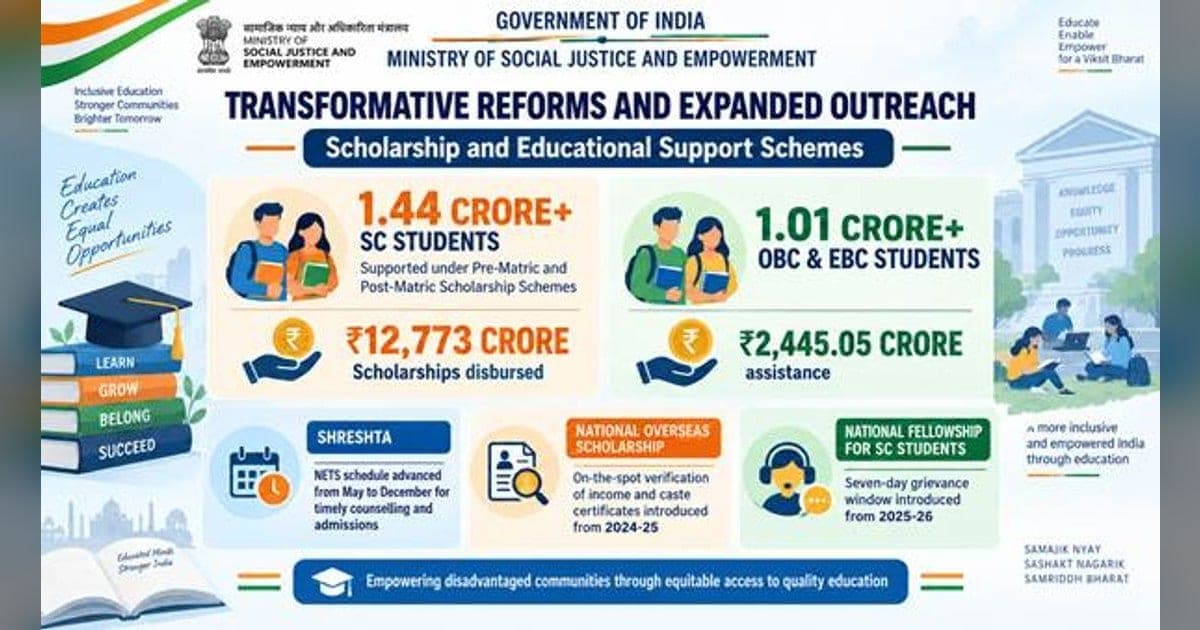
Scholarships Worth Rs 12,773 Crore for 1.44 Crore SC Students
23 September 2026 · 2 min read
- Government Schemes
MY Bharat Crosses 3 Crore Registered Youth in Under Three Years
23 September 2026 · 2 min read
- Government Schemes
Ayushman Bharat Completes Eight Years, 60 Crore Beneficiaries
23 September 2026 · 2 min read
- Government Schemes
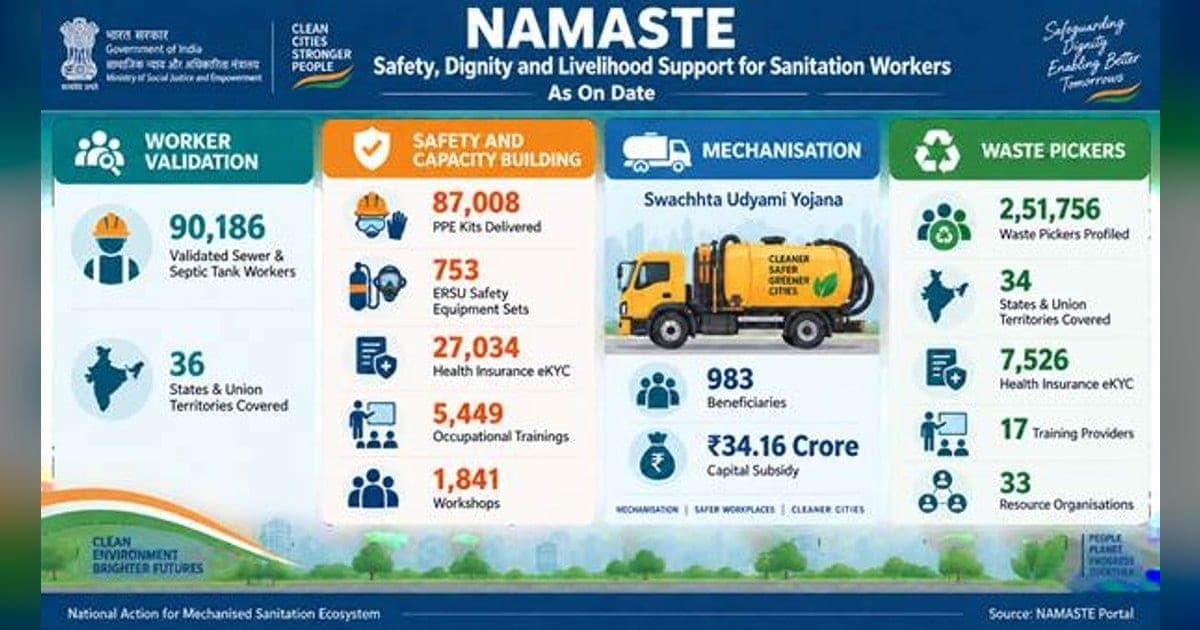
NAMASTE Scheme: 90,186 Sewer Workers Validated in 36 States, UTs
22 September 2026 · 2 min read
- Government Schemes
Ayushman Bharat PM-JAY at 8: 48.51 Crore Cards, ₹2.03 Lakh Crore Care
22 September 2026 · 2 min read
- Government Schemes
Jal Jeevan Mission 2.0: Nal Jal Mitra and Sujalam Shakti Push
22 September 2026 · 2 min read

Related GK
- Fundamental Rights (Articles 12–35): Notes, Writs and PYQs
23 September 2026 · Indian Polity
- Preamble of the Indian Constitution: Notes, Keywords and PYQs
22 September 2026 · Indian Polity
- Making of the Indian Constitution: Notes, Key Dates and PYQs
21 September 2026 · Indian Polity
Take the Quiz
- Current Affairs Quiz
State Exams Weekly Current Affairs Quiz: 31 August – 6 September 2026
27 questions27 minutesStart Quiz