
CAQM Reviews Stubble Management in Amritsar, Tarn Taran
A CAQM team led by chairperson Rajesh Verma reviewed paddy stubble management in Punjab's Amritsar and Tarn Taran districts and ordered firmer field action.

Why in News
On 24 October 2026 a CAQM team headed by chairperson Rajesh Verma reviewed paddy stubble management in the Amritsar and Tarn Taran districts of Punjab and issued directions to curb stubble burning.
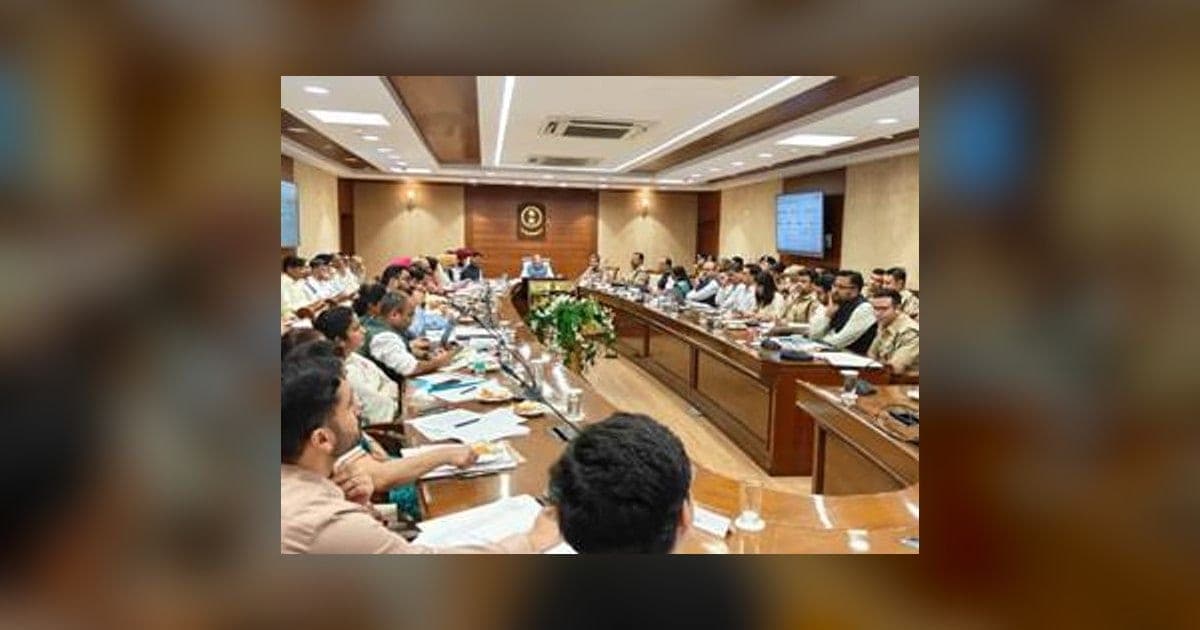
A high-level team of the Commission for Air Quality Management in NCR and Adjoining Areas (CAQM), led by its chairperson Rajesh Verma, held a review meeting on 24 October 2026 with the Deputy Commissioners and other officers of the Amritsar and Tarn Taran districts of Punjab. The subject was the management of paddy stubble and the steps needed to stamp out the burning of crop residue, which is one of the sources that worsens air quality in the national capital region and the areas around it during the harvest season.
What the team examined
The officers were asked to account for the stubble handled within the field, known as in-situ management, and the stubble taken out of the field for use elsewhere, known as ex-situ management, together with the machinery and other infrastructure available in the two districts for the purpose. The Commission looked at what the two district administrations had done in the face of a rise in fire incidents, said it was concerned by that rise, and told the officers to leave nothing undone in bringing the numbers down.
Directions issued
- Stubble should be used to the fullest as fuel in thermal power plants, brick kilns and industries where such use is practicable.
- Sector-wise nodal officers must be made answerable for the actual use of stubble by their sectors and must report compliance regularly.
- Officers must visit villages and farmers often, and not merely tell them that facilities exist but see that machinery reaches them in time.
- District administrations must tie farmers, Custom Hiring Centres, machinery providers and other stakeholders together so that residue solutions are available without delay.
Tarn Taran singled out
Because Tarn Taran continues to report among the highest numbers of paddy stubble burning cases, its Deputy Commissioner was told to treat the matter as the first priority and to step up field-level work on prevention and management. The Commission warned that slackness or failure to act effectively would bring strict action and accountability. During the visit the team also saw a working example of the ex-situ route: an industrial boiler at a complex in Amritsar that runs on pellets made from paddy stubble, which showed how processed residue can be put to productive use and how such models might be scaled up. The Commission repeated that stubble has to be treated as a resource to be used rather than waste to be burnt, and that the task must be approached from the point of view of helping the farmer.
Important Facts
| Body | Commission for Air Quality Management in NCR and Adjoining Areas (CAQM) |
|---|---|
| Chairperson | Rajesh Verma |
| Districts reviewed | Amritsar and Tarn Taran, Punjab |
| Subject | Paddy stubble management and prevention of stubble burning |
| Key direction | Maximum use of stubble as fuel in thermal power plants, brick kilns and industries |
| Coordination sought | Between farmers, Custom Hiring Centres and machinery providers |
| District under focus | Tarn Taran, among the highest in stubble burning incidents |
| Date | 24 October 2026 |
Exam Point of View
Remember the full form of CAQM and that it covers the NCR and adjoining areas, its chairperson Rajesh Verma, the two Punjab districts reviewed, the difference between in-situ and ex-situ management, the role of Custom Hiring Centres, and the use of stubble pellets as fuel in boilers, brick kilns and thermal power plants.
Practice Questions
Who is the chairperson of the Commission for Air Quality Management in NCR and Adjoining Areas?
- A.Rajesh Verma
- B.Rajesh Kumar Singh
- C.Manohar Lal
- D.Satendra Singh
Show answer
The meeting took stock of the arrangements for comprehensive paddy stubble management and of the measures needed to end the burning of residue.
Read the full explanation →In which state are Amritsar and Tarn Taran, the districts whose stubble management CAQM reviewed?
- A.Haryana
- B.Punjab
- C.Uttar Pradesh
- D.Rajasthan
Show answer
Both Amritsar and Tarn Taran are districts of Punjab, and the commission's team held its review meeting with their Deputy Commissioners and other concerned officers.
Read the full explanation →Where did the CAQM team direct that paddy stubble should be used as fuel to the maximum extent?
- A.Only in household cooking stoves
- B.In thermal power plants, brick kilns and industries
- C.In railway locomotives
- D.In municipal incinerators alone
Show answer
The commission emphasised this route and further directed that sector-wise nodal officers be made responsible for the actual use of stubble by their sectors and for monitoring and reporting compliance regularly.
Read the full explanation →Which institutions were district administrations asked to link with farmers so that residue management solutions reach them without delay?
- A.Custom Hiring Centres and machinery providers
- B.Regional rural banks and insurance agents
- C.Agricultural produce market committees only
- D.Panchayat libraries and cooperative stores
Show answer
The commission asked the district administrations to strengthen coordination between farmers, Custom Hiring Centres, machinery providers and other stakeholders so that farmers can obtain residue management solutions without waiting.
Read the full explanation →Frequently Asked Questions
Who leads the Commission for Air Quality Management in NCR and Adjoining Areas?
Rajesh Verma is its chairperson. He led the high-level team that reviewed paddy stubble management with officers of the Amritsar and Tarn Taran districts of Punjab on 24 October 2026.
What is the difference between in-situ and ex-situ stubble management?
In-situ management deals with the residue inside the field itself, while ex-situ management takes the residue out of the field for use elsewhere, for instance as pellet fuel in industrial boilers, brick kilns and thermal power plants.
Which district was asked to give the issue topmost priority?
Tarn Taran, because it continues to report among the highest numbers of paddy stubble burning incidents. Its Deputy Commissioner was told to intensify field-level prevention, and the Commission warned that laxity would invite strict action and accountability.
Sources
- सीएक्यूएम ने अमृतसर और तरनतारन में धान के पराली प्रबंधन उपायों की समीक्षा की (opens in a new tab) — Press Information Bureau
Current Affairs 24 October 2026
- Great Indian Bustard Rewilding Begins at Desert National ParkEnvironment
- 11 Crore Farmer IDs Created Under Digital Agriculture MissionGovernment Schemes
- VB-G RAM G Guarantees 125 Days of Rural Wage EmploymentGovernment Schemes
- 8th All India Conference of GRP Chiefs Concludes in New DelhiNational
- Piyush Goyal Ends Germany Visit With Berlin Industry MeetingsInternational
- Shram Samvad Campaign Covers 316 Districts on Labour CodesGovernment Schemes
- AATAL Lab Opens in Delhi to Trace Air Pollution SourcesScience & Technology
- India Chem 2026 Ends in Mumbai With Japan as Partner CountrySummits & Conferences
Related Current Affairs
- Environment
Great Indian Bustard Rewilding Begins at Desert National Park
24 October 2026 · 3 min read
- Environment
Namami Gange: 199 Sewerage Projects Worth Rs 31,327 Crore Taken Up
21 October 2026 · 2 min read



Related GK
- Panchayati Raj and Urban Local Bodies of Madhya Pradesh Notes
24 October 2026 · Madhya Pradesh
- Punjab and Haryana High Court, HPSC and State Commissions
24 October 2026 · Haryana
- Panchayati Raj and Urban Local Bodies of Bihar: Tiers and Articles
24 October 2026 · Bihar
Take the Quiz
- Current Affairs Quiz
State Exams Current Affairs Quiz: 24 October 2026
25 questions25 minutesStart Quiz