
CAQM Reviews Stubble Burning Curbs in Punjab and Haryana
The Commission for Air Quality Management held separate reviews with Punjab and Haryana at Chandigarh, warning districts against any laxity on stubble burning.
Why in News
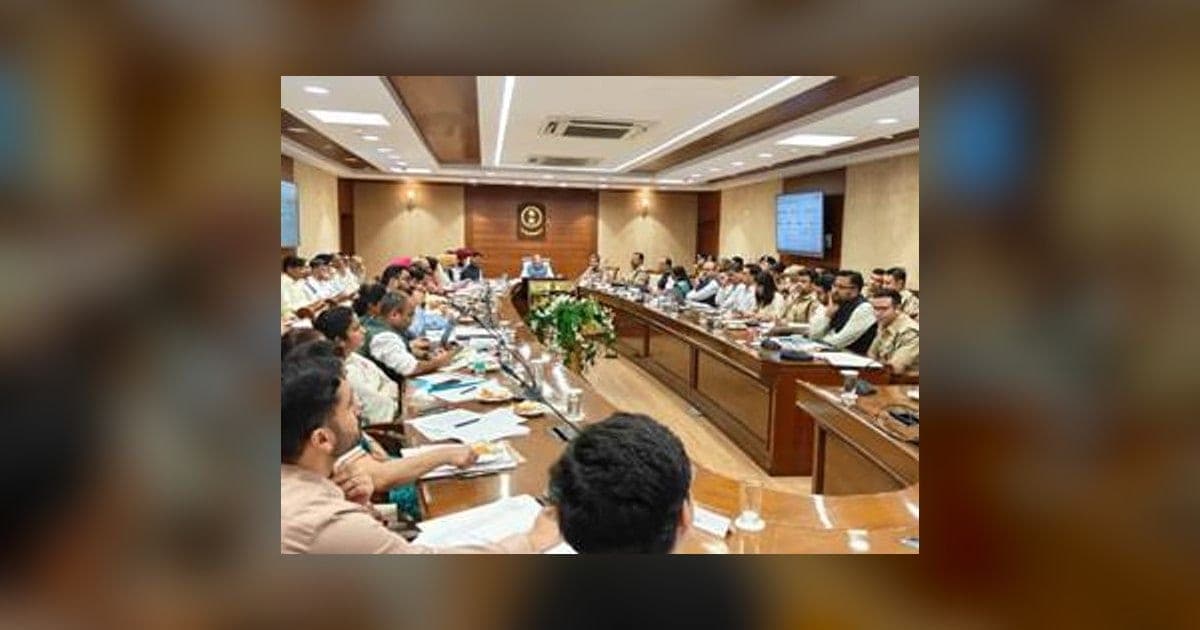
On 22 October 2026 the Commission for Air Quality Management in NCR and Adjoining Areas reviewed air pollution control work with the governments of Punjab and Haryana at Chandigarh and demanded prompt ground-level action on paddy stubble burning.
The Commission for Air Quality Management in NCR and Adjoining Areas (CAQM), chaired by Rajesh Verma, held separate review meetings with the governments of Punjab and Haryana at Chandigarh on 22 October 2026. The Commission examined what the two states are doing to stop paddy stubble burning and to curb other major sources of air pollution, and asked for action on the ground without delay as the critical winter weeks approach.
The Punjab review
The meeting with Punjab turned on the State Action Plan drawn up under CAQM Direction No. 99 dated 15 May 2026. The Commission went through field enforcement, district-level preparedness and monitoring arrangements, and then through the supply of Crop Residue Management machinery down to the farmer, looking for gaps in how the machines are actually being used. Collection, transport and use of paddy straw through in-situ and ex-situ routes were taken up, with a call to strengthen the residue supply chain through the peak harvest. The Commission also reviewed field validation of burnt-area assessment against satellite fire alerts, district-wise deployment of drones and low-cost sensors, compliance with Direction No. 92 on the use of paddy straw pellets and briquettes in brick kilns, and progress on biomass co-firing targets at thermal power plants.
The Haryana review
With Haryana the agenda was wider. Besides stubble burning, it covered vehicular pollution, road and open-area dust, construction and demolition dust and industrial pollution. On vehicles the Commission reviewed the installation of Automatic Number Plate Recognition systems at fuel and CNG stations to enforce valid Pollution Under Control Certificates, action against end-of-life vehicles, cleaner mobility measures and the phasing out of diesel autorickshaws in the National Capital Region districts. Mechanised road sweeping and dust control at construction sites were also examined, along with compliance and enforcement at industrial units.
What the Commission asked for
- Time-bound implementation of State Action Plans with continuous field monitoring and close coordination between departments, district administrations and enforcement agencies.
- Greater facilitation of farmers with in-situ machinery and a stronger ex-situ mechanism for paddy straw.
- More effective delivery of information, education and communication plans on the ground.
The Commission said paddy straw should be treated as a resource and a basis for a circular economy, not merely as waste to be kept from burning, and cautioned district administrations that any slackness leading to a rise in fire counts would be viewed seriously. It added that only sustained and coordinated effort by the states and all agencies can prevent stubble burning and bring down pollution during winter.
Important Facts
| Body | Commission for Air Quality Management in NCR and Adjoining Areas (CAQM) |
|---|---|
| Chairperson | Rajesh Verma |
| States reviewed | Punjab and Haryana, in separate meetings |
| Venue | Chandigarh |
| Date | 22 October 2026 |
| Direction No. 99 | Dated 15 May 2026, on the State Action Plan against paddy stubble burning |
| Direction No. 92 | Use of paddy straw based biomass pellets and briquettes in brick kilns |
| Monitoring tools | Satellite fire alerts, drones and low-cost sensors |
| Vehicular measure | Automatic Number Plate Recognition at fuel and CNG stations for PUC enforcement |
Exam Point of View
Remember the body (Commission for Air Quality Management in NCR and Adjoining Areas), its chairperson (Rajesh Verma), the venue of the reviews (Chandigarh), Direction No. 99 of 15 May 2026 on state action plans, Direction No. 92 on paddy straw pellets in brick kilns, and the tools used: satellite fire alerts, drones and low-cost sensors.
Practice Questions
Who chairs the Commission for Air Quality Management in NCR and Adjoining Areas, which reviewed pollution control work with Punjab and Haryana?
- A.Rajesh Verma
- B.Bhupender Yadav
- C.Tanmay Kumar
- D.Atal Dulloo
Show answer
He chaired the two separate review meetings the Commission held at Chandigarh with the governments of Punjab and Haryana, going through enforcement on the ground, district preparedness and the use of crop residue machinery.
Read the full explanation →Which CAQM direction mandates the use of paddy straw based biomass pellets and briquettes in brick kilns?
- A.Direction No. 76
- B.Direction No. 88
- C.Direction No. 92
- D.Direction No. 99
Show answer
Compliance with it was reviewed with both Punjab and Haryana, because moving brick kilns to pellets and briquettes made from paddy straw creates steady demand for the residue and takes away the reason to set fields on fire.
Read the full explanation →At which city did CAQM hold its separate review meetings with the governments of Punjab and Haryana?
- A.New Delhi
- B.Chandigarh
- C.Ludhiana
- D.Panipat
Show answer
The correct answer is Chandigarh, the common capital of the two states, which is why the Commission could meet both governments separately on the same day.
Read the full explanation →Frequently Asked Questions
What is CAQM?
It is the Commission for Air Quality Management in NCR and Adjoining Areas, the statutory body that issues directions on air pollution in the region. It is chaired by Rajesh Verma, who led the reviews with Punjab and Haryana at Chandigarh.
What does CAQM Direction No. 92 require?
It mandates the use of paddy straw based biomass pellets and briquettes in brick kilns. Compliance with it, and progress on biomass co-firing targets at thermal power plants, were reviewed with both states.
How is stubble burning being monitored?
Burnt-area assessment from satellite fire alerts is being validated in the field, and districts are deploying drones and low-cost sensors. The Commission warned that laxity leading to more burning incidents would be viewed seriously.
Sources
Current Affairs 22 October 2026
- Fisheries Investors and Exporters Conclave 2026 Set for BhopalSummits & Conferences
- PM-DAKSH Subsumed Under PMKVY After Training 1,87,305Government Schemes
- Law Commission Opens Cooperative Federalism and Law Reforms MeetSummits & Conferences
- Kashi Tamil Sangamam 5.0 to Run 28 November to 12 December 2026National
- Pradhan Mantri Samajik Sahayata Yojana Gets Rs 53,428 CroreGovernment Schemes
- ICAR Chief M. L. Jat Addresses Borlaug Dialogue RoundtableInternational
- India and Poland Agree to Double Bilateral Trade by 2030International
- India Post Crosses Rs 4,000 Crore Revenue in Two Straight QuartersEconomy
Related Current Affairs
- Environment
Namami Gange: 199 Sewerage Projects Worth Rs 31,327 Crore Taken Up
21 October 2026 · 2 min read





Related GK
- MP Language, Dialects and Literature: Exam Notes
22 October 2026 · Madhya Pradesh
- Religious and Tourist Places of Haryana: Exam Notes
22 October 2026 · Haryana
- Bihar Languages and Literature: Maithili, Bhojpuri, Magahi
22 October 2026 · Bihar
Take the Quiz
- Current Affairs Quiz
SSC Current Affairs Quiz: 22 October 2026
25 questions25 minutesStart Quiz