
AgriVoltaics World Conference 2026 Meets in New Delhi
The 7th AgriVoltaics World Conference met in New Delhi from 21 to 23 October 2026 on the theme Powering the Global South, as India mapped its agri-solar scope.
Why in News
On 23 October 2026 the agrivoltaics picture in India was set out in detail as the 7th AgriVoltaics World Conference met in New Delhi from 21 to 23 October 2026 under the theme Powering the Global South.
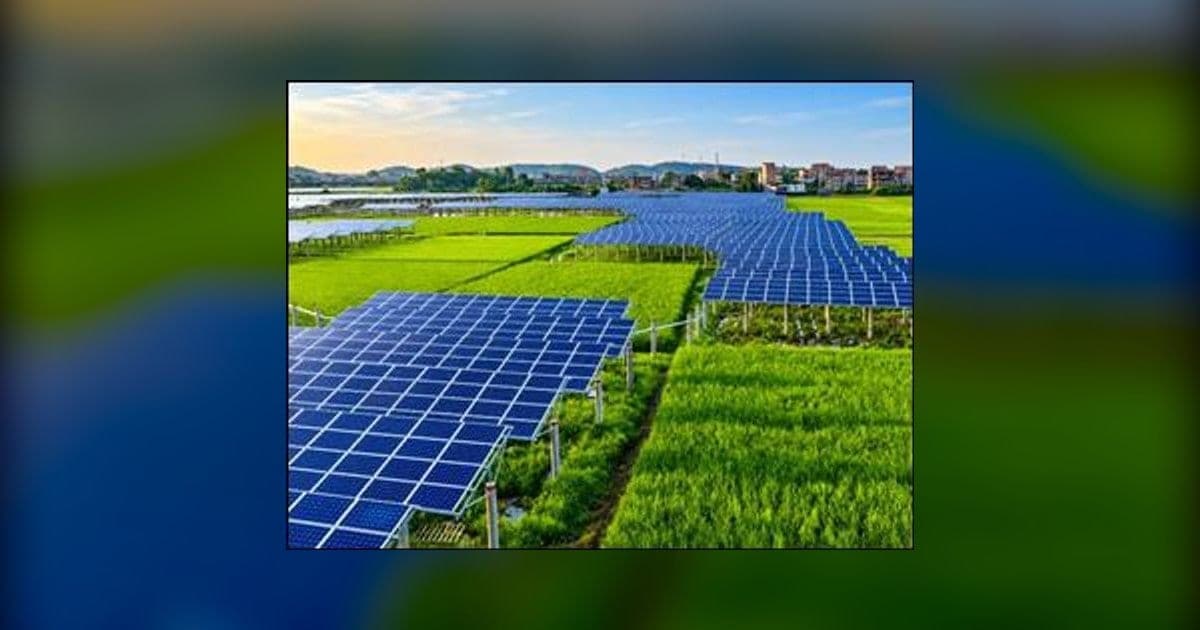
India is asking the same patch of farmland to do two jobs at once. Agrivoltaics, also called agrisolar or dual-use solar, puts solar panels above or between crop rows so that one plot gives both a harvest and electricity. A backgrounder issued on 23 October 2026 set out where the technology stands in India, timed with the 7th AgriVoltaics World Conference in the capital.
The conference
The 7th edition ran in New Delhi from 21 to 23 October 2026 under the theme Powering the Global South. It brought together people from industry, research, policy and finance, and its agenda was efficient use of land, steadier farming and a shift towards a low-carbon economy.
Why farms need solar power
Farming is the main source of livelihood for about 46.1 per cent of the country's people, and the Gross Value Added of the agriculture and allied sector is expected to touch Rs 52.08 lakh crore in 2025-26. Land Use Statistics for 2023-24 put the reported area at 306.96 million hectares, of which roughly 55 per cent is farmland. The net sown area is 138.99 million hectares and the gross cropped area 217.88 million hectares. Panels raised on tall structures let sunlight and rain through to the crop and leave room for a tractor underneath; the partial shade cuts evaporation and shields plants from fierce heat.
Where India stands
| Operational projects (August 2025) | 36, with 37.54 megawatts installed |
| Pilot projects under development | 10 |
| Estimated national potential | 3,000 GW to nearly 14,000 GW |
| Land screened as fit for AgriPV | 47.35 million hectares of restricted cropland |
| Farm earnings per acre | From about Rs 60,000 to over Rs 1 lakh a year |
Schemes behind the push
- PM KUSUM, launched in February 2019, carries central financial assistance of about Rs 34,422 crore for solar pumps and decentralised generation.
- A Centre of Excellence on Agrivoltaics set up by the National Institute of Solar Energy with the Indian Agricultural Research Institute of ICAR, which runs a 100-kilowatt system on its campus.
- The India Agrivoltaics Alliance, anchored by the National Solar Energy Federation of India, launched in 2023 and now past 40 members.
- In the states, Maharashtra's Mukhyamantri Saur Krushi Vahini Yojana 2.0 plans 16,000 megawatts on about 35,000 acres, Gujarat's Kisan Suryoday Yojana promises daytime supply for up to 16 hours, and Karnataka's Surya Raitha scheme pushes solar irrigation pumps.
Fruits, vegetables, spices and medicinal plants suit cultivation under panels. Maharashtra, Rajasthan, Andhra Pradesh, Madhya Pradesh, Karnataka and Uttar Pradesh together account for close to 50 per cent of the estimated AgriPV generation potential, while Odisha, Tamil Nadu, Kerala, Telangana, Bihar and West Bengal are rated moderate.
Important Facts
| Event | 7th AgriVoltaics World Conference |
|---|---|
| Venue and dates | New Delhi, 21 to 23 October 2026 |
| Theme | Powering the Global South |
| Projects running (August 2025) | 36 projects, 37.54 megawatts installed, plus 10 pilots |
| Estimated potential | 3,000 GW to nearly 14,000 GW |
| Land fit for AgriPV | 47.35 million hectares of restricted cropland |
| PM KUSUM | Launched February 2019, central assistance about Rs 34,422 crore |
| Centre of Excellence | National Institute of Solar Energy with ICAR's Indian Agricultural Research Institute; 100-kilowatt system |
| India Agrivoltaics Alliance | Anchored by NSEFI, launched 2023, over 40 members |
| Agriculture GVA | Rs 52.08 lakh crore estimated for 2025-26 |
Exam Point of View
Remember the edition (7th), the city (New Delhi), the dates (21 to 23 October 2026) and the theme (Powering the Global South); the August 2025 tally of 36 projects and 37.54 megawatts; the 3,000 GW to 14,000 GW potential; the 47.35 million hectares screened; PM KUSUM's February 2019 launch and Rs 34,422 crore assistance; and the 100-kilowatt system at the Indian Agricultural Research Institute.
Practice Questions
What was the theme of the 7th AgriVoltaics World Conference held in New Delhi?
- A.Food First, Energy Next
- B.Powering the Global South
- C.Sunlight for Every Farm
- D.Climate Resilient Water Management
Show answer
The 7th AgriVoltaics World Conference was held in New Delhi from 21 to 23 October 2026 and this was the theme chosen for it.
Read the full explanation →As of August 2025, how many operational agrivoltaics projects did India have and what was their installed capacity?
- A.26 projects, 27.54 megawatts
- B.36 projects, 37.54 megawatts
- C.46 projects, 47.54 megawatts
- D.10 projects, 100 megawatts
Show answer
That was the count of operational agrivoltaics projects in India as of August 2025, and alongside them another 10 pilot projects were under development.
Read the full explanation →PM KUSUM, which promotes solar energy in agriculture, was launched in which month and year?
- A.February 2019
- B.August 2020
- C.February 2023
- D.January 2015
Show answer
The Pradhan Mantri Kisan Urja Suraksha evam Utthaan Mahabhiyan, shortened to PM KUSUM, was launched in that month to encourage the use of solar energy on farms.
Read the full explanation →Frequently Asked Questions
What is the theme of the 7th AgriVoltaics World Conference?
Powering the Global South. The edition was held in New Delhi from 21 to 23 October 2026 and drew stakeholders from industry, research, policy and finance to discuss joining solar generation with farming.
How many agrivoltaics projects are running in India?
As of August 2025 there were 36 operational projects with 37.54 megawatts of installed capacity, besides 10 pilot projects under development across different agroclimatic zones.
What is India's estimated agrivoltaic potential?
Estimates range from 3,000 GW to nearly 14,000 GW. A GIS-based national screening identified 47.35 million hectares of restricted cropland as suitable for AgriPV after environmental, agronomic and technical filters.
Which scheme supports solar energy in farming?
PM KUSUM, launched in February 2019, with central financial assistance of about Rs 34,422 crore. It funds solarisation of agricultural pumps and decentralised solar generation and cuts diesel use on farms.
Sources
- https://pib.gov.in/PressReleaseIframePage.aspx?PRID=2327188 (opens in a new tab) — Press Information Bureau
Current Affairs 23 October 2026
- Ameena Nazreen Wins Global Youth Institute Award in USAAwards & Honours
- Indo-Pacific Regional Dialogue 2026 to Be Held in New DelhiDefence
- PLFS Sampling Design to Change from January 2027: NSOReports & Indices
Related Current Affairs
- Environment
Namami Gange: 199 Sewerage Projects Worth Rs 31,327 Crore Taken Up
21 October 2026 · 2 min read



Related GK
- MP Governor, CM and Vidhan Sabha: Articles and Facts
23 October 2026 · Madhya Pradesh
- Haryana Sports and Sportspersons: Medals and Facts
23 October 2026 · Haryana
- Bihar Governor, CM and Legislature: Articles and Facts
23 October 2026 · Bihar
Take the Quiz
- Current Affairs Quiz
State Exams Current Affairs Quiz: 23 October 2026
12 questions12 minutesStart Quiz