
Geothermal Energy: India's First Wells Open in Puga Valley
India's geothermal push rests on the 2025 national policy and the first two wells at Puga Valley in Ladakh; GSI has mapped 381 hot springs and 10 provinces.
Why in News
A government backgrounder of 2 November 2026 traces India's geothermal energy journey, from the National Policy on Geothermal Energy of September 2025 to the first two wells commissioned at Puga Valley in Ladakh in July 2026.
Heat stored inside the Earth is the basis of geothermal energy, and a government backgrounder issued on 2 November 2026 sets out how India plans to use it. Unlike sunlight or wind, this heat does not change with the weather, so geothermal plants can run round the clock. The Ministry of New and Renewable Energy is the nodal ministry, and the National Policy on Geothermal Energy was notified in September 2025 to guide exploration and development as the country works towards its net zero goal for 2070.
The first wells
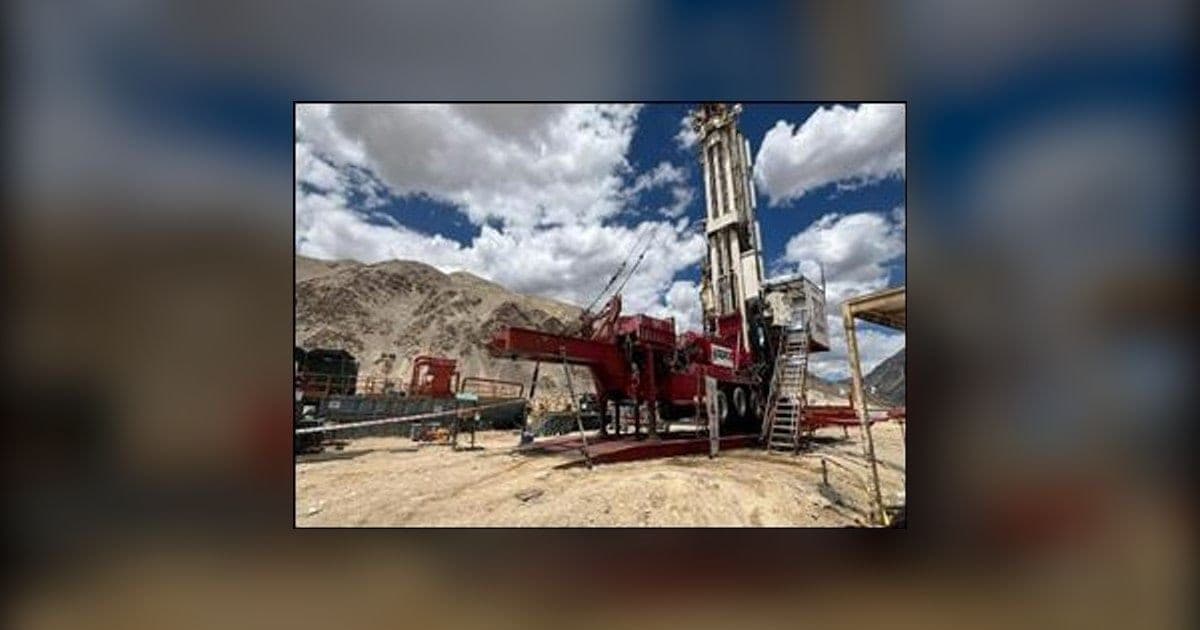
In July 2026 the ONGC Energy Centre commissioned the country's first two geothermal wells in the Puga Valley of Ladakh, a site known for hot springs and underground heat and lying more than 14,000 feet above sea level. Each well goes down 1,000 metres and will be used to assess the reservoir. They also clear the path for a planned 1-megawatt demonstration power project, which would be India's first geothermal generation.
Where the heat comes from
The Earth has four layers. At the centre is a solid inner core of iron and nickel about 2,400 km across, around it a liquid outer core roughly 2,400 km thick, then the mantle of hot dense rock running nearly 2,900 km, and finally the thin crust. The crust measures about 5 to 8 kilometres under the oceans and 24 to 56 kilometres under the continents. Temperature climbs with depth, reaching about 3,700 degrees Celsius where the mantle meets the core and 5,000 to 6,000 degrees in the core itself. Radioactive decay of uranium, thorium and potassium, along with heat left from the planet's formation, keeps this furnace going; convection currents then carry hot material upwards, and where faults and fractures exist it approaches the surface to form reservoirs of hot water and steam.
India's resource base
- The Geological Survey of India has mapped 381 hot springs and identified 10 geothermal provinces
- India's theoretical geothermal prospect is nearly 10.6 GW, or about 10,600 MW, with 42 sites held promising for power or direct heat use
- The provinces include the Himalayan belt, the Andaman and Nicobar Islands, Naga-Lusai, the West Coast, Cambay Graben and the Son-Narmada-Tapi or SONATA zone, besides Aravalli, Mahanadi, Godavari and the South Indian cratonic region
- Worldwide installed geothermal capacity touched 15.67 GW by the end of 2025, with Indonesia, the United States, the Philippines, Turkiye and New Zealand holding roughly 67 per cent of it
Projects and partnerships
Five research and development projects were sanctioned by the ministry between July and August 2025. A pilot at Ankleshwar in Gujarat is testing power generation from unproductive oil and gas wells; a demonstration at Gandhinagar has drilled three wells yielding fluid at 70 to 80 degrees Celsius and shown 50 to 90 kilowatts of generation; five sites near Tawang in Arunachal Pradesh are under study; and a Hyderabad project is developing geothermal cooling for air conditioning. Abandoned oil and gas wells can be repurposed, which lets the sector use existing drilling skills and data. India has named geothermal energy a field of cooperation with Australia and Iceland, and a memorandum with Saudi Arabia treats it as a focus area.
Important Facts
| Nodal ministry | Ministry of New and Renewable Energy (MNRE) |
|---|---|
| Policy | National Policy on Geothermal Energy, notified in September 2025 |
| First wells | Two wells at Puga Valley, Ladakh, commissioned by the ONGC Energy Centre in July 2026 |
| Well depth | 1,000 metres each |
| Site altitude | More than 14,000 feet above sea level |
| Next step | India's first 1-megawatt demonstration geothermal power project |
| Hot springs mapped | 381, by the Geological Survey of India |
| Geothermal provinces | 10, including the Himalayan belt, SONATA, Cambay Graben and the West Coast |
| Theoretical prospect | About 10,600 MW, with 42 promising sites |
| Global capacity | 15.67 GW at the end of 2025; Indonesia, the United States, the Philippines, Turkiye and New Zealand hold about 67 per cent |
| Partners | Australia, Iceland and Saudi Arabia |
Exam Point of View
Remember that MNRE is the nodal ministry, the policy year September 2025, the first two wells at Puga Valley in Ladakh commissioned by the ONGC Energy Centre in July 2026, their depth of 1,000 metres and the site's height of over 14,000 feet, the 1-megawatt demonstration project, 381 hot springs and 10 provinces mapped by GSI, the prospect of about 10,600 MW with 42 promising sites, and global capacity of 15.67 GW at the end of 2025.
Practice Questions
India's first two geothermal wells were commissioned in which valley?
- A.Nubra Valley
- B.Puga Valley
- C.Spiti Valley
- D.Suru Valley
Show answer
The valley sits more than fourteen thousand feet above sea level and has long been known for its hot springs and underground heat reserves, which is why it is counted among the most promising geothermal sites in India.
Read the full explanation →How many hot springs and geothermal provinces has the Geological Survey of India mapped?
- A.340 hot springs and 7 provinces
- B.381 hot springs and 10 provinces
- C.412 hot springs and 12 provinces
- D.381 hot springs and 14 provinces
Show answer
The provinces run across very different terrains, from the Himalayan belt and the Andaman and Nicobar Islands to the West Coast, the Cambay Graben, the Son-Narmada-Tapi zone and the cratonic region of southern India.
Read the full explanation →Which statement about global geothermal capacity at the end of 2025 is correct?
- A.It stood at 15.67 GW, with Indonesia among the leading countries
- B.It stood at 159.8 GW, led by China
- C.It stood at 45.2 GW, led by India
- D.It stood at 8.9 GW, led by Iceland
Show answer
Installed geothermal capacity across the world reached a little over fifteen and a half gigawatts by the close of that year, and five countries, namely Indonesia, the United States, the Philippines, Turkiye and New Zealand, together accounted for roughly sixty-seven per cent of it.
Read the full explanation →Frequently Asked Questions
Where were India's first geothermal wells commissioned?
At Puga Valley in Ladakh, by the ONGC Energy Centre in July 2026. The site lies more than 14,000 feet above sea level and each of the two wells is 1,000 metres deep.
Which ministry is the nodal ministry for geothermal energy in India?
The Ministry of New and Renewable Energy. It implements the National Policy on Geothermal Energy, which was notified in September 2025.
How large is India's geothermal potential?
The theoretical prospect is nearly 10,600 MW. The Geological Survey of India has mapped 381 hot springs and 10 geothermal provinces, and 42 sites are held promising for power generation or direct heat use.
Which countries lead in geothermal power?
Indonesia, the United States, the Philippines, Turkiye and New Zealand together hold about 67 per cent of global capacity, which stood at 15.67 GW at the end of 2025.
Sources
- https://www.pib.gov.in/PressReleasePage.aspx?PRID=2331597 (opens in a new tab) — Press Information Bureau
Current Affairs 2 November 2026
- India-EU Talks: Commerce Secretary Rajesh Agrawal Meets EC OfficialsInternational
- Sacred Piprahwa Buddha Relics Reach Tawang Monastery in ArunachalNational
- Sikkim Dairy Projects Worth Rs 251.56 Lakh Under White Revolution 2.0Government Schemes
- MoD Signs Rs 53,866.50 Crore Deal for 8 Next Generation CorvettesDefence
- Captive and Commercial Coal Mines Produce 22.03 MT in October 2026Economy
- VB-G RAM G Grievance Redressal Rules, 2026 Notified for Rural JobsGovernment Schemes
- Khet Bachaao Abhiyaan-Rabi 2026 Covers 700 Districts, 50 Lakh FarmersGovernment Schemes
- JanHIT: First National Orientation of Tribal Healers at HyderabadNational
Related Current Affairs
- Science & Technology
IIA Team Traces Black Hole Behind Bright X-ray Source ULX-8
2 November 2026 · 2 min read
- Science & Technology
Kishtwar Seismological Observatory Opens; J&K Now Has Four
2 November 2026 · 2 min read
- Science & Technology
Digi Yatra Begins International Trials at Seven Airports
1 November 2026 · 2 min read
- Science & Technology
NVS-03 Completes First Orbit Manoeuvre of NavIC Mission
1 November 2026 · 2 min read
- Science & Technology
DRDO Leads Semiconductor Session at ESTIC 2026 in Delhi
30 October 2026 · 2 min read




Related GK
- Famous Personalities of Rajasthan: Exam Notes
28 October 2026 · Rajasthan
- Districts and Divisions of Rajasthan: Exam Notes
28 October 2026 · Rajasthan
- Tourism and World Heritage Sites of Rajasthan Notes
27 October 2026 · Rajasthan
Take the Quiz
- Current Affairs Quiz
SSC CHSL Current Affairs Quiz: 2 November 2026
19 questions19 minutesStart Quiz