
Kishtwar Seismological Observatory Opens; J&K Now Has Four
Dr Jitendra Singh opened a seismological observatory at Kishtwar, the fourth in Jammu and Kashmir, sending real-time data to the National Centre for Seismology.
Why in News
On 2 November 2026 Dr Jitendra Singh inaugurated a Seismological Observatory at Kishtwar, the fourth in Jammu and Kashmir, and detailed the growth of the region's weather monitoring network since 2014.
A new Seismological Observatory has been opened at Kishtwar, a town that sits in a high seismic zone of Jammu and Kashmir. It was inaugurated by Dr Jitendra Singh, Union Minister of State with Independent Charge for Science and Technology and Earth Sciences, who also holds charge in the Prime Minister's Office, the Department of Atomic Energy and the Department of Space. The facility has been set up through the Ministry of Earth Sciences.
What the observatory will do
The station carries digital seismic instruments and will send readings as they are recorded to the round-the-clock Earthquake Monitoring Centre of the National Centre for Seismology in New Delhi. With this addition, Jammu and Kashmir has four seismological observatories in all, the others being at Jammu, Srinagar and Udhampur. The minister said continuous watch on earthquake activity will improve understanding of local seismic hazards, help the district administration and rescue teams respond faster, and guide the planning of safer construction.
Radars, weather stations and rain gauges
Dr Jitendra Singh set out how far the India Meteorological Department's network in the region has grown since 2014. There was then no Doppler Weather Radar coverage at all; four have since been installed, at Banihal, Jot, Jammu and Srinagar. Four more are to be commissioned in 2027 at Doda, Kishtwar, Anantnag and Baramulla, taking the total to eight. Automatic Weather Stations have gone from three, at Udhampur, Kathua and Ramban, to twelve, with four of the new ones in Kishtwar, two each in Doda and Ramban and one in Kathua. Rain Gauge Stations across the five districts of the parliamentary constituency have risen from nine to fifteen.
Forecasts down to the panchayat
Weather forecasts now reach every panchayat in those five districts, and the weather and agromet advisory services have covered 5,467 beneficiaries. The region also has a High-Altitude Cloud Physics Laboratory at Patnitop, while Jammu has been given a Regional Meteorological Centre for forecasting and early warning. Several of the additions followed the Chasoti cloudburst of last year.
A warning is only as good as the response
The minister stressed that scientific warnings save lives only when people act on them, recalling traffic curbs ordered after an alert and the damage to the highway that followed. Information matters, he said, but so does following it. He also urged that rumour and alarmist claims be answered with evidence from credible scientific sources.
Important Facts
| Facility | Seismological Observatory, Kishtwar, Jammu and Kashmir |
|---|---|
| Inaugurated by | Dr Jitendra Singh, Union Minister of State (Independent Charge) for Science and Technology and Earth Sciences |
| Set up through | Ministry of Earth Sciences |
| Data goes to | 24x7 Earthquake Monitoring Centre, National Centre for Seismology, New Delhi |
| Observatories in Jammu and Kashmir | Four, at Jammu, Srinagar, Udhampur and Kishtwar |
| Doppler Weather Radars | None in 2014; four installed at Banihal, Jot, Jammu and Srinagar; four more in 2027 at Doda, Kishtwar, Anantnag and Baramulla |
| Automatic Weather Stations | From three (Udhampur, Kathua, Ramban) to twelve |
| Rain Gauge Stations | From nine to fifteen across five districts |
| Agromet beneficiaries | 5,467 |
| Other facilities | High-Altitude Cloud Physics Laboratory at Patnitop; Regional Meteorological Centre at Jammu |
| Secretary, Ministry of Earth Sciences | Dr Srinivasa Kumar Tummala |
Exam Point of View
Remember the place (Kishtwar), the minister (Dr Jitendra Singh) and the ministry (Earth Sciences); that Jammu and Kashmir now has four seismological observatories at Jammu, Srinagar, Udhampur and Kishtwar; that data flows to the National Centre for Seismology, New Delhi; and the network figures, namely Doppler Weather Radars from none in 2014 to four with four more in 2027, Automatic Weather Stations from three to twelve, Rain Gauge Stations from nine to fifteen, and 5,467 beneficiaries of agromet advisories.
Practice Questions
The new Seismological Observatory inaugurated by Dr Jitendra Singh is located at which place?
- A.Udhampur
- B.Kishtwar
- C.Baramulla
- D.Patnitop
Show answer
The observatory was set up through the Ministry of Earth Sciences, carries digital seismic equipment and transmits readings in real time to the round-the-clock Earthquake Monitoring Centre of the National Centre for Seismology in New Delhi.
Read the full explanation →Real-time data from the new observatory will be transmitted to the Earthquake Monitoring Centre of which organisation?
- A.India Meteorological Department
- B.National Disaster Management Authority
- C.National Centre for Seismology
- D.Geological Survey of India
Show answer
The correct answer is the National Centre for Seismology, whose Earthquake Monitoring Centre in New Delhi works round the clock and will receive the Kishtwar readings as they are recorded.
Read the full explanation →How many Automatic Weather Stations does the region now have, against three earlier at Udhampur, Kathua and Ramban?
- A.8
- B.10
- C.12
- D.15
Show answer
Nine stations were added to the three that existed at Udhampur, Kathua and Ramban, taking the total to twelve; of the new ones, four are in Kishtwar, two each in Doda and Ramban, and one in Kathua.
Read the full explanation →How many beneficiaries have the weather forecast and agromet advisory services reached in the region?
- A.1,467
- B.3,540
- C.5,467
- D.9,675
Show answer
The minister said forecasts are now disseminated at the panchayat level across all panchayats in the five districts, and that the weather forecast and agromet advisory services have reached this many people, giving farmers and residents wider access to weather information.
Read the full explanation →Frequently Asked Questions
How many seismological observatories does Jammu and Kashmir have now?
Four. With the new facility at Kishtwar, the others are at Jammu, Srinagar and Udhampur. The Kishtwar station transmits data in real time to the Earthquake Monitoring Centre of the National Centre for Seismology in New Delhi.
Where are the Doppler Weather Radars in the region?
Four are working, at Banihal, Jot, Jammu and Srinagar, against none in 2014. Four more are to be commissioned in 2027 at Doda, Kishtwar, Anantnag and Baramulla, which will take the total to eight.
Which ministry set up the Kishtwar observatory?
The Ministry of Earth Sciences. Dr Jitendra Singh, Union Minister of State with Independent Charge for Science and Technology and Earth Sciences, inaugurated it, and the Secretary of the ministry, Dr Srinivasa Kumar Tummala, attended.
How many people do the weather and agromet advisory services cover?
The services have reached 5,467 beneficiaries, and forecasts are now issued for every panchayat in the five districts, strengthening local-level disaster preparedness in an area prone to earthquakes and landslides.
Sources
- https://www.pib.gov.in/PressReleasePage.aspx?PRID=2331574 (opens in a new tab) — Press Information Bureau
Current Affairs 2 November 2026
- India-EU Talks: Commerce Secretary Rajesh Agrawal Meets EC OfficialsInternational
- Sacred Piprahwa Buddha Relics Reach Tawang Monastery in ArunachalNational
- Sikkim Dairy Projects Worth Rs 251.56 Lakh Under White Revolution 2.0Government Schemes
- MoD Signs Rs 53,866.50 Crore Deal for 8 Next Generation CorvettesDefence
- Captive and Commercial Coal Mines Produce 22.03 MT in October 2026Economy
- VB-G RAM G Grievance Redressal Rules, 2026 Notified for Rural JobsGovernment Schemes
- Khet Bachaao Abhiyaan-Rabi 2026 Covers 700 Districts, 50 Lakh FarmersGovernment Schemes
- JanHIT: First National Orientation of Tribal Healers at HyderabadNational
Related Current Affairs
- Science & Technology
IIA Team Traces Black Hole Behind Bright X-ray Source ULX-8
2 November 2026 · 2 min read
- Science & Technology
Digi Yatra Begins International Trials at Seven Airports
1 November 2026 · 2 min read
- Science & Technology
NVS-03 Completes First Orbit Manoeuvre of NavIC Mission
1 November 2026 · 2 min read
- Science & Technology
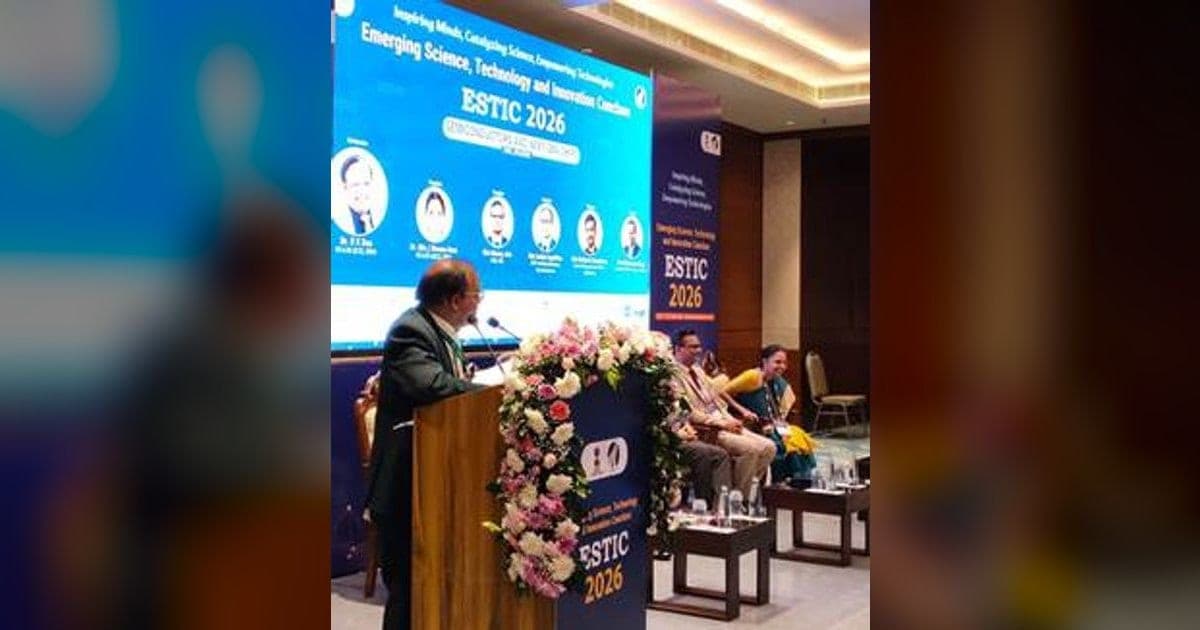
DRDO Leads Semiconductor Session at ESTIC 2026 in Delhi
30 October 2026 · 2 min read
- Science & Technology
TRAI Issues Draft AI Guidelines for Telecom Networks
30 October 2026 · 2 min read
Related GK
- Famous Personalities of Rajasthan: Exam Notes
28 October 2026 · Rajasthan
- Districts and Divisions of Rajasthan: Exam Notes
28 October 2026 · Rajasthan
- Tourism and World Heritage Sites of Rajasthan Notes
27 October 2026 · Rajasthan
Take the Quiz
- Current Affairs Quiz
Banking Current Affairs Quiz: 2 November 2026
25 questions25 minutesStart Quiz