
India, Switzerland Launch Indo-Swiss Research Framework
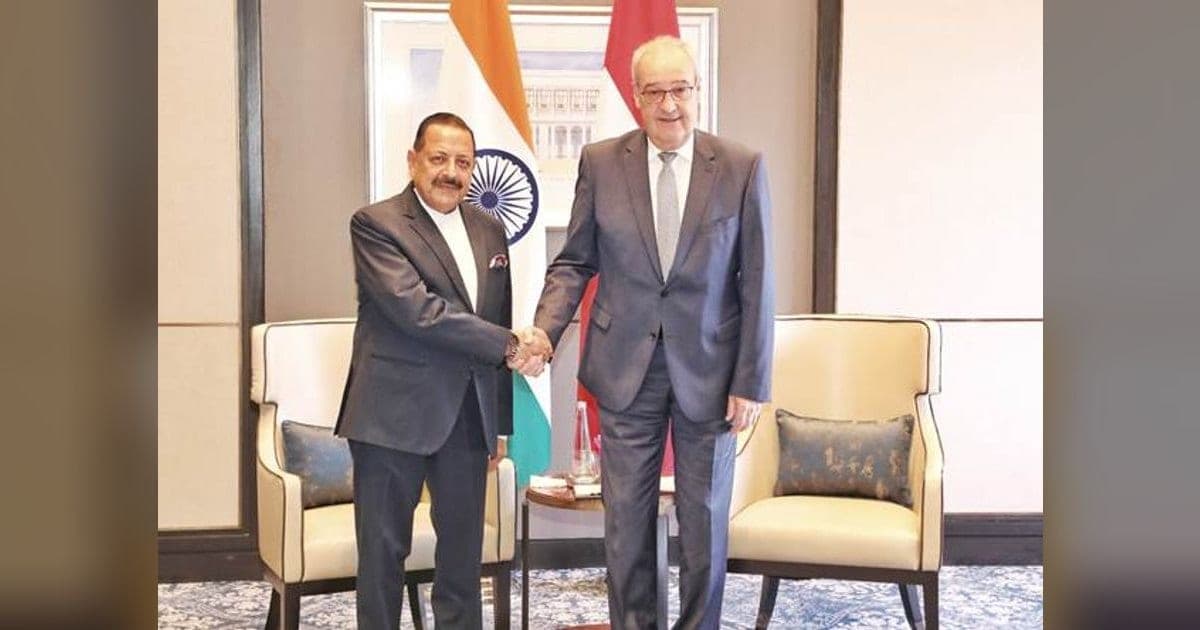
Jitendra Singh met Swiss President Guy Parmelin in New Delhi on 6 October 2026 as Switzerland set aside CHF 45 million for the Indo-Swiss Research Framework.
Why in News
On 6 October 2026 Dr Jitendra Singh held a bilateral meeting in New Delhi with Swiss President Guy Parmelin, where Switzerland earmarked a further CHF 45 million for the Indo-Swiss research partnership and the Indo-Swiss Research Framework was welcomed.
Union Minister of State Dr Jitendra Singh held a bilateral meeting in New Delhi on 6 October 2026 with Guy Parmelin, President of the Swiss Confederation, on deepening the long-standing India-Switzerland partnership in science, technology, research and innovation. The talks were about carrying that partnership into a more structured, long-term phase with greater institutional engagement in emerging fields.
The money and the mechanisms
President Parmelin said Switzerland has set aside a further CHF 45 million for the partnership and looked for a matching commitment from India to consolidate the joint research framework. He described India as a fast-emerging global research and development power and said Switzerland wants to be a preferred long-term partner in education, research and innovation. Dr Singh welcomed progress towards the Indo-Swiss Research Framework (ISRF) and the Indo-Swiss Joint Scientific Board, along with a Letter of Intent between the Swiss National Science Foundation and the Department of Science and Technology, and an Implementation Agreement between the Zurich University of Applied Sciences and the Department.
Two decades of cooperation
The formal basis of the relationship was the Inter-Governmental Agreement signed in 2003; the Indo-Swiss Joint Research Programme began in 2005. The Indo-Swiss Joint Committee on Science and Technology has met seven times, most recently at Bern in September 2025. Cooperation has spread across quantum technology, artificial intelligence, clean technology and renewable energy, ocean research and the blue economy, advanced materials, pharmaceuticals, biomedical research, pandemic preparedness and space technologies, with mountain and glacier studies, systems medicine, One Health and the social sciences among the active areas.
Where it is headed
Dr Singh said India is taking an interdisciplinary, mission-mode approach in science and technology, treating artificial intelligence as an enabling tool rather than a separate discipline, and pointed to work in biotechnology, vaccine development, genome sequencing, quantum technology, space and deep ocean research. The new framework is meant to move the relationship from a project-based model to a system-level partnership with greater mobility and knowledge exchange, supported by new initiatives such as Explore, for building research networks, and the Academia-Industry Training programme. President Parmelin stressed that artificial intelligence must benefit countries of the Global South and invited India to the forthcoming Geneva AI Summit.
Important Facts
| Meeting | Dr Jitendra Singh with Swiss President Guy Parmelin, New Delhi |
|---|---|
| Date | 6 October 2026 |
| Swiss commitment | A further CHF 45 million for the research partnership |
| New framework | Indo-Swiss Research Framework (ISRF) |
| New body | Indo-Swiss Joint Scientific Board |
| Agreements welcomed | SNSF-DST Letter of Intent; DST-ZHAW Implementation Agreement |
| Base agreement | Inter-Governmental Agreement on S&T, 2003 |
| Joint research programme | Began in 2005 |
| Joint Committee | Seven rounds held, the latest at Bern in September 2025 |
| New initiatives | Explore and the Academia-Industry Training programme |
Exam Point of View
Remember the visitor (Guy Parmelin, President of the Swiss Confederation), the Indian minister (Dr Jitendra Singh), the amount (CHF 45 million), the new mechanisms (Indo-Swiss Research Framework and Joint Scientific Board), the agreements (SNSF-DST Letter of Intent, DST-ZHAW Implementation Agreement), the base agreement year (2003) and the joint research programme year (2005).
Practice Questions
How much has Switzerland earmarked for strengthening the Indo-Swiss research partnership?
- A.CHF 25 million
- B.CHF 45 million
- C.CHF 90 million
- D.CHF 150 million
Show answer
Correct answer: B. CHF 45 million
Explanation
The correct answer is CHF 45 million. President Guy Parmelin announced this further allocation during his bilateral meeting with Dr Jitendra Singh in New Delhi and said Switzerland expects a corresponding commitment from India so that the joint research framework can be consolidated. He also described India as a rapidly emerging global research and development power and said Switzerland wants to position itself as a preferred long-term partner in education, research and innovation. Options A, C and D are near figures meant to test recall of the exact amount, and none of them is the sum announced, so each is wrong. The amount should be remembered alongside the name of the mechanism it supports, the Indo-Swiss Research Framework. The framework is designed to carry cooperation beyond individual projects into a lasting, system-level arrangement between the two countries.
Who is Guy Parmelin, who met Dr Jitendra Singh in New Delhi?
- A.President of the Swiss Confederation
- B.Swiss Ambassador to India and Bhutan
- C.President of the Swiss National Science Foundation
- D.Swiss State Secretary for Education and Research
Show answer
Correct answer: A. President of the Swiss Confederation
Explanation
The correct answer is President of the Swiss Confederation. Guy Parmelin held bilateral talks with Dr Jitendra Singh, the Union Minister of State for Science and Technology and Earth Sciences, on taking the science and technology partnership into a longer-term phase. Option B names a different person: Maya Tissafi is the Ambassador of Switzerland to India and Bhutan and was among those present. Option D also refers to someone else, Dr Martina Hirayama, the State Secretary for Education, Research and Innovation. Option C points to the head of the Swiss National Science Foundation, a funding agency that signed a Letter of Intent with the Department of Science and Technology. Keeping these four designations apart is useful for interview-style questions.
In which year was the Inter-Governmental Agreement that formally began India-Switzerland science and technology cooperation signed?
- A.1998
- B.2003
- C.2005
- D.2011
Show answer
Correct answer: B. 2003
Explanation
The correct answer is 2003. The formal foundation of India-Switzerland cooperation in science and technology was laid by the Inter-Governmental Agreement signed in that year, and President Parmelin recalled it while describing how steadily the partnership has grown since. Option C, 2005, is a very close distractor: that is when the Indo-Swiss Joint Research Programme was initiated, which brought together faculty and young researchers from the two countries, but it is not the year of the agreement itself. Options A and D are not connected with either milestone. Candidates should also note that the Indo-Swiss Joint Committee on Science and Technology has held seven rounds so far, the latest of them at Bern in September 2025. Cooperation under these mechanisms now spans quantum technology, clean energy, ocean research, advanced materials, pharmaceuticals and space technologies.
Which Swiss funding agency signed a Letter of Intent with India's Department of Science and Technology?
- A.Swiss National Science Foundation (SNSF)
- B.Zurich University of Applied Sciences (ZHAW)
- C.Foundation Switzerland Innovation
- D.Swiss Agency for Development and Cooperation
Show answer
Correct answer: A. Swiss National Science Foundation (SNSF)
Explanation
The correct answer is the Swiss National Science Foundation (SNSF), which signed a Letter of Intent with the Department of Science and Technology. Option B, the Zurich University of Applied Sciences, signed a different instrument with the same department, an Implementation Agreement, so it is the commonest trap in this question. Option C, Foundation Switzerland Innovation, was represented at the meeting but did not sign the Letter of Intent. Option D is not among the signatories named. The Swiss National Science Foundation is also the agency working with the Ministry of Earth Sciences on mountain and glacier research and with the Department of Biotechnology and the Indian Council of Medical Research on One Health. Pair each Swiss institution with the exact instrument it signed, since questions on bilateral visits very often turn on that distinction alone.
Frequently Asked Questions
How much has Switzerland earmarked for the research partnership with India?
A further CHF 45 million. President Guy Parmelin announced it in New Delhi and said Switzerland expects a corresponding commitment from India to consolidate the joint Indo-Swiss research framework.
What is the Indo-Swiss Research Framework meant to do?
It is meant to move cooperation from a project-based model to a strategic, system-level partnership, strengthening mobility, knowledge exchange and research networking, supported by the Indo-Swiss Joint Scientific Board.
Since when have India and Switzerland cooperated formally in science and technology?
Since the Inter-Governmental Agreement of 2003. The Indo-Swiss Joint Research Programme followed in 2005, and the Joint Committee on Science and Technology has met seven times, most recently at Bern in September 2025.
Sources
- https://pib.gov.in/PressReleasePage.aspx?PRID=2319563 (opens in a new tab) — Press Information Bureau
- https://pib.gov.in/PressReleasePage.aspx?PRID=2319560 (opens in a new tab) — Press Information Bureau
Current Affairs 6 October 2026
- eSanjeevani Crosses 50 Crore Teleconsultations in IndiaGovernment Schemes
- VB-G RAM G Schedule Notifies 375 Permissible Rural WorksGovernment Schemes
- Steel Ministry to Set Up Steel Industry Safety Council (SISC)Economy
- MoD Signs Rs 661.50 Crore BrahMos Fire Control System DealDefence
- First Fleet Support Ship Surya Launched at HSL VisakhapatnamDefence
- ARIES Study Tracks Blazar OJ 287 Twin Black Holes for a DecadeScience & Technology
- India Joins 153rd IPU Assembly at Arusha in TanzaniaInternational
- ESTIC 2026 Ocean Sciences Curtain Raiser Held at KochiSummits & Conferences
Related Current Affairs
- International
India, Switzerland Sign Mobility and Infrastructure Agreements
5 October 2026 · 2 min read
- International
India-Netherlands Talks Review 25 Agriculture Centres of Excellence
2 October 2026 · 2 min read
- International
India Presents Justice Reforms at 15th UN Congress, Abu Dhabi
30 September 2026 · 2 min read
Related GK
- Science Policy and Research Funding in India: Exam Notes
6 October 2026 · Science & Technology
- Goa GK: Liberation, Statehood, Geography and Facts
6 October 2026 · Indian States & UTs
- Statues, Towers and Landmarks of India for Exams
6 October 2026 · Static GK
Take the Quiz
- Current Affairs Quiz
RRB NTPC Current Affairs Quiz: 6 October 2026
25 questions25 minutesStart Quiz