
MeitY Holds Talks With UN Rapporteur Heba Hagrass on Access
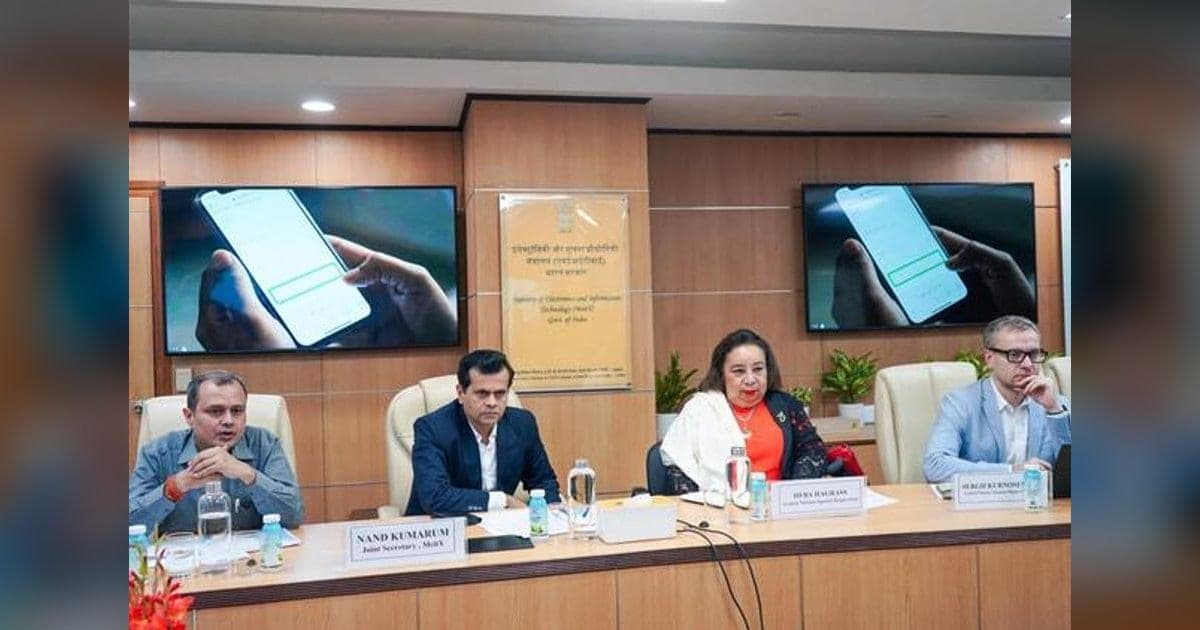
MeitY held a session with UN Special Rapporteur Heba Hagrass on digital accessibility on 20 November 2026, during her visit to India from 16 to 25 November.
Why in News
On 20 November 2026 MeitY held a session on digital accessibility with Heba Hagrass, the UN Special Rapporteur on the Rights of Persons with Disabilities, as part of her official visit to India from 16 to 25 November 2026.
The Ministry of Electronics and Information Technology (MeitY) held an interactive session on digital accessibility with Heba Hagrass, the United Nations Special Rapporteur on the Rights of Persons with Disabilities. The meeting took place at CeG Hall in the ministry and was reported on 20 November 2026. It formed part of the Special Rapporteur's official visit to India from 16 to 25 November 2026.
Who took part
Besides ministry officials, the Ministry of External Affairs joined in, along with representatives of the National Informatics Centre (NIC), Standardisation Testing and Quality Certification (STQC), the Centre for Development of Advanced Computing (C-DAC) and the National e-Governance Division (NeGD). The session was led by Nand Kumarum, Joint Secretary in the ministry and President and CEO of NeGD, and opened with a short film on accessibility before a detailed presentation.
The legal backbone
The presentation set out the framework India relies on. India ratified the Convention on the Rights of Persons with Disabilities in 2007. The Rights of Persons with Disabilities Act, 2016 requires that information and communication technology be accessible, and MeitY notified the National Policy on Universal Electronic Accessibility in 2013. The ministry described its own role as largely facilitative, working through standards, guidelines and tools rather than direct enforcement.
Standards, testing and tools
- Standards: GIGW 3.0, the Guidelines for Indian Government Websites and Apps, aligned with WCAG 2.1 Level AA, and Indian Standard IS 17802 on the accessibility of ICT products and services, made enforceable through the RPwD Rules by the 2023 amendment
- Certification: STQC certification, with 73 Ministries and Departments certified, plus the SugamyaWeb and SATYA tools for testing websites and apps
- Design support: UX4G, which has given audit and design support to over 400 government websites and apps, and whose accessibility widget is in use on over 1,800 websites
- Inclusive services: Bhashini for multilingual access, UMANG offering citizen services in 23 languages, and the Namaste Bharat AI citizen guide with voice and multilingual support
- Assistive learning: Divyang Sarthi, a platform carrying virtual-reality learning content for persons with intellectual disabilities
What the ministry committed to
MeitY said it would keep updating accessibility guidelines in line with international standards, support certification and compliance, build the capacity of officials and developers, and share India's tools and experience with others. It added that work on digital assistive solutions would continue, with the aim of widening inclusion.
Important Facts
| Visitor | Heba Hagrass, UN Special Rapporteur on the Rights of Persons with Disabilities |
|---|---|
| Visit to India | 16 to 25 November 2026 |
| Host ministry | Ministry of Electronics and Information Technology (MeitY) |
| Session led by | Nand Kumarum, Joint Secretary, MeitY, and President and CEO, NeGD |
| Convention ratified | Convention on the Rights of Persons with Disabilities, ratified by India in 2007 |
| Key law and policy | Rights of Persons with Disabilities Act, 2016, and National Policy on Universal Electronic Accessibility, 2013 |
| Standards | GIGW 3.0 aligned with WCAG 2.1 Level AA; Indian Standard IS 17802 for ICT accessibility |
| Certification | STQC certification held by 73 Ministries and Departments |
| UX4G | Audit and design support to over 400 government websites and apps; widget on over 1,800 websites |
| Inclusive platforms | Bhashini, UMANG in 23 languages, Namaste Bharat AI guide, Divyang Sarthi |
Exam Point of View
Remember the visitor's name and office (Heba Hagrass, UN Special Rapporteur on the Rights of Persons with Disabilities), the visit dates (16 to 25 November 2026) and the ministry (MeitY). Note the legal milestones, ratification of the UN Convention in 2007, the RPwD Act of 2016 and the National Policy on Universal Electronic Accessibility of 2013, plus the tools GIGW 3.0, IS 17802, SugamyaWeb, SATYA, UX4G, Bhashini, UMANG and Divyang Sarthi.
Practice Questions
Heba Hagrass, who held a session with MeitY on digital accessibility in November 2026, holds which position?
- A.UN Special Rapporteur on the Rights of Persons with Disabilities
- B.UN Special Rapporteur on the Right to Privacy
- C.UNESCO Director-General
- D.UN High Commissioner for Human Rights
Show answer
Heba Hagrass holds that mandate, and the interactive session with the Ministry of Electronics and Information Technology was devoted precisely to advancing digital accessibility and inclusion for persons with disabilities in India.
Read the full explanation →In which year did India ratify the Convention on the Rights of Persons with Disabilities?
- A.2007
- B.2013
- C.2016
- D.2023
Show answer
India ratified the United Nations Convention on the Rights of Persons with Disabilities in that year, and the step forms the foundation of the legal framework presented to the Special Rapporteur.
Read the full explanation →GIGW 3.0, the Guidelines for Indian Government Websites and Apps, is aligned with which international standard?
- A.ISO 9001
- B.WCAG 2.1 Level AA
- C.IEEE 802.11
- D.ATSC 3.0
Show answer
The Guidelines for Indian Government Websites and Apps are aligned with that benchmark, so that government websites and applications meet an internationally recognised measure of accessibility rather than a purely domestic one.
Read the full explanation →Frequently Asked Questions
Who is Heba Hagrass?
She is the United Nations Special Rapporteur on the Rights of Persons with Disabilities. She was on an official visit to India from 16 to 25 November 2026, during which MeitY held an interactive session with her on digital accessibility and inclusion.
When did India ratify the Convention on the Rights of Persons with Disabilities?
India ratified it in 2007. The Rights of Persons with Disabilities Act, 2016 then required accessible information and communication technology, and MeitY had notified the National Policy on Universal Electronic Accessibility in 2013.
What is GIGW 3.0?
GIGW 3.0 stands for the Guidelines for Indian Government Websites and Apps, version three. It is aligned with WCAG 2.1 Level AA. Alongside it, Indian Standard IS 17802 covers accessibility of ICT products and services and was made enforceable through the RPwD Rules by the 2023 amendment.
What is UX4G?
It is a design support initiative that has provided user experience audits and design help to over 400 government websites and apps. Its ready-to-use accessibility widget is deployed on over 1,800 websites.
Sources
- https://www.pib.gov.in/PressReleasePage.aspx?PRID=2338864 (opens in a new tab) — Press Information Bureau
Current Affairs 20 November 2026
- Swachh Shauchalay Garimamay Bhavishya Campaign Launched by DDWSGovernment Schemes
- CGST Faridabad Seizes Four Pan Masala Machines in RewariEconomy
- Cheetah KOMG 3 Has Four Cubs, India's Cheetah Count Hits 62Environment
- Basmati Rice Exports Rise 25.4% to US$ 1.60 Billion in Half-YearEconomy
- Aadi Mahotsav 2026 at Dilli Haat With 115 Tribal StallsNational
- World Television Day: India's Analogue to Digital TV JourneyImportant Days
- NFDC Ties Up With Svayam for Accessible 57th IFFI in GoaNational
- President Murmu Attends 12th ABVIMS and Dr RML Hospital ConvocationNational
Related Current Affairs
- Important Days
World Television Day: India's Analogue to Digital TV Journey
20 November 2026 · 2 min read
- International
India and Japan Hold Fourth 2+2 Ministerial Meeting in Tokyo
19 November 2026 · 2 min read
- Environment
India Seeks an Open, Equitable Second Global Stocktake at COP31
18 November 2026 · 2 min read
- Summits & Conferences
India Presses Climate Justice, CBDR-RC at COP31 Antalya
18 November 2026 · 2 min read

Related GK
- Forts and Palaces of Rajasthan: Builders and Key Facts
21 October 2026 · Rajasthan
- Devotional Music of India: Bhajan, Kirtan and Qawwali
17 October 2026 · Art & Culture
- Chandigarh GK: Capitol Complex, Sectors and Static Facts
12 October 2026 · Indian States & UTs
Take the Quiz
- Current Affairs Quiz
State Exams Current Affairs Quiz: 20 November 2026
25 questions25 minutesStart Quiz