
India Targets 30 Million Tonnes of Fish Production in Five Years
The development phase of a national action plan for inland small-scale fisheries was launched as India set a fish production target of 30 million tonnes.
Why in News
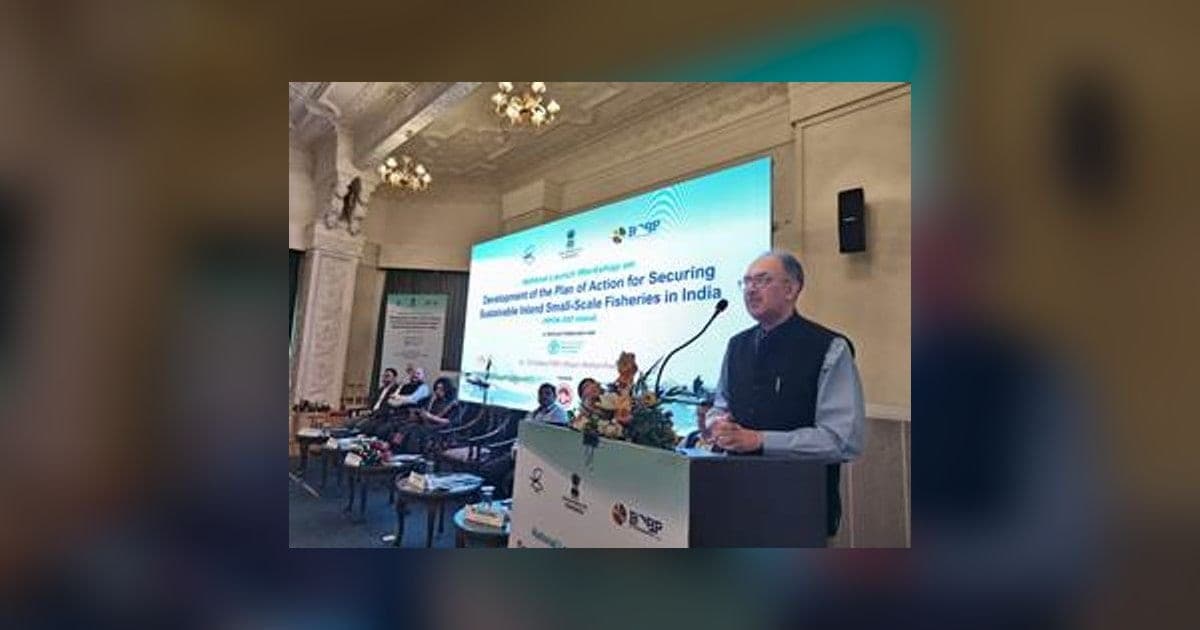
On 23 October 2026 the Department of Fisheries launched the development phase of India's National Plan of Action for small-scale inland fisheries and announced a fish production target of 30 million tonnes in five years.
India has entered the development phase of a separate National Plan of Action (NPOA) for small-scale inland fisheries, a plan aimed at better livelihoods, closer coordination and sounder management of freshwater resources. Abhilaksh Likhi, Secretary in the Department of Fisheries, formally launched the phase at a two-day national workshop in Bhopal.
Who is behind the plan
The plan is being drawn up within the framework of the Food and Agriculture Organization of the United Nations. The Union Department of Fisheries is leading the work in collaboration with the Bay of Bengal Programme Inter-Governmental Organisation (BOBP-IGO). The workshop set out the priorities for the development phase, among them a proposed round of consultations with fishing communities and other stakeholders, and experts from fisheries institutions prepared a framework of activities.
The production and export targets
The Secretary said India has set a target of 30 million tonnes of fish production over the next five years, with seafood exports expected to rise to Rs 1.25 lakh crore. At present annual fish production stands at 19.7 million tonnes, of which inland fisheries supply roughly three-fourths, while seafood exports have crossed Rs 70,000 crore. He stressed that growth in output and in exports must go together with securing the livelihoods of small-scale fishers.
What the plan must address
- Fishing rights and the management of resources.
- Employment and decent work.
- Gender equality.
- Value chains and post-harvest trade.
- Disaster risks and climate change.
These areas were listed by P. Krishnan, Director of BOBP-IGO, as the ground the development phase is expected to cover.
Climate and water quality
The Secretary flagged climate change and worsening water quality as the main threats to inland fisheries, pointing to problems such as falling oxygen levels in water bodies. The plan, he said, must build climate resilience and should draw on the experience of fishing communities who meet these problems first hand. He also called for a mission-mode outreach programme so that the document reaches fishing communities across the country and translates into practical gains in livelihoods rather than staying inside government offices.
Scope and next step
The proposed plan covers fisheries in rivers, canals, reservoirs, lakes, floodplain wetlands, tanks and cold-water systems. The Secretary suggested that India's varied inland fisheries could serve as a model for the FAO to pilot region-specific approaches and carry the lessons to wider geographies. The plan will be finalised through stakeholder consultations before a public launch next month, after which implementation begins. Madhya Pradesh Fisheries Secretary Swantantra Kumar Singh, Joint Secretary Gunjan Krishna and FAO Project Officer Giulia Gorelli also spoke.
Important Facts
| Plan | National Plan of Action (NPOA) for small-scale inland fisheries, development phase |
|---|---|
| Launched by | Abhilaksh Likhi, Secretary, Department of Fisheries |
| Venue | Two-day national workshop at Bhopal |
| International framework | Food and Agriculture Organization of the United Nations (FAO) |
| Partner organisation | Bay of Bengal Programme Inter-Governmental Organisation (BOBP-IGO) |
| Production target | 30 million tonnes in the next five years |
| Export target | Rs 1.25 lakh crore of seafood exports |
| Present production | 19.7 million tonnes a year, inland share about three-fourths |
| Present exports | Above Rs 70,000 crore |
| Water bodies covered | Rivers, canals, reservoirs, lakes, floodplain wetlands, tanks and cold-water systems |
| Director of BOBP-IGO | P. Krishnan |
Exam Point of View
Remember the targets: 30 million tonnes of fish production in five years and seafood exports of Rs 1.25 lakh crore, against present production of 19.7 million tonnes and exports above Rs 70,000 crore. Also remember that inland fisheries give about three-fourths of production, that the plan is framed under the FAO with BOBP-IGO, and the name of the Fisheries Secretary, Abhilaksh Likhi.
Practice Questions
What fish production target has India set for the next five years, as announced by the Fisheries Secretary?
- A.20 million tonnes
- B.25 million tonnes
- C.30 million tonnes
- D.40 million tonnes
Show answer
Abhilaksh Likhi, Secretary in the Department of Fisheries, said India has set a target of 30 million tonnes of fish production over the next five years, and that seafood exports are expected to rise to Rs 1.25 lakh crore in the same period.
Read the full explanation →The National Plan of Action for small-scale inland fisheries is being developed with which inter-governmental organisation?
- A.Bay of Bengal Programme Inter-Governmental Organisation
- B.Indian Ocean Rim Association
- C.Asian Fisheries Society
- D.World Organisation for Animal Health
Show answer
The initiative is led by the Union Department of Fisheries in collaboration with this body, and the whole plan is being prepared within the framework of the Food and Agriculture Organization of the United Nations.
Read the full explanation →Where was the development phase of the National Plan of Action for small-scale inland fisheries launched?
- A.Chennai
- B.Kochi
- C.Bhopal
- D.New Delhi
Show answer
Experts from fisheries institutions and other stakeholders at the workshop prepared a framework of activities for this phase, and a programme of consultations with fishing communities was proposed.
Read the full explanation →Frequently Asked Questions
What fish production target has India set for the next five years?
30 million tonnes, with seafood exports expected to rise to Rs 1.25 lakh crore. Present annual production is 19.7 million tonnes and exports have crossed Rs 70,000 crore.
Under which international framework is the plan being prepared?
Under the framework of the Food and Agriculture Organization of the United Nations. The Union Department of Fisheries is leading the work with the Bay of Bengal Programme Inter-Governmental Organisation, or BOBP-IGO.
Which water bodies does the plan cover?
Fisheries in rivers, canals, reservoirs, lakes, floodplain wetlands, tanks and cold-water systems. The development phase will take up fishing rights, resource management, employment and decent work, gender equality, value chains, post-harvest trade, disaster risks and climate change.
What share of India's fish production comes from inland fisheries?
About three-fourths of the annual output of 19.7 million tonnes, which is why a separate plan of action for small-scale inland fisheries matters for livelihoods and for exports.
Sources
- https://www.pib.gov.in/PressReleasePage.aspx?PRID=2327362 (opens in a new tab) — Press Information Bureau
Current Affairs 23 October 2026
- AgriVoltaics World Conference 2026 Meets in New DelhiEnvironment
- Ameena Nazreen Wins Global Youth Institute Award in USAAwards & Honours
- Indo-Pacific Regional Dialogue 2026 to Be Held in New DelhiDefence
- PLFS Sampling Design to Change from January 2027: NSOReports & Indices
- C-DOT Opens Sixth Centre of Excellence at IIT (BHU) VaranasiScience & Technology
- C-DAC and Bank of India Sign Quantum Banking MoUBanking & Finance
- PM Modi Opens Chinmaya Amrit Mahotsav Global SammelanNational
- Special Campaign 6: Textiles, Jal Shakti Report ProgressNational
Related Current Affairs
- Summits & Conferences
GI-AI4FS Second Meeting Held at IMC 2026 in New Delhi
10 October 2026 · 2 min read
Related GK
- Forts and Palaces of Rajasthan: Builders and Key Facts
21 October 2026 · Rajasthan
- Devotional Music of India: Bhajan, Kirtan and Qawwali
17 October 2026 · Art & Culture
- Chandigarh GK: Capitol Complex, Sectors and Static Facts
12 October 2026 · Indian States & UTs
Take the Quiz
- Current Affairs Quiz
Banking Current Affairs Quiz: 23 October 2026
25 questions25 minutesStart Quiz