
ICAR and FCI Sign MoU on Safer Foodgrain Fumigation Methods
ICAR and FCI signed an MoU on 30 September 2026 to research alternative fumigation for storage pests in wheat and rice, with Phase-I run by ICAR-CIPHET, Ludhiana.
Why in News
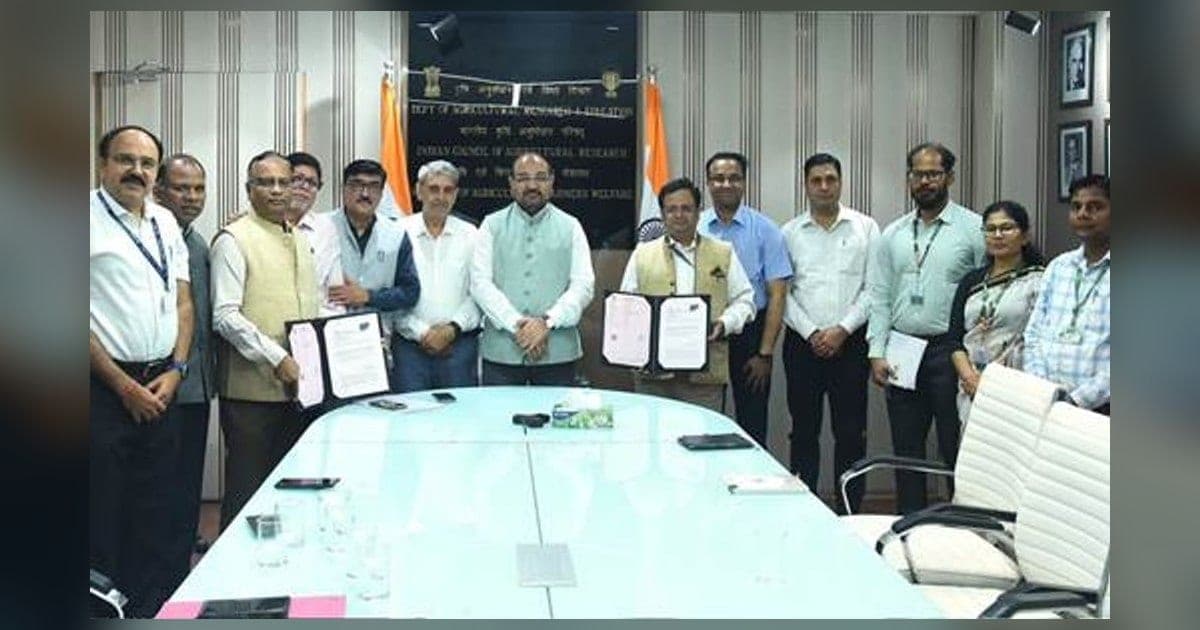
An MoU between ICAR and FCI, announced on 1 October 2026 and signed on 30 September 2026, starts research on safer and more sustainable alternatives to chemical fumigation in wheat and rice storage.
The Indian Council of Agricultural Research (ICAR) and the Food Corporation of India (FCI) signed a Memorandum of Understanding on 30 September 2026 for research on alternative fumigation technologies to manage storage pests in wheat and rice. The study is supported by the Department of Food and Public Distribution under the Ministry of Consumer Affairs, Food and Public Distribution.
Who runs it
The two-year Phase-I project will be carried out by ICAR–Central Institute of Post-Harvest Engineering and Technology (CIPHET), Ludhiana. It was signed by Dr Nachiket Kotwaliwale, Director of ICAR-CIPHET, and Dr A. K. Sinha, Executive Director (Quality Control), FCI, in the presence of Dr M. L. Jat, Secretary, DARE and Director General, ICAR.
The problem being addressed
India’s grain reserves have long depended on aluminium phosphide and malathion for post-harvest pest control. Repeated use has pushed pest resistance to 72 to 100 per cent in key states, forced more frequent fumigation cycles and raised operating costs, while the chemicals carry respiratory risks for workers and long-term ecological risks.
The three trials in Phase-I
- Nitrogen gas fumigation, above 99 per cent purity, for wheat stored in metal silos
- Carbon dioxide combined with phosphine for wheat and rice bagged at FCI and CWC warehouses
- Carbon dioxide fumigation for bagged wheat and rice kept inside hermetic covers
What follows
After the two-year pilot, Phase-II will become a one-year trial at several locations across different agro-climatic zones, so that region-specific Standard Operating Procedures can be framed. The aim is a set of scientifically validated, scalable and sustainable substitutes for conventional chemical fumigation, answering worries about rising pest resistance, exposure at work, environmental damage and fumigant residues. For an aspirant the signing date, the two bodies, the implementing institute and its city, and the three gases under trial are the examinable core.
The signing was attended by deputy and assistant directors general of the council, along with quality control officers of the corporation and the lead investigator of the project.
Important Facts
| Agreement | MoU between ICAR and the Food Corporation of India |
|---|---|
| Signed on | 30 September 2026 |
| Supported by | Department of Food and Public Distribution, Ministry of Consumer Affairs, Food and Public Distribution |
| Phase-I duration | Two years |
| Implementing institute | ICAR-Central Institute of Post-Harvest Engineering and Technology (CIPHET), Ludhiana |
| Chemicals being replaced | Aluminium phosphide (ALP) and malathion |
| Pest resistance in key states | 72 to 100 per cent |
| Gases under trial | Nitrogen (above 99 per cent), carbon dioxide, and carbon dioxide with phosphine |
| Phase-II | One-year multi-location trial for region-specific SOPs |
| Signatories | Dr Nachiket Kotwaliwale (ICAR-CIPHET) and Dr A. K. Sinha (FCI) |
Exam Point of View
Remember the two signatories ICAR and FCI, the signing date of 30 September 2026, the implementing institute ICAR-CIPHET at Ludhiana, the supporting department, the two chemicals being replaced, the resistance figure of 72 to 100 per cent and the three gases on trial.
Practice Questions
Which institute will implement Phase-I of the ICAR-FCI research project on alternative fumigation?
- A.ICAR-Indian Agricultural Research Institute, New Delhi
- B.ICAR-CIPHET, Ludhiana
- C.ICAR-Indian Institute of Wheat and Barley Research, Karnal
- D.Central Warehousing Corporation, New Delhi
Show answer
Correct answer: B. ICAR-CIPHET, Ludhiana
Explanation
The correct answer is ICAR-CIPHET, Ludhiana, the Central Institute of Post-Harvest Engineering and Technology, which will carry out the two-year Phase-I of the project on alternatives to chemical fumigation in wheat and rice. Option A is wrong because the Indian Agricultural Research Institute works on crop improvement and allied research and was not named as the implementing body here. Option C is wrong because, although wheat is central to the trials, the institute at Karnal does not figure in this agreement, which was signed with a post-harvest engineering institute precisely because storage and fumigation are post-harvest problems. Option D is wrong because the Central Warehousing Corporation appears only as one of the warehousing systems where bagged grain will be treated during a trial, not as the implementing institute. The MoU itself was signed on 30 September 2026.
Which two chemicals has India’s foodgrain storage relied on for post-harvest pest control?
- A.Aluminium phosphide and malathion
- B.Nitrogen and carbon dioxide
- C.Endosulfan and DDT
- D.Phosphine and chlorpyrifos
Show answer
Correct answer: A. Aluminium phosphide and malathion
Explanation
The correct answer is aluminium phosphide and malathion. For decades these two have been the mainstay of post-harvest pest control in the country’s grain reserves, and their widespread, repeated use is what pushed pest resistance to 72 to 100 per cent in key states while raising fumigation cycles and costs. Option B is wrong because nitrogen and carbon dioxide are the alternatives being tested under this project, not the chemicals being replaced, which is the exact swap an exam setter would use. Option C is wrong because neither of those insecticides is named in connection with this grain storage programme. Option D is only partly right and therefore wrong as a whole: phosphine appears in the trials in combination with carbon dioxide, while chlorpyrifos has no place in this story at all.
What will the second phase of the ICAR-FCI fumigation project involve?
- A.A two-year laboratory study at a single institute
- B.A one-year multi-location trial across agro-climatic zones
- C.Immediate nationwide rollout of nitrogen fumigation
- D.A review of existing chemical fumigation rules only
Show answer
Correct answer: B. A one-year multi-location trial across agro-climatic zones
Explanation
The correct answer is a one-year multi-location trial across agro-climatic zones. Phase-II follows the two-year Phase-I pilot and is designed to test the methods in varied conditions so that region-specific Standard Operating Procedures can be established. Option A is wrong because the two-year, single-institute work describes Phase-I, which ICAR-CIPHET at Ludhiana will run, and not the phase that comes after it. Option C is wrong because no immediate nationwide rollout was announced; the whole point of a phased design is to validate the gases first, including nitrogen above 99 per cent purity in metal silos. Option D is wrong because the project is a field research programme on alternative technologies, aimed at scalable and sustainable substitutes, rather than a paper review of the existing rules.
Frequently Asked Questions
Which institute will implement Phase-I of the ICAR-FCI project?
ICAR-Central Institute of Post-Harvest Engineering and Technology (CIPHET), Ludhiana. Phase-I runs for two years and tests alternatives to chemical fumigation in wheat and rice.
Which chemicals has grain storage in India relied on so far?
Aluminium phosphide and malathion. Repeated use has driven pest resistance to 72 to 100 per cent in key states and raised both fumigation cycles and operating costs.
What will Phase-II of the project do?
It will be a one-year multi-location trial across different agro-climatic zones, meant to establish region-specific Standard Operating Procedures for the new fumigation methods.
Sources
- https://www.pib.gov.in/PressReleasePage.aspx?PRID=2317785 (opens in a new tab) — Press Information Bureau
Current Affairs 1 October 2026
- Swachhata Hi Seva 2026: Health Ministry Holds ShramdaanGovernment Schemes
- Narendra Bhooshan Assumes Charge as MoEFCC SecretaryAppointments
- Jal Jeevan Mission 2.0 Sets Aside Rs 5,000 Crore for Tribal VillagesGovernment Schemes
- Special Campaign 6.0 Begins 2 October With E-Waste FocusNational
- Surya Kiran Air Show Sought at Lonar, Ajanta and ElloraNational
- PM Modi Joins UPSC Centenary Celebrations at Bharat MandapamNational
- INS Trishul Joins 24th India-France Exercise Varuna at ToulonDefence
- 5th Kautilya Economic Conclave: Resilience in an Age of FluxSummits & Conferences
Related Current Affairs
- Science & Technology
CHIME Telescope Makes First Solo Detection of Hydrogen Glow
30 September 2026 · 2 min read
- Science & Technology
CAG and BHASHINI Launch AI Translation Tool for Audit Papers
30 September 2026 · 2 min read
- Science & Technology
TRAI Releases Mobile Network Drive Test Findings for Sonitpur
30 September 2026 · 2 min read
- Science & Technology
MHI Industry Accelerator Impact Report Released at Navigyaan
30 September 2026 · 2 min read
- Science & Technology
UIDAI Launches Five Initiatives at Aadhaar Samvaad Kolkata
29 September 2026 · 2 min read
- Science & Technology
TDB Backs Indigenous Multi-Gas Sensor With Rs 37.51 Crore
29 September 2026 · 2 min read



Related GK
- Himachal Pradesh GK: Formation, Rivers and Exam Facts
1 October 2026 · Indian States & UTs
- Uttarakhand GK: Formation, Rivers, Parks and Exam Facts
1 October 2026 · Indian States & UTs
- Indian Railways Zones and Facts: Complete Exam Notes
1 October 2026 · Static GK
Take the Quiz
- Current Affairs Quiz
State Exams Current Affairs Quiz: 1 October 2026
25 questions25 minutesStart Quiz