
TDB Backs NeoSeeker Metals Critical Minerals Recycling Project
The Technology Development Board signed an agreement with Neo Seekermetals of Hyderabad under the RDI Fund to recover critical metals from e-waste.
Why in News
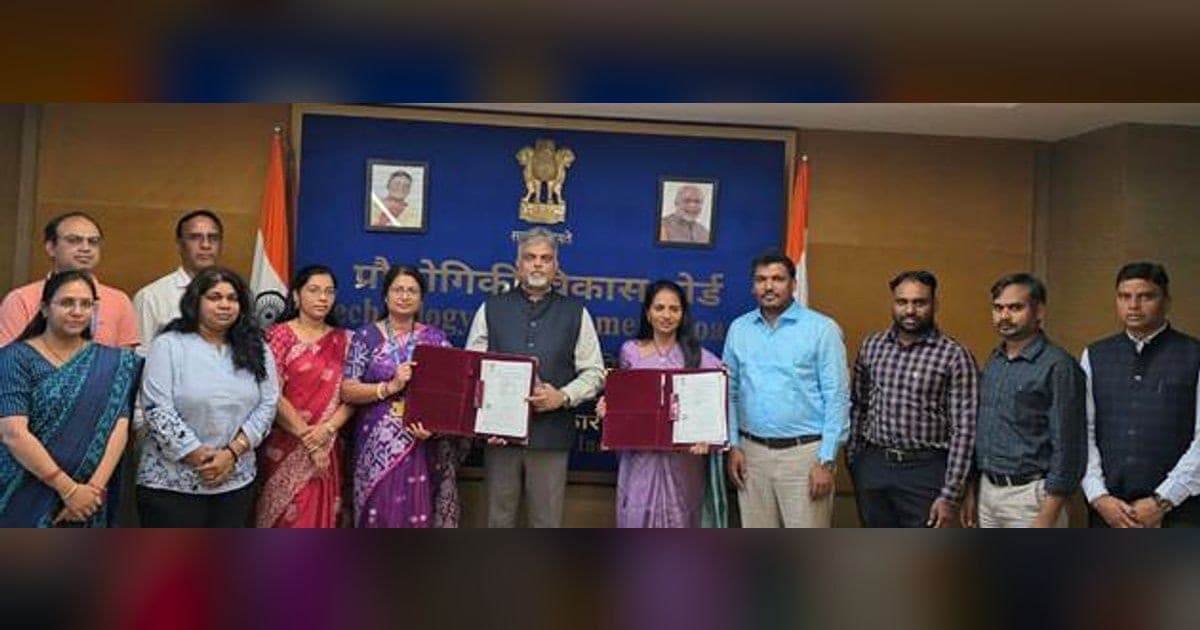
On 16 November 2026 the Department of Science and Technology announced that its Technology Development Board had signed an agreement with Neo Seekermetals of Hyderabad under the RDI Fund to develop and commercialise an indigenous technology for recovering critical metals from e-waste and lithium-ion battery waste.
The Technology Development Board (TDB), which works under the Department of Science and Technology (DST), has signed an agreement with M/s Neo Seekermetals Pvt. Ltd. of Hyderabad, Telangana, under the Research, Development and Innovation (RDI) Fund. The money will help the company develop and then commercialise an Indian technology that pulls critical metals out of electronic waste and spent lithium-ion batteries.
The project
The project is titled Extraction of Critical Metals by Recycling of E-Waste and Lithium-Ion Battery Waste. The company works through an integrated, patented recycling route built to handle both streams of waste in one process. The aim is to take back valuable metals and battery materials from these mixed and difficult feedstocks, so that material heading for a landfill returns to the economy as usable input.
Cost and the funding instrument
| Item | Detail |
| Project title | Extraction of Critical Metals by Recycling of E-Waste and Lithium-Ion Battery Waste |
| Company | M/s Neo Seekermetals Pvt. Ltd., Hyderabad, Telangana |
| Total project cost | Rs 20 crore |
| Approved under RDI Fund | Rs 10 crore |
| Instrument | Optionally Convertible Debt (OCD) |
| Technology Readiness Level | From TRL-5 to TRL-9 |
Half the cost of the project therefore comes from the RDI Fund, and it comes as Optionally Convertible Debt rather than as a grant, an instrument that lets the lender turn the debt into equity if it chooses.
From TRL-5 to TRL-9
Technology Readiness Level is the ladder used to describe how far a technology has travelled from the laboratory. This project sets out to lift the recycling process from TRL-5 to TRL-9, the step that separates a validated process from one deployed at commercial scale. Reaching the top of that ladder is what turns a patented idea into a plant that can run on industrial volumes of waste.
Why it matters
India is widening its presence in electric mobility, clean energy, electronics and advanced manufacturing, and each of these pulls hard on critical minerals. That leaves the country with two problems at once: securing a steady and sustainable supply of strategic minerals, and dealing with the swelling heap of electronic waste and end-of-life batteries. Recovery technology answers both from the same side.
TDB Secretary Rajesh Kumar Pathak said the shift to clean energy and advanced technology will need secure and sustainable access to critical minerals, and that building Indian capability to win these resources back from e-waste and used batteries is an important part of that effort. Through the RDI Fund, he said, the Board is supporting technologies that pair innovation with strategic value, turning waste streams into resources and strengthening the base of a circular economy. The company said the support will push its technology towards commercial deployment and help build indigenous capability in resource recovery.
Important Facts
| Funding body | Technology Development Board (TDB), Department of Science and Technology |
|---|---|
| Fund | Research, Development and Innovation (RDI) Fund |
| Company | M/s Neo Seekermetals Pvt. Ltd., Hyderabad, Telangana |
| Project | Extraction of Critical Metals by Recycling of E-Waste and Lithium-Ion Battery Waste |
| Total cost | Rs 20 crore |
| RDI Fund share | Rs 10 crore |
| Instrument | Optionally Convertible Debt (OCD) |
| Technology target | TRL-5 to TRL-9, that is, commercial-scale deployment |
| TDB Secretary | Rajesh Kumar Pathak |
Exam Point of View
Remember the funding body (TDB under DST), the fund (Research, Development and Innovation Fund), the company and its city (Neo Seekermetals, Hyderabad, Telangana), the cost split of Rs 20 crore total and Rs 10 crore from the fund, the instrument (Optionally Convertible Debt), the TRL jump from 5 to 9, and the TDB Secretary, Rajesh Kumar Pathak.
Practice Questions
Under which fund has the Technology Development Board signed the agreement with Neo Seekermetals?
- A.Research, Development and Innovation Fund
- B.National Clean Energy Fund
- C.Technology Acquisition Fund
- D.National Mineral Exploration Trust
Show answer
The agreement with M/s Neo Seekermetals Pvt. Ltd.
Read the full explanation →Where is Neo Seekermetals Pvt. Ltd., the company in the TDB agreement, based?
- A.Hyderabad, Telangana
- B.Pune, Maharashtra
- C.Bengaluru, Karnataka
- D.Chennai, Tamil Nadu
Show answer
The press release names M/s Neo Seekermetals Pvt. Ltd.
Read the full explanation →What is the total cost of the critical metals recycling project and the share approved under the RDI Fund?
- A.Rs 10 crore in all, with Rs 5 crore from the fund
- B.Rs 20 crore in all, with Rs 10 crore from the fund
- C.Rs 50 crore in all, with Rs 25 crore from the fund
- D.Rs 20 crore in all, with the whole amount from the fund
Show answer
The project titled Extraction of Critical Metals by Recycling of E-Waste and Lithium-Ion Battery Waste carries a total cost of Rs 20 crore, and the Technology Development Board has approved Rs 10 crore of it under the Research, Development and Innovation Fund, which means the fund meets half the cost.
Read the full explanation →The project aims to advance the recycling technology from TRL-5 to which level?
- A.TRL-6
- B.TRL-7
- C.TRL-8
- D.TRL-9
Show answer
Technology Readiness Level is the scale used to say how far a technology has moved out of the laboratory, and this project aims to carry the recycling process from TRL-5 to TRL-9, the level at which a technology is ready for deployment at commercial scale.
Read the full explanation →Frequently Asked Questions
What is the NeoSeeker Metals project supported by TDB about?
It is a project titled Extraction of Critical Metals by Recycling of E-Waste and Lithium-Ion Battery Waste. M/s Neo Seekermetals Pvt. Ltd. of Hyderabad, Telangana, will develop and commercialise an integrated, patented process that recovers critical metals and battery materials from electronic waste and spent lithium-ion batteries, taking the technology from TRL-5 to TRL-9.
How much does the project cost and how much comes from the RDI Fund?
The total project cost is Rs 20 crore, of which Rs 10 crore has been approved under the Research, Development and Innovation Fund. The assistance will be extended through Optionally Convertible Debt rather than as an outright grant.
Which body signed the agreement and under which ministry does it work?
The Technology Development Board signed it. TDB functions under the Department of Science and Technology in the Ministry of Science and Technology. Its Secretary, Rajesh Kumar Pathak, said the Board is using the RDI Fund to support technologies that combine innovation with strategic relevance and strengthen a circular economy.
Sources
Current Affairs 16 November 2026
- India-Egypt 7th Joint Trade Committee Meets at Ministerial LevelInternational
- Modi Departs for 23rd ASEAN-India Summit in ManilaSummits & Conferences
- WPI Inflation Climbs to 12.29 Per Cent in October 2026Economy
- 31st CII Partnership Summit 2026 Held in VisakhapatnamSummits & Conferences
- Vice-President Opens 17th Odisha Assembly Orientation ProgrammeState News
- Kutch Earthquake 2001: Rebuilding, GSDMA and Key FiguresNational
- COVID-19 Response: 22.89 Crore Precaution Doses AdministeredNational
- National FRA Digital Platform Launched for Forest Rights ClaimsGovernment Schemes
Related Current Affairs
- Science & Technology
India's Space Economy at USD 9 Billion with 440 Start-ups
15 November 2026 · 2 min read
- Science & Technology
Adi Vaani Now Translates Nine Tribal Languages Using AI
15 November 2026 · 3 min read
- Science & Technology
India Commits 7 Million Euros to Elettra 2.0 Synchrotron, Italy
14 November 2026 · 2 min read
- Science & Technology
Consent Manager Registration Under DPDP Act Comes Into Effect
14 November 2026 · 2 min read
- Science & Technology
COSMOS Planetarium Mysuru: India's First LED Dome Opened
13 November 2026 · 2 min read
Related GK
- Famous Personalities of Rajasthan: Exam Notes
28 October 2026 · Rajasthan
- Districts and Divisions of Rajasthan: Exam Notes
28 October 2026 · Rajasthan
- Tourism and World Heritage Sites of Rajasthan Notes
27 October 2026 · Rajasthan
Take the Quiz
- Current Affairs Quiz
State Exams Current Affairs Quiz: 16 November 2026
25 questions25 minutesStart Quiz