
5th Swachh Vayu Sarvekshan Awards Given on Swachh Vayu Diwas 2026
The Environment Ministry gave the 5th Swachh Vayu Sarvekshan awards on Swachh Vayu Diwas 2026 and released a compendium of best practices under NCAP.
Why in News
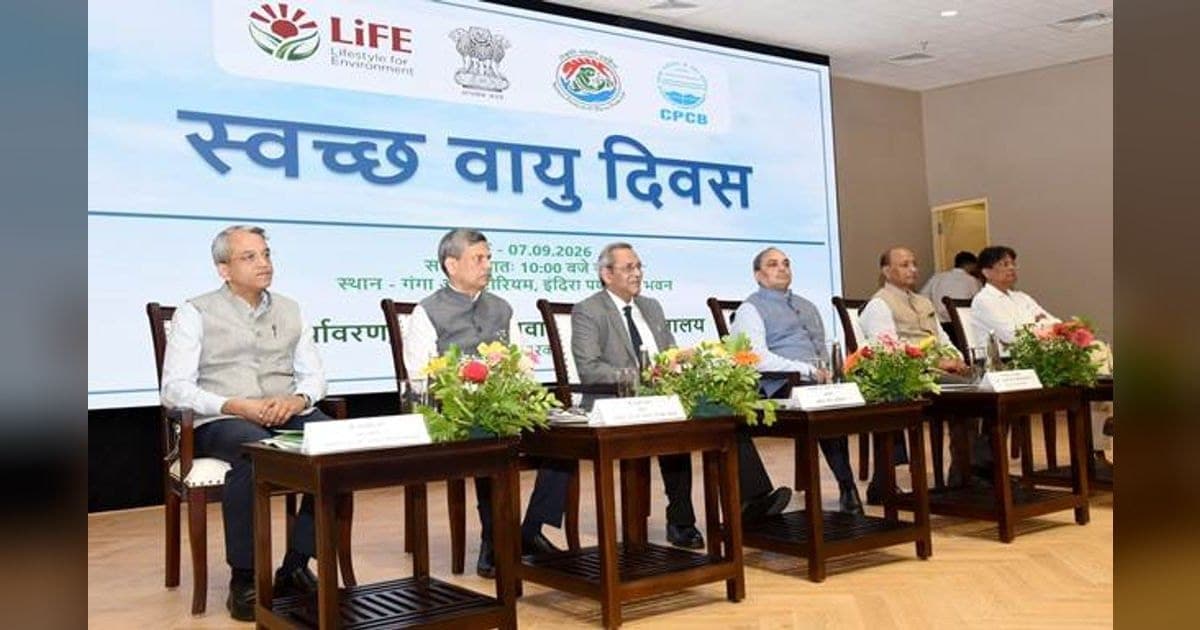
On 7 September 2026, the International Day of Clean Air for Blue Skies, the Environment Ministry held Swachh Vayu Diwas and conferred the 5th Swachh Vayu Sarvekshan awards on the best performing cities and wards under the National Clean Air Programme.
The Ministry of Environment, Forest and Climate Change held Swachh Vayu Diwas 2026 on 7 September 2026. The date is also the International Day of Clean Air for Blue Skies. Justice Prakash Shrivastava, Chairperson of the National Green Tribunal, was the chief guest and presided over the event.
Who spoke
Justice Shrivastava said clean air is a basic need and not a luxury. He said development and the protection of the environment can move together. He called air pollution a hard problem because it ignores political boundaries and comes from many sources at once, and he named urban and rural local bodies as the frontline institutions. Shri Tanmay Kumar, Secretary of the ministry, said the fight against air pollution is a continuous programme and needs a citizen-led movement in mission mode. The Chairperson of the Commission for Air Quality Management, Shri Rajesh Verma, and the Chairperson of the Central Pollution Control Board, Shri Amandeep Garg, were also present.
How the awards were decided
The framework for the Swachh Vayu Sarvekshan was issued in 2022-23. It scores a city on road dust, solid waste management, vehicular emissions, industrial pollution, construction and demolition waste, other emissions such as DG sets, and awareness work. All 130 cities under the National Clean Air Programme took part, sorted into three groups by population: below three lakh, three to ten lakh, and above ten lakh. Cities first assessed themselves, the State-level Monitoring Committee approved the entry, the Central Pollution Control Board evaluated it, independent committees verified it in the field, and ten best performing cities were then chosen.
What NCAP has achieved
| Measure | Figure |
| Cities under NCAP | 130 cities in 24 States and Union Territories |
| Performance linked grant | Rs 16,425 crore released to the 130 cities |
| Cities with better PM10 levels | 108 |
| Cities with over 20 per cent fall in PM10 | 72 |
| Cities with over 40 per cent fall | 26 |
| Cities meeting NAAQS | 14 |
All these gains are measured for 2025-26 against the levels of the financial year 2017-18. The PRANA portal tracks air quality management for the 130 cities. A Compendium of Best Management Practices under NCAP was also released so that one city can copy what worked in another.
Important Facts
| Occasion | Swachh Vayu Diwas 2026, on the International Day of Clean Air for Blue Skies |
|---|---|
| Date | 7 September 2026 |
| Organiser | Ministry of Environment, Forest and Climate Change |
| Chief guest | Justice Prakash Shrivastava, Chairperson, National Green Tribunal |
| Awards | 5th Swachh Vayu Sarvekshan awards to best performing cities and wards |
| NCAP coverage | 130 cities in 24 States and Union Territories |
| Grant released | Rs 16,425 crore as performance linked grant |
| PM10 improvement | 108 cities improved; 72 cut PM10 by over 20 per cent; 26 by over 40 per cent |
| Cities meeting NAAQS | 14 |
| Ranking groups | Population below 3 lakh, 3 to 10 lakh, and above 10 lakh |
| Portal | PRANA portal, which tracks air quality management for NCAP cities |
| Document released | Compendium of Best Management Practices under NCAP |
Exam Point of View
Remember that Swachh Vayu Diwas falls on the International Day of Clean Air for Blue Skies, the edition of the Sarvekshan (5th), the NGT Chairperson Justice Prakash Shrivastava as chief guest, the 130 NCAP cities in 24 States and Union Territories, the grant of Rs 16,425 crore, the PM10 record of 108, 72, 26 and 14 cities, the three population groups used for ranking and the PRANA portal.
Practice Questions
How many cities are covered under the National Clean Air Programme?
- A.102 cities
- B.130 cities
- C.150 cities
- D.178 cities
Show answer
The release repeats this figure three times, once for the coverage of the programme, once for the cities that took part in the ranking exercise, and once for the cities whose air quality management is tracked on the PRANA portal, so it is the single number a candidate must carry…
Read the full explanation →Swachh Vayu Diwas is observed on which international day?
- A.World Environment Day
- B.World Ozone Day
- C.International Day of Clean Air for Blue Skies
- D.World Meteorological Day
Show answer
The correct answer is the International Day of Clean Air for Blue Skies, on which the ministry held Swachh Vayu Diwas and gave away the fifth round of Swachh Vayu Sarvekshan awards.
Read the full explanation →How many NCAP cities have met the National Ambient Air Quality Standards?
- A.14
- B.26
- C.72
- D.108
Show answer
The ministry set out the record on PM10 for the year 2025-26 against the base of the financial year 2017-18 in four steps, and every one of those steps appears among the options here, which is what makes the question worth practising.
Read the full explanation →Which portal tracks air quality management parameters for the NCAP cities?
- A.SAMEER portal
- B.PRANA portal
- C.PARIVESH portal
- D.NAMASTE portal
Show answer
The Secretary of the ministry explained that the National Clean Air Programme gives every city a framework within which it works out its own strategy for clean air, while this portal follows the various parameters of air quality management for the cities under the programme.
Read the full explanation →Frequently Asked Questions
On which day is Swachh Vayu Diwas observed?
On the International Day of Clean Air for Blue Skies, which fell on 7 September 2026. The Ministry of Environment, Forest and Climate Change organises it.
How many cities are covered by the National Clean Air Programme?
130 cities across 24 States and Union Territories. They have been given a performance linked grant of Rs 16,425 crore as critical gap funding.
What progress has NCAP shown on PM10?
Compared with 2017-18, 108 of the 130 cities improved. 72 cities cut PM10 by more than 20 per cent, 26 cities by more than 40 per cent, and 14 cities met the National Ambient Air Quality Standards.
Sources
Current Affairs 7 September 2026
- DAC Clears Rs 1.10 Lakh Crore Defence Procurement ProposalsDefence
- Bye-Election Schedule: Five Assembly Seats, Nagaon Poll on 6 OctoberNational
- 11th Ayurveda Day 2026: Nagpur to Host on 23 SeptemberImportant Days
- G20 Innovation Ministerial: Jitin Prasada Leads India at Chapel HillSummits & Conferences
- NITI Aayog Launches PACT and ZET Marketplace for Electric TrucksEconomy
- President's Colour Presented to Goa Police by Amit Shah in PanajiAwards & Honours
- RRI Scientists Delay Entanglement Sudden Death with Timed FlipScience & Technology
Related Current Affairs
Related GK
- Famous Personalities of Rajasthan: Exam Notes
28 October 2026 · Rajasthan
- Districts and Divisions of Rajasthan: Exam Notes
28 October 2026 · Rajasthan
- Tourism and World Heritage Sites of Rajasthan Notes
27 October 2026 · Rajasthan
Take the Quiz
- Current Affairs Quiz
UPSC CAPF Current Affairs Quiz: September 2026
50 questions50 minutesStart Quiz