
Robotics for Good India 2026: Singularity, Ferrum Incubators Win
Team Ferrum Incubators and Team Singularity won the Senior and Junior titles of the Robotics for Good Youth Challenge India 2026 at IMC 2026 in New Delhi.
Why in News
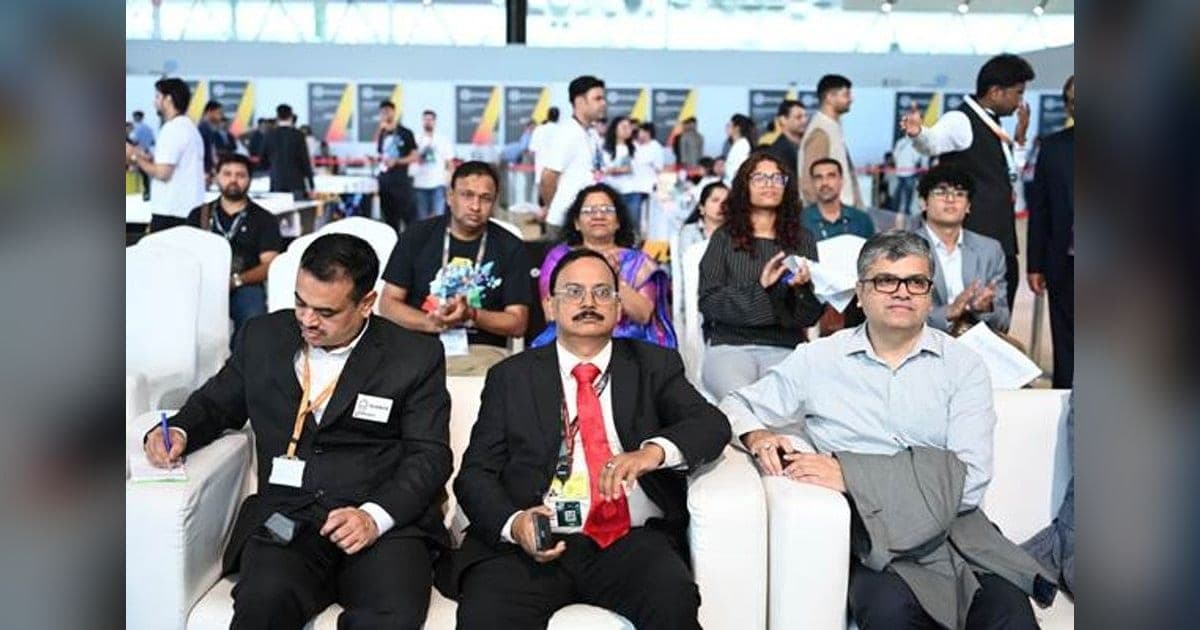
On 10 October 2026 the Robotics for Good Youth Challenge India 2026, run by the ITU with the Department of Telecommunications, was decided at Yashobhoomi, New Delhi, during India Mobile Congress 2026; Team Ferrum Incubators and Team Singularity won the Senior and Junior categories.
The Robotics for Good Youth Challenge India 2026–2027 was decided at Yashobhoomi in New Delhi on 10 October 2026, alongside the India Mobile Congress (IMC) 2026. The contest is run jointly by the International Telecommunication Union (ITU) and the Department of Telecommunications (DoT) of the Ministry of Communications, with support from the I-Hub Foundation for Cobotics (IHFC), the Technology Innovation Hub of IIT Delhi. It is a flagship initiative under ITU’s AI for Good programme.
Who won
In the Senior Category the title went to Team Ferrum Incubators of Cambridge School, Noida, Uttar Pradesh. Team Mech Minds of Lions Calcutta Greater Vidya Mandir, West Bengal, was first runner-up, and Team Botics Alpha of Vidya Pratishthan’s Magarpatta City Public School, Maharashtra, second runner-up. The Junior Category was won by Team Singularity of Gopalan International School, Karnataka, ahead of Team Veda Velocity of MSB Education Institute, Pune, and Team Vajra of IgnAlte Robotics LLP, Uttar Pradesh. Separate prizes were given for Design, Innovation and Creative Thinking. Both champion teams will carry India’s colours to the Grand Finale at Geneva, Switzerland, during the AI for Good Global Summit in June 2027.
How big the field was
Fifty-seven teams reached the nationals, 28 of them in the Junior Category and 29 in the Senior Category, bringing roughly 300 students and mentors from 14 States. Competitors aged 10 to 18 built and programmed autonomous robots around this year’s mission of public health emergency response, tied to UN Sustainable Development Goal 3 on good health and well-being. On the game board the machines had to lift and deliver samples, raise a quarantine zone, hand out medical kits and sort patients by medical triage.
The road to the final
Entries were open from 10 to 25 August 2026, orientation ran from 7 to 16 September 2026, and a practice day on 9 October 2026 let teams test their solutions on the competition board. Atul Sinha, Director General of the National Communications Academy-Technology (NCA-T) at DoT, opened the event, and Dr Bilel Jamoussi of ITU’s Telecommunication Standardization Bureau gave the welcome address. India first held the Challenge in 2024, during the World Telecommunication Standardization Assembly (WTSA-24) it hosted, and has staged it at IMC 2025 and IMC 2026 since. Organisers keep the contest on free software and hardware so that costly kits are not a barrier to entry.
Important Facts
| Event | Robotics for Good Youth Challenge India 2026–2027 (India Nationals) |
|---|---|
| Date and venue | 10 October 2026, Yashobhoomi, New Delhi, on the sidelines of India Mobile Congress 2026 |
| Organisers | International Telecommunication Union (ITU) and Department of Telecommunications, Ministry of Communications |
| Support | I-Hub Foundation for Cobotics (IHFC), Technology Innovation Hub of IIT Delhi |
| Parent programme | ITU’s AI for Good programme |
| Senior Category winner | Team Ferrum Incubators, Cambridge School, Noida, Uttar Pradesh |
| Junior Category winner | Team Singularity, Gopalan International School, Karnataka |
| Field | 57 teams (28 Junior, 29 Senior), about 300 students and mentors from 14 States, aged 10 to 18 |
| Mission theme | Public health emergency response, linked to UN Sustainable Development Goal 3 |
| Grand Finale | Geneva, Switzerland, during the AI for Good Global Summit in June 2027 |
| Inaugurated by | Atul Sinha, Director General, National Communications Academy-Technology, DoT |
| First Indian edition | 2024, during the World Telecommunication Standardization Assembly (WTSA-24) hosted by India |
Exam Point of View
Remember the two champions (Ferrum Incubators in Senior, Singularity in Junior), the organisers (ITU with the Department of Telecommunications, supported by IHFC of IIT Delhi), the parent programme (AI for Good), the venue (Yashobhoomi, New Delhi, on the sidelines of IMC 2026), the size of the field (57 teams, about 300 participants, 14 States), the age band (10 to 18), the mission tied to SDG 3, and the Grand Finale at Geneva in June 2027.
Practice Questions
Which team won the Junior Category of the Robotics for Good Youth Challenge India 2026?
- A.Team Mech Minds
- B.Team Singularity
- C.Team Botics Alpha
- D.Team Vajra
Show answer
Explanation
The correct answer is Team Singularity. The Junior Category of the Robotics for Good Youth Challenge India 2026 was won by Team Singularity of Gopalan International School, Karnataka. Option A, Team Mech Minds of Lions Calcutta Greater Vidya Mandir, West Bengal, is wrong because that team finished first runner-up in the Senior Category and not in the Junior one. Option C, Team Botics Alpha of Vidya Pratishthan’s Magarpatta City Public School, Maharashtra, is wrong for the same reason, as it took the second runner-up place in the Senior Category. Option D, Team Vajra of IgnAlte Robotics LLP, Uttar Pradesh, did compete in the Junior Category but finished second runner-up there, behind Team Veda Velocity of MSB Education Institute, Pune. The Senior Category title went to Team Ferrum Incubators of Cambridge School, Noida. Both champions will represent India at the Grand Finale at Geneva in June 2027.
Where will the winning teams represent India at the Grand Finale of the Robotics for Good Youth Challenge?
- A.Dubai, United Arab Emirates
- B.Geneva, Switzerland
- C.Singapore
- D.Nairobi, Kenya
Show answer
Explanation
The correct answer is Geneva, Switzerland. The winners of the Junior and Senior categories of the India Nationals will represent the country at the Grand Finale to be held at Geneva during the AI for Good Global Summit in June 2027, where teams from participating countries will compete. Options A, C and D name Dubai, Singapore and Nairobi, none of which is linked to the finale; the only overseas venue named is Geneva. The India round itself was staged on 10 October 2026 at Yashobhoomi in New Delhi, on the sidelines of India Mobile Congress 2026, so New Delhi is the venue of the national stage and not of the global one. Team Ferrum Incubators of Cambridge School, Noida, and Team Singularity of Gopalan International School, Karnataka, are the two teams that earned the trip.
Along with the Department of Telecommunications, which international organisation runs the Robotics for Good Youth Challenge India?
- A.UNESCO
- B.International Telecommunication Union
- C.World Intellectual Property Organization
- D.United Nations Industrial Development Organization
Show answer
Explanation
The correct answer is the International Telecommunication Union. The Challenge is organised by the ITU together with the Department of Telecommunications, Ministry of Communications, with support from the I-Hub Foundation for Cobotics, the Technology Innovation Hub of IIT Delhi, and it is a flagship initiative under ITU’s AI for Good programme. Options A, C and D are wrong because UNESCO, the World Intellectual Property Organization and the United Nations Industrial Development Organization have no role in this contest. The ITU link also explains the event calendar: the first Indian edition was held in 2024 during the World Telecommunication Standardization Assembly hosted by India, and later editions were held at India Mobile Congress 2025 and 2026. The welcome address at the award ceremony was given by Dr Bilel Jamoussi of ITU’s Telecommunication Standardization Bureau.
The 2026 mission of the Robotics for Good Youth Challenge India was linked to which Sustainable Development Goal?
- A.SDG 3 — Good Health and Well-being
- B.SDG 4 — Quality Education
- C.SDG 9 — Industry, Innovation and Infrastructure
- D.SDG 13 — Climate Action
Show answer
Explanation
The correct answer is SDG 3, Good Health and Well-being. The mission set for this edition was public health emergency response, and it was tied to the United Nations Sustainable Development Goal on good health and well-being. Students aged 10 to 18 designed robots that had to lift and deliver samples, build a quarantine zone, distribute medical kits and carry out medical triage on the game board, all tasks drawn from a health emergency. Option B on quality education, option C on industry, innovation and infrastructure and option D on climate action are wrong because none of them was named as the mission theme, even though the contest does promote learning and innovation. The health framing is the examinable fact, along with the tasks the robots had to complete.
Frequently Asked Questions
Who won the Robotics for Good Youth Challenge India 2026?
Team Ferrum Incubators of Cambridge School, Noida, won the Senior Category and Team Singularity of Gopalan International School, Karnataka, won the Junior Category. Both will represent India at the Grand Finale at Geneva during the AI for Good Global Summit in June 2027.
Who organises the Robotics for Good Youth Challenge in India?
The International Telecommunication Union and the Department of Telecommunications, Ministry of Communications, organise it with support from the I-Hub Foundation for Cobotics, the Technology Innovation Hub of IIT Delhi. It is a flagship initiative of ITU’s AI for Good programme.
What was the mission theme of the 2026 edition?
Public health emergency response, linked to UN Sustainable Development Goal 3 on good health and well-being. Robots built by students aged 10 to 18 had to lift and deliver samples, raise a quarantine zone, distribute medical kits and carry out medical triage.
How many teams took part in the India Nationals?
Fifty-seven teams reached the nationals at Yashobhoomi, New Delhi, 28 in the Junior Category and 29 in the Senior Category, with about 300 students and mentors drawn from 14 States across the country.
Sources
- https://www.pib.gov.in/PressReleasePage.aspx?PRID=2321853 (opens in a new tab) — Press Information Bureau
Current Affairs 10 October 2026
- Forest Rights Act Review Conference Held in Kolkata for Eight StatesNational
- Exercise Tarang Shakti 2026 Second Edition Held at JodhpurDefence
- Milton Dick of Australia Elected President of the IPU at ArushaInternational
- BRICS Traditional Sports Demonstration Games to Open in AhmedabadSports
- Vice-President Addresses Second Convocation of AIIMS DeogharNational
- 94th Fit India Sundays on Cycle to Be Held in VaranasiGovernment Schemes
- Lighthouse Tourism Grows to 18.63 Lakh Visitors in 2024-25National
- PM Dhan-Dhaanya Krishi Yojana Completes One Year in 100 DistrictsGovernment Schemes
Related Current Affairs
- Summits & Conferences
GI-AI4FS Second Meeting Held at IMC 2026 in New Delhi
10 October 2026 · 2 min read
- Important Days
World Cotton Day Marked by India and Mali at UN Headquarters
9 October 2026 · 2 min read
- Summits & Conferences
Harivansh Leads India at 153rd IPU Assembly in Arusha
8 October 2026 · 2 min read
- Reports & Indices
MoSPI Releases Environmental Accounts Strategy for 2026-2030
7 October 2026 · 2 min read
Related GK
- State-wise Dances, Festivals and Symbols for Exams
10 October 2026 · Indian States & UTs
- Sustainable Development and the SDGs: All 17 Goals
9 October 2026 · Environment & Ecology
- The UN and Its Specialised Agencies: Organs, Headquarters and PYQs
8 October 2026 · Static GK
Take the Quiz
- Current Affairs Quiz
State Exams Current Affairs Quiz: 10 October 2026
25 questions25 minutesStart Quiz